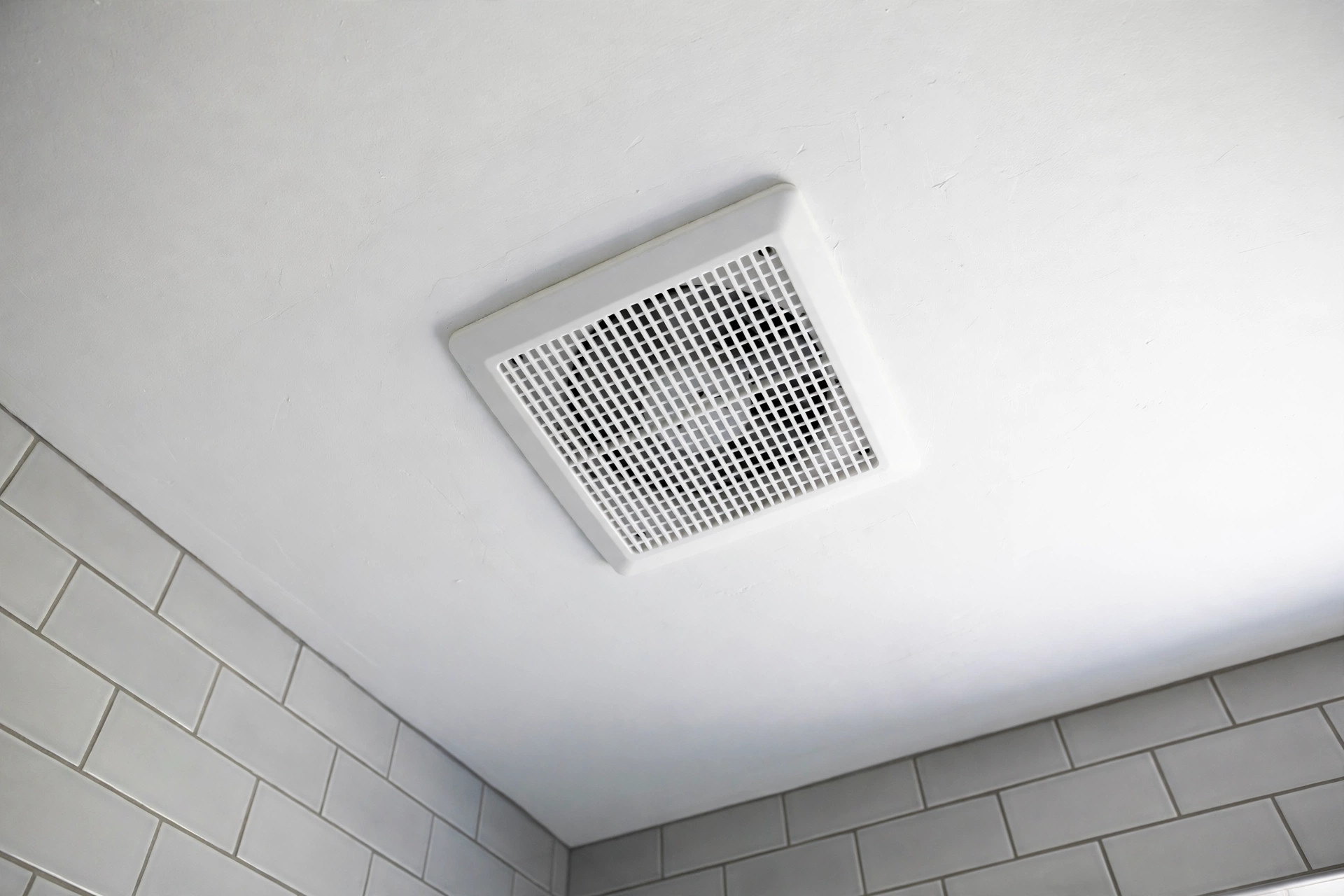
Every bathroom in a house holds steam, damp air, and strong smells. A good fan pulls that air out and keeps the room dry. But many old fans sound like a small jet engine. In quiet exhaust fans california homes usa searches, buyers are asking for a fan that works well and stays silent. This guide explains what to buy, how to size it, what it costs, and how to keep it running for years.
Why a Quiet Fan Matters
Steam from a hot shower settles on walls, mirrors, and ceilings. If the air stays damp, paint peels. Wallpaper loosens. Wood trim swells. Over time, mold can grow in dark corners. Mold is hard to remove and can harm health. A fan moves moist air outside before damage starts.
Noise matters too. A loud fan wakes sleepers. It drowns out talk. Many people switch it off because of the sound. A fan that runs silent gets used. A quiet bath fan for a California home keeps the bathroom dry and the house calm at the same time.
California homes face extra rules. The state energy code, Title 24, sets clear standards for bath fans. A new fan must meet both noise and air flow rules. Knowing these rules before you buy saves money and trouble later.
What Noise Ratings Mean: Quiet Exhaust Fans California Homes Usa
Sone Ratings
Bath fans are rated in sones. A sone is a unit of loudness. A fan rated at 4.0 sones sounds loud and harsh. A fan rated at 1.0 sone sounds soft. A fan rated at 0.3 sones is nearly silent. For a truly quiet bath fan for a California home, look for 1.0 sone or less. The best models fall between 0.3 and 0.8 sones.
Noise ratings are tested in a lab. Real rooms can make a fan sound louder. Duct runs that are long or bent add noise. A clean, straight duct keeps the fan quiet.
CFM and Sizing
CFM means cubic feet per minute. It tells how much air the fan moves. A small bathroom needs at least 50 CFM. A medium bathroom needs 80 CFM. A large bathroom needs 110 CFM or more. A simple rule helps: for rooms up to 100 square feet, buy one CFM for each square foot. A 60 square foot room needs a 60 CFM fan.
For rooms with high ceilings or large showers, pick a higher CFM. A fan that is too weak leaves steam behind. A fan that is too strong can waste energy and make noise through the duct. Measure the room first. Multiply length by width to get square feet.
California Rules for Bath Fans
California building code exhaust fan rules come from Title 24 of the California Code of Regulations. New and replacement bath fans must be Energy Star rated. They must move at least 50 CFM. They must run at 1.0 sone or less. A humidity control or timer switch is also required in many cases. This switch keeps the fan running for a set time after a shower.
Local cities may add their own rules. Check with the city building office before a full remodel. For a simple fan swap, most homes pass inspection with a fan that meets the state limits.
Types of Quiet Exhaust Fans
Standard Ceiling Fans
These mount in the ceiling and vent through the attic or roof. They are the most common type. Most quiet models use a DC motor. A DC motor runs cooler and quieter than an old AC motor. Look for grilles that fit standard ceiling openings.
Fans With Lights
Many quiet fans include a light kit. The light uses low energy LED bulbs. This saves a separate fixture above the shower. Choose a model with a warm color bulb for a soft look.
Fans With Heaters
Some models add a small heat lamp or ceramic heater. These help on cold mornings. They cost more and use more power. In warm parts of California, a heater is rarely needed.
Inline and Remote Fans
An inline fan sits in the duct, far from the bathroom. The room hears almost nothing. The grille on the ceiling is small and clean. Inline fans cost more and take more work to install. They suit large bathrooms and shared walls where silence matters most.
How to Choose
Start with size. Measure the room and pick the right CFM. Then set a noise goal. For a main bathroom, 1.0 sone or less is a fair target. For a master bath or a bath near bedrooms, aim for 0.5 sones or less.
Check the motor type. DC motors run quieter and use less power. Check the duct size. Most home fans use 4 inch or 6 inch duct. A 6 inch duct moves air with less noise. Match the fan outlet to the duct in the house, or plan to change the duct.
Look for Energy Star labels. They confirm the fan meets state rules. Read the quiet exhaust fans buying guide for model terms and terms on labels. If you plan to shop now, the quiet exhaust fans for sale roundup lists current models by price band.
Plan the switch. A timer or humidity sensor keeps the fan on long enough to clear steam. Many people leave too soon and shut the fan off early. A sensor removes the guess work.
Think about placement. The fan works best near the shower or tub, where steam rises. A grille far from the shower clears the room more slowly. In a long bathroom, one fan at each end can beat a single large fan. Two smaller quiet fans often sound softer than one big unit.
Check the duct path before you buy. A short, straight run to the roof or wall is ideal. If the path is long, choose a fan with a stronger motor and a 6 inch outlet. A weak fan on a long duct leaves steam behind and may hum under strain.
Installation Basics
Turn off the power at the breaker before any work. Old fans often sit in a metal housing held by screws. The new fan should fit the same ceiling hole or a slightly larger one. Mark and cut the ceiling as the template shows.
Connect the duct. Use smooth, rigid duct where you can. It moves air better than flexible hose. Seal joints with foil tape. Avoid sharp bends. Each bend adds noise and cuts air flow.
Vent the duct to the outside. Never vent a bath fan into the attic. Attic air grows damp and mold follows. Run the duct to a roof cap or a wall vent with a damper. The damper stops cold air from flowing back in.
Wire the fan to the switch. If the model has a light or heater, more wires may be needed. Follow the wiring diagram in the box. When in doubt, call a licensed electrician. A short job costs less than a fire.
Work in the attic with care. Lay boards across the joists so you have a firm path to walk. Wear gloves and a dust mask. Old insulation can irritate skin and lungs. Keep a bright work light handy so you can see screws and wires.
Test the fan before you close the ceiling. Turn the power back on and listen. The air flow at the outside vent should feel strong and steady. If the fan rattles, tighten the mounting screws and check that the grille sits flat against the ceiling.
Pair the fan with good lighting. LED bathroom mirrors add bright, even light without extra ceiling fixtures.
Cost and Price
A quiet bath fan costs more than a basic loud one. Small 50 CFM models rated under 1.0 sone start near forty dollars. Mid size models with lights run from eighty to one hundred fifty dollars. Large or inline fans can reach two hundred to three hundred dollars.
Labor adds to the cost. A simple swap by a handyman may cost one hundred to two hundred dollars. A full new install with new duct can run three hundred to six hundred dollars. In high cost California cities, labor runs higher.
Energy use is low. A DC motor fan may use under ten watts. Running it for an hour costs only a few cents. The savings from less mold repair dwarf the power bill.
Care and Upkeep
Clean the grille twice a year. Dust builds on the cover and slows air flow. Pull the cover down and wash it with warm soapy water. Let it dry before you clip it back.
Vacuum the fan blades once a year. Turn off the power first. A soft brush removes dust from the blower wheel. A clean wheel runs quieter.
Check the outside vent each spring. Birds and wasps can nest in the cap. Leaves can block the damper. Clear the vent so air flows free.
Listen for change. A fan that grows loud may have a loose screw or a worn motor. Tighten the housing screws. If the noise stays, the motor may need replacement. Most quality fans last ten to fifteen years.
Safety
Always cut power at the breaker before you touch the fan. Test with a non contact voltage tester. Wear a dust mask when working in the attic. Attics hold dust and old insulation.
Do not vent into the attic or crawl space. Damp air in closed spaces grows mold fast. Make sure the duct ends outside the house.
Keep insulation away from hot parts. If the fan has a heat lamp, follow the clearance rules in the manual. Call a pro if the wiring looks old or damaged.
FAQ
How quiet is 1.0 sone? A 1.0 sone fan sounds like a soft hum. You can talk over it with ease. It will not wake a sleeper in the next room. Fans at 0.3 sones are hard to hear at all.
What size fan does a small California bathroom need? A bathroom up to 100 square feet needs about one CFM per square foot. A 50 square foot bath needs a 50 CFM fan. For a shower stall with no tub, add 10 CFM.
Do I need a permit to replace a bath fan in California? A simple like for like swap often needs no permit. A new duct run or new wiring may need one. Check with the local building office to be sure.
Can a quiet fan meet California Title 24 rules? Yes. Most quiet fans on the market today are Energy Star rated and run under 1.0 sone. They meet the state limits for new and replacement installs.
Should the fan run after the shower ends? Yes. Let it run twenty to thirty minutes after a hot shower. A timer or humidity sensor switch handles this on its own.
Why does my new fan still sound loud? The duct may be the cause. Long runs, sharp bends, or crushed flexible duct add noise. A loose housing can rattle. Check the duct path and tighten all screws.
A Short Final Word
A quiet exhaust fan is a small upgrade with a big payoff. It guards the walls from damp. It keeps mold away. It runs in the background without a roar. Pick the right size, check the sone rating, and meet California rules. Install it with a clean duct path to the outside. Then clean it twice a year and let it work.
For more background, see Moen, Delta Faucet, and American Standard. For more background, see The Home Depot, Lowe’s, and This Old House. Buying guides are also published by HGTV and Bob Vila.
References
American Standard. (n.d.). Bathroom and kitchen products. https://www.americanstandard.com Bob Vila. (n.d.). Home improvement advice. https://www.bobvila.com Delta Faucet. (n.d.). Kitchen and bathroom faucets. https://www.deltafaucet.com HGTV. (n.d.). Home and garden ideas. https://www.hgtv.com Lowe’s. (n.d.). Home improvement products. https://www.lowes.com Moen. (n.d.). Faucets and plumbing fixtures. https://www.moen.com The Home Depot. (n.d.). Home improvement products. https://www.homedepot.com This Old House. (n.d.). Home renovation guidance. https://www.thisoldhouse.com
Was this guide helpful?

About Jennifer Lee
The My Garden US editorial team writes practical, in-depth home and garden guides for American homeowners — tested advice, no fluff.