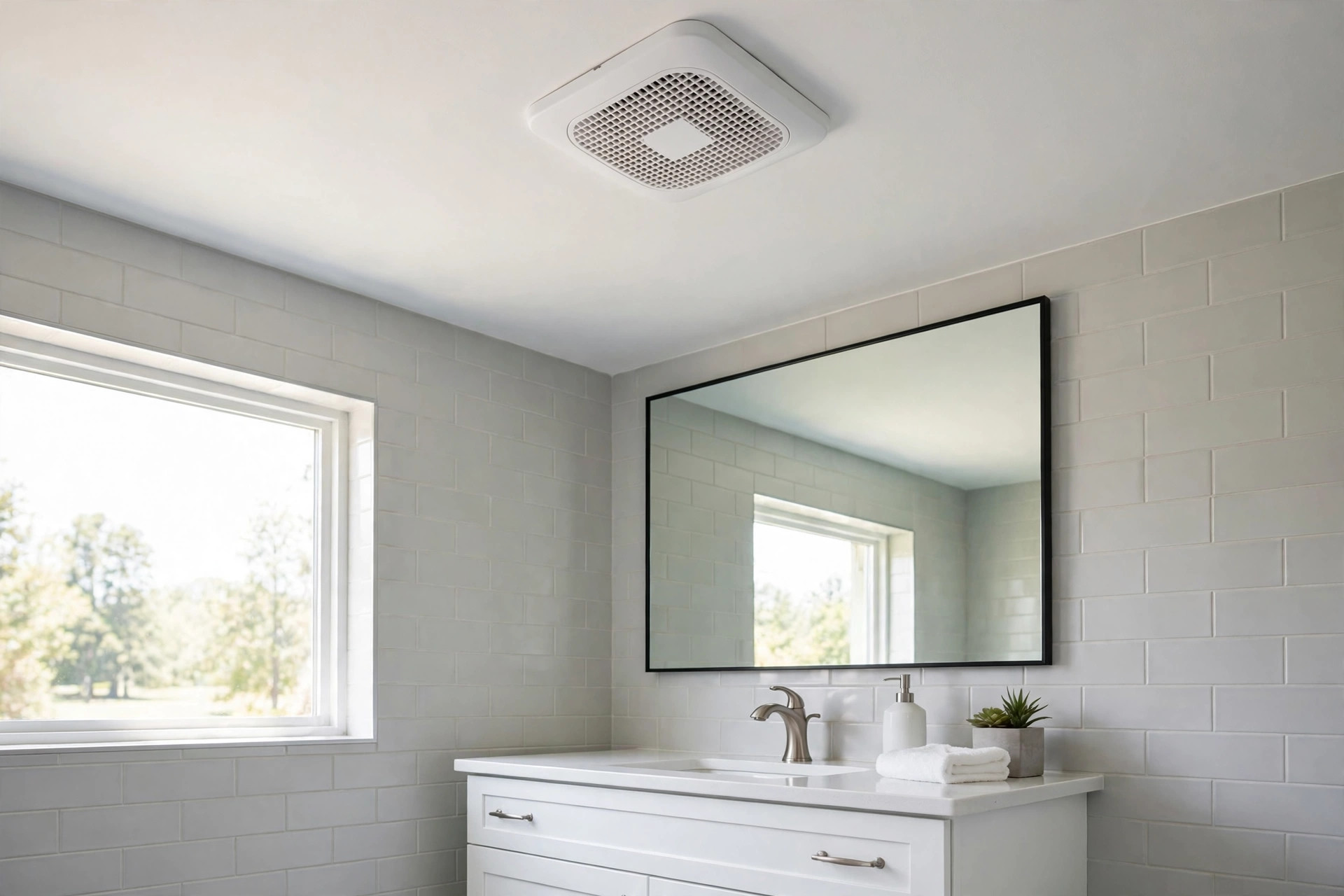

A bathroom that stays damp too long is a bathroom that wears out fast. Steam from a hot shower coats the walls. It coats the mirror. It sinks into the paint. A good fan pulls that moist air out of the room. It sends it through a duct to the outside. Most homeowners know they need a fan. Fewer know that quiet exhaust fans for sale usa now come in models so soft that you can barely tell they are running. This guide explains what makes a fan quiet, how to size one, what the types cost, and how to keep the fan working for years.
Why a Quiet Fan Matters
Noise is the first reason people turn a bath fan off. A loud fan sounds like a small engine over the shower. People do not like it. So they flip the switch and walk away. The steam then sits in the room. Over months, that moisture feeds mold. It peels paint. It warps trim. It stains the ceiling.
A quiet fan solves the problem by removing the excuse. When the fan is soft, the family leaves it on. It runs through the shower and for twenty minutes after. The mirror clears faster. The paint lasts longer. The air smells fresher.
There is a second reason. Bathrooms are often near bedrooms. A loud fan at six in the morning wakes a sleeping child or a tired spouse. A quiet fan does not. Many newer models run under one sone. A sone is the unit used to measure how loud a fan sounds to a human ear. One sone is about as loud as a refrigerator humming. At that level, the fan is a whisper.
How Noise Ratings Work: Quiet Exhaust Fans for Sale Usa
Fan makers in the United States rate bath fans in sones. Lower is better. A fan rated at 4.0 sones is loud. A fan at 2.0 sones is moderate. A fan at 1.0 sone or below is quiet. The quietest models now rate at 0.3 sones. You can read the sone rating on the box. It is usually printed next to the CFM rating.
CFM means cubic feet per minute. It tells you how much air the fan moves. A higher CFM moves more air. But CFM alone does not tell you how loud the fan is. Two fans can both move 110 CFM. One can hum at 2.5 sones. The other can whisper at 0.8 sones. The difference comes from the motor, the blade shape, and the housing. DC motors tend to run quieter than older AC motors. They also use less power.
When you shop for quiet exhaust fans for sale usa, read both numbers. Look for high CFM with low sones. That pairing is what you want.
What to Look for When You Choose
Start with the size of your bathroom. Measure the length and the width in feet. Multiply the two numbers. That gives you the square footage. The common rule is one CFM for each square foot. A bathroom of 50 square feet needs a fan of at least 50 CFM. For a bathroom with a tall ceiling or a separate toilet room, add extra. A steam shower or a large tub needs more still.
Next, check the duct size. Most bath fans use a four inch or six inch round duct. A six inch duct lets air flow with less strain. Less strain means less noise. If your old duct is four inches, a quiet fan can still work. But do not squeeze a large fan onto a small duct. The motor will work harder. The noise will rise.
Then look at the sone rating, as noted above. Aim for 1.0 sone or less. Many stores now put quiet models at the front of the shelf. You can also look for fans that carry an energy saving label.
Finally, think about extra features. Some fans add a light. Some add a heater. Some add a motion sensor that runs the fan when someone enters. Each feature adds cost. Each can add a small amount of noise. A plain quiet fan is often the best value.
Types of Quiet Exhaust Fans
Several kinds of fans fill the shelves today.
Ceiling mounted fans are the most common. They sit in the ceiling over the shower or tub. The grille shows. The motor hides above. Most quiet models are ceiling mounted.
Inline fans sit in the duct line, often up in the attic. Only a small vent shows in the bathroom ceiling. Because the motor is far from the room, inline fans are very quiet. They cost more and need an attic space for mounting.
Wall mounted fans go through an outside wall. They suit homes where a ceiling duct run is not possible. They can be quiet, but the motor is closer to the room than an inline fan.
Fan and light units combine a quiet fan with an overhead light. They save a ceiling opening. The light lens can hold a bulb or a set of LED boards.
Fan, light, and heater units add a heating element. They are popular in cold states. They need their own power wire and their own switch. They weigh more than a plain fan.
For most homes, a ceiling mounted fan with a low sone rating is the right pick. If silence matters most and you have attic access, look at an inline model.
Cost and Price
Prices for quiet exhaust fans for sale usa vary by size and features. A plain 50 CFM fan rated near 1.0 sone often sells for twenty five to fifty dollars. A mid size fan at 110 CFM with a low sone rating often sells for sixty to one hundred twenty dollars. A large or feature rich model, with a light or heater, can sell for one hundred fifty to three hundred dollars or more.
These are store prices for the fan alone. They do not include wire, duct parts, or labor. If you hire an electrician, labor often costs one hundred fifty to four hundred dollars for a simple swap. A new install that needs a duct run costs more.
Buying tips help. Compare prices at more than one store. Lowe’s and The Home Depot both carry wide lines of bath fans. Big brands sell their own lines too. Kohler and Moen focus on fixtures, while fan makers such as Panasonic and Broan sell the quietest models. If you plan a full remodel, you may also price mirrored medicine cabinets for sale usa and brushed nickel faucets buying guide usa so the whole room matches.
How to Install and Where to Put It
Placement matters as much as the fan itself. Put the fan over the shower or tub, or as close to it as the ceiling joists allow. Moist air rises straight up. A fan near the source catches it first.
The duct must run to the outside of the house. It can exit through the roof or through a side wall. It must not dump into the attic. A duct that ends in the attic blows warm moist air onto the roof deck. That can rot wood and grow mold.
Keep the duct run short and straight. Each bend adds drag. Drag makes the motor strain. Strain makes noise. Use smooth metal duct where you can. Insulate the duct in cold attics so moisture does not condense inside it.
Wiring is simple for a swap. Turn off the power at the breaker. Remove the old grille and housing. Wire the new fan the same way the old one was wired. Many new fans use a plug inside the housing that makes the job easy. If the job needs a new circuit, new duct, or roof work, call a licensed electrician or roofer. This Old House and Bob Vila both publish clear how to guides for bath fan installs.
Care and Upkeep
A quiet fan stays quiet only if you clean it. Dust gathers on the blades and the grille. Dust unbalances the blades. Unbalanced blades hum. Once or twice a year, turn off the power and pull the grille down. Wash it in warm soapy water. Vacuum the blades and the motor with a soft brush tool.
Check the duct outside cap now and then. Leaves and lint can block it. A blocked cap traps air. The fan then pushes against a wall of air and grows loud.
Listen for change. A fan that was soft and turns loud is telling you something. It may be loose in the ceiling. It may have a worn motor bearing. It may have a damper stuck half shut. Fix it early. A small fix now beats a full swap later.
If you live in a hot state, you may want fixtures that stand up to heat and hard water. A guide on brushed towel holders texas homes usa covers finishes that age well in warm climates.
Safety Notes
Bath fans move air, but they are wired devices in a wet room. A few rules keep the job safe.
– Mount any fan over a tub or shower only if its label says it is listed for that use. – Keep water off the motor and the wiring. Wipe, do not spray. – Run the duct to the outside. Never into the attic or between the walls. – If the fan has a heater, give it its own circuit as the maker directs. – When in doubt, hire a licensed electrician.
Readers looking for style ideas can browse HGTV and The Spruce for bathroom layouts that place fans, lights, and mirrors well together. Delta Faucet and American Standard also show full bath suites that pair well with a new quiet fan.
Frequently Asked Questions
How quiet should a bathroom fan be? Look for 1.0 sone or less. Models rated at 0.5 sones or lower are nearly silent. The box lists the sone rating next to the CFM rating.
What size fan does my bathroom need? Multiply length by width in feet. Use at least one CFM per square foot. Add extra for tall ceilings, separate toilet rooms, or large tubs and steam showers.
Can I replace my old fan with a quiet one myself? Often yes, if the new fan fits the old ceiling opening and uses the same duct size. Turn off the breaker first. If you need new wiring or a new duct run, hire a licensed electrician.
Why did my quiet fan get loud? Dust on the blades is the most common cause. A loose housing, a stuck damper, or a blocked outside cap can also raise noise. Clean the fan and check the duct.
Do quiet fans cost more to run? No. Many quiet models use DC motors that draw less power than older fans. A quiet 110 CFM fan may use under 20 watts. Running it for an hour a day costs only a few dollars a year.
Should the duct go through the roof or the wall? Either is fine if done right. The wall route is often shorter and easier to seal. The roof route suits bathrooms far from an outside wall. Both must end at the outside air with a proper cap.
A Final Word
A bathroom fan is a small machine with a big job. It guards the paint, the drywall, and the air your family breathes. The quiet exhaust fans for sale usa today make that job easy to live with. Pick the right size. Pick a low sone rating. Vent it to the outside. Clean it twice a year. Do those four things and your bathroom will stay dry, fresh, and quiet for a long time.
References
American Standard. (n.d.). Bathroom and kitchen products. https://www.americanstandard.com Bob Vila. (n.d.). Home improvement advice. https://www.bobvila.com Delta Faucet. (n.d.). Kitchen and bathroom faucets. https://www.deltafaucet.com HGTV. (n.d.). Home and garden ideas. https://www.hgtv.com Kohler. (n.d.). Bathroom and kitchen fixtures. https://www.kohler.com Lowe’s. (n.d.). Home improvement products. https://www.lowes.com Moen. (n.d.). Faucets and plumbing fixtures. https://www.moen.com The Home Depot. (n.d.). Home improvement products. https://www.homedepot.com The Spruce. (n.d.). Home and garden advice. https://www.thespruce.com This Old House. (n.d.). Home renovation guidance. https://www.thisoldhouse.com
Was this guide helpful?

About Robert Taylor
The My Garden US editorial team writes practical, in-depth home and garden guides for American homeowners — tested advice, no fluff.
You May Also Like

Frameless Shower Doors Where to Buy USA: A Plain Guide for Homeowners
March 11, 2026 0 views
How to Find Bathroom Wall Tiles Deals Near Me
August 24, 2026 0 views
Bathroom Linen Cabinets Buying Guide USA
April 6, 2026 0 views