
A cold towel on a damp morning can spoil a shower. For many people who search for bathroom towel warmers texas homes usa, the draw is simple. They want a warm, dry towel every time they step out of the shower. This guide covers all that matters. You will learn what towel warmers do, which kinds suit Texas homes, what they cost, how to install them, and how to keep them safe. The words stay plain. The facts stay clear.
Why It Matters
Texas weather is hot in summer, but winter mornings can still feel cold. Tile floors hold the chill. Bathrooms stay damp longer than other rooms. A wet towel left on a hook may smell sour by the next day. That sour smell comes from germs that grow in damp cloth. A towel warmer heats the rail. The heat drives out dampness. Dry towels smell clean and feel soft.
For bathroom towel warmers texas homes usa, there is one more point. Texas air is humid. Humid air slows drying. A towel that hangs for hours in a closed bathroom stays damp. Heat from a warmer fights that damp. Your towels dry fast even on muggy days. You also use fewer towels each week, which saves water and laundry time.
A warm towel adds comfort too. Many home owners in Texas add these rails when they update a bath. It feels like a hotel touch. Guests notice it. Buyers notice it. A small fixture can lift the whole room.
What to Look For When You Choose: Bathroom Towel Warmers Texas Homes Usa
Start with size. A rail should hold at least one bath towel, flat, so air can move around it. A small rail for one towel may be 20 inches wide. A family bath may need a rail 24 to 32 inches wide. Measure the wall space first. Leave room to open the door and move past the rail.
Next, look at heat. Most rails reach 100 to 170 degrees on the surface. That is warm to the touch, not burning. A timer or switch lets you run the rail for one or two hours after each shower. That is all you need. Some models warm up in 20 minutes. Others take an hour. Fast warm up saves energy.
Think about how the unit gets power. There are two main kinds: plug-in and hardwired. A plug-in model uses a normal wall outlet. You can hang it like a picture. A hardwired model ties into the house wiring. An electrician should install it. Hardwired units look clean, with no cord in view.
Finish matters in a damp room. Look for rails made of stainless steel or brass. Chrome and brushed nickel are common finishes. They fight rust. Cheap steel may rust at the joints after a year. Check that the model is listed for bathroom use. A badge from a known test lab is a good sign.
You can read more about matching finishes at Kohler, which shows many bathroom fixture styles. If you are planning a wider bath update, guides at This Old House explain how small fixtures fit into a remodel.
Types and Options
There are four main types of towel warmers sold in the United States.
Electric Wall Mounted Rails
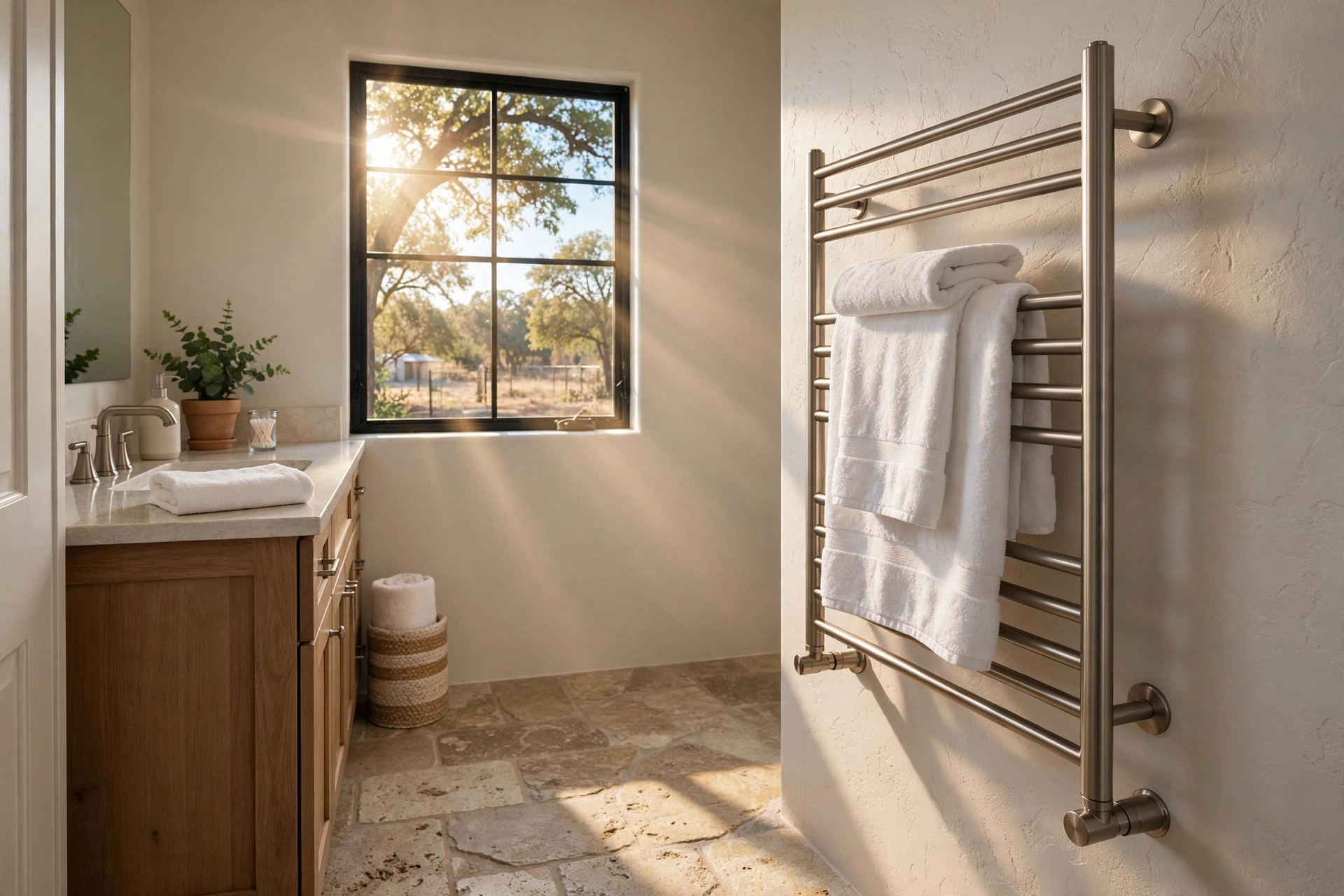
These are the most common. Bars of metal run in a ladder shape. An electric element inside the bars heats them. You hang the rail on the wall. Sizes range from small to full width. Most draw about the same power as a light bulb, so they cost little to run.
Plug-In Warmers
A plug-in unit hangs on the wall and plugs into a ground fault outlet. This is the easy pick for renters. You can move it when you move. The cord shows, so some owners dislike the look. Keep the cord away from water.
Hardwired Warmers
These tie into the home wiring and need an electrician. No cord shows. They can sit on a timer with the bath fan. This is the neat choice for a remodel. Many owners pair a hardwired towel warmer with heated floor kits for a warm bath from floor to wall.
Hydronic Warmers
A hydronic model hooks to the home hot water system. It warms like a small radiator. These are rare in Texas. They suit homes with a boiler. Most Texas homes use forced air heat, so electric models make more sense.
You can compare styles and finishes at Delta and Moen, which both carry bath hardware in many finishes. For plain rail designs, American Standard offers options that fit modern baths.
How They Work in Texas Homes
Texas homes pose few problems for a towel warmer. The main job is drying, not heating the room. A rail in a Dallas bath works the same as one in Houston. But there are a few Texas notes worth your time.
First, summer humidity. From June to September, Gulf air keeps indoor humidity high. A damp towel may not dry on its own. Run the warmer for one to two hours after each shower. That keeps towels fresh through the humid season.
Second, hard water. Many Texas towns have hard water with lime. Hard water does not hurt the rail itself, but it leaves spots on chrome. Wipe the bars with a damp cloth once a week. Dry them after. This keeps the finish bright.
Third, small baths. Many Texas homes built in the 1980s and 1990s have small hall baths. A slim rail fits well on the wall beside the shower. If wall space is short, a free standing warmer can stand in a corner. It plugs in and needs no wall work.
Ideas for small bath layouts appear at HGTV, which covers many bath updates. Room by room buying tips are easy to find at The Spruce.
Cost and Price
A basic plug-in towel warmer costs about 100 to 250 dollars. A mid range wall rail with a timer runs 250 to 500 dollars. High end hardwired rails in brass or nickel run 500 to 1,200 dollars. Designer models can cost more.
Installation adds to the cost. A plug-in unit costs nothing to install if you hang it yourself. A hardwired unit needs an electrician. Plan 150 to 400 dollars for the wiring work, more if a new circuit is needed. A GFCI outlet near the rail adds to the bill too.
Running costs are low. A typical rail draws 60 to 150 watts. Used two hours a day, it may add one to three dollars a month to the power bill. Texas power rates vary by city, so check your bill. A timer helps. It shuts the rail off when you do not need it.
Total project cost for most Texas owners runs 250 to 900 dollars with install. That is less than a new vanity. For price checks, shop the bath sections of Home Depot and Lowe’s, which list many models with owner reviews.
How to Install
You can hang a plug-in model yourself. You will need a drill, a level, a stud finder, and the screws that come in the box. Mark the holes with the level. Drill pilot holes. Set the wall anchors. Hang the rail. Plug it in. The job takes about 30 minutes.
For a hardwired model, hire a licensed electrician. The work may need a permit in your city. The electrician will run a line from a GFCI circuit to the wall box. The rail then mounts over the box. The whole job takes one to two hours.
Pick the right spot. Hang the rail where you can reach it from the shower door. Keep it at least a few inches from the tub edge. Do not hang it over the bath where it could fall in. Keep it clear of the toilet splash zone.
Step by step install guides appear at Bob Vila, which covers many small bath jobs for home owners. If you want general help for bathroom towel warmers, our buying guide lists the main specs to check before you buy.
Care and Upkeep
A towel warmer needs little care. Wipe the bars with a soft damp cloth each week. Use mild soap. Do not use bleach or rough pads. They dull the finish. Dry the bars after wiping.
Hang towels flat. Fold a bath towel in half over the bars. Do not wad it up. Air must reach both sides. A folded towel dries in one to two hours. Remove dry towels so the rail can rest.
Check the switch or timer once a month. Make sure the rail turns on and off as set. If the rail stays hot all day, check the timer. Constant heat wastes power and can dry out towels too much.
Watch for rust at joints. If you see a small spot, dry the area and watch it. Stainless steel should not rust. If rust spreads, call the maker. Most good rails carry a warranty of two to five years.
Pair the warmer with good towel holders. Brushed towel holders in the same finish keep the whole bath looking planned.
Safety
Heat and water need respect. Follow these rules.
Use a GFCI outlet or circuit. Ground fault protection cuts power if current leaks. This is a must in any bath. Never plug a warmer into an unprotected outlet.
Keep cords dry. Do not run a cord across the tub or shower. Do not let a cord sit in a puddle. If the cord is too short, move the rail or add an outlet. Do not use an extension cord in the bath.
Do not overheat the rail. Use the timer. One to two hours is enough. Do not drape plastic items on the rail. Do not hang clothes with metal zippers that could scratch the finish.
Keep children in mind. A rail at 170 degrees feels hot to small hands. Mount the rail where young children cannot grab it. Or use a model with a lower heat setting.
Turn the rail off when you leave home for days. Like any heater, it should not run unattended for long.
FAQ
Do bathroom towel warmers use a lot of power?
No. Most use 60 to 150 watts. That is about the same as one or two light bulbs. Used two hours a day, the cost is only a few dollars a month in most Texas cities.
Will a towel warmer dry towels in humid Texas summers?
Yes. That is its best use. The rail heats the cloth and drives out damp air. A folded bath towel dries in one to two hours, even in Gulf Coast humidity.
Is a plug-in model safe in a bathroom?
Yes, if you plug it into a GFCI outlet and keep the cord dry and clear of water. A hardwired model is neater, but a plug-in is safe when used as the maker says.
Can I install it myself?
You can hang a plug-in model with basic tools. A hardwired model needs a licensed electrician. Check your city rules about permits before you start.
How long does a towel warmer last?
A good stainless steel or brass rail lasts 10 to 20 years with simple care. Cheap steel models may rust sooner. Look for a warranty of at least two years.
Do I need one if Texas is hot?
Texas heat does not dry a bathroom. Humidity does the opposite. Even in August, a closed bath stays damp. A warmer keeps towels fresh all year.
A Short Final Word
For owners who search for bathroom towel warmers texas homes usa, the choice is easy to frame. Pick the right size. Pick a finish that fights rust. Use a timer. Keep cords and water apart. The cost is low, the comfort is real, and the care is small. A warm dry towel each morning is a small luxury that earns its keep every day of the year.
References
American Standard. (n.d.). Bathroom and kitchen products. https://www.americanstandard.com Bob Vila. (n.d.). Home improvement advice. https://www.bobvila.com Delta Faucet. (n.d.). Kitchen and bathroom faucets. https://www.deltafaucet.com HGTV. (n.d.). Home and garden ideas. https://www.hgtv.com Kohler. (n.d.). Bathroom and kitchen fixtures. https://www.kohler.com Lowe’s. (n.d.). Home improvement products. https://www.lowes.com Moen. (n.d.). Faucets and plumbing fixtures. https://www.moen.com The Home Depot. (n.d.). Home improvement products. https://www.homedepot.com The Spruce. (n.d.). Home and garden advice. https://www.thespruce.com This Old House. (n.d.). Home renovation guidance. https://www.thisoldhouse.com
Was this guide helpful?

About Sarah Mitchell
The My Garden US editorial team writes practical, in-depth home and garden guides for American homeowners — tested advice, no fluff.
You May Also Like
Shower Grab Bars USA Online Deals: How to Buy the Right Safety Bars
April 20, 2026 0 views
Bathroom Towel Warmers USA Online Deals: A Plain Buyer Guide
March 2, 2026 0 views
Bathroom Linen Cabinets American Homes Guide
April 1, 2026 0 views