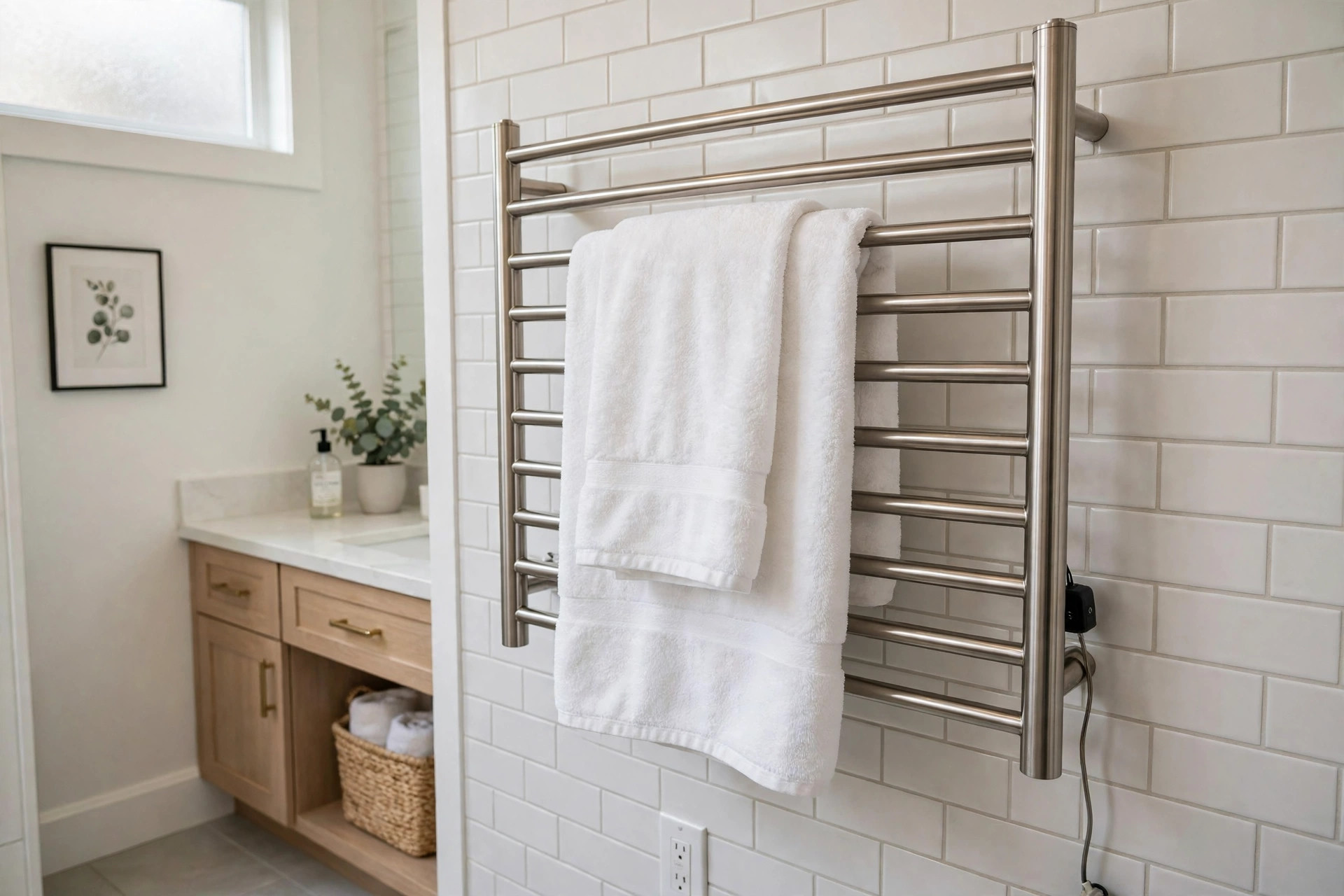

This bathroom towel warmers buying guide usa is written for American home owners who want warm, dry towels after every bath. A towel warmer is a heated rack or rail that dries towels and warms them at the same time. It also dries robes, bath mats, and small washcloths. Many models give off a little heat into the room, which can take the chill off a cold bathroom on a winter morning.
Towel warmers are not a new idea. Hotels in Europe have used them for decades. In the last twenty years they have become common in American homes. Prices have fallen. Choices have grown. You can now buy a simple plug in rail for a small sum or a large hardwired unit that heats a full master bath.
This guide explains the types, the sizes, the costs, and the safety rules. It also answers the common questions buyers ask. Read it through before you buy. A little study now will save you from a poor fit later.
Why It Matters
A damp towel is a small daily trouble. In a closed bathroom, a wet towel can take hours to dry. It can smell stale. It can grow mold and mildew. A towel warmer solves this by keeping the towel warm while it dries. Warmth speeds drying. Fast drying keeps the towel fresh.
There is also comfort. A warm towel on a cold day is a simple pleasure. Many buyers say it is the part of their bathroom remodel they enjoy most. Guests notice it too. A warm towel feels like a hotel stay at home.
A third reason is the room itself. Bathrooms hold damp air. A heated rail helps cut dampness on the wall behind it. Less dampness means less chance of mold on grout and paint. It does not replace a good exhaust fan and heated floor system, but it helps.
How To Choose the Right Towel Warmer: Bathroom Towel Warmers Buying Guide Usa
Type: Electric or Hydronic
Electric towel warmers are the most common in the United States. They heat with an electric element inside the rail. Some plug into a wall outlet. Others wire straight into the house current through a switch or timer. Plug in models are easy to install. Hardwired models look cleaner because the cord is hidden.
Hydronic towel warmers connect to the hot water heating system of the house. They are rare in America. They make sense only if your home already heats with hot water radiators or a boiler. Most buyers should choose electric.
Heat Up Time and Temperature
Electric rails heat by one of two methods. A dry element warms the metal bars directly. These heat up in about fifteen minutes. A liquid filled rail holds oil or water that the element warms. These take thirty to sixty minutes to reach full heat, but they stay warm longer after you switch them off.
Surface temperature usually runs between 120 and 150 degrees Fahrenheit. That is warm enough to dry towels. It is not hot enough to burn skin in normal touch. Check the maker rating before you buy. A reliable retailer catalog will list the temperature range.
Size and Bar Count
Size decides how many towels the rail can hold. A small rail about twenty inches tall holds one bath towel. A mid size rail about thirty to forty inches tall holds two towels. A tall floor rail over fifty inches can hold three or four towels and robes.
Bar count matters too. More bars mean more warm metal touching the towel. That dries faster. Look at the spacing. Wide gaps let you hang thick towels with ease. Narrow gaps suit washcloths and hand towels.
Mounting: Wall or Floor
Wall mounted rails are the standard. They save floor space. They keep the unit away from splashes. You bolt them to the wall through tile, drywall, or cement board. Most kits include the hardware.
Freestanding floor models stand on small feet. They need no drilling. That suits renters or homes where you cannot cut into the wall. The trade off is floor space and a less stable unit. A home improvement guide can show the steps for a wall mount.
Types and Options on the Market
Ladder Style Rails
The ladder is the classic shape. Two upright bars hold five to ten horizontal rungs. Towels hang over the rungs. It is simple, cheap, and fits most baths. Stainless steel ladders in polished or brushed finish match modern faucets. You can read more about matching finishes in a faucet finish guide.
Curved and Freestanding Rails
Curved rails bow outward. They hold towels away from the wall. That improves air flow and drying. Freestanding towers stand in a corner. They work well in powder rooms and guest baths where the wall is full.
Hardwired Units With Timers
Hardwired units connect to the house wiring through a wall switch. Many now come with timers or programmable controls. You set them to warm the towels before your morning shower and shut off after. This saves power. Some units wire into the same circuit as the vanity light bars so everything turns on together.
Budget Plug In Models
A simple plug in rail costs the least and installs in minutes. You hang it, plug it in, and switch it on. It is the best first step if you have never owned one. The cord is visible, so it looks less neat than a hardwired unit. Many buyers start here and upgrade later.
Cost and Price
Prices in the United States vary by size, finish, and wiring type. Small plug in rails start near fifty dollars. Mid size hardwired units run from one hundred fifty to four hundred dollars. Large designer rails with timers can reach eight hundred dollars or more.
Running cost is low. Most electric rails use fifty to two hundred watts, about the same as a light bulb or two. If you run a one hundred watt rail four hours a day, it adds a few dollars a month to the electric bill. Timers keep this cost down. A consumer testing lab notes that low wattage appliances like these add little to yearly energy use.
Installation cost is separate. A plug in model costs nothing to install. A hardwired unit needs an electrician if you are not handy. Expect to pay the usual service call fee in your area. If the bathroom is being remodeled anyway, the wiring adds little to the job. Pair the work with other upgrades like heated floor kits to save on labor.
Care and Upkeep
Towel warmers need little care. Wipe the bars with a damp cloth when they are cool. Use mild soap for grime. Avoid harsh cleaners and steel wool on polished finishes. They scratch.
Do not overload the rail. Too many towels block air flow. The rail cannot heat what it cannot touch. Two towels on a two towel rail is right. Three is too many.
Check the power cord each year on plug in models. Look for cracks or wear. If the cord is damaged, stop using the unit and have it serviced. On liquid filled models, never open the fill plug. The fluid is sealed at the factory.
If the rail heats slowly or not at all, check the fuse or breaker first. Then check the switch. If both are fine, the element may have failed. Contact the maker. Many units carry a two to five year warranty. Keep the receipt and the model number.
Safety
Buy only a unit listed by a recognized test lab. Look for UL or ETL marks on the box. These marks show the unit passed safety tests for American homes. Unlisted units may have poor wiring and no safety fuse.
Keep the unit away from the shower spray and the tub edge. Water and electric heat do not mix. Follow the maker rules on distance from water. Most makers call for a ground fault circuit interrupter outlet, the same kind used for hair dryers. A renovation advice site explains these outlets in plain terms.
Let the rail cool before you clean it. Do not drape plastic items or rubber mats on a hot rail. Do not let children climb on a freestanding unit. It can tip. A bathroom design resource reminds owners that freestanding models need a firm flat floor.
Timer models are the safest for daily use. They shut off on their own. If you forget to switch off a manual model, it will run all day. That wastes power and wears the unit. Get in the habit of using the timer.
Frequently Asked Questions
Do towel warmers dry towels or just warm them?
They do both. The heat warms the fabric and drives out moisture. A well sized rail dries a bath towel in two to four hours. A damp towel left on a plain hook may still be damp the next day. For best results, hang the towel flat across several bars. A bath fixture maker notes that full contact with warm bars is what speeds drying.
How much power does a towel warmer use?
Most use fifty to two hundred watts. That is low. A one hundred watt rail running four hours a day costs a few dollars a month in most states. Models with timers cost less to run. A plumbing fixture brand publishes wattage ratings so you can compare before you buy.
Can I install a towel warmer myself?
A plug in model is a do it yourself job. You hang the brackets and plug it in. A hardwired model should be installed by a licensed electrician. House wiring must meet local code. If your walls are tile, drilling needs care. A home project library walks through wall mounting step by step.
Will a towel warmer heat my bathroom?
It gives off some warmth, but it is not a space heater. A mid size rail may raise the air temperature a degree or two near the wall. In a small powder room you will feel it. In a large master bath you will not. Buy it for dry towels first. Any room warmth is a bonus. A kitchen and bath supplier describes the real heat output of common rail sizes.
What finish should I pick?
Match the finish to your faucets and towel holders for a clean look. Polished chrome is bright and easy to clean. Brushed nickel hides water spots. Matte black suits modern baths. Stainless steel resists rust best in steamy rooms. Cheap plated finishes may peel in a few years. Pay a little more for solid stainless steel if the bath stays steamy.
Can I use a towel warmer with a timer plug?
Yes, if the maker allows it. Many plug in rails work fine with a simple timer plug. The rail must draw less power than the timer rating. Read both manuals. Some makers warn that timer plugs void the warranty. When in doubt, buy a rail with a built in timer. A mirror and lighting guide shows how timed bath circuits are commonly set up.
A Final Word
A towel warmer is a small luxury with real use. It dries towels, fights dampness, and adds comfort to the daily routine. Choose the type that fits your wiring, the size that fits your towels, and a listed unit from a known maker. Install it with care. Use the timer. In a few weeks you will wonder how you lived without warm towels on a cold morning.
References
American Standard. (n.d.). Bathroom and kitchen products. https://www.americanstandard.com Bob Vila. (n.d.). Home improvement advice. https://www.bobvila.com Consumer Reports. (n.d.). Product reviews and ratings. https://www.consumerreports.org Delta Faucet. (n.d.). Kitchen and bathroom faucets. https://www.deltafaucet.com HGTV. (n.d.). Home and garden ideas. https://www.hgtv.com Kohler. (n.d.). Bathroom and kitchen fixtures. https://www.kohler.com Lowe’s. (n.d.). Home improvement products. https://www.lowes.com Moen. (n.d.). Faucets and plumbing fixtures. https://www.moen.com The Home Depot. (n.d.). Home improvement products. https://www.homedepot.com The Spruce. (n.d.). Home and garden advice. https://www.thespruce.com This Old House. (n.d.). Home renovation guidance. https://www.thisoldhouse.com
Was this guide helpful?

About Robert Taylor
The My Garden US editorial team writes practical, in-depth home and garden guides for American homeowners — tested advice, no fluff.
You May Also Like

LED Bathroom Mirrors for Texas Homes
January 12, 2026 0 views
Walk In Shower Kits for California Homes USA
February 23, 2026 0 views
Rain Shower Heads California Homes USA: A Complete Buying and Installation Guide
April 1, 2026 0 views