
Living in a warm, damp part of the country changes the way you dress your windows. The best pinch pleat drapes for humid climates are not the same drapes that work well in a dry state. Moisture hangs in the air for months at a time. It sinks into fabric. It loosens folds. It feeds mildew on linings. A heavy velvet panel that looks rich in January can smell musty by July.
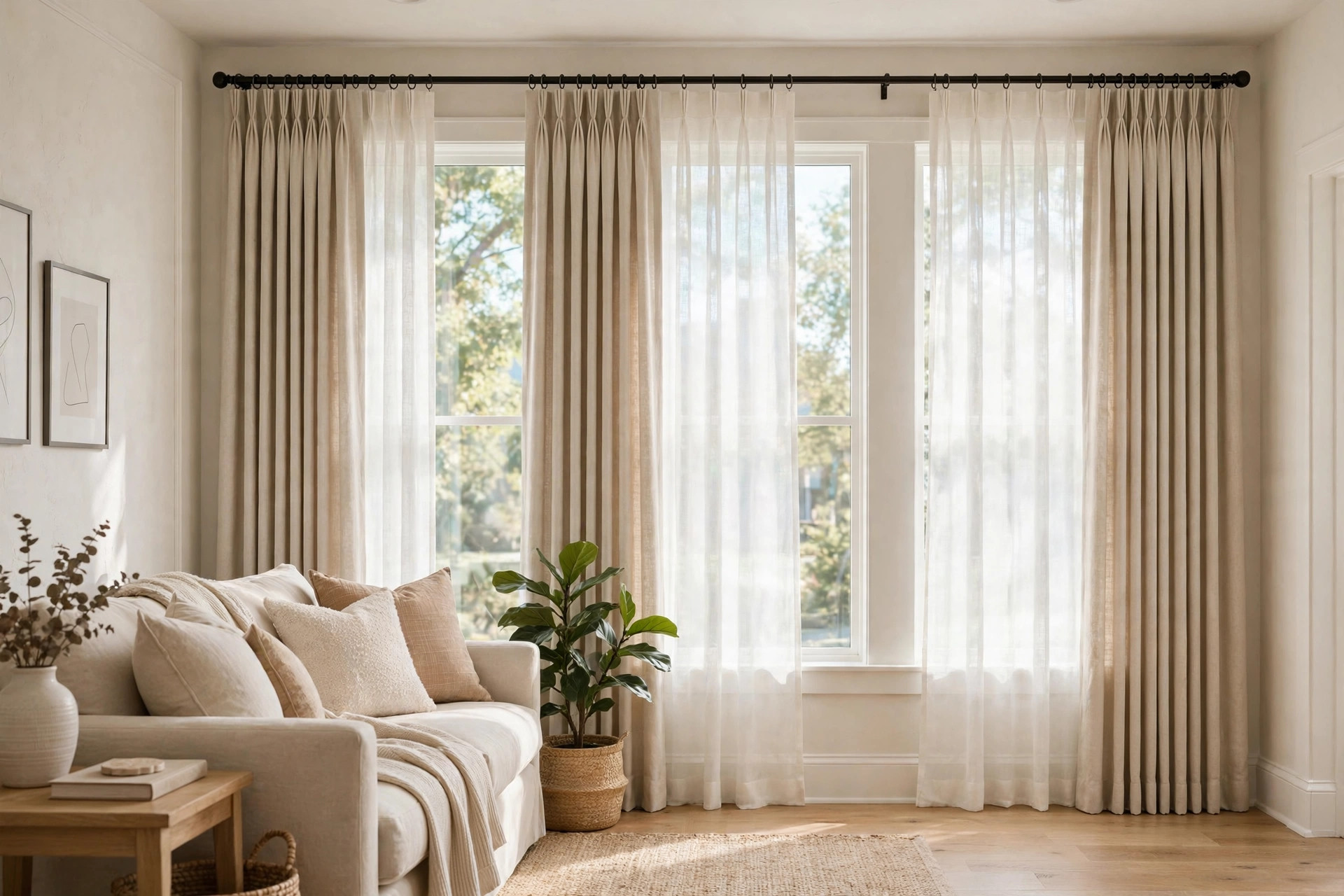
Pinch pleat drapes earn their name from the small pinched folds sewn at the top. They fall in neat, even waves. They give a window a tailored look that never goes out of style. But the secret of a good pinch pleat is a crisp fold that holds. In a humid climate, the wrong fabric lets those folds sag. The right fabric keeps them standing proud for years.
This guide walks through what makes a pinch pleat drape hold up in damp air. It covers the best fabrics, the right linings, what to look for when you shop, what prices to expect, how to care for the panels, and how to keep your family safe. Every suggestion is written with the damp Gulf air, the Florida summer, and the wet Carolina spring in mind.
Why Fabric Choice Matters in Humid Climates
Humidity is hard on cloth. Cotton and linen drink water from the air. When a drape absorbs moisture day after day, several things happen. The fibers swell. The pleats lose their edge. The panel may stretch and hang longer than it should. In time, dark spots of mildew can appear on the back where air does not move.
Synthetic fibers behave better in damp air. Polyester is the workhorse here. It absorbs very little water. Pleats pressed into polyester tend to stay put through season after season of rain. Many buyers pair a polyester face with a cotton look, so the drape feels soft but acts tough. If you want the best pinch pleat drapes for humid climates, start by looking at polyester and polyester blends before anything else.
Cotton is not banned from humid homes. A tight-weave cotton can serve well if the lining is right and the room has good air flow. But pure linen is a risk. Linen wrinkles in damp air. It can grow musty. For a coastal cottage with strong breezes it may be fine. For a closed-up bedroom near a swamp, it is not the best pick.
How to Choose Pinch Pleat Drapes for Damp Air: Best Pinch Pleat Drapes for Humid Climates
Shop with a short checklist in your hand. These points separate a drape that lasts from one that fades fast.
Look for moisture-resistant fabrics
The tag is your friend. Read the fiber content. Aim for polyester, acrylic, or a blend with at least half synthetic fiber. These fabrics resist mildew and dry fast after a storm blows through an open window. Homeowners often start their search at IKEA, where many ready-made panels list their fiber content plainly, making the choice easier.
Check the lining
The lining is the back wall of the drape. In humid homes it matters as much as the face fabric. An unlined cotton drape can mildew from behind. A drape with a polyester lining or a mildew-resistant thermal backing stands up better. Look for linings sold as moisture resistant. Many styles on Wayfair let you filter by lining type so you can narrow the field fast.
Weigh the pleat depth
Pinch pleats come in several styles. A two-finger pleat uses less fabric and hangs closer to the rod. A three-finger pleat, also called a French pleat, uses more fabric and makes fuller folds. Full pleats look grand, but they trap more air between folds. In a very damp room, a slimmer pleat can dry faster and resist musty smells. For a bedroom that runs humid, a double pleat is often the smart middle ground.
Mind the hardware
Brass and iron rods can rust or spot in salty coastal air. A painted or powder-coated rod resists rust. Curtain rings of coated metal or plastic glide well and never corrode. When you shop large stores such as Home Depot or Lowe’s, check the hardware section for rods rated for damp or outdoor use. They cost little more and last much longer near the sea.
Measure twice
Pinch pleat drapes hang from rings and hooks, so the panel sits a bit below the rod. Measure from the top of the rod to the floor, then add the drop for the hooks. In humid climates, leave a small gap above the floor. A panel that kisses the floor can wick up moisture from tile or wood on wet days.
Types and Options
Not every pinch pleat drape is built the same. Here are the main kinds you will meet in stores and catalogs.
Polyester pinch pleats
The safest choice for damp air. Polyester holds a pressed pleat through years of humidity. It rarely fades, washes well, and costs less than natural fiber. New weaves look and feel close to linen or silk. For most humid homes, this is where the search should begin.
Cotton-polyester blends
A blend gives you the soft hand of cotton with the strength of polyester. A 60/40 or 50/50 blend resists wrinkles and mildew better than pure cotton. These panels breathe a little more than pure polyester, which some people prefer in a warm room. Guides at The Spruce often note blends as a good middle path for mixed climates.
Treated cotton and canvas
Some cotton drapes carry a mildew-resistant finish. These can work in humid rooms if the finish is strong and the room is aired often. Canvas-weight cotton holds a pleat well. But the finish can wash out over time, so plan to retreat or replace sooner than you would with a synthetic panel.
Thermal and blackout linings
A lined pinch pleat blocks light and cuts heat. In hot humid states, a thermal lining keeps the sun out and the cool air in. Make sure the lining is marked mildew resistant. A cheap foam-backed lining can flake in damp air. A woven interlining lasts longer. For full darkness in a bedroom, compare lined options with the noise-reducing pinch pleat drape buying guide, which covers the thickest lined picks.
Sheer linen panels as a second layer
Many humid-climate homes pair a sturdy pinch pleat drape with a sheer inner panel. The sheer lets daylight in while the heavier drape stays open during the day, giving the pleats time to air out. See top rated sheer linen curtains for USA homes for breathable sheer picks that pair well with pinch pleats.
Custom and made-to-measure
Wide windows and tall ceilings often need custom panels. A local workroom can sew pinch pleats to your exact width and add the lining you choose. Custom costs more, but the fit is perfect and you control the fabric. Style ideas and room looks from HGTV can help you picture how a full custom treatment changes a room.
Cost and Price
Ready-made pinch pleat drapes are priced per panel. Prices rise with width, length, fabric quality, and lining.
– Budget polyester panels run about 25 to 60 dollars per panel at big stores. – Mid-range blended fabrics with a real lining cost 60 to 150 dollars per panel. – Premium fabrics and made-to-measure panels run 150 to 400 dollars per panel and up.
A standard window needs two panels, so double the per-panel price. Add rings, hooks, and a rod, which together can add 40 to 150 dollars. Wide windows may need three panels or extra-full widths, which raises the total.
Custom workrooms charge by the yard plus labor. Expect 300 to 800 dollars per window for a lined pinch pleat pair in a mid-price fabric. It is real money, but a well-made panel lasts ten years or more, even in damp air.
Watch for sales. Late winter and late summer bring window treatment sales at most big retailers. Buying off-season can cut a third off the price. Measure your windows first so you can move fast when a sale starts.
Care and Upkeep in Humid Homes
Good care is half the battle in a damp climate. A few simple habits keep pinch pleat drapes fresh for years.
Air the room. Open windows on dry days, or run a ceiling fan to move air behind the panels. Stale air trapped behind a drape is where mildew starts.
Shake and vacuum. Take the panels down twice a year. Shake them out and vacuum with a soft brush head. Dust holds moisture, so less dust means less dampness.
Wash with care. Most polyester panels go in the machine on a gentle cycle. Use warm water and a mild soap. Skip fabric softener, which can coat fibers and trap odors. Hang the panels to dry or tumble on low heat. Pull them out while slightly damp and hang them back up so the pleats set as they finish drying.
Mind the washing facts. If you prefer help, a curtain cleaning service cost guide can tell you what pros charge in your area.
Treat stains fast. A spot of food or dirt can feed mold in damp air. Blot, never rub. A small dab of mild soap and water handles most marks.
Re-press pleats. After washing, the pinched tops may need a quick press with a warm iron and a press cloth. Work only on the pleat header. Steam is your friend here; it sets a polyester pleat fast and kills surface mold spores at the same time.
Rotate and rest. In a very humid room, some owners keep a spare set of panels. While one set washes and airs out fully, the other hangs. This also gives you a seasonal change of color.
Safety
Window treatments must be safe, above all for homes with small children and pets. Long cords on old-style drapes and blinds can be a strangling risk. The Consumer Product Safety Commission warns parents to keep cords out of reach and to use cordless products where children sleep and play. Pinch pleat drapes hung on rings have no lift cords, which makes them one of the safer choices. Still, check these points.
Keep tiebacks high. Tiebacks hold panels open and look tidy, but a low loop can tempt a climbing child. Mount tiebacks well above a small child’s reach.
Anchor tall hardware. If you use a heavy rod on a wide window, anchor the brackets into studs, not just drywall. A falling rod can hurt a child or pet.
Choose flame-safe fabrics. Drapes hang near lamps and candles. Keep panels away from open flame. Some fabrics are sold as flame retardant; check the tag if that matters to your home.
Wash new panels before hanging in a nursery. Factory finishes and packing dust can bother small lungs. One wash removes most of it.
Frequently Asked Questions
Do pinch pleat drapes work in a Florida home?
Yes, with the right fabric. Florida air stays damp for much of the year. Choose polyester or a high-polyester blend with a mildew-resistant lining. Air the room often. With those steps, pinch pleat drapes hold their folds and stay fresh in a Florida home.
What fabric is best for humid climates?
Polyester is the top pick. It absorbs almost no water, resists mildew, and holds a pressed pleat for years. A cotton-polyester blend is a fine second choice. Avoid pure linen and heavy velvet in very damp rooms unless the room is well aired.
Will my pinch pleats lose their shape in damp air?
They can, if the fabric is wrong. Natural fibers swell with moisture and the folds soften. Synthetic fibers keep their set. If old pleats have gone flat, a steam press often brings them back. For a lasting fix, switch to a polyester panel.
How do I stop mildew on drape linings?
Keep air moving behind the panels. Use a mildew-resistant lining. Wash or wipe the backs of the panels twice a year. In a problem room, run a dehumidifier during the wettest months. Sunlight helps too; open the drapes on bright days so light reaches the lining.
Can I use pinch pleat drapes on a patio door?
You can. Choose a tough fabric, because patio doors get sun, rain splash, and heavy use. A coated rod resists rust. Leave a small gap above the floor so the hem never sits in water. Many stores, including Blinds.com, carry door-width panels and hardware rated for hard use.
Are custom drapes worth it in a humid climate?
They can be. A workroom lets you pick the exact fabric and lining for your damp room, and the fit is perfect. Custom costs more up front. But a panel made with a moisture-smart fabric and a good lining can outlast two sets of cheap ready-mades, which saves money in the end.
A Short Final Word
The best pinch pleat drapes for humid climates are built for the air they live in. Pick a polyester or blended fabric. Insist on a mildew-resistant lining. Hang them on rust-proof hardware. Air the room and wash the panels on a steady schedule. Do these simple things, and your pinch pleats will keep their crisp folds through every wet summer. A window dressed well is a small daily pleasure, and in a damp climate it is also a small daily victory.
References
Blinds.com. (n.d.). Window blinds, shades, and shutters. https://www.blinds.com HGTV. (n.d.). Home and garden ideas. https://www.hgtv.com IKEA. (n.d.). Home furnishings. https://www.ikea.com Lowe’s. (n.d.). Home improvement products. https://www.lowes.com The Home Depot. (n.d.). Home improvement products. https://www.homedepot.com The Spruce. (n.d.). Home and garden advice. https://www.thespruce.com U.S. Consumer Product Safety Commission. (n.d.). Product safety information. https://www.cpsc.gov Wayfair. (n.d.). Furniture and home goods. https://www.wayfair.com
Was this guide helpful?

About David Wilson
The My Garden US editorial team writes practical, in-depth home and garden guides for American homeowners — tested advice, no fluff.
You May Also Like
Thermal Vertical Blinds for Sliding Doors for Sale
July 26, 2026 0 views
Reliable Blinds Installation Companies in California: A Homeowner’s Guide
May 18, 2026 0 views
Curtain Rods and Hardware Price Comparison USA: A Full Buyer’s Guide
June 16, 2026 0 views