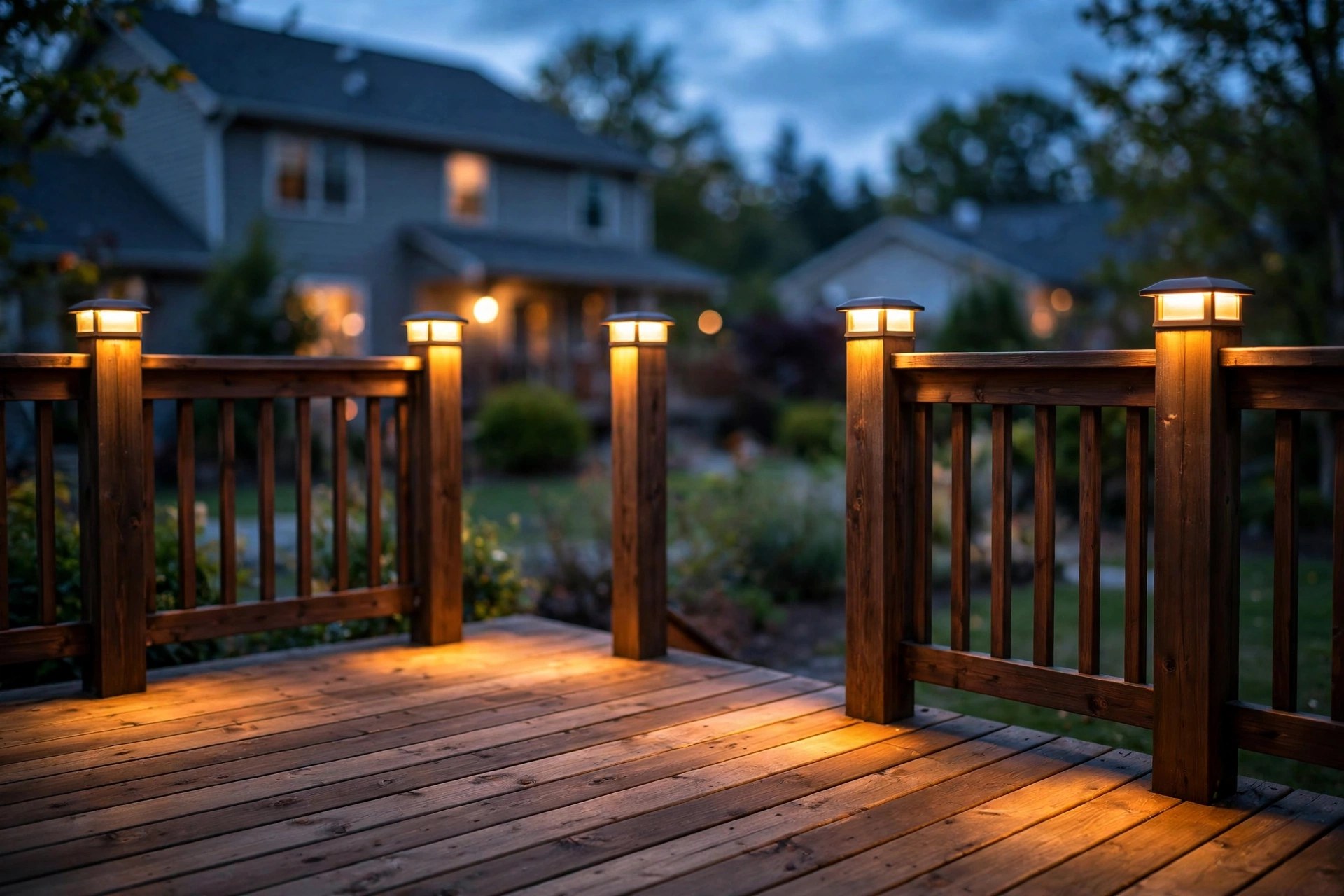

This deck cap lights American homes guide begins with a simple fact. A deck is most useful at night. That is when families sit outside, eat dinner, and talk. But a dark deck is a hazard. Steps are hard to see. Railings fade into shadow. One missed step can end an evening badly.
Deck cap lights solve this problem in a quiet way. They sit on top of deck posts or along the railing cap. They cast a soft ring of light down each post. The deck edge becomes clear. The space looks warm and inviting. This guide explains what these lights are, how to choose them, what they cost, and how to keep them working for years.
Why Deck Cap Lights Matter
Most American homes with a deck share the same pattern. The deck gets built in spring. It gets used in summer. By fall, the days grow short. The deck goes dark by seven o’clock. Families stay inside. A small amount of light changes this. Cap lights let you use the deck through the fall and into the winter evenings.
Safety is the first reason. The Consumer Product Safety Commission notes that falls are a leading cause of home injury. Decks have edges, steps, and raised platforms. Light at the deck edge marks where the floor ends. Light at the steps shows the drop. Cap lights put light exactly where it matters most.
Security is the second reason. A lit deck is a watched deck. Burglars avoid lit areas. Neighbors can see movement. The light is low and soft, not harsh, but it still removes the hiding places.
Beauty is the third reason. A deck with cap lights looks finished. The warm pools of light along each post give the yard a calm, planned look. Home buyers notice this. Real estate agents speak often about curb appeal. Lighting is one of the cheapest ways to raise the look of a home. Guides on The Spruce cover this point well in their outdoor lighting articles.
What to Look For When You Choose Deck Cap Lights: Deck Cap Lights American Homes Guide
Choosing cap lights is not hard. Four things matter most: fit, power source, brightness, and build quality.
Fit and Post Size
Deck posts come in standard sizes. Four-by-four posts are most common in American homes. Some decks use six-by-six posts. Measure your posts before you buy. A cap light made for a four-inch post will not sit right on a six-inch post. Many brands sell adapters. Check the product box or the store page for the list of fits. Retailers like Home Depot and Lowe’s list post sizes in the product details.
Power Source
You have three main choices. Solar lights charge by day and run at night. Low-voltage lights wire to a small outdoor transformer. Line-voltage lights tie into the house wiring. Each choice has a trade.
Solar deck cap lights are the easiest. No wires run under the deck. You set them on the posts and they work. They cost little to run. They do have limits. A shaded deck gives the panels little sun. Winter days are short. The light may fade by midnight in December.
Low-voltage lights are the most common for new decks. A transformer plugs into an outdoor outlet. Wires run to each post. The voltage is only twelve volts, so the work is simple and safe. The light is steady all night. Installation takes more time than solar, but the result is more reliable.
Line-voltage lights match the house system. An electrician usually installs them. They give the strongest light. They also cost the most to install. Older decks often get upgraded to this type during a full remodel.
Brightness and Color
Outdoor cap lights do not need to be bright. Fifteen to thirty lumens per post is enough for most decks. The goal is marking edges, not lighting a parking lot. Warm white light, around twenty-seven hundred kelvin, looks natural and calm. Cool white light looks harsh on a wood deck. If you want to learn more about light color and brightness, Lumens and Lamps Plus both publish clear guides.
Build Quality and Weather Rating
Deck lights live outside all year. Rain, snow, and sun beat on them. Look for a weather rating on the box. IP44 is the minimum for deck use. IP65 is better. The body should be metal or heavy plastic. Cheap thin plastic cracks in cold weather. Stainless steel and powder-coated aluminum last longest. Consumer Reports tests outdoor fixtures for weather life and publishes the results.
Types and Options for American Homes
Deck cap lights come in more styles than most buyers expect. The main split is between post cap lights and rail cap lights.
Post cap lights sit on top of each deck post. They replace the plain wood cap. Many look like small lanterns. Others are flat discs. They send light down the post and out over the deck floor.
Rail cap lights mount on the top rail itself. Some are slim strips under the rail. Some are small round lights set into the rail top. They give a line of light along the whole railing. This style suits wide decks with long rails.
Solar post cap lights are the most popular type in the United States. They need no wiring. You can buy them in packs of four, six, or eight. They work best on decks with full sun.
LED low-voltage cap lights are the most durable. The LED bulb lasts for years. You never climb up to change it. The light color stays steady. Many run on the same twelve-volt line as other landscape lights. If your yard already has landscape spot lights, you may be able to add deck caps to the same transformer.
Some homeowners mix cap lights with other deck lighting. Solar path lights can light the walk to the deck steps. Patio string lights can hang over the seating area. Together with cap lights, they make a full lighting plan. Cap lights stay as the base layer. They mark the structure. The other lights add mood.
A newer option is the smart cap light. These connect to a phone app or a home hub. You can dim them or set a timer. Philips and other brands sell smart outdoor lines. They cost more. They suit homes that already use smart lighting indoors.
Cost and Price
Deck cap lights fit most budgets. Prices in American stores follow a clear range.
Basic solar post cap lights cost five to fifteen dollars each. A pack of eight costs forty to eighty dollars. These last two to four years in most climates.
Mid-range low-voltage LED cap lights cost twenty to forty dollars each. A ten-light set with a transformer costs two hundred to four hundred dollars. These last five to ten years or more.
High-end metal cap lights cost fifty to one hundred dollars each. A full deck set can run five hundred to one thousand dollars with wiring. These are built for decades.
Installation adds cost if you hire help. A handyman may charge one hundred to three hundred dollars to wire a low-voltage set. An electrician may charge three hundred to six hundred dollars for line-voltage work. Solar lights need no labor cost. Most homeowners install them in an afternoon.
Running cost is small. LED cap lights use one to three watts each. Ten lights running six hours a night use less than one dollar of electricity per month in most states. The U.S. Department of Energy and ENERGY STAR both confirm that LED outdoor lighting is among the cheapest lights to run.
Care and Upkeep
Deck cap lights need little care. A small routine keeps them bright.
Clean the solar panels twice a year. Dust and pollen block the sun. A damp cloth wipes them clean in minutes. Dirty panels are the most common reason solar caps grow dim.
Clear leaves and snow from around the lights. A pile of wet leaves can trap moisture against the fixture. Snow on the cap blocks solar charging. Brush it off after a storm.
Check the wiring once a year. Low-voltage wires run under the deck or along joists. Animals chew them. Lawn tools cut them. Walk the wire path each spring. Look for bare spots. Replace damaged wire before it fails.
Tighten the caps each fall. Wood posts swell and shrink with the seasons. A cap that fit tight in summer may sit loose in winter. A loose cap lets rain in. Press it down and tighten any screws.
Replace batteries in solar caps every two to three years. Most use standard rechargeable AA or AAA cells. The back panel opens with a small screw. New cells restore the brightness. Do not mix old and new cells in one light.
Safety
Deck lighting is a safety tool. It must also be safe itself.
Use only fixtures rated for outdoor use. The rating must be printed on the box. Indoor lights rust and short out in rain. A short can trip a breaker or start a fire.
Keep low-voltage wire away from high-voltage lines. Run deck light wire on its own path. Do not staple it to the same board as house wiring.
Ground-fault protection matters for any outdoor outlet. The transformer for low-voltage lights should plug into a GFCI outlet. Test the GFCI each spring with its test button.
Do not overload a transformer. Add up the wattage of all lights on the line. Keep the total under eighty percent of the transformer rating. An overloaded transformer runs hot and fails early.
Turn off power before you change a wired fixture. This sounds basic. It is the step most often skipped. Flip the breaker or unplug the transformer first.
For wider safety reading on home products, the Consumer Product Safety Commission posts recall notices and safety guides. It is worth checking before a large purchase.
FAQ
How many deck cap lights do I need?
Count your posts. Most decks need one cap light per post. A deck with eight posts needs eight lights. For rails longer than eight feet, add a mid-rail light. Walk the deck at night before you buy. Note the dark spots. Those spots need light.
Do solar deck cap lights work in winter?
They work, but they run shorter hours. Winter sun is weak and days are short. A solar cap that runs eight hours in July may run three hours in January. If winter use matters to you, choose low-voltage wired lights. They run full brightness all night in every season.
Can I install deck cap lights myself?
Solar lights, yes. Most homeowners finish in one afternoon. No tools beyond a screwdriver are needed. Low-voltage lights are also a fair do-it-yourself job. The transformer plugs in. The wires push into connectors. Follow the maker instructions. Line-voltage lights need an electrician. House wiring rules apply.
Will cap lights damage my wood posts?
No, if you mount them right. Most cap lights sit on top of the post. They do not pierce the wood. A few styles screw into the side of the post. Use the screws that come in the box. They are sized to avoid splitting. Do not drive long deck screws through the fixture.
What is the best light color for a deck?
Warm white, between twenty-seven hundred and three thousand kelvin. It matches candle light and sunset tones. It makes wood look rich. Cool white above four thousand kelvin looks cold and clinical. It washes out the deck color. When in doubt, buy one light first. Test it at night. Then buy the rest.
How long do LED deck cap lights last?
The LED itself can last twenty-five thousand to fifty thousand hours. At six hours a night, that is eleven to twenty-two years. The fixture body may fail first. Plastic bodies crack. Seals wear out. Metal fixtures with good seals last the longest. Keep your receipt. Many brands carry a three to five year warranty.
A Short Final Word
Deck cap lights are a small project with a large effect. They make the deck safer. They make it usable after dark. They make the whole yard look planned. Start with a count of your posts. Choose solar for speed or low-voltage for steady light. Buy one or two first and test them at night. Then finish the deck. The work takes a weekend at most. The result lasts for years.
Related guides on this site include led recessed lights installation guide usa.
References
Consumer Reports. (n.d.). Product reviews and ratings. https://www.consumerreports.org ENERGY STAR. (n.d.). Energy efficient products. https://www.energystar.gov Lamps Plus. (n.d.). Lighting and home decor. https://www.lampsplus.com Lowe’s. (n.d.). Home improvement products. https://www.lowes.com Lumens. (n.d.). Lighting and ceiling fans. https://www.lumens.com Philips. (n.d.). Lighting products. https://www.philips.com The Home Depot. (n.d.). Home improvement products. https://www.homedepot.com The Spruce. (n.d.). Home and garden advice. https://www.thespruce.com U.S. Consumer Product Safety Commission. (n.d.). Product safety information. https://www.cpsc.gov U.S. Department of Energy. (n.d.). Energy efficiency and renewable energy. https://www.energy.gov
Was this guide helpful?

About Sarah Mitchell
The My Garden US editorial team writes practical, in-depth home and garden guides for American homeowners — tested advice, no fluff.
You May Also Like
A Practical Guide to Sensor Porch Lights for American Homes
August 2, 2026 0 views
Garage Shop Lights: How to Find the Best USA Online Deals
February 5, 2026 0 views
Reading Floor Lamps for Sale USA: A Plain Guide for Buyers
August 22, 2026 0 views