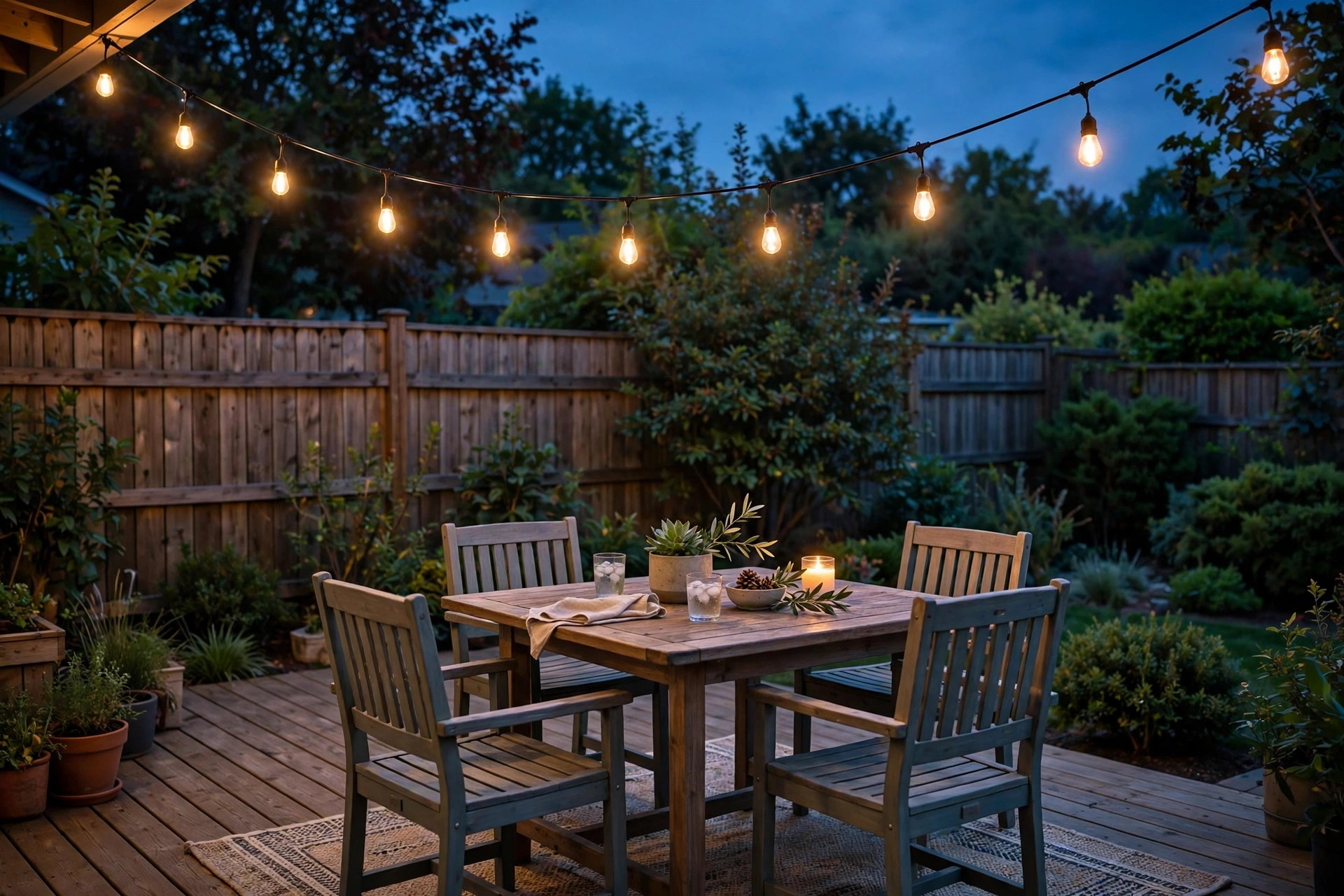

A good patio string lights buying guide USA shoppers can trust should start with a simple fact. Outdoor string lights are one of the least costly ways to make a patio feel warm and lived in. They add light for evening meals, late talks with friends, and quiet nights alone. They also make steps, edges, and paths easier to see, which helps keep guests safe. This guide walks through why patio string lights matter, what to look for before you buy, the main types on the market, what they cost, how to care for them, and how to hang them with care. It also answers common questions from American buyers.
Why Patio String Lights Matter
A patio is often the most used room of an American home from late spring to early fall. Yet many patios go dark as soon as the sun sets. Without light, chairs sit empty, grills cool down early, and guests move back inside. Patio string lights change that pattern. They turn a dark slab of concrete or a wooden deck into a place where people want to stay.
There is also a practical side. Dark patios hide steps, planters, and low walls. A soft line of light across the space marks these edges. It helps older guests and small children move with care. For homes in busy neighborhoods, lights also signal that someone is present, which can deter unwanted visitors.
Style counts as well. String lights suit almost any patio look. They work with farmhouse porches, modern decks, and small city balconies alike. The soft glow flatters faces and food better than harsh floodlights. For renters, they are a rare upgrade that can be taken down in minutes and moved to the next home.
What to Look for Before You Buy: Patio String Lights Buying Guide Usa
Buying the right set is mostly about four details: length, bulb type, power source, and weather rating. Get these right and the rest is a matter of taste.
Length and Strand Count
Measure the area first. Stretch a tape or a piece of string along the path where the lights will hang. Add about ten percent extra for sag and slack. A string pulled tight looks flat and harsh. A gentle curve between support points looks natural and sheds rain better.
Most boxed sets run 25, 48, or 100 feet. Larger patios often need two or three strands joined end to end. Check the box for the maximum number of strands that can connect safely. Many plug-in sets allow five to ten linked strands. Going past that limit can overheat the cord.
Bulb Type and Brightness
Two bulb styles dominate the market. The first is the small warm LED, often called fairy light. It gives a soft sparkle and uses very little power. The second is the larger Edison-style bulb with a visible filament, either real or simulated. It gives the classic bistro look that cafes use.
LED bulbs are the better pick for most buyers. They stay cool, last for years, and cost little to run. Look for a warm color temperature, listed as 2700K or 3000K, which reads as candlelight rather than office white. Dimmable sets are worth the small extra cost. They let you lower the glow for a quiet night and raise it for a party.
Plug-in, Solar, or Battery
Plug-in sets give the steadiest light. They plug into an outdoor outlet and burn at full brightness all night. If your patio has an outlet nearby, this is the simplest choice. Outdoor string lights for patios that run on house current also dim well and rarely fail.
Solar sets charge a small panel by day and run off a battery at night. They need no outlet and no cord across the yard. But they depend on direct sun. Under trees, on north-facing patios, or in cloudy weeks, they may glow weakly or fade before midnight. Battery sets sit in the middle. They work anywhere but need fresh or recharged batteries every few weeks.
Weather Rating
Outdoor lights must survive rain, wind, and sun. Look for an IP rating on the box. IP44 or higher means the set can handle splashes and light rain. IP65 means it can take a driving storm. In coastal states, check that the wire and sockets resist rust. In desert states, make sure the plastic parts can stand long hours of strong sun without cracking.
Types of Patio String Lights
Shoppers will meet five common types. Each suits a different need.
Bistro and cafe lights. These are the classic sets with large round or teardrop bulbs spaced along a heavy cord. They give the most light per strand and the most visible charm. They suit large patios, pergolas, and wedding tents. They cost more and use more power than fairy lights, but they look the part.
Fairy and micro lights. These use dozens or hundreds of tiny LED points on a thin wire. They look like fireflies when hung in shrubs, railings, or under a pergola roof. They are cheap, light, and easy to hide. They give more sparkle than real light, so pair them with another source if you need to read or cook.
Globe lights. Round glass or plastic globes, often two inches across, give a soft, even glow. They suit modern patios and small balconies where a clean line matters. Many globe sets use LEDs and connect end to end.
Rope lights. A flexible tube of LEDs that lays along deck edges, stair treads, or planter walls. Rope lights mark paths clearly and survive foot traffic well. They are less decorative than hanging strands but excellent for safety lighting.
Net and curtain lights. These are grids of light meant to drape over a wall, a hedge, or a railing. They cover a wide area fast and look full even from a distance. They are popular for holiday seasons but work year round.
If you are still comparing choices across the yard, our guide to outdoor wall lanterns covers a strong partner light for walls and doors, while landscape spot lights explain how to add aimed beams for trees and beds. For deck edges, deck cap lights are worth a look.
Cost and Price
Patio string lights fit almost any budget. Small fairy-light sets of 33 feet start near five dollars. Mid-range 48-foot LED bistro sets run fifteen to forty dollars. Long commercial-grade sets of 100 feet with heavy sockets can reach eighty to one hundred fifty dollars.
Three facts shape the true cost. First, LED sets cost more up front but far less to run. A 48-foot LED strand may use under five watts, while an old incandescent strand of the same length can use over one hundred watts. Second, solar sets save on power but often need replacement sooner. Their batteries lose strength after one or two seasons. Third, heavy-duty cords and real glass bulbs cost more but last longer in wind and weather.
Plan also for hanging hardware. Screw-in hooks, adhesive clips, guide wire, and zip ties add five to twenty dollars to the project. A sturdy guide wire, strung tight between posts, keeps heavy bistro strands from sagging over time.
Care and Upkeep
Good care adds years to a set. At the start of each season, plug the lights in before hanging them. Walk the full length and look for dark bulbs, cracked sockets, or bare wire. Replace dead bulbs with the same wattage and type. A mismatched bulb can burn hot or dim its neighbors.
Hang strands with slack. Wind moves them, and a tight line snaps sooner. Keep bulbs clear of dry leaves, curtains, and fabric shades. LED bulbs run cool, but old incandescent bulbs grow hot enough to scorch fabric. At the end of the season, coil each strand loosely around a spool or a piece of cardboard. Do not wind them tight around your hand. Store them in a dry box, not on a damp garage floor.
Wipe bulbs once a year with a soft dry cloth. Dust and pollen dim the glow more than most owners expect. Check outdoor outlets too. A ground-fault outlet, marked GFCI, is the right outlet for any plug-in set. If yours trips when rain falls, dry the connections and check for cracked sockets.
Safety
String lights are safe when hung with sense. A few rules keep them that way.
Keep all plugs and connections dry. Even weather-rated sets should not sit in standing water. Raise connections off the deck or wrap them in an outdoor-rated cord box. Do not run extension cords through doorways or under rugs. Buy cords rated for outdoor use.
Hang strands high enough that tall guests will not brush them with their heads. Eight to ten feet is a good guide for walking areas. Over dining tables, six and a half to seven feet above the tabletop gives light without glare. Keep lights away from gas grills, fire pits, and patio heaters. Heat melts plastic sockets and can crack glass globes.
Follow the box limits on connected strands. Linking too many sets on one outlet is the most common cause of blown fuses and hot cords. If you need more light than one circuit allows, run a second cord from a different outlet.
Frequently Asked Questions
How many feet of string lights do I need for my patio? Measure the hang path and add ten percent for sag. A twelve-by-twelve patio often needs about fifty feet for a simple back-and-forth pattern. A larger space with a crisscross pattern may need one hundred feet or more. Sketch the layout on paper first.
Are LED patio string lights worth the higher price? For most buyers, yes. LED strands use a fraction of the power, stay cool, and last many seasons. A standard 48-foot LED set may cost ten to twenty dollars more than an incandescent set, but it can save more than that in power and replacement bulbs within two years.
Can I leave patio string lights up all year? Commercial-grade sets with heavy cords often survive winter well. Light-duty sets last longer if stored indoors during harsh months. In states with heavy snow and ice, take down even good sets. Ice builds weight that can snap wires and pull hooks from wood.
Do solar patio string lights work in shade? Not well. Solar panels need direct sun for most of the day to charge fully. Under trees or on covered porches, solar sets often fade by mid-evening. If shade covers your patio, choose plug-in or battery sets instead.
What color temperature looks best outdoors? Warm white, listed as 2700K to 3000K, suits patios best. It feels like candlelight and flatters skin tones. Cool white, near 5000K, looks harsh and clinical outdoors. Most cafe-style sets come in warm white, which is the classic look.
How do I hang string lights without trees or a pergola? Use posts, poles, or wall hooks. Planter posts filled with concrete make sturdy freestanding supports. A tight guide wire between two walls or posts carries heavy strands without sag. For renters, heavy-duty adhesive hooks and tension rods work on many surfaces.
A Final Word
The best patio string lights buying guide USA readers can follow comes down to this. Measure first. Choose LED bulbs in warm white. Pick a power source that fits your yard and your outlets. Buy a weather rating that matches your climate. Hang with slack, keep connections dry, and respect the strand limits on the box. Do these things and a modest set of lights will give your patio years of warm, welcoming evenings.
For more background, see The Home Depot, Lowe’s, and Lumens. For more background, see Lamps Plus, U.S. Department of Energy, and The Spruce. Buying guides are also published by ENERGY STAR and Philips.
References
ENERGY STAR. (n.d.). Energy efficient products. https://www.energystar.gov Lamps Plus. (n.d.). Lighting and home decor. https://www.lampsplus.com Lowe’s. (n.d.). Home improvement products. https://www.lowes.com Lumens. (n.d.). Lighting and ceiling fans. https://www.lumens.com Philips. (n.d.). Lighting products. https://www.philips.com The Home Depot. (n.d.). Home improvement products. https://www.homedepot.com The Spruce. (n.d.). Home and garden advice. https://www.thespruce.com U.S. Department of Energy. (n.d.). Energy efficiency and renewable energy. https://www.energy.gov
Was this guide helpful?

About Michael Thompson
The My Garden US editorial team writes practical, in-depth home and garden guides for American homeowners — tested advice, no fluff.
You May Also Like
Kitchen Track Lighting Where to Buy USA: A Complete 2026 Guide
February 27, 2026 0 views
Garage Shop Lights for Sale USA: A Plain Buyer’s Guide
August 31, 2026 0 views
Solar Path Lights for Florida Homes
March 20, 2026 0 views