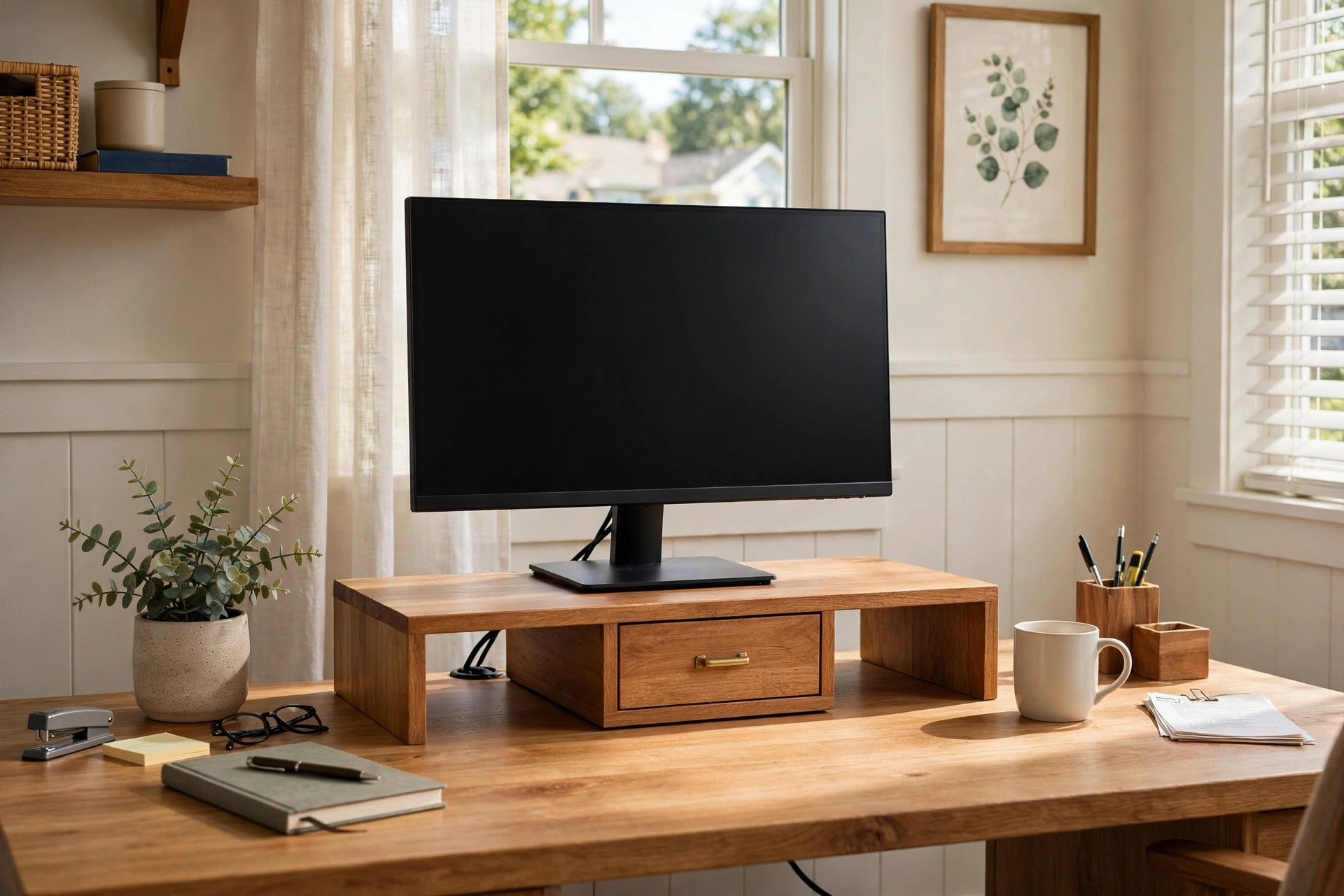

A home office monitor riser with drawer storage is a small platform that sits on your desk. It lifts your monitor to a better height. Under the screen it holds a drawer for pens, notes, and small tools. It is a simple piece of furniture. Yet it changes how a desk feels and how a workday goes.
Most home desks are too low for screens. The top of the monitor should sit near eye level. Without a riser, the head bends down for hours. That bend causes neck pain and tired eyes. A riser fixes the problem for a small price. The drawer adds a second benefit. It gives small items a home. It keeps the desk clear.
This guide explains everything about a home office monitor riser with drawer storage. You will learn why it matters, how to choose one, what types exist, what it costs, and how to care for it. You will also find answers to common questions.
Why a Home Office Monitor Riser with Drawer Storage Matters
The average worker spends seven to eight hours a day at a screen. Posture during those hours decides how the body feels at night. A monitor that sits flat on a desk forces the neck to tilt down. Over weeks and months, this tilt causes stiffness in the neck and shoulders. Eye strain follows. The eyes work harder to focus when the angle is wrong.
A home office monitor riser with drawer storage lifts the screen by three to six inches. That lift brings the top third of the screen to eye level. The spine stays upright. The shoulders relax. The eyes look straight ahead, which is their natural rest position.
The drawer matters as much as the lift. Small office items spread across a desk without a place to live. Pens, sticky notes, USB drives, and earbuds pile up in corners. The mess distracts the eye and slows the hand. One shallow drawer takes all of it. When each item has a place, the desk stays clear. A clear desk helps the mind stay clear.
There is also a space gain. The riser creates a shelf above the drawer. The monitor sits on top. The space in front of the riser stays open for a keyboard. The space below the drawer can hold a laptop or a notebook. In a small home office, this vertical use of space is worth a great deal.
Many buyers notice one more benefit. A raised monitor looks better on video calls. The camera sits at a level close to the face. The image on the call looks more natural. Colleagues see the face, not the top of the head.
How to Choose the Right One: Home Office Monitor Riser with Drawer Storage
Choosing a home office monitor riser with drawer storage takes only a few measurements. Start with the desk. Measure the depth of the desk from front to back. The riser should take no more than half of that depth. If the desk is 24 inches deep, the riser should be 12 inches or less. A riser that is too deep steals room from the keyboard.
Next, measure the monitor. Check the width of the base or the full width of the screen. The top platform must be wider than the monitor base by at least two inches on each side. A wide screen or an ultra-wide screen needs a wide riser. Most standard risers are 20 to 24 inches wide. Large monitors may need a 30-inch model.
Check the weight. A monitor can weigh 10 to 25 pounds. The riser must hold that weight with ease. Look for a load rating of at least 40 pounds. A higher rating gives a margin of safety.
Then think about the drawer. Open and close it in your mind. The drawer should glide in and out without catching. A single drawer is the most common design. Some models offer two small drawers or a drawer with dividers. If you store many small items, dividers help. If you store papers, a wider drawer helps.
Material choice comes next. Wood risers look warm and match many desks. Bamboo is a strong and light choice. Metal risers are thin and modern. Some risers mix a metal frame with a wood top. Think about the rest of the room. A good riser blends in rather than stands out.
Height matters too. Some risers are fixed. Others have legs that adjust. A fixed riser is simpler and often cheaper. An adjustable model lets you set the exact height your body needs. If two people share the desk, adjustability is a real help.
Finally, check the feet. Rubber or felt pads keep the riser from sliding. They also protect the desk from scratches. This small detail is easy to miss and annoying to fix later.
Types and Options
The home office monitor riser with drawer storage comes in several common designs. Each suits a different desk and a different style of work.
The classic wood riser is the most popular. It is a solid box with one wide drawer. The top is flat and strong. It fits almost any room. Oak, walnut, and bamboo are common finishes. Wood models are often the sturdiest.
The metal frame riser is lighter in look. It uses steel legs and a thin shelf. A fabric or wood drawer hangs under the shelf. These models suit modern rooms. They are also easy to move.
The adjustable riser uses folding legs or telescoping posts. The height can change from two inches to six inches or more. The drawer stays fixed in the frame. These are best for people who want to fine-tune the screen height.
The corner riser is a triangle shape. It fits into the corner of an L-shaped desk. The drawer faces forward at an angle. Corner desks gain the most from this shape.
The dual-monitor riser is extra wide. It holds two screens side by side. The drawer runs the full width. It is heavy and needs a large desk. For people who use two monitors every day, it is worth the size.
Some risers add extras. A small slot at the back can hold a phone. Side compartments can hold a notepad. A cable hole keeps cords tidy. These extras are nice, but the main job stays the same: lift the screen and store the clutter.
Buyers who are building a fuller setup may also look at an adjustable monitor arm for dual screen setup, which holds screens without any base at all. Others pair a riser with good lighting and storage habits, like keeping a home office trash can with lid for documents near the desk. A clean desk pairs well with a clean room.
Cost and Price
A home office monitor riser with drawer storage is an affordable piece of office furniture. Prices run from about 20 dollars to 80 dollars. Most buyers pay between 30 and 50 dollars for a good model.
Basic models made of engineered wood or bamboo sit at the low end. They lift the screen and give one drawer. They do the job well. Mid-range models add better finishes, smooth drawer glides, and cable slots. Premium models use solid hardwood or steel. They may offer adjustable height or a wide dual-monitor size.
Price also depends on where you buy. Large home stores and online retailers carry many models. It is smart to compare a few stores before you buy. Independent review sites test office furniture and rate risers for stability and value. The product tests published by Wirecutter often cover desk accessories in depth. The buying guides at The Spruce explain what to check before checkout. Tech reviewers at PCMag look at work-from-home gear from a practical angle.
Before you pay, check the return policy. A riser that looks right online may feel wrong on your desk. A store that allows returns makes the choice easier. Shipping is another cost to watch. Heavy wood models can carry a shipping fee.
Think of the riser as a long-term buy. It should last ten years or more. Spending a little more for solid material is usually the wiser choice.
Care and Upkeep
A home office monitor riser with drawer storage needs very little care. A weekly wipe with a dry or slightly damp cloth keeps the top clean. Dust builds up under the monitor where the cloth rarely reaches. Lift the monitor once a month and wipe that spot.
Wood tops need care against water. A wet glass placed on a wood riser can leave a ring. Use a coaster. If the finish is oil-based, a light coat of furniture oil once a year keeps the wood rich.
The drawer needs the most attention. Take everything out every few months. Wipe the inside. Throw away dead pens and old notes. A drawer that fills with junk loses its purpose. Keep only what you use each week.
Check the screws or joints twice a year. Wood boxes rarely loosen, but metal frames can. A quick turn with a screwdriver keeps the frame tight. Check the feet too. Felt pads wear down over time. Replace them before they scratch the desk.
Keep the weight limit in mind. A riser is not a shelf for books. Heavy piles stress the joints. Leave the top for the monitor and a few light items.
Safety
A riser is safe when it is used as designed. The main risk is tipping. A riser with a heavy monitor and an open drawer can tip forward if the drawer is pulled hard. Open the drawer slowly. Keep heavy items, like a stapler or a full mug, off the top.
Place the riser on a flat and stable desk. Do not stack one riser on another. Do not place the riser on a wobbly table. If the desk shakes when you type, fix the desk first.
Cords need care too. Route the monitor cable through the back of the riser, not around the sides. Loose cables can catch the drawer and pull it open.
For homes with small children, the drawer is a pinch point. Choose a model with a soft-close drawer or a rounded edge. Keep small items that a child might swallow out of the drawer.
Frequently Asked Questions
Will a monitor riser fit my 34-inch ultra-wide monitor? It can, but you need a wide model. Look for a riser at least 30 inches wide. Check the load rating too. Ultra-wide screens are heavier than standard screens.
Can I put my laptop on a home office monitor riser with drawer storage? Yes. Many people place a closed laptop or a laptop on a stand under the riser. Others put the laptop on top of the riser and use it as the main screen. Both work. Make sure the laptop vents are not blocked.
Does the drawer weaken the riser? No, not in a well-made model. The drawer box is part of the frame. It adds stiffness rather than removing it. Cheap models with thin walls may flex. Choose a model with a load rating that fits your monitor.
What height should the riser be? The goal is to bring the top third of the screen to eye level. For most adults, a lift of three to five inches is right. Adjustable models let you find the exact height. Sit in your chair and test before you settle.
Is a wooden or metal riser better? Neither is better for everyone. Wood looks warm and suits most rooms. Metal looks modern and is often thinner. Both hold a monitor well. Choose the one that matches your desk and your taste.
Can I use two risers for two monitors? You can, but a single wide dual-monitor riser is usually better. Two separate risers can drift apart over time. If you use two, measure both and keep them level with each other.
A Final Word
A home office monitor riser with drawer storage is one of the smallest upgrades a home office can receive. It costs little. It takes minutes to set up. It needs almost no care. Yet it solves two daily problems at once: a screen that sits too low and a desk that collects clutter.
Measure your desk and your monitor before you buy. Choose a drawer that fits what you store. Pick a material that matches the room. Then enjoy a straighter back, clearer eyes, and a cleaner desk.
If you are furnishing the whole room, it helps to learn from established makers. The workplace research published by Steelcase explains how small furniture changes shape daily work. The design ideas at Herman Miller show how form and function meet. Standing desk maker UPLIFT Desk covers ergonomic height from another angle. For shopping, both IKEA and Wayfair carry wide ranges of desk accessories. And if a bigger planning session is on the calendar, a home office whiteboard for remote team planning can turn the riser desk into a full command center.
References
Herman Miller. (n.d.). Office furniture and ergonomic seating. https://www.hermanmiller.com IKEA. (n.d.). Home furnishings. https://www.ikea.com PCMag. (n.d.). Technology product reviews. https://www.pcmag.com Steelcase. (n.d.). Office furniture and workplace research. https://www.steelcase.com The Spruce. (n.d.). Home and garden advice. https://www.thespruce.com UPLIFT Desk. (n.d.). Standing desks and ergonomic office furniture. https://www.uplift-desk.com Wayfair. (n.d.). Furniture and home goods. https://www.wayfair.com Wirecutter. (n.d.). Product reviews from The New York Times. https://www.nytimes.com/wirecutter
Was this guide helpful?

About James Carter
The My Garden US editorial team writes practical, in-depth home and garden guides for American homeowners — tested advice, no fluff.
You May Also Like
Home Office Acoustic Panels to Reduce Echo: A Plain Guide
March 3, 2026 0 views
Home Office Filing Cabinet Lateral Two Drawer: A Complete Guide
February 6, 2026 0 views
A Practical Guide to a Home Office Humidifier for Dry Winter Air
March 5, 2026 0 views