
More people now work from home. Many of them fight the same small enemy. It is echo. You speak on a call and your voice bounces off bare walls. The sound comes back thin and hollow. Clients hear it. Your boss hears it. You hear it in your own ears. The good news is simple. Home office acoustic panels to reduce echo fix this problem fast. They are not costly. They are easy to hang. And they work on the very first day.
Why Echo Happens in Home Offices
A home office is often a spare bedroom or a corner of a living room. These rooms have hard surfaces. Drywall, glass windows, wood floors, and bare ceilings all reflect sound. Sound waves leave your mouth and hit the walls. Then they bounce back. The bounce is called a reflection. Many reflections in a short time make reverb. Reverb makes speech less clear.
Bedrooms are not built like recording studios. A studio uses soft materials to trap sound. Your home office does the opposite. It throws sound around. That is why a phone call from a bare room sounds like a call from a bathroom. The mic picks up the direct voice and the late echoes too. The result is muddy audio.
Echo also hurts focus. Your own voice coming back at you is tiring. Studies of office design have long shown that poor sound lowers comfort. A quiet room feels calm. A loud, echoing room feels tense. Panels help on both sides. They make you sound better to others. And they make the room feel quieter to you.
How Acoustic Panels Work: Home Office Acoustic Panels to Reduce Echo
Acoustic panels do not block sound from leaving the room. That is a common mistake. Their job is to absorb sound inside the room. A panel is made of soft, dense material. Sound enters the panel. The fibers inside turn sound energy into a tiny bit of heat. The reflection dies. The room gets quieter.
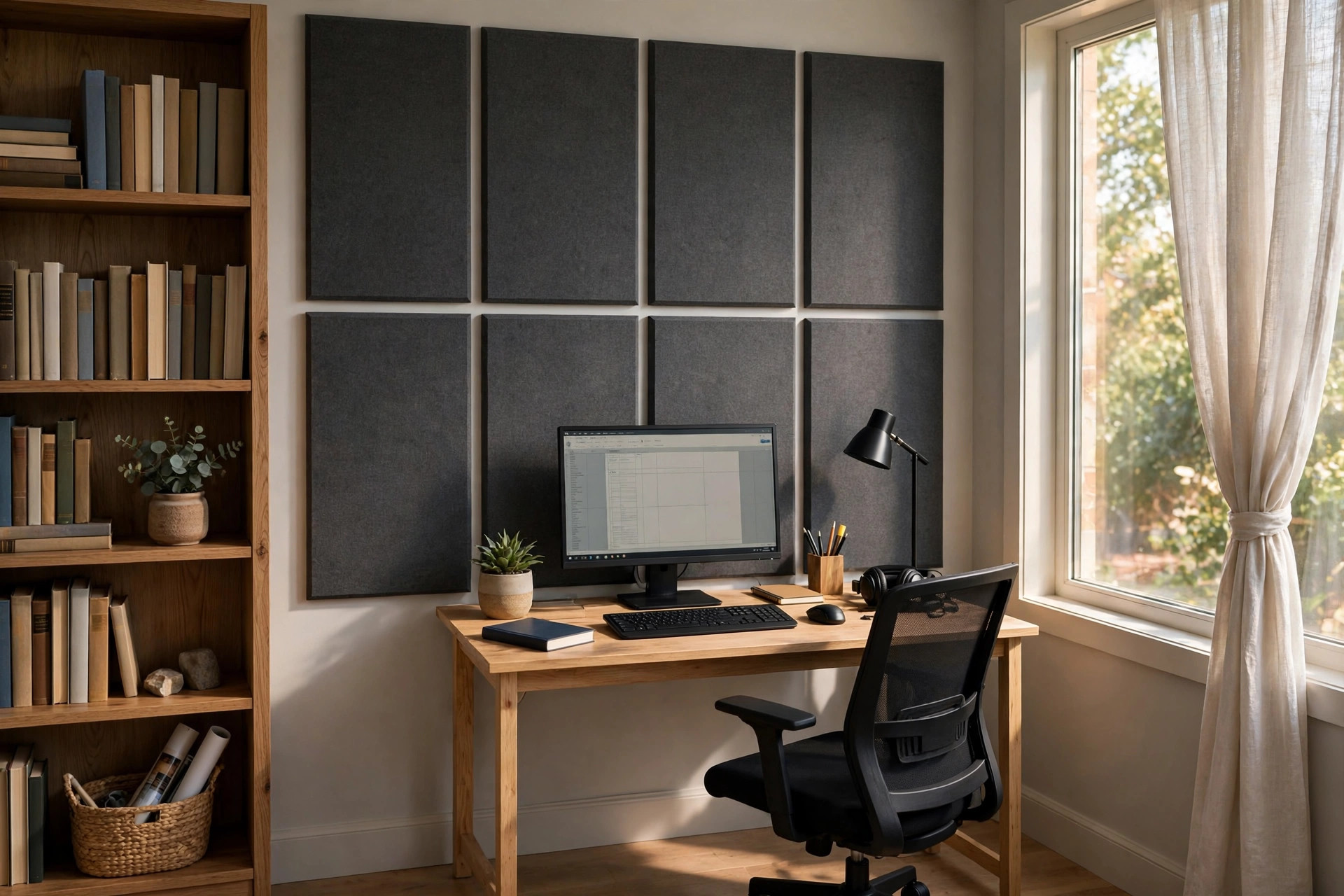
Think of a wall like a mirror for sound. A bare wall is a clean mirror. An acoustic panel is like a dark cloth over the mirror. The sound hits the cloth and stops. One or two panels will not change much. But eight or twelve panels will change the room in a clear way. Claps stop ringing. Voices sound warm and full.
Panels work best on mid and high sounds. These are the sounds of human speech. That is lucky. Speech is what you want to fix in a home office. Low bass notes are harder to trap. They need thick panels or special bass traps. Most home workers do not need bass traps. Standard panels cover voice work well.
What to Look for When You Choose
The first thing to check is the noise rating. Good panels list an NRC score. NRC means noise reduction coefficient. The scale runs from zero to one. Zero means the panel reflects all sound. One means it absorbs all sound. For home office acoustic panels to reduce echo, look for an NRC of 0.8 or higher. Higher is better.
The second thing is thickness. A panel that is one inch thick works on high tones. A panel that is two inches thick works on more of the voice range. Thicker panels cost more. They also stick out further from the wall. Two inches is a good middle choice for most rooms.
The third thing is material. The best panels use fiberglass or mineral wool inside a fabric cover. These materials absorb well. Foam panels also exist. Foam is light and cheap. It helps with high tones but does less for the full voice range. Foam also ages faster. It can turn yellow and crumble after some years.
The fourth thing is fire safety. Check for a fire rating on the label. Class A is the top rating for wall materials. It means the panel resists flame spread. This matters in a home. Many rental homes and condos ask for rated materials.
The fifth thing is looks. Panels sit on your wall for years. Pick a color that fits your room. Many makers sell panels in gray, beige, blue, and charcoal. Some sell patterned sets that look like art. A panel that looks good will stay up. A panel that looks ugly will end up in a closet.
Types of Acoustic Panels
Fiberglass panels
Fiberglass panels are the classic choice. A board of compressed glass fiber sits inside a fabric frame. They are light for their size. They absorb a wide range of tones. Most have an NRC of 0.9 or better. They cost more than foam. They last longer too. Many offices and schools use them for that reason.
Mineral wool panels
Mineral wool is made from melted rock spun into fibers. Panels made from it are dense and strong. They absorb sound much like fiberglass. Some makers prefer mineral wool because it holds its shape well. It also resists moisture better than some other fills. These panels often carry good fire ratings.
Acoustic foam panels
Foam panels are the budget pick. They come in wedge or pyramid shapes. The shape gives more surface to catch sound. Foam is light and easy to glue to a wall. It works best on high tones. It does less for low mid tones. Foam also stains and fades in sun. It is a fair choice for a small budget or a rental.
Fabric-wrapped art panels
Some companies print photos or designs on acoustic fabric. The panel hangs like a picture. It absorbs sound and decorates at once. These cost more than plain panels. They solve the look problem in one step. They are a good pick if your video calls show the wall behind you.
Wood slat panels
Wood slat panels mix thin wood strips with an acoustic felt back. They look warm and modern. They absorb less than full fiberglass panels. They still help with echo. Many buyers pick them for style first and sound second. They cost the most of the common types.
Free-standing panels and baffles
Some panels stand on the floor or hang from the ceiling. These help when you cannot put holes in a wall. A floor screen behind a desk blocks some echo. Ceiling baffles catch sound that bounces up. They cost more and take floor space. They are useful in shared rooms.
How Many Panels You Need
A common rule says to cover about one fifth of the wall space in a small room. A 10 by 12 foot office has about 440 square feet of wall space. One fifth of that is about 88 square feet. That is roughly twenty-two panels that are 2 by 2 feet. That sounds like a lot. In practice, most people start with eight to twelve panels.
Start with the wall behind you and the wall you face. These two walls make the biggest reflections. Add panels to the side walls if echo remains. Put a panel or two on the ceiling above your desk if the room still rings. Test as you go. Clap your hands and listen. When the clap sounds short and dry, you have enough.
Renters can use panels that hang on removable hooks. Some panels ship with sticky mounting strips. These strips come off clean when you move. Light foam panels work well with these strips. Heavier fiberglass panels need real hooks or screws. Check your lease before you drill.
Where to Place the Panels
Place panels at the height where sound bounces. Sit at your desk. Have a friend hold a mirror flat on the wall. Move the mirror until you see your speaker or your mouth in it from your seat. That spot is a reflection point. Put a panel there. This trick finds the spots that matter most.
The wall behind your video camera matters too. A hard wall behind you throws echo into your mic. It also looks plain on camera. Panels there fix sound and looks at once. Many remote workers build a small panel wall behind the desk. It reads as a tidy, pro backdrop.
Do not forget the ceiling. Sound bounces off a low ceiling fast. A few panels over the desk help a lot. The floor matters less if you have a rug. A thick rug cuts floor bounce. Hard tile or wood floors are the worst for echo. A rug plus wall panels is a strong pair.
Keep panels away from heat. Do not hang them over a radiator or a space heater. Leave space around lamps that get hot. Check the maker label for heat limits. This is basic care but easy to forget.
Cost and Price
Prices run wide. A pack of twelve foam panels can cost 30 to 60 dollars. Plain fiberglass panels run 40 to 120 dollars for a pack of six. Fabric-wrapped art panels can run 60 to 150 dollars each. Wood slat panels run 80 to 200 dollars per panel or more.
Count the full project, not one panel. A twelve-panel fiberglass set with mounting hardware may run 150 to 300 dollars. That is a fair price for a full small room. A foam-only setup may run under 100 dollars. An art-panel setup can run past 500 dollars.
Watch for hidden costs. Mounting strips, hooks, and glue add 10 to 30 dollars. If you hire a handyman to hang panels, add 100 to 200 dollars. Most people hang their own. A level, a tape measure, and an hour of time are all you need.
Quality pays off over time. Cheap foam may need replacement in three to five years. Good fiberglass panels last ten years or more. Buy the best you can afford. Your ears will use them every workday.
Care and Upkeep
Acoustic panels need little care. Dust them with a soft brush or a vacuum with a brush head. Do this every month or two. Fabric covers can take a light lint roller. Foam panels can take a soft dry cloth.
Do not soak the panels. Water can stain the fabric and warp the fill. If a panel gets a spot, dab it with a damp cloth. Let it dry in open air. Do not use strong cleaners. They can break down the fibers.
Check the mounts once a year. Sticky strips can loosen in heat. Tighten screws if a panel sags. A fallen panel can break or hurt a foot. A quick check takes five minutes.
Keep panels out of direct sun when you can. Sun fades fabric colors. It also breaks down foam faster. If your office faces south, use blinds or pick panels for that wall in a light color that hides fade.
Pets can be a problem. Cats love to scratch fabric panels. If your cat works with you, place panels high on the wall. Or pick panels with a tight, scratch-proof fabric. Dogs are less of a risk but a wagging tail can knock a floor panel.
Safety Notes
Fire rating is the top safety point. Look for Class A or Class 1 on the label. This means the panel was tested for flame spread. Cheap foam without a rating can burn fast. Keep unrated foam away from kitchens and heaters.
Mounting safety comes next. A 2 by 4 foot fiberglass panel can weigh 8 to 12 pounds. Use the right hook for the weight. Drywall anchors hold more than plain nails. If a panel hangs over your desk, make sure it is secure. A falling panel can hit your head or your screen.
Dust and fibers are a small concern. Fiberglass panels are sealed in fabric. The seal keeps fibers in. Do not cut a panel open indoors. If you must trim one, wear a mask and gloves. Work outside if you can. Wash your hands after.
Renters should check lease rules. Some leases ban wall anchors. Removable strips solve this. Keep the panel weight light if you use strips. Follow the strip rating. A panel that falls and dents the floor can cost you a deposit.
Common Mistakes to Avoid
The biggest mistake is buying too few panels. Two panels on one wall will not fix a room. Sound just bounces off the other walls. Plan for at least eight panels in a small office. More is fine.
The second mistake is putting panels in the wrong spots. Random art-like placement looks nice but may miss reflection points. Use the mirror trick. Put panels where sound actually bounces.
The third mistake is mixing too many thin foam pieces with no plan. A wall of thin foam helps a little. The same money in fewer, thicker panels helps more. Thickness beats coverage when the budget is tight.
The fourth mistake is forgetting the door and window. A hollow door leaks sound. A thin curtain does little. Heavy curtains help more. If echo comes from the window wall, hang a heavy curtain plus panels on the side walls.
The fifth mistake is expecting panels to block noise from outside. Panels absorb echo inside the room. They do not stop street noise or a loud neighbor. For that, you need mass and sealing, like a solid door and sealed gaps. Many buyers learn this the hard way.
Other Ways to Cut Echo
Panels are the best single fix. But they work even better with small extras. A thick rug is the cheapest helper. It kills floor bounce. Bookshelves full of books break up flat walls. Each book is a small sound trap. A full shelf works well.
Soft chairs and a couch help too. Hard plastic chairs reflect sound. A fabric chair absorbs it. Curtains beat bare blinds. A heavy curtain over a window cuts both echo and outside noise.
A noise cancelling headset for home office meetings is a smart partner to panels. Panels fix the room. The headset fixes what your mic picks up. Together they give clean, pro audio on every call.
If you share the room, a home office partition divider for a shared room adds both privacy and sound control. A fabric divider absorbs some sound. It also blocks sight lines. It is not a wall, but it helps.
Small noise sources add up. A quiet keyboard for a shared home office space keeps typing clicks low. Less noise in means less echo out. These small picks stack with panels for a calm room.
Makers of office furniture study sound too. Brands like Herman Miller and Steelcase publish guides on workplace acoustics. Big stores like IKEA and Wayfair sell rugs, curtains, and soft goods that pair with panels. Review sites like The Spruce explain room treatment in plain steps. Test labs like Wirecutter and PCMag test mics and headsets for home offices. Desk makers like UPLIFT Desk cover the ergo side of the room. Use these sources to plan the whole space, not just the walls.
FAQ
Do acoustic panels really reduce echo?
Yes. Good panels with a high NRC rating absorb the reflections that make echo. You can hear the change with a simple clap test before and after. They do not block outside noise. They clean up sound inside the room.
How long does it take to hang them?
Most people finish in one to two hours. Plan the layout first. Mark spots with painter tape. Then hang. Removable strips are fastest. Screws and anchors take a bit longer but hold heavy panels well.
Will panels help my video calls?
Yes. This is the top reason home workers buy them. Panels cut the hollow, roomy sound that cheap mics pick up. Your voice sounds closer and clearer. Clients notice the change at once.
Can I use acoustic panels in a rental?
Yes. Pick light panels and hang them with removable strips rated for the weight. When you move, the strips pull off clean. Keep the packaging so you can move the panels to the next home.
Do I need to cover the whole wall?
No. Cover about one fifth of the wall area in a small room for a clear change. Start with the wall behind you and the wall you face. Add more only if the clap test still rings.
Are foam panels safe?
Foam panels with a fire rating are fine on walls away from heat. Unrated foam can burn fast, so check the label. Keep all foam away from heaters, stoves, and hot lamps. When in doubt, pick fiberglass or mineral wool with a Class A rating.
A Short Final Word
Echo is a small problem with a simple fix. Home office acoustic panels to reduce echo turn a hollow room into a calm workspace. Start with eight to twelve panels. Put them where sound bounces. Pick a safe fire rating. Add a rug and heavy curtains if you can. Your calls will sound better. Your room will feel quieter. And your workdays will feel a little easier.
References
Herman Miller. (n.d.). Office furniture and ergonomic seating. https://www.hermanmiller.com IKEA. (n.d.). Home furnishings. https://www.ikea.com PCMag. (n.d.). Technology product reviews. https://www.pcmag.com Steelcase. (n.d.). Office furniture and workplace research. https://www.steelcase.com The Spruce. (n.d.). Home and garden advice. https://www.thespruce.com UPLIFT Desk. (n.d.). Standing desks and ergonomic office furniture. https://www.uplift-desk.com Wayfair. (n.d.). Furniture and home goods. https://www.wayfair.com Wirecutter. (n.d.). Product reviews from The New York Times. https://www.nytimes.com/wirecutter
Was this guide helpful?

About Michael Thompson
The My Garden US editorial team writes practical, in-depth home and garden guides for American homeowners — tested advice, no fluff.
You May Also Like

Floating Shelf Desk for Tiny Bedroom Office: A Simple Guide
August 14, 2026 0 views
Small Standing Desk With Wheels for Mobility: What to Know Before You Buy
February 15, 2026 0 views
Best Whiteboard Calendar for Home Office Wall
July 27, 2026 0 views