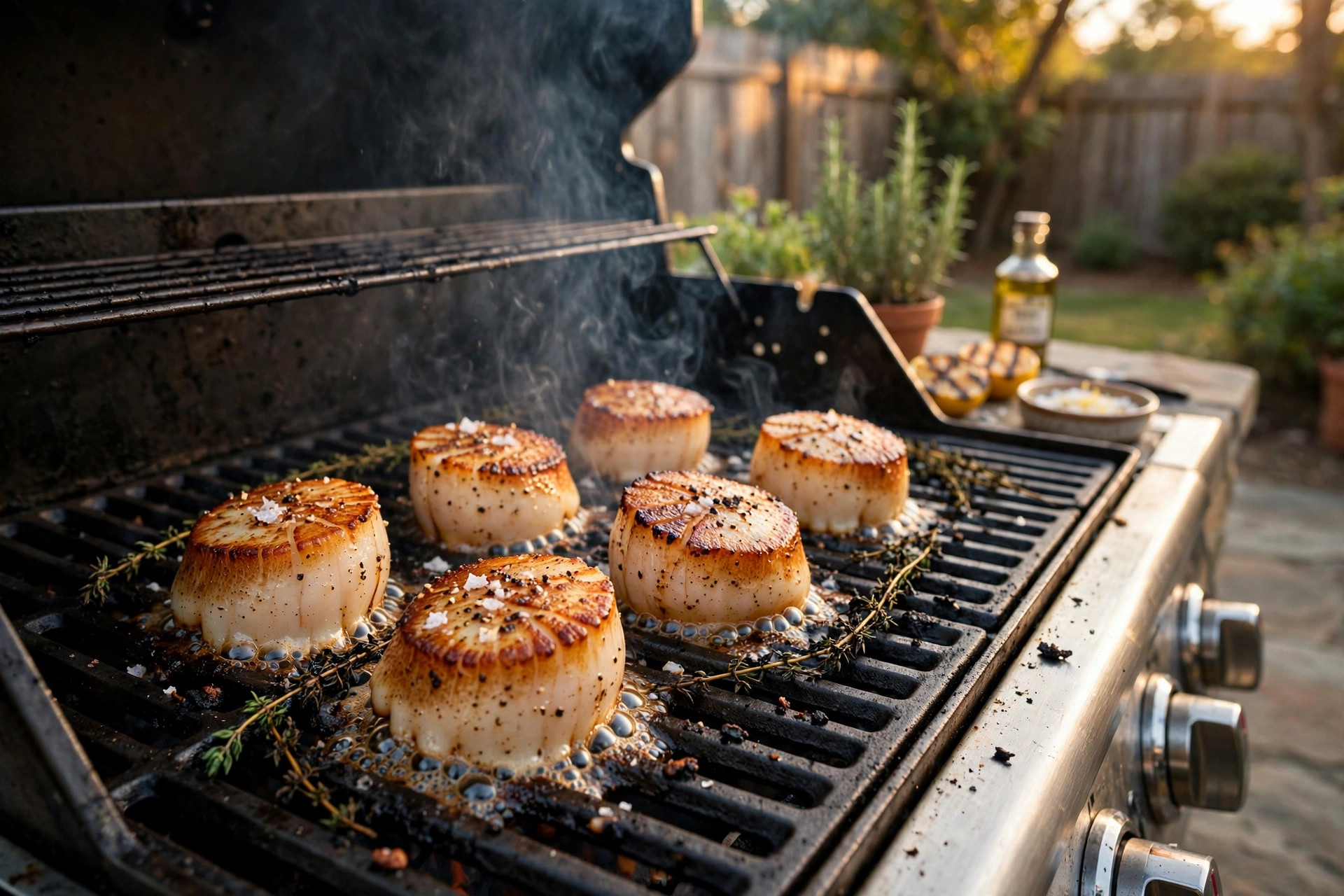
Scallops are one of the finest things a home cook can put on a grill. They are sweet, tender, and ready in minutes. But they are also easy to spoil. One extra minute of heat turns a soft, juicy scallop into a small rubber ball. Learning how to grill scallops without overcooking is mostly a matter of heat control, dry surfaces, and good timing.
This guide walks through the full process: which scallops to buy, how to set up your grill, and how to tell when they are done.
Why Scallops Overcook So Fast
A scallop is almost pure protein with very little fat. That is why it tastes so clean and sweet. It is also why it cooks so quickly. Heat moves through the flesh in a matter of minutes. Most steaks can rest on a grill for ten minutes or more. Scallops need about two to three minutes per side, sometimes less.
Two things push scallops past the point of no return. The first is wetness. A damp scallop steams instead of sears. It sits in its own juice and needs more time on the heat, which dries out the inside before the outside browns. The second is a cool grill. A grill that is not hot enough forces you to wait, and the waiting cooks the center to toughness.
The fix is simple. Start with dry scallops. Start with a very hot grill. Work fast, and take the scallops off the heat as soon as the centers turn opaque.
Buying the Right Scallops: How to Grill Scallops Without Overcooking
Dry Scallops vs. Wet Scallops
Scallops are sold two ways. Dry scallops are packed without chemical additives. They have a natural color that ranges from pale ivory to light tan. Wet scallops are treated with a solution of water and sodium tripolyphosphate. The solution plumps them up and makes them heavier, but it also makes them release liquid on the grill.
For grilling, dry scallops are the clear choice. They sear instead of steam. They brown faster and taste cleaner. If your fish market does not label them, ask the person behind the counter. A good shop will know. When seafood grilling guides explain seafood basics, they point to this difference as the single most important choice for grill cooks.
Bay Scallops vs. Sea Scallops
Sea scallops are the large ones, about two inches across. Bay scallops are small, about the size of a coin. For direct grilling, use sea scallops. Their size gives you a margin of error. You can get a deep brown crust before the center firms up. Bay scallops cook through before they brown, so they are better suited to sautés and broils.
Choose scallops of similar size so they all finish at the same time. Avoid any that smell like strong ammonia or look gray and cloudy. Fresh scallops should smell faintly of the sea and nothing more.
How to Prep Scallops for the Grill
Good prep takes ten minutes and pays off in the result. Start by rinsing the scallops under cold water, then laying them on paper towels. Pat the tops dry too. Press firmly but gently. Some cooks go through two rounds of towels to get the surface as dry as possible. A dry surface is what lets the crust form.
Next, remove the small side muscle if it is still attached. This little flap on the side, sometimes called the foot, feels tougher than the rest. Pinch it and pull; it comes off easily. Check each one.
Season simply. Brush both flat sides with a thin coat of oil, then sprinkle with salt and pepper. Heavy spice blends can hide the sweet flavor and may burn on hot grates. If you want more flavor, save sauces and herb butters for after the scallops leave the grill. Cooks who study direct-heat cooking tips often note that simple seasoning works best for delicate seafood.
Setting Up the Grill
Heat Level
The grill should be hot. On a gas grill, set the burners to high and close the lid for ten to fifteen minutes. On a charcoal grill, spread a full chimney of lit coals in a single hot layer. You want surface heat near 500 degrees Fahrenheit or above. Hotter is better here, within reason, because the goal is a fast sear.
Some cooks like a two-zone fire, with one side blazing hot and the other side cooler. This gives you a safe zone if flare-ups start.
Clean and Oil the Grates
A clean grate is non-negotiable. Brush it hard with a wire brush while it is hot. Scrub until the wires run clear and the metal shines. If you are unsure how to keep grates in good shape, our guide on how to season cast iron grill grates covers the basics step by step.
Then oil the grates. Fold a paper towel, grip it with long tongs, dip it in cooking oil with a high smoke point, and rub it over the bars. Peanut oil and vegetable oil work well. The oil fills the tiny gaps in the metal and keeps the scallops from sticking. A stuck scallop tears, and a torn scallop overcooks while you fight with the spatula.
Skewers or Direct on the Grate
You have two choices. You can lay scallops right on the oiled grate, or you can thread them onto skewers. Skewers make flipping easy and keep small scallops from falling through the bars. If you use wooden skewers, soak them in water for at least thirty minutes so they do not catch fire.
Thread sea scallops through the sides, not through the flat faces. Two skewers run side by side work even better, because they hold each scallop flat and stop it from spinning when you turn it. Flat metal skewers do the same job. Equipment reviewers at independent testing labs have covered skewer styles in their grilling guides, and the flat designs win for control.
Direct grilling gives the best crust, since the full surface touches the hot metal. If your grates have wide gaps, a grill basket or a piece of foil with holes punched in it is a fair compromise.
The Grilling Method Step by Step
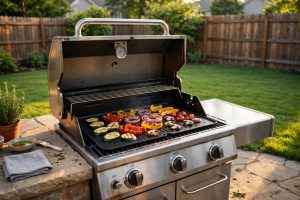
1. Place the scallops on the hot grill in a single layer. Leave space between them. Crowding traps steam. 2. Close the lid. Let them cook undisturbed for two minutes. 3. Open the lid and check the edges. When the bottom is golden brown and releases easily, flip each scallop once. 4. Cook one to two minutes more on the second side. 5. Lift one scallop and cut it open to check. The center should be just barely opaque, not milky white and not clear. Another sign of doneness: the flesh firms up slightly but still gives when pressed.
Total time is usually four to five minutes. On a very hot grill, three and a half can be enough. The biggest error is walking away. Stay at the grill. Scallops change quickly in the last minute.
If you like precision, a fast-read thermometer can help. A wireless unit that reads from across the yard is handy for longer cooks, as described in our roundup of the best bbq thermometer wireless for grilling. For scallops, though, touch and sight beat numbers. An internal temperature near 115 to 120 degrees Fahrenheit at pull time gives a warm, just-cooked center that finishes on the plate.
How to Grill Scallops Without Overcooking: The 7 Rules
1. Buy dry, sea-sized scallops. Wet scallops steam; dry ones sear. 2. Dry the surface completely. Paper towels are your best tool. 3. Get the grill truly hot. Lukewarm grates are the top cause of rubbery scallops. 4. Clean and oil the grates. Sticking ruins the timing. 5. Do not move them. Let the crust form before flipping. 6. Flip once, and only once. Every flip adds uneven cooking. 7. Pull them early. Carryover heat finishes the job off the grill.
Carryover heat deserves stress. A scallop keeps cooking for a minute or two after it leaves the grate. If the center looks perfect on the grill, it will be overdone on the plate. Take the scallops off when the center still shows a faint hint of translucence. Within a minute, it will turn to full opaqueness as it rests.
Types of Grills and How They Handle Scallops
Gas grills offer steady, even heat and easy temperature control. They are the simplest option for seafood. Retailers like home improvement stores carry a wide range of sizes, so most homes have one that works.
Charcoal grills run hotter and add a light smoke flavor. They need more attention, since the heat fades over time. For scallops, build a hot, even bed of coals and work quickly.
Kamado-style cookers, covered in guides from makers like ceramic grill manufacturers, hold heat well and can reach searing temperatures.
Pellet grills are built for slow smoking, but many models now reach high heat with a sear setting. Pellet grill makers publish tips for high-heat cooking that apply to seafood.
Flat-top griddles deserve a mention. They put the whole scallop surface in contact with hot metal, which gives an even, deep crust. Outdoor griddle guides from gas grill makers show how a flat top handles delicate foods without the sticking problems of open grates.
Electric grills and infrared models work fine too, as long as they get hot enough. The grill type matters less than the heat and the prep.
Cost and Price
Scallops are a luxury seafood. In most American markets, dry sea scallops run about twenty to thirty-five dollars per pound. Wet scallops cost less, sometimes under twenty dollars, but you are buying water weight.
Plan on four to five large scallops per person as an appetizer, or six to eight for a main course. A bag of skewers, a bottle of oil, and a grill brush are the only other costs, and most grill owners have those already. Guides from premium grill brands and backyard cooking sites remind buyers to factor in fuel, but a short scallop cook uses very little of it.
Buying frozen scallops can save money. Frozen-at-sea scallops are often excellent, since they are processed hours after harvest. Thaw them slowly in the refrigerator overnight, then dry them well before grilling. Do not thaw them in the microwave, which starts cooking the edges.
Care and Upkeep
After the Cook
Scrape the grates while they are still hot. Seafood leaves a sticky residue that hardens as the grill cools. A stiff brush and a pass with an oiled towel keep the bars ready for the next cook.
Empty the drip pan if your gas grill has one. Burnt seafood drippings smell strong on the next lighting. A major charcoal grill maker publishes cleaning checklists that fit most kettle and gas models.
Storing Leftovers
Grilled scallops are best eaten right away. If you have leftovers, cool them quickly and refrigerate them in a sealed container. Eat them within a day. Reheat gently in a warm pan for less than a minute, or serve them cold over a salad. The microwave turns leftover scallops rubbery, so avoid it.
Safety
Food safety matters with seafood. Keep raw scallops cold, below forty degrees, until they hit the grill. Do not let them sit out on a warm patio for long. Wash your hands, cutting boards, and tongs after they touch the raw seafood.
Cross-contamination is the main risk at a cookout. Use one set of tongs for placing raw scallops and a clean set for removing the cooked ones. If you marinated the scallops, do not serve the leftover marinade as a sauce unless you boil it first.
Keep a spray bottle of water near the grill. Oil brushed on scallops can drip and cause small flare-ups. A quick spritz knocks them down without cooling the grates.
FAQ
How long do scallops take on the grill?
About four to five minutes total for large sea scallops over high heat. Two to three minutes on the first side, then one to two minutes after flipping. Times vary with grill heat and scallop size, so watch the color and firmness rather than the clock.
Should I grill scallops with the lid open or closed?
Closed is better. The lid traps heat and cooks the top of the scallop while the bottom sears. Open the lid only to flip and to check doneness near the end.
Why did my scallops stick to the grill?
Three common causes: the grill was not hot enough, the grates were not clean, or the grates were not oiled. Also, flipping too early tears the crust before it releases. Let the scallop sit until the browned surface lets go on its own.
Can I grill frozen scallops?
Thaw them first. Frozen scallops release too much water and cook unevenly. Thaw overnight in the refrigerator, pat them fully dry, and grill them the same way as fresh ones.
What is the best oil for grilling scallops?
Use a neutral oil with a high smoke point, such as vegetable oil, peanut oil, or avocado oil. Olive oil is fine for flavor but can smoke heavily on a very hot grill. Brush it on the scallops, not just the grates.
Do I need to marinate scallops before grilling?
No. A marinade adds surface moisture, which works against a good sear. Season with oil, salt, and pepper right before grilling. Serve lemon wedges, melted butter, or a light herb sauce on the side instead.
A Short Final Word
Grilled scallops reward simple methods. Choose dry sea scallops. Dry them well. Heat the grill until it is fierce. Oil the clean grates. Sear, flip once, and pull them a moment early. If you master that rhythm, you will never serve a rubbery scallop again.
For cooks who want to practice heat control on other foods first, our guide on how to grill steak on gas grill teaches the same hot-and-fast method on a more forgiving cut.
References
AmazingRibs.com. (n.d.). Barbecue and grilling science. https://www.amazingribs.com Big Green Egg. (n.d.). Kamado grills and outdoor cooking. https://www.biggreenegg.com Broil King. (n.d.). Gas and charcoal grills. https://www.broilkingbbq.com Char-Broil. (n.d.). Gas and charcoal grills. https://www.charbroil.com Consumer Reports. (n.d.). Product reviews and ratings. https://www.consumerreports.org Napoleon. (n.d.). Fireplaces, grills, and heating products. https://www.napoleon.com The Home Depot. (n.d.). Home improvement products. https://www.homedepot.com The Spruce Eats. (n.d.). Recipes and cooking guides. https://www.thespruceeats.com Traeger. (n.d.). Wood pellet grills. https://www.traeger.com Weber. (n.d.). Grills and outdoor cooking. https://www.weber.com
Was this guide helpful?

About Sarah Mitchell
The My Garden US editorial team writes practical, in-depth home and garden guides for American homeowners — tested advice, no fluff.