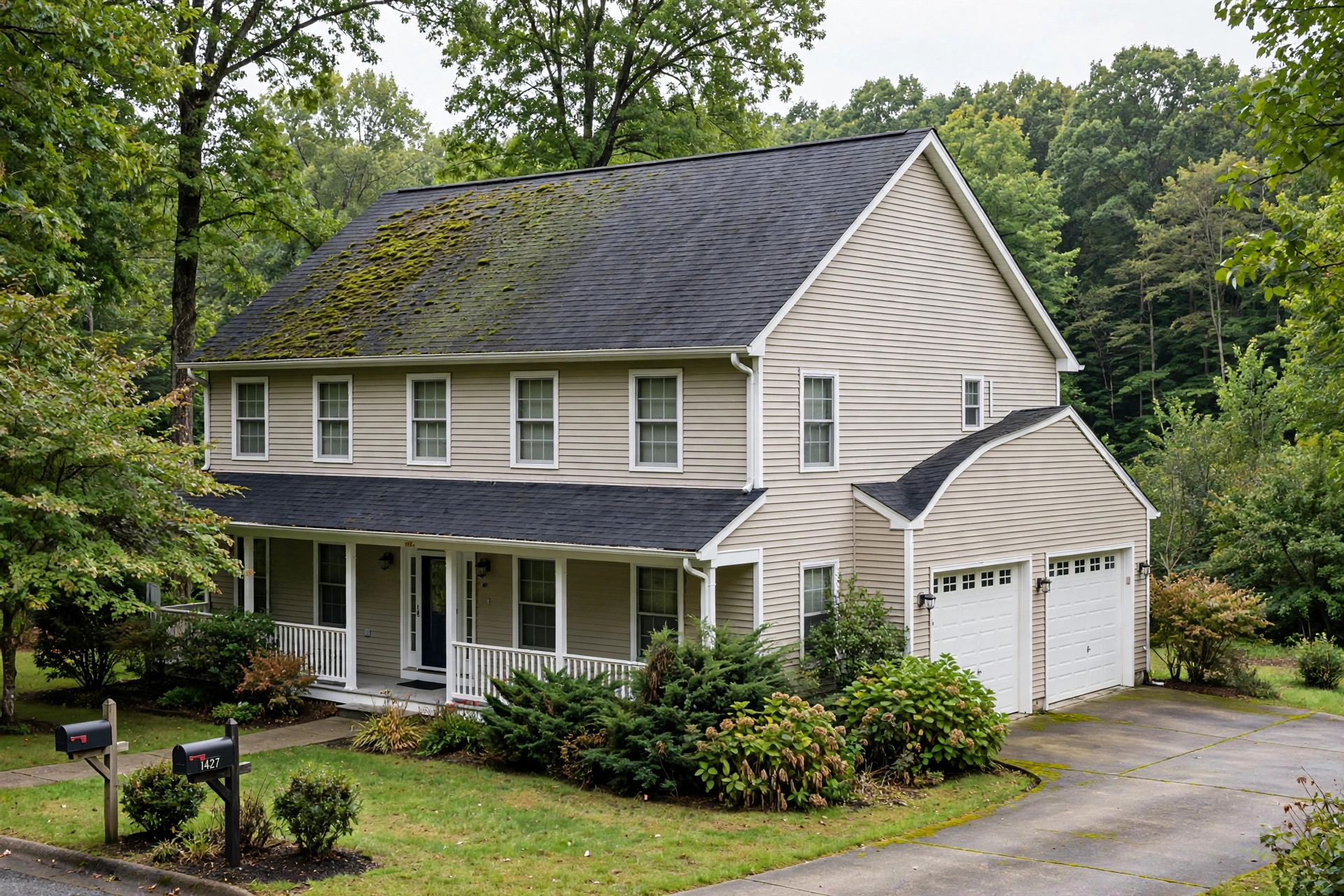

Moss on a roof looks harmless at first. A small green patch sits between the shingles, and you tell yourself it adds character. But moss holds water against the roof for days after every rain. That water works its way under the shingles and shortens the life of the roof. That is why so many homeowners search for the best roof moss removal services near me each spring and fall. A good service removes the moss, treats the roof so it does not grow back, and does the work without harming the shingles. This guide explains why moss matters, what the cleaning methods are, what to ask before you hire, and what the job should cost.
Why Moss on a Roof Matters
Moss grows on roofs that stay damp. North-facing slopes get less sun, so they dry slower. Trees that hang over the house drop shade and leaves, which feeds the moss. In wet regions like the Pacific Northwest and the Northeast, moss is a year-round problem. In drier states, it still appears on shaded porches and additions.
The damage is slow but real. Moss sends tiny rootlike threads into the shingle surface. These threads lift the edges of the shingles and let water creep underneath. The shingles then curl, crack, and lose their granules. A roof that might have lasted twenty-five years may need replacement in fifteen. Wood shake roofs suffer even faster, because moss keeps the wood wet and soft. Home inspectors flag heavy moss growth as a warning sign during a sale, so the problem can also hurt the value of a house. InterNACHI publishes roof inspection standards that treat thick moss as a defect worth reporting.
Moss also blocks water flow. It forms dams that hold rain in valleys and behind chimneys. The standing water can back up under the flashing and leak into the attic. From the ground, a mossy roof looks tired and neglected, which hurts curb appeal. None of this means you should panic over a single green spot. It means moss deserves the same attention you give to gutters and downspouts.
Types of Roof Moss Removal Methods: Best Roof Moss Removal Services near Me
There is more than one way to clean a roof. The best roof moss removal services near me usually offer soft washing or manual removal. Pressure washing has a place in home care, but it is rarely right for a roof.
Manual removal comes first. A worker climbs the roof with a soft brush or a plastic scraper and sweeps the moss loose by hand. This is slow work, but it is gentle. It suits roofs with thick, heavy growth where washing alone will not lift the moss. A careful worker brushes down the slope, never up, so the shingles are not lifted.
Soft wash cleaning follows the brushing. The company applies a low-pressure spray of water mixed with a cleaning agent, often sodium hypochlorite at a safe dilution or a dedicated moss killer. The solution kills the moss at the root and rinses away with garden-hose pressure. Soft washing cleans the whole surface without tearing off granules. This Old House has long covered roof cleaning methods and advises against aggressive washing of asphalt shingles.
Zinc and copper strips form a third option. Long metal strips are nailed near the ridge of the roof. Each rain washes a small amount of metal ions down the slope, and the ions discourage moss from growing back. Strips work best as prevention after a deep cleaning, not as a cure for heavy growth.
Pressure washing is the method to avoid. A pressure washer can strip granules off asphalt shingles in seconds. Granules are the gritty coating that protects the shingle from sun and weather. Once they wash away, the shingle wears out fast. Any company that wants to blast your roof with high pressure should be turned away. Consumer guidance at The Spruce explains why gentle cleaning protects the roof surface.
What to Look For in a Roof Moss Removal Service
Finding the best roof moss removal services near me takes a little homework. Start with reputation. Ask neighbors who have had the work done. Look for companies with steady reviews over several years, not a brand-new listing with a handful of five-star notes. A company that only cleans roofs, or that specializes in exterior cleaning, will usually do better work than a general handyman with a ladder.
Insurance matters more here than in most jobs. Roof work is risky, and a fall can cause serious injury. Ask the company to show proof of general liability insurance and workers compensation. A careful company sends this without argument. If the owner hesitates, move on.
Ask about the method before anyone climbs a ladder. A good company explains that it will brush first and soft wash second, and it can tell you which cleaning products it uses. Ask whether the products are safe for nearby plants, pets, and gutters. Ask how the company protects the landscaping during the job. Angi lists local roof cleaning professionals and lets you compare ratings and responses.
Get everything in writing. The quote should list the roof size or square footage, the cleaning method, the treatment used to prevent regrowth, and whether gutter cleaning is included. Moss washes off the roof and into the gutters, so a service that cleans the gutters as part of the job saves you a second call. It also helps to hire a chimney sweep at the same visit if your chimney needs care; you can read about chimney sweep services near you before you decide.
Watch for red flags. Companies that knock on doors after a storm and demand a decision on the spot are a risk. Quotes given without measuring or looking at the roof are guesses. Prices far below every other bid often mean skipped steps or no insurance. A calm, detailed, written estimate is the mark of a professional.
Cost and Price Guide
The cost of moss removal depends on roof size, roof pitch, the weight of the growth, and the region. National averages for a professional roof cleaning run from about 250 dollars to 800 dollars for a typical single-family home. Small, walkable roofs with light growth sit at the low end. Large, steep roofs with years of heavy moss sit at the high end.
Treatment for regrowth adds to the bill. A zinc sulfate or potassium soap treatment after the cleaning may add 100 to 300 dollars. Zinc strip installation near the ridge costs more, often 300 to 600 dollars depending on the length of the roof. Some companies sell a yearly maintenance plan, in which they return each spring for a light treatment. These plans cost less per visit than a full cleaning and keep the roof clear.
Get three written quotes before you choose. Ask each company to break down labor, treatment, and extras. A slightly higher quote from an insured specialist with a strong method is worth more than a cheap quote from a crew that pressure washes. If you want a broader sense of what exterior service pricing looks like, a window cleaning service companies cost guide shows how similar home services are priced.
A note on do-it-yourself products: hardware stores sell moss killers you can apply from the ground with a hose-end sprayer. These products work on light growth, but climbing the roof yourself is dangerous, and walking on wet shingles can break them. If the roof is steep or the growth is thick, leave the work to a crew with harnesses and training. You can still save money by comparing roof moss remover products at Lowe’s and moss treatment products at Home Depot to understand what the pros are applying.
Care and Upkeep After Removal
A clean roof stays clean only if the conditions change. Trim back tree branches that shade the roof. Sunlight is the cheapest moss killer there is. Keep the gutters clear so water drains instead of backing up under the shingles. Leaves that sit on the roof hold moisture and feed new growth, so blow them off in the fall. If you prefer to handle gutter work yourself, look into commercial-grade gutter cleaning tools to make the job safer from a ladder.
Plan an inspection once a year. Walk around the house with binoculars and look at the north slopes and shaded valleys. Catching a thin green film early lets you treat it with a spray before it becomes a thick mat. Many homeowners schedule the check at the same time as the spring yard cleanup.
Zinc or copper strips need a check now and then. They work for years, but they can loosen in wind or get buried under debris. Brush leaves off them in the fall. If you had a prevention treatment applied, ask the company how long it lasts and when to repeat it. A light reapplication every one to two years is common in damp climates. Family Handyman offers practical roof care tips that fit this yearly rhythm.
Safety Concerns With Roof Moss Removal
Roof work is one of the most dangerous jobs around the home. Falls from roofs injure thousands of people each year. Wet moss makes shingles slick, and algae-covered surfaces are worse. This is the strongest reason to hire a professional. A trained crew uses harnesses, roof anchors, and slip-resistant footwear. They know how to walk a slope without breaking shingles.
Chemical safety matters too. Moss killers and bleach-based washes can harm plants, stain siding, and irritate skin and eyes. A good company wets down the landscaping before spraying, rinses plants afterward, and wears protective gear. The EPA publishes guidance on safe use of outdoor cleaning and pest control products, including how to protect nearby soil and water. If you live near a pond, stream, or well, mention it before the work starts so runoff is handled with care.
Pets and children should stay inside while the cleaning happens and until the roof is rinsed. Ask the company how long to wait. Do not let anyone drink from an outdoor faucet connected to the chemical spray line. These are simple steps, and a careful company walks you through them. Good Housekeeping cleaning advice also stresses rinsing plants and keeping pets clear during exterior chemical work.
Frequently Asked Questions
How often should I have moss removed from my roof? In damp regions, plan on a professional cleaning every two to three years, with a light prevention treatment each spring. In drier regions, a cleaning every four to five years may be enough. Yearly visual checks tell you when the time has come. Do not wait until the moss is an inch thick; heavy growth takes longer to remove and costs more.
Will moss removal damage my shingles? Not if the company uses the right method. Manual brushing and soft washing protect the shingle granules. Pressure washing is the main cause of damage. Ask the company directly whether it uses high-pressure equipment on roofs. If the answer is yes, choose someone else. A careful crew treats the roof like a surface to protect, not a driveway to blast.
Can I remove roof moss myself? You can treat light moss from the ground with a hose-end moss killer, and that is safe for most homeowners. Climbing the roof is where the risk starts. Slopes, wet surfaces, and loose shingles cause falls. If you must climb, use a stable ladder, wear soft rubber-soled shoes, and work with a partner holding the ladder. For anything more than a small patch, hire a professional.
How long does a professional moss removal take? Most homes take a half day. A simple roof with moderate growth may take two to three hours. A large or steep roof with heavy growth can take a full day, especially if the crew applies a prevention treatment and cleans the gutters. Weather can delay the work; rain and high wind make roof work unsafe.
Does moss grow back after removal? Yes, unless you change the conditions or apply prevention. Spores float in the air and land on every roof. Trimming trees, clearing leaves, and applying zinc treatments or metal strips slow the return. In very damp climates, some regrowth within two years is normal. That is why yearly treatment plans exist.
Is roof moss covered by homeowners insurance? Usually not. Insurance covers sudden damage, like a storm tearing off shingles. It does not cover slow wear from moss or algae. Worse, some policies can be affected if the owner neglects maintenance. Check your policy and ask your agent. Regular cleaning counts as maintenance, like painting or sealing a deck.
A Short Final Word
Moss removal is maintenance, not luxury. A clean roof drains water the way it should, lasts longer, and looks better. The best roof moss removal services near me are the ones that brush and soft wash, carry insurance, explain their method, and put the price in writing. Take an hour to get three quotes and ask the questions in this guide. That small effort protects one of the most costly parts of your home. Your roof shields everything under it. A little care from a good crew keeps it doing its job for years.
References
Angi. (n.d.). Home services marketplace. https://www.angi.com Family Handyman. (n.d.). DIY home repair and maintenance. https://www.familyhandyman.com Good Housekeeping. (n.d.). Product reviews and home advice. https://www.goodhousekeeping.com International Association of Certified Home Inspectors. (n.d.). Home inspection standards. https://www.nachi.org Lowe’s. (n.d.). Home improvement products. https://www.lowes.com The Home Depot. (n.d.). Home improvement products. https://www.homedepot.com The Spruce. (n.d.). Home and garden advice. https://www.thespruce.com This Old House. (n.d.). Home renovation guidance. https://www.thisoldhouse.com U.S. Environmental Protection Agency. (n.d.). Protecting human health and the environment. https://www.epa.gov
Was this guide helpful?

About Sarah Mitchell
The My Garden US editorial team writes practical, in-depth home and garden guides for American homeowners — tested advice, no fluff.
You May Also Like
Tile Grout Cleaning Machines Price Comparison USA
August 14, 2026 0 views
Quiet Hardwood Floor Buffers for Sale: What to Know Before You Buy
February 17, 2026 0 views
Reliable Move Out Cleaning Services in California: A Practical Guide for Renters
July 21, 2026 0 views