A brushed towel holder is a small piece of hardware that carries more weight than its size would suggest. It is used every day, it sits at eye level, and it is one of the first details a guest will notice in a bathroom. This brushed towel holders reviews buying guide usa is written for homeowners who want to compare the choices with a clear head: what the brushed finish really is, which types suit which rooms, what to pay, and how to keep the metal looking right for years.
Why a Brushed Towel Holder Deserves a Buying Guide
Towel hardware fails in quiet ways. A bar that wobbles because the mount was weak. A ring that holds only one thin towel. A finish that shows every water spot. A good choice begins with honest aims. You want a holder that fits your towels, matches your other fixtures, and stays firm on the wall.
The brushed finish is popular for practical reasons. It has a soft, matte sheen instead of a mirror shine. It hides fingerprints and small scratches better than polished chrome. It pairs well with brushed nickel faucets, cabinet pulls, and light fixtures, which is why many remodelers choose it as the unifying finish of a bathroom. Guides at The Spruce often point out that a single consistent finish makes a small bathroom feel planned rather than patched together.
What “Brushed” Really Means: Brushed Towel Holders Reviews Buying Guide Usa
A brushed finish is metal that has been finished with fine lines scratched into the surface in one direction. These lines soften reflections. The result is a warm, low-glare look. Brushed nickel is the most common base, though brushed stainless steel, brushed bronze, and brushed gold also appear in bathroom lines.
Do not confuse brushed with satin or matte black. Satin is smoother and slightly brighter. Matte black is a painted or coated finish, not a brushed metal at all. When reviews of towel hardware speak of a “brushed” piece, they usually mean brushed nickel or stainless with a directional grain.
Types of Brushed Towel Holders
Towel Bars
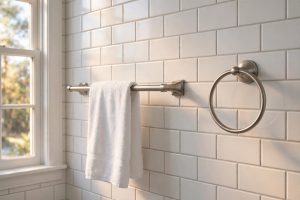
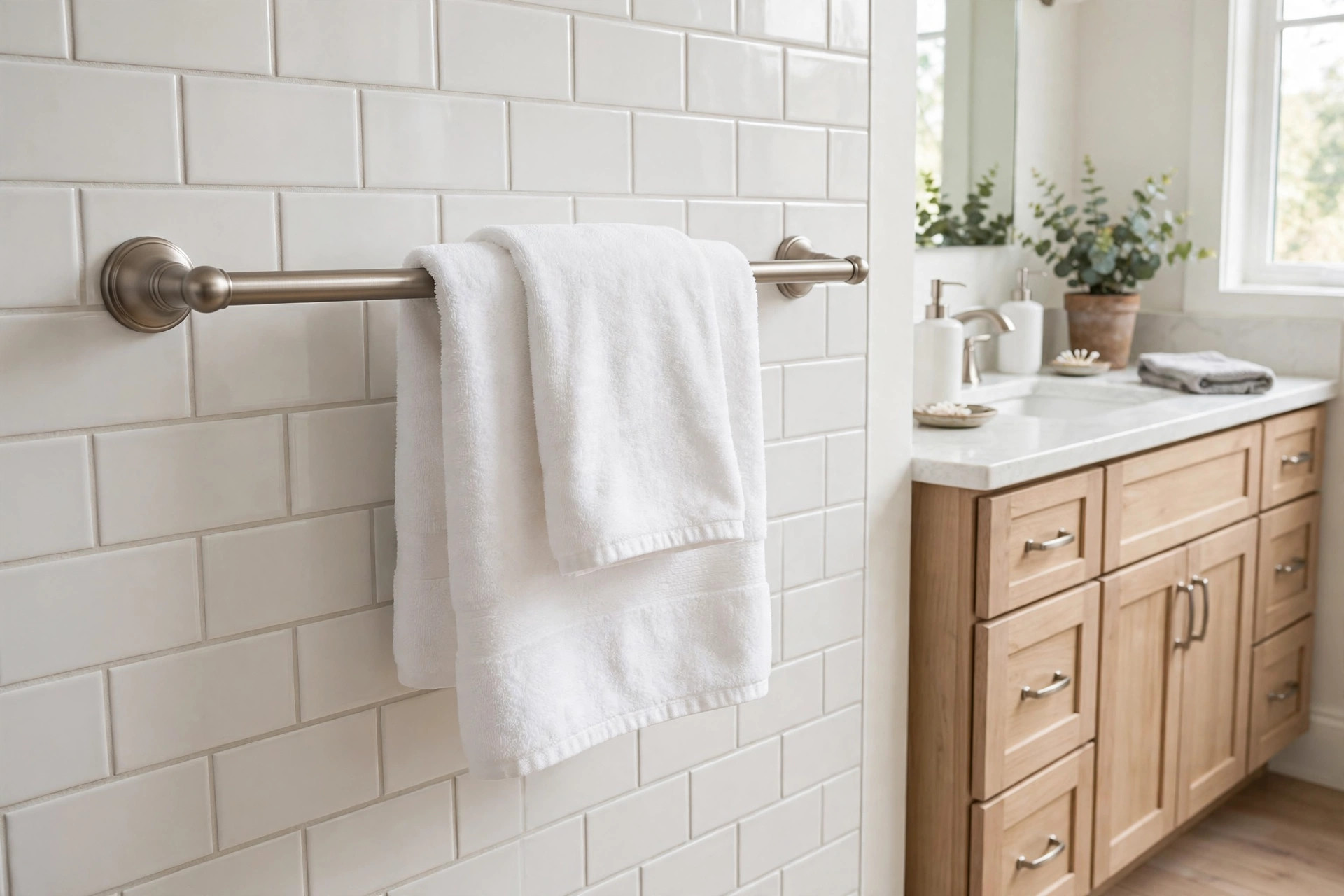
The towel bar is the standard choice. It is a horizontal bar between two mounts, usually 18 or 24 inches wide. It holds a full-size bath towel folded once, which allows air to move around the fabric. For a family bathroom, a 24-inch bar near the shower is the workhorse.
Towel Rings
A towel ring is a closed loop mounted on a small bracket. It suits hand towels and washcloths. Rings hang towels in a gathered shape, which dries slower than a bar. Place rings near the sink where quick drying is less of a concern. Most rings fit towels up to a medium hand towel size.
Double Bars and Pivoting Arms
Double towel bars stack two bars on one mount set, doubling capacity in the same wall space. Pivoting towel arms swing out from the wall and fold flat when not needed. Both suit small bathrooms and guest baths. They cost more, but they solve real space problems.
Towel Hooks
Hooks are simple, strong, and honest. One screw, one curve, one towel. They dry towels more slowly because the fabric bunches, but they are easy to mount and nearly impossible to break. In a busy family bath, a row of hooks behind the door often outlasts a bar.
Freestanding and Over-Door Options
Freestanding towel racks stand on the floor and need no wall holes. Over-door hooks hang from the top of the door. Both are useful in rented homes where drilling is not allowed. They are less steady than wall-mounted pieces, and over-door types can scratch paint if they shift.
How to Choose: What to Look For
Metal and Build Quality
The best towel holders are made of solid brass or solid stainless steel. Mid-range pieces use zinc alloy, which is strong enough for towel duty if the casting is clean. Avoid thin hollow tubing with a plastic core; it bends under a heavy wet bath sheet. In reviews, weight is a fair proxy for quality. A holder that feels light in the hand will feel lighter still after two years of use.
Manufacturers such as Moen and Delta publish the base metal of their hardware lines, and their bath collections keep the brushed finish consistent across bars, rings, and hooks. Kohler and American Standard take the same approach in their catalogues, which matters when you plan to buy the whole set from one line.
Finish Consistency
Buy the bar, ring, hooks, and other pieces from the same collection when you can. “Brushed nickel” is not a standard colour. One maker’s brushed nickel may run slightly warm, another slightly cool. A mixed set will show the difference in daylight. If you must mix brands, bring one piece to the store and hold the candidates side by side.
Mounting System
Look at how the piece fastens to the wall. The common method is a wall plate screwed into the stud or into a wall anchor, with a small set screw that locks the mount arm onto the plate. Better kits include a mounting template and screws rated for the load. The strongest approach is to screw directly into a stud or a blocking board. In drywall with no stud, use toggle bolts rather than the small plastic anchors that come in the box.
Size and Placement
Plan placement before you buy. A 24-inch bar needs clear wall space and room for a towel to hang without touching the vanity top. Standard height for a towel bar is about 48 inches from the floor. A towel ring sits about 50 to 52 inches high, within easy reach of the sink. Leave at least a few inches of clearance around each mount so the towel drapes free.
Brushed Towel Holders Reviews: What Buyers Report
Reviews of brushed towel hardware across American stores tell a consistent story. Retailer listings at Home Depot and Lowe’s show high ratings for solid-metal pieces from established plumbing brands, with complaints clustering around the same few points.
The most praised trait is the finish itself. Owners report that brushed surfaces show fewer water spots than polished chrome and fewer smudges than darker finishes. The second most praised trait is a firm mount. When a bar stays tight after a year of daily pulls, reviewers notice and say so.
The most common complaints are weak wall anchors, finish mismatch between pieces bought months apart, and set screws that work loose. A second common note concerns towel rings that are too small for thick hand towels; buyers advise measuring your towels before choosing a ring diameter. Step-by-step mounting guides at This Old House and Bob Vila show how proper anchors and stud mounting remove most of these complaints at the source.
Matching the Rest of the Room
A brushed towel holder rarely stands alone. It usually joins faucets, shower trim, drawer pulls, and the mirror frame. If you are planning a wider refresh, read our guide to brushed nickel faucets so the whole room speaks one finish language. For the shower side of the project, rain shower heads pair naturally with brushed trim. And if warmth matters in winter, bathroom towel warmers can join the same brushed family of hardware.
Cost and Price
Brushed towel hardware in the United States falls into clear bands.
– Budget, roughly 8 to 20 dollars: Zinc alloy or thin stainless, boxed sets sold by general brands. Fine for a rental or a quick refresh. Expect lighter metal and simpler mounts. – Mid-range, roughly 20 to 45 dollars: Solid metal from known bath brands, better mounting hardware, consistent finish within a collection. This is where most homeowners land, and it is the best value for a bathroom you plan to keep. – Premium, roughly 45 to 90 dollars: Heavy solid brass or thick stainless, designer styling, lifetime finish warranties from major makers. Worth it for a primary bathroom in a long-term home.
Buying the bar, ring, hook, and toilet paper holder as a set usually saves 15 to 25 percent over buying each piece alone. Design coverage at HGTV regularly notes that hardware sets also remove the guesswork of matching finishes.
Care and Upkeep
Brushed metal asks for little, and it punishes harsh treatment. Clean it with warm water and a soft cloth. A drop of mild dish soap handles most soil. Wipe in the direction of the grain so you do not leave crosswise marks.
Do not use bleach, ammonia, or abrasive powders. Do not use steel wool or scouring pads. Strong chemicals can dull the brushed grain or eat through the protective coating that some makers apply. Hard water spots respond to a cloth dampened with plain white vinegar, followed by a clean-water rinse and a dry wipe. Once a year, check the set screws on each mount and tighten them gently with the small wrench that came in the box. A minute of attention keeps a bar from developing the slow wobble that ruins many a towel holder.
Safety and Sound Mounting
A towel holder is not a grab bar and must never be used as one. Grab bars are built to carry body weight and are screwed into studs or solid blocking. A towel bar, even a strong one, can pull free and cause a fall if someone grabs it for balance. Keep this distinction clear in any bathroom used by older adults or children. When real support is needed, install a proper grab bar in a brushed finish so it matches the room while doing its job.
Mounting safety also means knowing what is in the wall. Keep clear of electrical runs when drilling. A small stud finder and a pencil mark take a minute and prevent an expensive mistake.
FAQ
Are brushed towel holders better than chrome? Neither is better in every way. Brushed finishes hide fingerprints and water spots more readily, and many owners prefer the softer look. Chrome is brighter and sometimes cheaper. Choose the finish that matches the rest of your bathroom, since a mixed room draws the eye for the wrong reason.
Will a brushed nickel towel holder match other brands’ brushed nickel? Not always. Each maker tones its finish slightly differently. The safest course is to buy all pieces from one collection. If you mix brands, compare pieces in daylight before you mount anything.
What size towel bar do I need? For a standard bath towel, a 24-inch bar is the common choice. An 18-inch bar suits hand towels and guest baths. Measure your wall space first, and leave room for the towel to hang free of the vanity or door swing.
Can I install a towel holder myself? Most homeowners can. The work is marking level lines, drilling pilot holes, setting anchors, and tightening set screws. The whole job takes well under an hour for one piece. If your walls are tile or plaster, work slowly with the right drill bit, or call a handyman.
How do I stop a towel bar from coming loose? Nearly every loose bar traces back to the mount. Screw into a stud when possible. In drywall, replace the small plastic anchors with toggle bolts. Check the set screw twice a year. A bar mounted this way stays put for the life of the bathroom.
Do brushed finishes wear off over time? On quality pieces, no. The brushed texture is in the metal itself, often with a clear protective layer. Cheap pieces with a thin plated coating can show wear at high-touch points after several years. Buying solid metal from an established brand is the main defence.
A Final Word
A brushed towel holder is a small decision with a long daily life. Choose solid metal, match the finish to the room, and mount it with care. The piece will disappear into the background of a well-kept bathroom, which is exactly what good hardware should do. Start with the size and type that fit your towels, read a few honest reviews of the exact model, and let the brushed finish do the quiet work of tying the room together.
References
American Standard. (n.d.). Bathroom and kitchen products. https://www.americanstandard.com Bob Vila. (n.d.). Home improvement advice. https://www.bobvila.com Delta Faucet. (n.d.). Kitchen and bathroom faucets. https://www.deltafaucet.com HGTV. (n.d.). Home and garden ideas. https://www.hgtv.com Kohler. (n.d.). Bathroom and kitchen fixtures. https://www.kohler.com Lowe’s. (n.d.). Home improvement products. https://www.lowes.com Moen. (n.d.). Faucets and plumbing fixtures. https://www.moen.com The Home Depot. (n.d.). Home improvement products. https://www.homedepot.com The Spruce. (n.d.). Home and garden advice. https://www.thespruce.com This Old House. (n.d.). Home renovation guidance. https://www.thisoldhouse.com
Was this guide helpful?

About Michael Thompson
The My Garden US editorial team writes practical, in-depth home and garden guides for American homeowners — tested advice, no fluff.