
Introduction
When people look for bathroom wall tiles florida homes usa, they are usually planning a remodel in a warm and humid state. Florida brings long summers, damp air, and hard water in many areas. Each of these can wear down a bathroom faster than in cooler states. The tile on your walls must do more than look nice. It must fight moisture, resist mold, and stay strong for many years.
Wall tiles cover most of what you see in a bathroom. They set the style of the room and guard the walls behind them. A good choice can make a small bath feel bright and clean. A poor choice can lead to stains, loose tiles, and repair bills. This guide walks you through the main points. It covers why tile choice matters in Florida, what to look for, the main types of tile, what they cost, and how to care for them.
Why Bathroom Wall Tiles Matter in Florida: Bathroom Wall Tiles Florida Homes Usa
Florida homes face a climate that few other states share. The air stays damp for much of the year. Bathrooms trap steam from hot showers. Warm air feeds mold and mildew on grout lines. Salt in coastal air can reach indoor surfaces in homes near the shore. These facts make wall tile a working part of the home, not just decoration.
Tile that soaks up water can crack in time. Grout that stays wet can darken and grow mildew. Painted walls behind a shower may peel within a year or two in a busy family bath. Good wall tile stops these problems at the start. Dense porcelain or glass tile sheds water and keeps the wall dry. With the right grout and sealant, the surface stays clean with plain weekly care.
There is also resale value to think about. Many buyers in Florida look for fresh, low-care bathrooms. A clean tile job tells buyers the home was cared for. Homeowners often read guides like this walk-in shower kit buying guide when they plan a full bath update, since showers and wall tile are often done together.
How to Choose Bathroom Wall Tiles
The right tile depends on your budget, your style, and how much care you want to give. The points below will help you narrow the field.
Moisture and Humidity Resistance
Start with water. Florida bathrooms stay damp long after the shower ends. Pick tile with a low rate of water uptake. Porcelain is the safest common choice. Glass tile also takes in almost no water. Both hold up well in steamy rooms. Standard ceramic wall tile works too, but check that it is rated for wet areas before you buy. Trade guidance from sources such as This Old House can help you judge which materials suit damp rooms.
Tile Size and Grout Lines
Large tiles mean fewer grout lines. Fewer grout lines mean fewer places for mildew to grow. Many Florida remodels use 12-by-24-inch or larger tiles on the main walls. Small mosaic sheets still work for shower floors and accent strips, where grip matters more. Think about the size of your bath. Very large tile can look out of place in a tiny half bath. A medium tile often gives the best balance of looks and easy care.
Color and Light
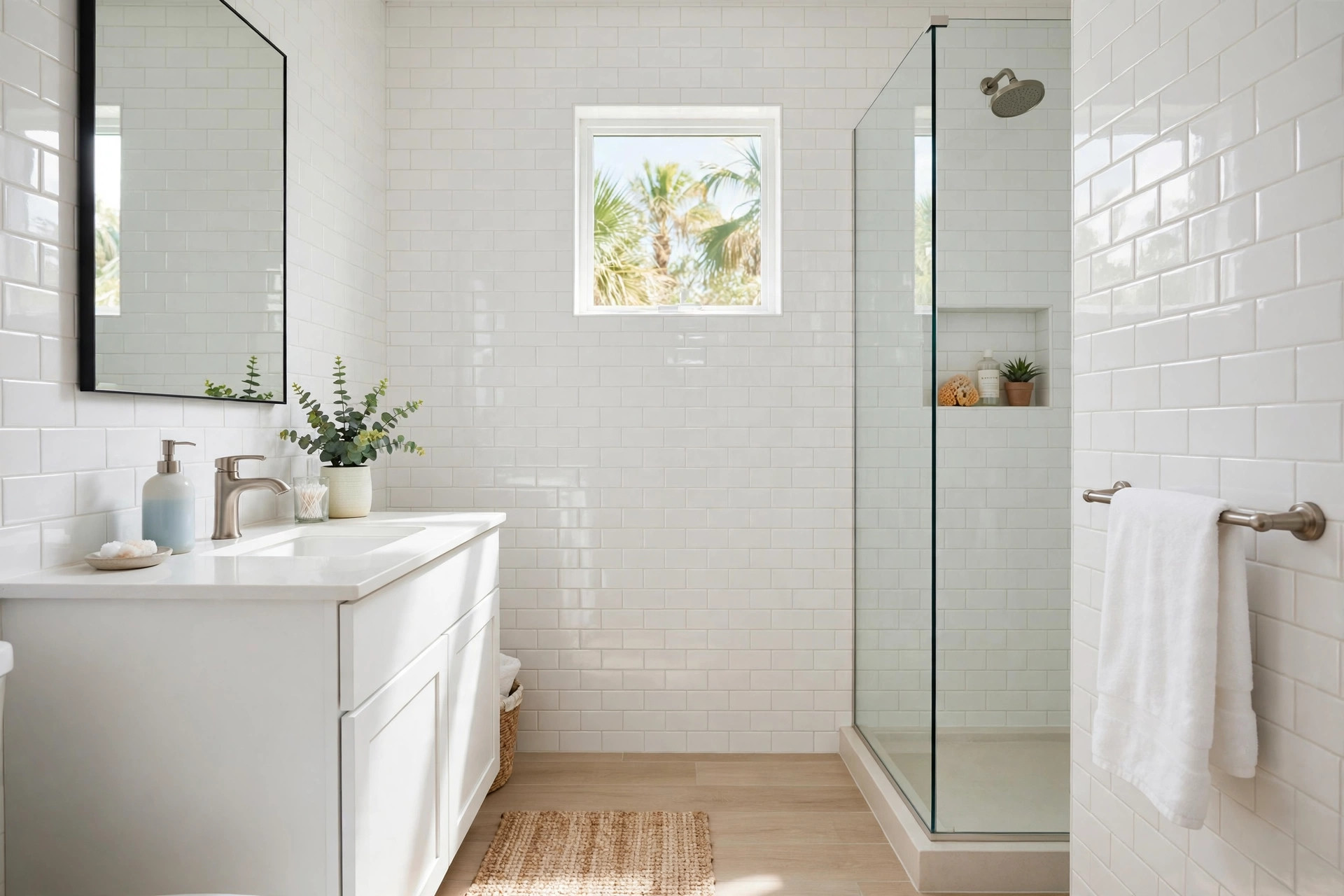
Light colors reflect daylight and make small rooms feel bigger. Whites, pale grays, and soft blues are common picks in Florida. They also match the bright, airy style of many homes in the state. Dark tile can look rich, but it shows water spots and soap film more clearly. If you love deep color, save it for an accent wall and keep the rest light. Bright walls also pair well with good fixtures, and guides to bathroom vanity light bars show how lighting changes the way tile looks.
Types of Bathroom Wall Tile
Ceramic and Porcelain Tile
Ceramic tile is the classic pick. It is light, easy to cut, and low in cost. Porcelain is fired at higher heat, so it is denser and harder. For Florida walls, porcelain has the edge. It shrugs off steam and resists stains. Both come in many sizes, shapes, and prints. You can even find porcelain that looks like wood or stone. Major makers such as American Standard and Delta Faucet design their bath products to pair with standard tile sizes, which makes planning easier.
Glass Tile
Glass tile brings a clean, bright shine. It does not soak up water at all. It works well as an accent band, a niche back wall, or a full shower wall. The main drawback is price. Glass tile costs more than ceramic, and it can be harder to cut. It also needs a light-colored thinset behind it so the color stays true. In a sunny Florida bath, glass tile bounces light around the room in a way no other tile can.
Natural Stone Tile
Marble, travertine, and limestone give a bath a rich, natural feel. Many owners love the look. In Florida, stone needs more care. Stone is porous, so it must be sealed when installed and resealed each year or two. Hard water can leave mineral marks on it. If you choose stone, pick a honed finish rather than polished. Honed stone hides water marks better. Retailers like Home Depot and Lowe’s stock sealers made for bathroom stone, and their staff can explain the upkeep.
Cement and Encaustic-Look Tile
Cement tile and the porcelain that copies it bring bold pattern and old-world charm. True cement tile is soft and porous. It needs sealing and gentle care. Most Florida owners choose porcelain copies of the look. They get the pattern without the upkeep. These tiles suit an accent wall or a powder room where steam is light. Design sites such as HGTV show many ways to mix pattern tile with plain tile.
Cost and Price of Bathroom Wall Tiles
Prices vary widely. Plain ceramic wall tile can cost as little as two dollars per square foot at big-box stores. Mid-range porcelain runs from four to ten dollars per square foot. Glass tile often starts near ten dollars and can climb past twenty-five for handmade sheets. Natural stone ranges from eight to thirty dollars per square foot before labor.
Labor adds a large share. In Florida, tile setters often charge six to fifteen dollars per square foot for wall work, depending on tile size and job difficulty. Large-format tile and glass cost more to set. Repairs to damaged backer board also add to the bill. A full shower surround in a standard tub alcove may run from one thousand to three thousand dollars for labor alone.
Plan for extras too. Backer board, thinset, grout, sealant, trim pieces, and niche shelves all add up. Many guides, such as those at Bob Vila, suggest adding ten to fifteen percent to your tile order for cuts and waste. Buying a little extra tile from the same dye lot saves trouble if a tile cracks later and you need a match.
Florida labor prices shift with the season. Many tile crews book up fast in winter, when snowbirds arrive and remodel work peaks. If your job can wait until late spring or summer, you may find shorter lead times and slightly lower bids. Always get at least three written quotes, and ask each setter how they prep wet-area walls. Good prep is what keeps tile tight for decades.
Care and Upkeep
Tile is low in care, but not carefree. A few habits keep Florida bathroom walls looking new.
Wipe down walls after heavy steam when you can. A small squeegee takes only a minute. Run the bath fan during showers and for twenty minutes after. Moving air is the best defense against mildew in a humid state.
Clean grout with a mild cleaner once a week. Avoid harsh acids on stone tile. For ceramic and porcelain, a mix of warm water and dish soap handles most soil. Rinse well so soap film does not build up. If mildew appears, a paste of baking soda and water often lifts it. Grout sealers help too. Reseal cement grout every year or two. Epoxy grout costs more up front but resists stains far better, and many Florida installers now favor it for showers. The Spruce offers practical bathroom cleaning routines that fit a busy weekly schedule.
Check caulk lines twice a year. Caulk where tile meets the tub, floor, or ceiling can crack with time. Pull out failed caulk and replace it before water gets behind the tile. Catching it early keeps a small job from turning into a full tear-out.
Safety Notes for Tiled Bathrooms
Wall tile itself is safe, but a bath has a few risks to manage. Slippery floors cause most bath injuries, not walls. Still, a few wall-related points matter.
Seal any gaps where water could reach the wall board. Soft, swollen drywall behind tile can hide mold. If grout crumbles or tiles sound hollow when tapped, have a pro check the wall before the damage spreads.
Use tempered glass or a strong curtain rod if tile runs to the ceiling around a tub. Keep cleaners out of reach of children. Store heavy bottles low so they cannot fall. For homes with young children, the safety tips from Moen on scald-safe fixtures pair well with a tile plan, since hot water and hard surfaces are a poor mix for little ones.
Florida storms bring one more point. If a storm knocks out power, a bath with good tile and sealed grout dries out faster once the fan runs again. Quick drying limits mold after heavy weather.
Frequently Asked Questions
What is the best tile for a Florida bathroom wall?
Porcelain is the best all-around pick for most Florida baths. It takes in almost no water, resists stains, and needs little care. Glass tile is also strong against moisture but costs more. Standard ceramic works if it is rated for wet areas.
Does grout grow mold faster in Florida?
It can. Warm, damp air feeds mildew. Good venting, weekly cleaning, and sealed grout keep it in check. Epoxy grout resists mold far better than plain cement grout. Many owners cut dampness further with extras like the bathroom towel warmers covered in this American homes guide.
Can I put tile over old tile?
In some cases, yes, but it is not the best route. The old tile must be sound, clean, and level. The added layer raises the wall and can cause trouble at trim and fixtures. Most pros in Florida prefer to strip down to the studs and install fresh backer board, which also lets them check for hidden water damage.
How long does bathroom wall tile last?
Well-set porcelain or ceramic tile can last thirty years or more. Grout and caulk wear out sooner and need refreshment. Stone needs resealing on schedule. The tile itself rarely fails. Water getting behind it is the usual cause of early failure.
Should the shower wall tile match the rest of the bathroom?
It does not have to. Many Florida baths use one tile in the shower and a simpler tile on the other walls. Keep the colors in the same family so the room feels calm. A single accent band can tie the two areas together.
A Final Word
Good bathroom wall tile is a quiet investment. It guards your walls, cuts your cleaning time, and suits the Florida climate for decades. Take time to pick a dense, moisture-safe tile, plan your grout with care, and keep the fan running. The result is a bath that stays bright and clean with little effort. When you are ready to shop, compare a few samples in your own light before you commit. Tile looks different under store lights than it does at home.
References
American Standard. (n.d.). Bathroom and kitchen products. https://www.americanstandard.com Bob Vila. (n.d.). Home improvement advice. https://www.bobvila.com Delta Faucet. (n.d.). Kitchen and bathroom faucets. https://www.deltafaucet.com HGTV. (n.d.). Home and garden ideas. https://www.hgtv.com Lowe’s. (n.d.). Home improvement products. https://www.lowes.com Moen. (n.d.). Faucets and plumbing fixtures. https://www.moen.com The Home Depot. (n.d.). Home improvement products. https://www.homedepot.com The Spruce. (n.d.). Home and garden advice. https://www.thespruce.com This Old House. (n.d.). Home renovation guidance. https://www.thisoldhouse.com
Was this guide helpful?

About Lisa Anderson
The My Garden US editorial team writes practical, in-depth home and garden guides for American homeowners — tested advice, no fluff.
You May Also Like
Brushed Nickel Faucets for Florida Homes: A Buyer’s Guide
June 8, 2026 0 views
Bathroom Linen Cabinets for Sale USA: A Simple Guide to Choosing the Right One
January 11, 2026 0 views
Quiet Exhaust Fans for Florida Homes: A Complete Buying Guide
April 11, 2026 0 views