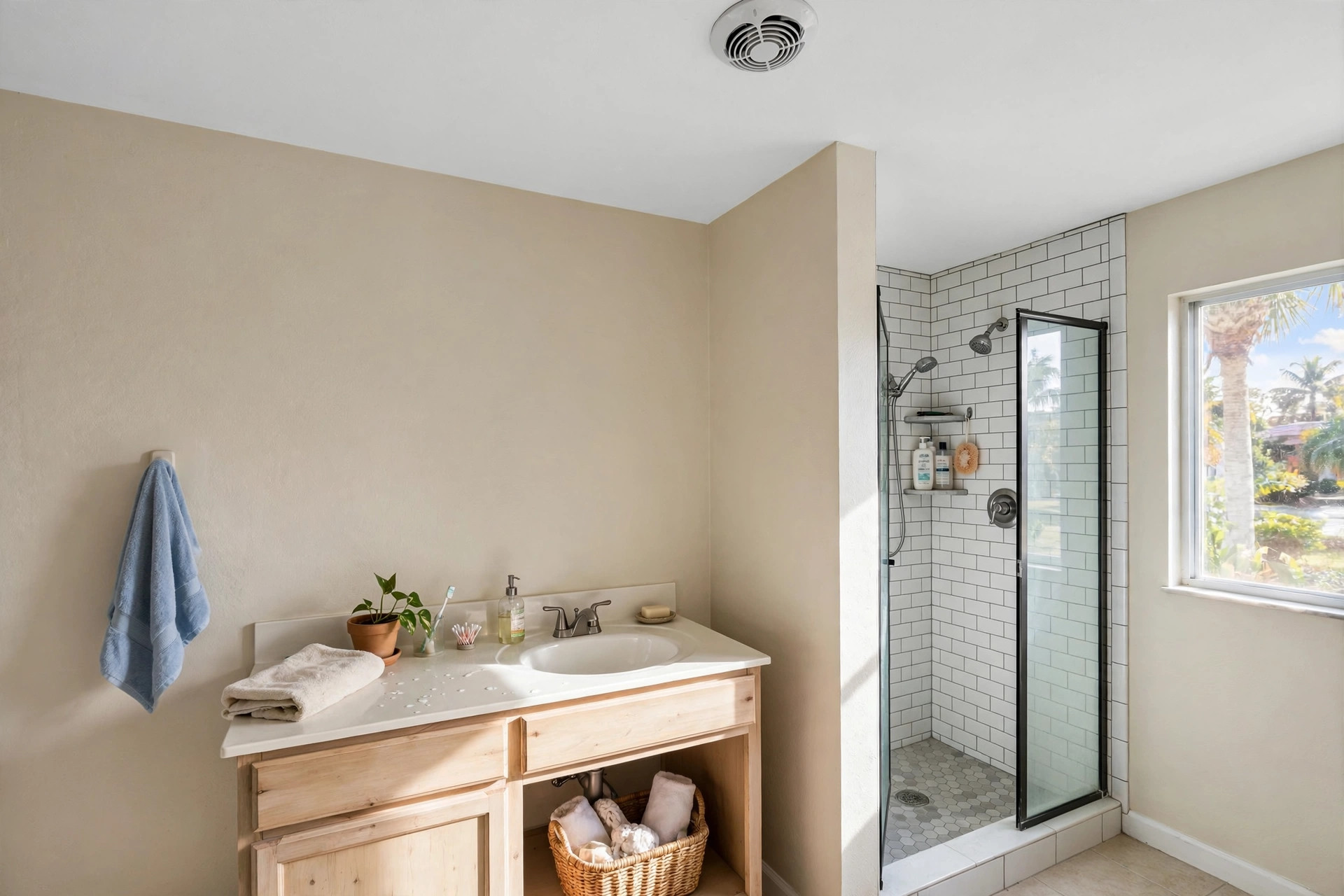

Florida bathrooms work harder than bathrooms in most other states. The heat lasts all year. The humidity never takes a day off. Steam from a hot shower hangs in the air long after the water stops. A weak or noisy fan only makes the problem worse. That is why searches for quiet exhaust fans florida homes usa keep growing. Homeowners want fans that clear steam fast without sounding like a small airplane.
Why Quiet Exhaust Fans Matter in Florida
Bathrooms are the wettest rooms in any house. Showers and tubs push gallons of water vapor into the air each week. In dry climates that vapor leaves quickly. In Florida it stays. High outdoor humidity means indoor air holds more moisture too. Without strong ventilation, the bathroom mirror stays fogged for an hour. Paint bubbles near the ceiling. Mildew grows in the corners of the shower. Over time, hidden mold can spread into wall cavities and the attic.
A good exhaust fan solves this by pulling moist air out of the bathroom and pushing it outside through a duct. In Florida this matters more than anywhere else. The long cooling season means windows stay shut for most of the year, so the fan is the only exit for steam. A quiet model matters because a loud fan gets switched off. Many homeowners run a noisy fan for five minutes and then kill the switch to stop the racket. The steam stays. The mold wins. A fan you cannot hear is a fan you will leave running, and that is the whole point.
Quiet fans also protect the rest of the house. Bathrooms that vent into the attic dump warm wet air right onto the roof deck.
What to Look For When You Choose: Quiet Exhaust Fans Florida Homes Usa
Sound Rating in Sones
Exhaust fans rate their noise in sones. The scale is simple. A fan rated at 4 sones is loud, like a cheap model from decades ago. A fan at 1 sone is about as loud as a quiet refrigerator. The best quiet models run at 0.3 to 1 sone. At that level you can barely hear the fan from across the room. When you read product specs, look for the sone number first. Anything at or below 1 sone counts as quiet. Below 0.5 is nearly silent.
Many homeowners shopping for quiet exhaust fans florida homes usa compare sone ratings side by side. That is the right move. Two fans can both claim 110 CFM of power, but one may hum at 0.3 sones while the other drones at 2.5. The quiet one is worth the extra money because it will actually get used.
Airflow in CFM
CFM stands for cubic feet per minute. It measures how much air the fan moves. A small half bath needs about 50 CFM. A full bathroom with a shower needs 70 to 110 CFM. A large master bath with a separate shower and tub may need 150 CFM or more. The old rule of thumb is one CFM per square foot of bathroom floor space, with a minimum of 50 CFM for any bathroom. Florida bathrooms often need the higher end of the range because steam lingers longer here. Buying a fan slightly stronger than the rule suggests is smart.
Power and quiet do not fight each other. Modern fans use better motors and smoother blade designs, so a 110 CFM fan can still run at 0.3 sones. Check both numbers before you buy.
ENERGY STAR Rating
The federal ENERGY STAR program rates bath fans for efficiency. An ENERGY STAR fan uses less power and often runs quieter than a plain model. The U.S. Department of Energy explains how efficient ventilation lowers home energy use. Since Florida homes run air conditioning nearly all year, a fan that wastes less electricity is a small but real saving. Look for the ENERGY STAR label on the box.
Timer and Humidity Sensor
A fan with a built-in timer or humidity sensor removes the guesswork. You set the timer and the fan shuts itself off after the bathroom is dry. A humidity sensor watches the air and keeps the fan running until moisture drops to a safe level. These controls are ideal for Florida, where a ten-minute run may not be enough. Many quiet fans include them as an option or a built-in feature. Guides at This Old House show how these controls cut moisture damage in humid climates.
Types of Quiet Exhaust Fans
Standard Ceiling Fans
The classic ceiling fan is still the most common choice. It mounts between the joists above the bathroom and pulls air straight up. Quiet ceiling models now use DC motors, which hum less and use less power than old AC motors. Sizes range from 50 to 150 CFM. If you are replacing an old loud fan, a quiet ceiling fan often fits the same opening with only small changes.
Fan and Light Combos
Many Florida bathrooms use a fan with a built-in light. These combos save space and simplify wiring. Quiet combo units run the fan at low sones while giving full overhead light. Some add a nightlight, which is handy for guests. The fan motor in a combo unit should still rate at 1 sone or less. Check the spec sheet, because some cheap combos hide a loud fan behind a pretty light.
Inline Fans
An inline fan hides in the attic, far from the bathroom. Only a grille shows on the ceiling. Because the motor sits several feet away in the duct, these fans are nearly silent in the bathroom itself. They cost more and need a duct run, but for homeowners who want true silence, inline fans are the best answer. They also let one motor serve two bathrooms, which can save money in a remodel.
Wall-Mount Fans
Some Florida homes, especially older block houses, vent through the wall instead of the ceiling. Wall-mount fans fit this setup. Quiet models exist, but the choice is smaller than for ceiling fans. If your bathroom has no attic access, a wall fan may be the only easy option. Pick one rated at 1 sone or below and make sure the wall cap outside seals against rain.
For full remodel planning, many homeowners pair a new fan with fixtures from brands like Kohler or Moen so the whole bathroom works well together.
Cost and Price
Quiet exhaust fans cost more than loud ones, but the gap is not huge. Here is what to expect at major home centers:
– Basic quiet ceiling fan, 50 to 80 CFM, 1 sone: 60 to 120 dollars. – Mid-range quiet fan, 110 CFM, 0.3 to 0.8 sones: 130 to 220 dollars. – Fan with humidity sensor or timer, 110 to 150 CFM: 180 to 300 dollars. – Inline fan with grille, 150 to 300 CFM: 250 to 450 dollars. – Fan and light combo, quiet motor: 150 to 280 dollars.
Professional installation adds 150 to 400 dollars if a duct already exists. If the bathroom has no duct at all, running a new one through the attic to the roof or wall can add 300 to 600 dollars. Prices vary across Florida, but these ranges hold from Miami to Jacksonville. Shoppers at The Home Depot and Lowe’s can compare models in person, and Consumer Reports tests bath fans for noise and airflow if you want lab data before you buy.
Replacing a fan yourself saves the labor cost. Most homeowners with basic tools can swap an old fan for a new quiet one in two to three hours, as long as the duct is already in place.
Installation Tips for Florida Homes
Florida homes have quirks that affect fan installation. Many houses sit on slabs with concrete block walls, so wall ducts can be hard to cut. Most Florida roofs are low-slope or flat, which makes roof venting tricky. And the attic is one of the hottest places in the house, which means ducts sweat.
Duct the fan straight outside. Never vent into the attic or the soffit. In Florida, venting into the attic is an open invite to mold. Use smooth metal duct or rigid PVC instead of cheap flexible duct. Flexible duct sags and traps moisture. Keep the duct run short and straight. Every bend cuts airflow.
Insulate the duct if it passes through the attic. Warm attic air makes cold duct sweat, and that sweat drips back down. A simple duct wrap stops the problem. Seal all joints with metal tape, not cloth duct tape, which fails in heat.
If your home has a concrete tile roof, roof venting needs a proper flashing that matches the tile. A roofer can set the flashing in under an hour. For block homes with no good wall spot, going up through the roof is usually easier than cutting block.
Turn the power off at the breaker before you touch any wires. If the wiring looks old or the circuit has no ground wire, call an electrician. Water and electricity are a bad mix, and bathrooms are the worst room for a wiring mistake. Homeowners planning a bigger update may also be reading about bidet toilet seats buying guide usa or led bathroom mirrors for sale usa while they remodel.
Care and Upkeep
A quiet fan stays quiet only if you keep it clean. Dust collects on the grille and the blades. That dust makes the motor work harder, which adds noise and cuts airflow. Clean the grille twice a year. Pull the grille down, wash it in warm soapy water, and let it dry. Wipe the blades and the motor housing with a damp cloth. Check that the duct is still connected. In Florida, roof caps can loosen in storms, so peek at the outside vent once a year.
Replace the fan when the motor bearings wear out. You will hear a rattle or a whine that was not there before. Most good fans last 10 to 15 years. Cleaning can stretch that to 20. If the fan starts dripping water, the duct may be sagging or the insulation may have slipped. Fix it fast, because standing water in a duct breeds mold.
Simple routines like these appear in maintenance guides at Family Handyman and HGTV, which both cover fan care for humid regions.
Safety
Bath exhaust fans are safe when installed right, but three rules matter. First, duct the fan outside the house, never into the attic or wall space. Second, use a fan rated for damp or wet locations if it sits over a shower or tub. The label on the box will say. Third, keep the electrical connections dry and tight, and use a GFCI-protected circuit where the local code requires it.
Old fans are a small fire risk. Lint and dust build up inside them, and a worn motor can overheat. If your fan is more than 20 years old and runs hot or loud, replace it. The U.S. Consumer Product Safety Commission has recalled some bath fans over the years, so check your model number against their list if you own an older unit.
FAQ
How many sones is truly quiet?
A fan at 1 sone or less is quiet. At 0.3 to 0.5 sones, most people cannot hear it from the hallway. Older fans often run at 3 to 4 sones, which is loud enough to hear through a closed door. When you shop, the sone rating tells you more about your daily experience than any other number.
What size fan does a Florida bathroom need?
Use the one-CFM-per-square-foot rule as a starting point. A 60-square-foot bathroom needs at least 60 CFM. Florida homeowners should round up, because humid air is harder to clear. A 60-square-foot Florida bathroom does well with an 80 or 90 CFM fan. Large master baths often need 150 CFM.
Can I install a quiet fan where my old loud fan was?
Yes, in most cases. Quiet fans come in the same housing sizes as old fans. You may need to enlarge the ceiling hole slightly or adjust the mounting bracket. The duct and wiring usually connect the same way. The job takes a few hours with basic tools.
Do I really need to vent the fan outside?
Yes. Venting into the attic is against most building codes and causes mold in Florida attics. The fan must push air all the way outside through a duct. Roof caps and wall caps both work. Pick the path with the shortest, straightest duct run.
How long should I run the fan after a shower?
Run it for 20 to 30 minutes after the shower stops. That is long enough to clear the steam. A timer switch or a humidity sensor handles this automatically, so you do not have to remember. In Florida summers, err on the longer side.
Are quiet fans worth the extra cost?
Yes. A fan that is too loud gets turned off, and a fan that is off does nothing. The price difference between a loud fan and a quiet one is often less than 100 dollars. That buys a fan you will actually use, which protects your bathroom from mold and your home from moisture damage. Many buyers finishing a full remodel also browse bathroom sink vanities for sale usa once the ventilation is sorted.
Final Word
A quiet exhaust fan is one of the best small upgrades a Florida homeowner can make. It keeps the bathroom dry, holds mold at bay, and protects the attic and roof. Pick a fan at 1 sone or less, size it generously for your bathroom, and duct it straight outside. Add a timer or a humidity sensor and you will never have to think about it again. For a few hundred dollars, your bathroom stays fresh and quiet all year, even through the wettest Florida summer.
References
Consumer Reports. (n.d.). Product reviews and ratings. https://www.consumerreports.org Family Handyman. (n.d.). DIY home repair and maintenance. https://www.familyhandyman.com HGTV. (n.d.). Home and garden ideas. https://www.hgtv.com Kohler. (n.d.). Bathroom and kitchen fixtures. https://www.kohler.com Lowe’s. (n.d.). Home improvement products. https://www.lowes.com Moen. (n.d.). Faucets and plumbing fixtures. https://www.moen.com The Home Depot. (n.d.). Home improvement products. https://www.homedepot.com This Old House. (n.d.). Home renovation guidance. https://www.thisoldhouse.com U.S. Consumer Product Safety Commission. (n.d.). Product safety information. https://www.cpsc.gov U.S. Department of Energy. (n.d.). Energy efficiency and renewable energy. https://www.energy.gov
Was this guide helpful?

About Jennifer Lee
The My Garden US editorial team writes practical, in-depth home and garden guides for American homeowners — tested advice, no fluff.
You May Also Like

Brushed Towel Holders Texas Homes USA: A Plain Buying Guide
February 1, 2026 0 views
Frameless Shower Doors Texas Homes USA: A Complete Buying Guide
July 13, 2026 0 views
Shower Grab Bars for Sale USA: What to Know Before You Buy
June 2, 2026 0 views