
If you type water heater replacement cost near me 2026 into a search box, you will see a wide range of prices. Some sites quote a few hundred dollars. Others quote several thousand. Both can be right. The price depends on the type of heater, the size of the tank, the fuel you use, and where you live. Labor rates change from city to city. Permits and code upgrades can add to the bill.
This guide gives you plain facts. You will learn what a new water heater costs in 2026. You will see the difference between a tank model and a tankless model. You will learn how to get fair quotes from local installers. Read it before you sign a contract.
Why the Cost Matters
Hot water is easy to forget until it is gone. A cold shower on a winter morning gets your attention fast. The average tank water heater lasts eight to twelve years. Many homes now have units from the early 2010s. Those units are near the end of their life.
A planned replacement costs less than an emergency one. When a tank fails on its own, you may pay rush fees. You may accept the first quote you get. You may also face water damage from a leaking tank. A slow leak can ruin a floor or a wall before you notice it.
Knowing the cost ahead of time puts you in control. You can save money. You can compare models. You can pick a more efficient unit that lowers your monthly bill. Sites like This Old House and Family Handyman publish guides that help owners plan this kind of work. The U.S. Department of Energy also offers facts on water heating costs and efficiency.
How to Choose a New Water Heater: Water Heater Replacement Cost near Me 2026
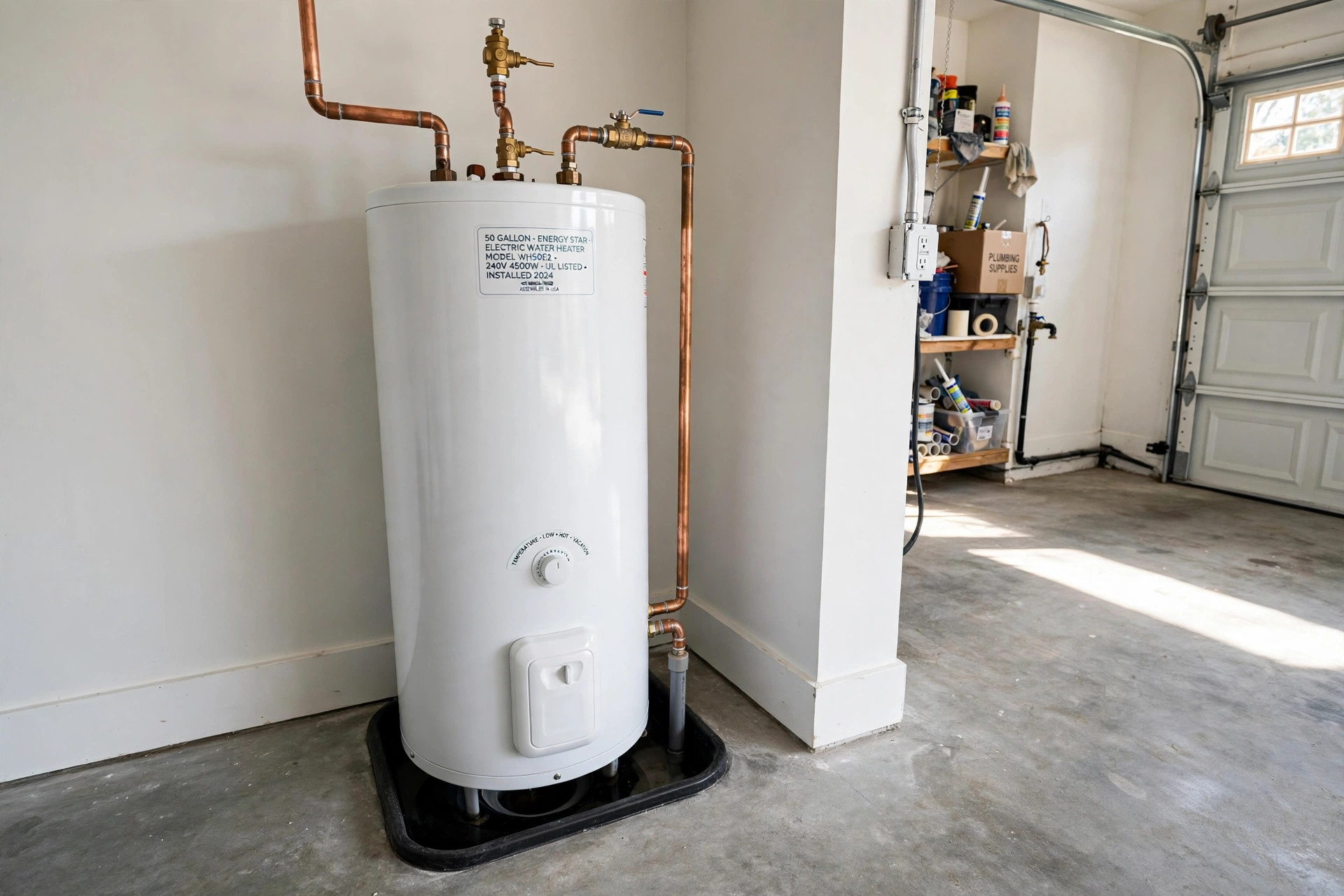
Start with what you have now. Look at your current heater. Note whether it burns gas or runs on electric power. Note the tank size in gallons. Common sizes are 40, 50, and 75 gallons. A family of two can often use a 40-gallon tank. A family of four or five usually needs 50 gallons or more.
Next, check your fuel options. Gas heaters heat water fast and cost less to run in many areas. Electric heaters cost more to run but are simpler to install. Some homes can use a heat pump water heater. These pull heat from the air and use far less power.
Measure the space. A new unit must fit where the old one sat. Tankless units are small and mount on a wall. Standard tanks need floor space. Heat pump models need room for air flow around them.
Look at the energy label. A higher efficiency rating means lower monthly costs. In 2026, new federal standards push makers to build better units. Check the EPA and Energy Star pages for current ratings. An efficient model costs more up front. It often pays for itself in a few years.
Types and Options
Standard Tank Heaters
The storage tank is the most common type in American homes. It holds a full tank of hot water at all times. When you turn on a tap, hot water flows out and cold water flows in to take its place. These units are simple and well understood by every installer.
A gas tank heater for a 50-gallon size often costs less than an electric one over time, since gas is cheaper than power in many states. The tank itself is the lowest cost option to buy. That is why most homes still use this type.
Tankless Heaters
A tankless unit heats water only when you need it. There is no stored tank. Cold water runs through a heat exchanger and comes out hot. These units last longer than tanks, often twenty years or more.
The price is higher. The unit costs more, and the install takes more work. Gas tankless models may need a larger gas line and a new vent. Electric tankless models may need wiring upgrades. Read a full tankless vs tank water heater cost comparison before you decide. For gas homes, also check gas tankless water heater installation cost usa to see local price ranges.
Heat Pump and Hybrid Heaters
A heat pump water heater moves heat from the surrounding air into the water. It uses about a third of the power of a standard electric tank. Some models have a hybrid mode that switches between heat pump and standard electric heat.
The up front price is the highest of the three types. Federal and state tax credits can cut the cost in many cases. See heat pump water heater installation cost usa for current numbers and rebate tips.
Cost and Price in 2026
Here is what homeowners pay across the country in 2026. Prices vary by region. Big cities with high labor rates cost more. Rural areas often cost less.
Standard tank, gas or electric: A 40 to 50 gallon tank unit costs about 400 to 900 dollars for the heater alone. Full install with labor runs 900 to 1,800 dollars in most areas. If new code rules force extra work, such as an expansion tank or a new drain pan, add 150 to 400 dollars.
Tankless, gas: The unit costs 800 to 2,000 dollars. Total install often runs 2,000 to 4,500 dollars. Venting and gas line upgrades are the main extra costs. Electric tankless models cost less for the unit but may need a new circuit.
Heat pump or hybrid: The unit costs 1,200 to 2,500 dollars. Total install runs 2,500 to 4,500 dollars. Tax credits can bring the real cost down by hundreds of dollars. Check current federal rules before you buy.
Labor: Most installers charge 300 to 800 dollars for a simple tank swap. A complex job with new pipes or new vents can run 1,000 dollars or more in labor alone.
Permits and extras: Many cities require a permit for water heater work. Permits cost 50 to 200 dollars. New valves, pans, and expansion tanks add to the total. Haul away of the old unit may be free or may cost 50 to 100 dollars.
To get a fair price, call three local installers. Ask each for a written quote with the same scope of work. Ask what the quote includes: unit, labor, permit, parts, and haul away. Prices listed at large retailers like Home Depot and Lowe’s can serve as a check on what the hardware costs. Maker sites such as Rheem list model prices and specs.
Beware of quotes far below the rest. A very low bid may skip the permit. It may reuse old valves or skip code upgrades. That can cost you more later.
Care and Upkeep
A little care makes a heater last longer. Drain a few gallons from the tank once a year. This clears sediment from the bottom. Sediment makes the heater work harder and shortens its life.
Check the anode rod every two to three years. The rod sits inside the tank and draws rust away from the steel. When the rod is gone, the tank itself starts to rust. A new rod costs little and can add years to the tank.
Keep the area around the heater clear. Do not stack boxes against it. Gas units need air for safe burning. Set the thermostat to 120 degrees. That is hot enough for most homes and cuts energy use. It also lowers the risk of burns.
Look at the pressure relief valve once a year. Lift the lever and let a little water out. The valve should snap shut when you release it. If it leaks after the test, call a plumber to replace it.
Safety
Water heaters are safe when installed right. They can be dangerous when installed wrong. Gas units make carbon monoxide. A bad vent can let this gas into the home. You cannot see or smell it. Every home with gas heat should have a carbon monoxide alarm.
Never seal a gas heater in a tight closet without proper air vents. Never cover a relief valve or plug its drain pipe. The relief valve protects against pressure build up. A blocked valve can turn a tank into a hazard.
Electrical work on electric heaters must meet code. Turn off the breaker before you touch any wire. If you are not sure, call a licensed electrician. The EPA site has plain guides on safe combustion appliances in the home.
Water on the floor near the heater is a warning sign. A small drip can become a burst tank. If you see rust on the tank body or water under the unit, call a plumber the same day. Makers like Kohler, Moen, and Delta Faucet also publish fixture care guides that cover valves and shut offs near the heater.
Frequently Asked Questions
How long does a water heater install take? A simple tank swap takes two to four hours. The installer drains the old tank, removes it, sets the new one, and connects pipes and fuel lines. A tankless install can take a full day. New venting or gas line work adds time.
Can I install a water heater myself? You can, but most owners should not. Gas and electrical work carry real risks. Most cities require a permit and an inspection. A licensed installer knows the local code. Poor work can void the warranty on the new unit.
Should I repair or replace my water heater? If the tank is under eight years old and the problem is small, such as a bad heating element or a faulty thermostat, repair makes sense. If the tank is over ten years old or the tank itself leaks, replace it. A leaking tank cannot be fixed.
Does a bigger tank cost more to run? Yes, but not by much. A larger tank loses a bit more standby heat. The main cost is the fuel you burn to heat the water you use. A family that uses less hot water can save more with a small tank or a tankless unit.
What size water heater do I need? A home with one or two people does well with a 40-gallon tank. Three or four people usually need 50 gallons. Five or more may need 75 gallons or a high output tankless unit. Count showers, laundry, and dishwashing. A plumber can size the unit to your peak use.
Are tankless heaters worth the extra cost? They can be. A tankless unit costs more up front but lasts about twice as long as a tank. It also wastes less energy on standby heat. Homes with high hot water use see the best payback. Homes with low use may do better with a good tank model.
A Final Word
The water heater replacement cost near me 2026 question has no single answer. A basic tank swap may run under one thousand dollars. A high end tankless or heat pump job can pass four thousand. The right price for you depends on your home, your fuel, and your hot water needs.
Get three written quotes. Ask about permits, parts, and warranty. Pick a unit that fits your home and your budget. With a little planning, you will have hot water for years and a bill you can feel good about. For clean water at every tap after the install, brands like Aquasana offer whole home filtration options worth a look.
References
Aquasana. (n.d.). Water filtration systems. https://www.aquasana.com Delta Faucet. (n.d.). Kitchen and bathroom faucets. https://www.deltafaucet.com Family Handyman. (n.d.). DIY home repair and maintenance. https://www.familyhandyman.com Kohler. (n.d.). Bathroom and kitchen fixtures. https://www.kohler.com Lowe’s. (n.d.). Home improvement products. https://www.lowes.com Moen. (n.d.). Faucets and plumbing fixtures. https://www.moen.com Rheem. (n.d.). Heating, cooling, and water heating. https://www.rheem.com The Home Depot. (n.d.). Home improvement products. https://www.homedepot.com This Old House. (n.d.). Home renovation guidance. https://www.thisoldhouse.com U.S. Department of Energy. (n.d.). Energy efficiency and renewable energy. https://www.energy.gov U.S. Environmental Protection Agency. (n.d.). Protecting human health and the environment. https://www.epa.gov
Was this guide helpful?

About Robert Taylor
The My Garden US editorial team writes practical, in-depth home and garden guides for American homeowners — tested advice, no fluff.
You May Also Like
Chloramine Filter for City Water Reviews USA: What to Know Before You Buy
September 22, 2026 0 views
Submersible Well Pump Reviews for Deep Wells
September 27, 2026 0 views
Polybutylene Pipe Replacement Cost USA: What Homeowners Should Know
April 14, 2026 0 views