
Every home in America needs hot water. The question is how you heat it. A traditional tank water heater stores 40 to 80 gallons of hot water at all times. A tankless water heater heats water only when you turn on the tap. This tankless vs tank water heater cost comparison walks through the full price of each choice, from the day of purchase to the day of replacement. By the end, you will know which system fits your budget and your home.
Why the Cost Comparison Matters
Water heating is one of the largest energy users in the home. Federal guidance notes that it can account for a large share of a home’s energy bill. A poor choice here costs you money every month for a decade or longer. Most homeowners only look at the sticker price on the box. That is a mistake. The true cost includes the unit, the installation labor, the energy used each year, and any repairs. Only a full tankless vs tank water heater cost comparison shows which option is truly cheaper.
Upfront Cost: The Unit Itself: Tankless vs Tank Water Heater Cost Comparison
The price of the unit is the first line in any tankless vs tank water heater cost comparison.
A standard tank water heater costs between $400 and $1,200 for the unit, depending on size and brand. A 40-gallon gas tank model sits at the low end. A 75-gallon high-efficiency model sits at the high end.
A tankless water heater costs between $500 and $2,500 for the unit. Point-of-use electric tankless models start near $200, but whole-house gas tankless units run $1,000 to $2,000 or more.
The tankless unit usually costs more at the store. But the unit price is only part of the story.
Installation Cost: Labor and Changes
Installation is where the gap often widens in a tankless vs tank water heater cost comparison.
A tank water heater installation is simple. A plumber swaps the old tank for a new one in a few hours. Installed cost runs $800 to $1,800 in most homes. If your home already has a tank heater, no new gas lines or wiring are needed.
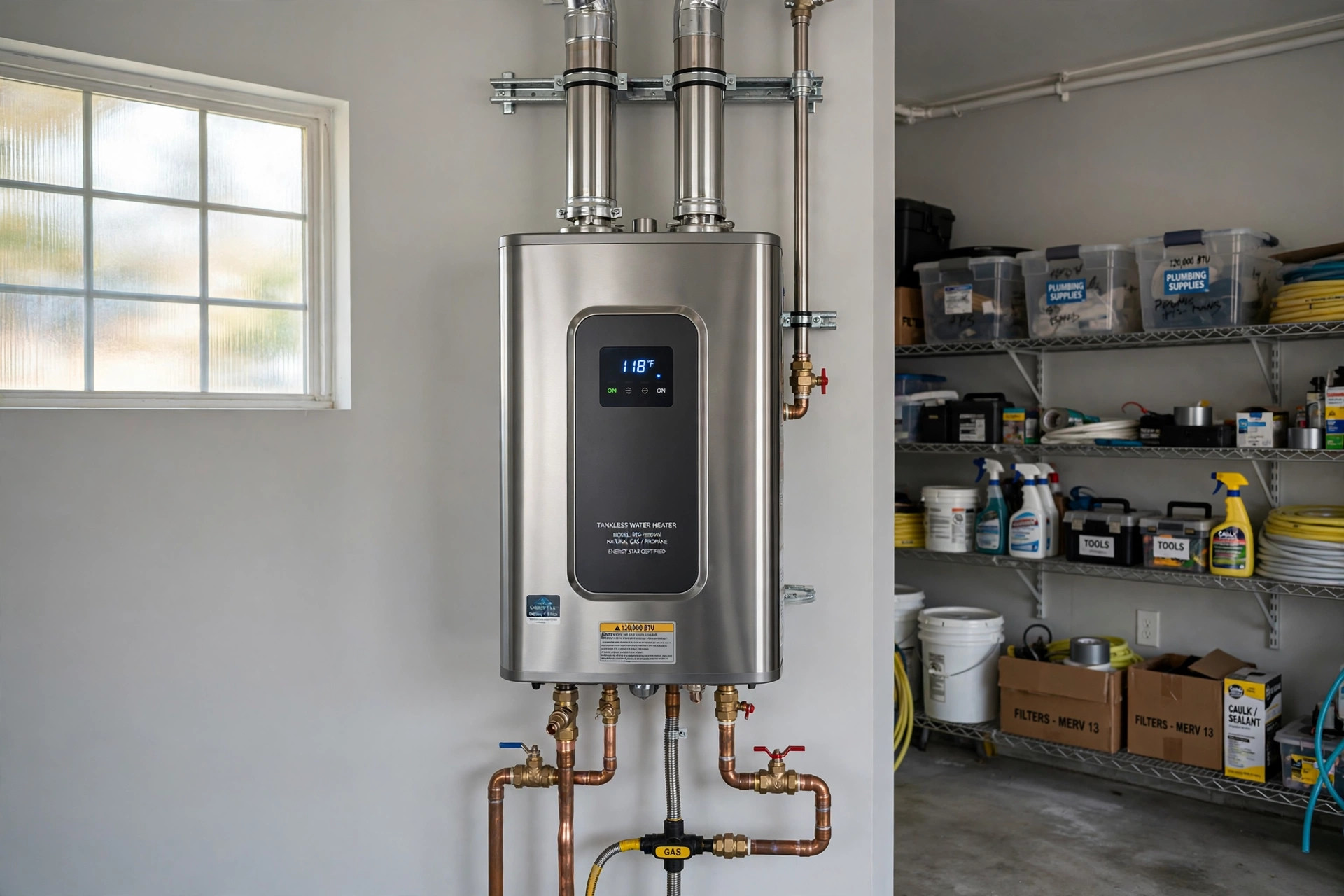
A tankless water heater installation is more complex. The installer may need to run a larger gas line, add new venting through the wall or roof, or upgrade the electrical panel for an electric unit. This Old House and Family Handyman walk through what such a retrofit typically involves. Installed cost runs $1,500 to $4,500, and complex jobs can reach $5,000. This labor and retrofit work is the main reason tankless costs more up front.
Energy Cost Year by Year
Energy cost is where tankless units fight back. A tank heater keeps water hot around the clock, even at 3 a.m. when no one is awake. This standby heat loss wastes energy every day.
A tankless heater fires only when hot water flows. For a family that uses 40 gallons of hot water or less per day, a tankless unit can use 24 to 34 percent less energy than a tank model. Larger families that use more hot water save less, often 8 to 14 percent.
In dollars, a tank gas heater may cost $250 to $450 per year to run. A tankless gas heater may cost $180 to $330 per year. These numbers depend on your local gas or electric rates. Over 15 years, the energy savings from tankless can add up to $1,000 to $2,000 or more.
Lifespan and Replacement Cost
A traditional tank water heater lasts 8 to 12 years. A tankless water heater lasts 20 years or more with proper care. This difference matters greatly in a tankless vs tank water heater cost comparison.
If you own your home for 24 years, you will buy about two tank heaters. You will buy about one tankless heater. When you spread the total cost over the life of each unit, the numbers get much closer than the first-day price suggests.
Maintenance and Repair Cost
Tank heaters need little care. A flush of the tank once a year removes sediment. This takes about an hour and costs little if you do it yourself, or around $100 to $200 from a professional.
Tankless heaters need more regular care. Mineral scale builds up inside the heat exchanger, especially in homes with hard water. Most makers suggest a yearly descaling flush. A professional descaling service costs $150 to $250. In very hard water areas, some owners add a water softener or scale filter, which adds to the cost.
Repairs on both types can cost $150 to $600 for common parts like thermostats, valves, or igniters. Tankless units have more complex electronics, so repairs can run higher when parts fail. Note that a shower that suddenly runs cold does not always mean the heater failed — a worn shower valve can cause the same symptom.
How to Choose Between Tank and Tankless
Start with your hot water habits. A couple with low water use will see the biggest savings from tankless. A large family with teenagers who shower one after another will see smaller savings, though tankless still ends the cold shower problem.
Look at your fuel type. Gas tankless models are the most efficient choice in homes with natural gas. Electric tankless models demand a lot of power — often three or four breaker slots — and many older panels cannot handle them. Electric tank models and heat pump hybrids are often simpler and cheaper to wire.
Check your water hardness. Hard water scales up a tankless heat exchanger fast. If your water is hard, budget for a scale filter or softener with a tankless unit. Tank heaters tolerate hard water better, though sediment still builds up in the tank.
Think about space. A tank heater needs a large floor area, often 2 feet wide and 5 feet tall. A tankless unit hangs on the wall and frees that space. Homeowners who turn a utility room into living space often choose tankless for this reason alone.
Finally, consider how long you will stay. If you plan to move in three years, a tank heater gives you hot water at the lowest cost and the buyer will not pay extra for your tankless upgrade. If you plan to stay twenty years, the tankless math starts to work in your favor.
Types and Options
Traditional Tank Models
Gas tank heaters are the most common. They heat fast and cost less to run than electric tanks. Electric tank heaters are easy to install and need no venting. Heat pump hybrid tank heaters cost more up front but use far less energy than either type. Major retailers and home centers stock both styles side by side for hands-on comparison.
Tankless Models
Gas tankless units provide endless hot water and work well for large families. Electric tankless units are smaller and simpler to install but may need a major electrical upgrade. Outdoor tankless models save indoor space but need freeze protection in cold climates.
Which Costs Less Over Time?
Add it all together and the long-term tankless vs tank water heater cost comparison looks like this.
15-year total for a tank system: unit $700 + install $1,200 + energy $5,000 + repairs $600 = about $7,500.
20-year total for a tankless system: unit $1,500 + install $3,000 + energy $4,500 + repairs $1,200 = about $10,200.
Wait — that shows tank as cheaper. But remember the life spans. In 24 years you replace the tank system twice. Over 24 years, the tank path can cost roughly $12,000 to $15,000 total. The tankless path can cost roughly $11,000 to $13,000 total, with the second half of the period running on energy savings alone.
Your actual numbers depend on local labor rates, energy prices, and how much hot water your family uses. In homes with high energy rates and heavy hot water use, tankless often wins sooner.
Safety Considerations
Both systems need proper care to stay safe.
Tank heaters can develop leaks as they age, and a failed tank can release 40 to 80 gallons of water into your home. A drain pan and a automatic shut off valve can limit damage. Quality plumbing fixtures and faucets from trusted makers help prevent small leaks from becoming big ones. Gas models also produce carbon monoxide, so proper venting and a working CO detector are a must.
Tankless heaters also need proper venting for gas models. Because they run hotter, scale buildup can cause overheating if the unit is not flushed on schedule. Keep the area around either unit clear of stored items, and have a licensed plumber handle gas work.
Care and Upkeep Tips
– Flush your tank heater once a year to remove sediment. – Descale your tankless heater once a year, more often with hard water. – Test the pressure relief valve on a tank heater once a year. – Keep the vent pipes on either unit clear of snow, leaves, and nests. – Set the thermostat to 120 degrees to save energy and reduce scald risk. – Size your heater for every hot water fixture you plan to add — a kitchen remodel guide on the best pot filler placement over range can help you map new plumbing demand before you size a heater.
FAQ
How much does a tankless water heater cost installed? A whole-house tankless unit installed costs $1,500 to $4,500 in most homes. Complex installs with new gas lines or venting can reach $5,000.
How much does a tank water heater cost installed? A standard tank water heater installed costs $800 to $1,800. The job is usually done in one visit.
Does tankless really save money on energy bills? Yes, but the size of the savings depends on use. Small households that use less than 40 gallons of hot water a day save the most. Large families with constant hot water use save less.
Which lasts longer, tank or tankless? Tankless wins clearly. A tank heater lasts 8 to 12 years. A tankless heater lasts 20 years or more with yearly care.
Is it worth replacing a working tank heater with tankless? If your tank heater is still working well and under 8 years old, it is usually better to wait until it fails. Replacing early means you throw away remaining value in the old unit. A faucet tune-up or aerator cleanout can sometimes fix a slow hot water problem without touching the heater.
Do tankless heaters need special maintenance? Yes. They need a yearly descaling flush to remove mineral buildup. Homes with very hard water may also need a scale filter or softener.
Do tankless heaters work well in cold climates? Yes, but sizing matters. Cold incoming water needs more heating power to reach 120 degrees, so a unit that is too small will fall short in winter. Installers in cold states often size one step larger.
Can one tankless unit run a large soaking tub? It can if the flow rating covers the fill rate. High-output gas models handle most tubs. Very large tubs may need a larger unit or a second heater in line.
A Short Final Word
The tankless vs tank water heater cost comparison comes down to time. A tank heater costs less today. A tankless heater can cost less over decades, and it gives you endless hot water along the way. Match the choice to your budget, your plans for the home, and your local energy rates, and either path can be a sound one.
References
Aquasana. (n.d.). Water filtration systems. https://www.aquasana.com Delta Faucet. (n.d.). Kitchen and bathroom faucets. https://www.deltafaucet.com Family Handyman. (n.d.). DIY home repair and maintenance. https://www.familyhandyman.com Kohler. (n.d.). Bathroom and kitchen fixtures. https://www.kohler.com Lowe’s. (n.d.). Home improvement products. https://www.lowes.com Moen. (n.d.). Faucets and plumbing fixtures. https://www.moen.com The Home Depot. (n.d.). Home improvement products. https://www.homedepot.com This Old House. (n.d.). Home renovation guidance. https://www.thisoldhouse.com U.S. Environmental Protection Agency. (n.d.). Protecting human health and the environment. https://www.epa.gov
Was this guide helpful?

About Jennifer Lee
The My Garden US editorial team writes practical, in-depth home and garden guides for American homeowners — tested advice, no fluff.
You May Also Like
UV Water Purifier for Well Water Reviews: What Rural Homeowners Should Know
September 6, 2026 0 views
Alcove vs Freestanding Tub Comparison USA: Which Tub Is Right for Your Bathroom
February 27, 2026 0 views
Conventional vs Aerobic Septic System Cost: A Complete Homeowner Guide
August 8, 2026 0 views