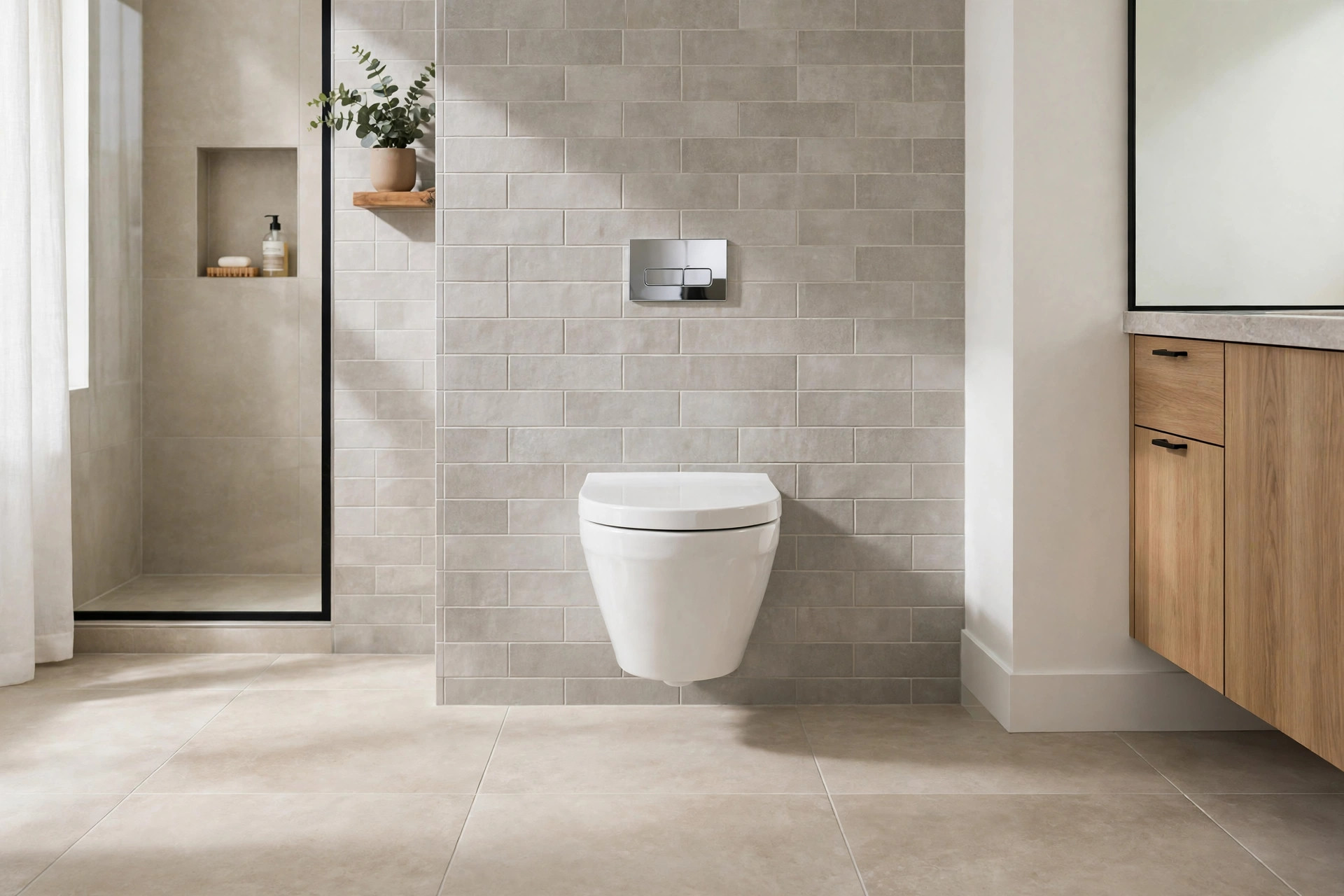

A wall hung toilet is not like the toilet most Americans grew up with. It has no base on the floor. The bowl bolts to a steel frame hidden inside the wall, and the tank sits behind the drywall where no one can see it. You see only the floating bowl and the flush plate. This guide to wall hung toilet pros and cons reviews USA gives you the full picture: how these toilets work, what they cost, where they shine, and where they fall short.
The fair question is simple. Is a wall hung toilet worth the money, or is it just a fad? The short answer is that it is a real, working fixture with solid benefits and real trade offs. It is not a gimmick. But it is not for every home. Read on to learn what matters before you decide.
Why Wall Hung Toilets Matter Now
Bathrooms in American homes keep getting smaller and smarter. Many homes have tight powder rooms where every inch counts. A wall hung toilet saves floor space because nothing sits on the floor under the bowl. That open space makes the whole room feel larger and makes cleaning the floor much easier.
Water use matters too. Most wall hung toilets use 1.28 gallons per flush or less. The U.S. Environmental Protection Agency runs the WaterSense program, which labels toilets that use at least twenty percent less water than the 1.6 gallon standard without losing performance. A floating toilet with that label can save a busy household hundreds of gallons a year.
Style is the third reason. Floating vanities, shelves, and toilets all lift off the floor for a neat, calm look. Updated bathrooms also catch the eye of buyers, and a wall hung toilet is one of the fastest ways to make a bath look current.
How a Wall Hung Toilet Works: Wall Hung Toilet Pros and Cons Reviews Usa
The working parts live inside the wall. A steel carrier frame bolts to the wall studs. It holds the bowl, the hidden tank, and the weight of the person who sits down. Most carriers support at least 500 pounds. A flush plate on the wall surface releases water from the hidden tank when pressed.
The bowl hangs on two large bolts that pass through the finished wall into the carrier. The drain pipe runs through the wall instead of through a floor flange, so the rough in plumbing differs from a standard toilet. That difference is the main source of the added cost.
The Pros of a Wall Hung Toilet
A Clean Modern Look
With no base and no visible tank, the toilet seems to float. Designers love this look for small, modern baths. The simple lines match flat panel cabinets and large floor tiles. Makers such as Kohler and Moen now offer wall hung lines for American bathrooms, so matching the rest of the room is easier than it was ten years ago.
Easy Floor Cleaning
Dust, hair, and grime collect where a regular toilet base meets the floor, and the caulk line can stain or grow mold. With a wall hung toilet there is no base. A mop passes right under the bowl. Families with children and pets notice this daily benefit most.
More Floor Space
The open space under the bowl changes how the room feels. In a 30 square foot powder room, a floating toilet can make the floor look much larger. Wheelchair users and people with walkers benefit too. Nothing sits on the floor to block a footrest or a wheel.
Adjustable Bowl Height
A standard toilet has a fixed height, often 15 or 17 inches. A wall hung bowl can be set to almost any height during install because the carrier has mounting holes at several levels. Tall people can set it at 19 inches. Shorter households can set it lower. This comfort benefit is hard to get any other way.
Quiet Flushing
The tank sits behind the wall, often packed with insulation. The wall absorbs much of the flush noise. Many owners say their floating toilet is clearly quieter than the old tank toilet it replaced. Near a living room, that is a welcome change.
Strong Water Efficient Flushing
Wall hung toilets pair well with dual flush plates. A short press gives a light flush. A long press gives a full flush. Most models in USA reviews carry the WaterSense label. If you are comparing options, our guide to the best high efficiency toilet reviews is worth a look, and retailers such as Lowe’s stock water saving models that meet the same standards.
The Cons of a Wall Hung Toilet
High Upfront Cost
This is the largest drawback. A wall hung bowl and carrier kit runs 400 to 1,200 dollars for parts, and labor adds far more. The wall must be opened, the carrier anchored, the drain rerouted, and the wall rebuilt and tiled. Total installed cost often runs 1,500 to 3,500 dollars. A standard toilet swap costs 200 to 500 dollars by comparison.
Hard Installation
This is not a weekend project for most homeowners. The wall needs about 6 inches of depth for the carrier and tank. The framing must be strong and square, and the drain must land at the right height. Mistakes are costly because everything hides behind tile. Most owners hire a licensed plumber, plus a carpenter and tile setter. Guides from This Old House and Family Handyman show how involved the framing work can be.
Repairs Take More Work
With a standard toilet you lift the tank lid and look inside. With a wall hung toilet, repairs go through the small flush plate opening. A plumber reaches through it with hands and tools, so even simple jobs take longer. If a pipe joint fails inside the wall, the wall may need to be opened. That is rare with quality parts, but it is a real risk.
Parts Can Be Hard to Find
Standard toilet parts sit on the shelf at every hardware store. Wall hung parts are less common and may need to be ordered online. Sticking with major brands helps. Check that parts are sold by big sellers such as The Home Depot before you buy an unknown brand, so the fixture can still be serviced in ten years.
Not Ideal for Every Wall
The carrier must bolt to solid framing. A wall full of pipes, wires, and insulation can be a poor host. A wall shared with a bedroom can pass flush noise through if the installer skips sound insulation. Condo rules may forbid opening a wet wall or moving a drain. Check local codes before you plan.
Weight Limits and Sturdy Feel
A well installed unit is very solid and does not flex. But some people never fully trust a floating toilet. Guests may look for the base. A proper carrier handles daily use with ease, but the mental comfort of a floor bolted toilet is gone. A heavy duty carrier rated above 700 pounds is worth the extra cost for rough daily use.
Cost and Price Breakdown
Budget bowl and carrier kits start near 350 dollars. Mid range kits from known brands run 600 to 900 dollars. Premium models reach 1,200 dollars or more, and the flush plate can add 50 to 250 dollars more. Labor is the larger share: plumbing 800 to 2,000 dollars, carpentry and drywall 300 to 800 dollars, tile 200 to 600 dollars. A full project total of 1,500 to 3,500 dollars is typical.
Long term costs look better. A 1.28 gallon dual flush model can save a family of four around 2,000 to 4,000 gallons a year over an old 3.5 gallon toilet. Some cities offer rebates for WaterSense toilets of 50 to 150 dollars. If you want a strong flush in a compact bowl, also read the pressure assisted toilet pros and cons comparison, and our one piece vs two piece toilet comparison if you lean toward a floor mounted model instead.
What to Look for When You Buy
Start with the carrier frame. Look for steel, a 500 pound rating or better, and a name you trust. It must fit your wall depth, which is about 6 inches for most models. Measure before you order.
Next, check the bowl. Elongated bowls are the common pick in the USA and feel more comfortable. Pick a dual flush plate to save the most water. Check the glaze: a smooth baked on glaze resists stains and wipes clean.
Confirm the rough in fit. The carrier sets the drain center at a fixed height, often near 9 inches above the finished floor. A plumber can confirm your drain line can meet it. Look at flush plate finishes too, since the plate is the one part you touch daily. Plates come in chrome, brushed nickel, matte black, and white.
Finally, buy from brands with USA service lines. Delta Faucet makes wall hung compatible trim and bathroom suites, and established brands still sell parts years later. If your water is very hard, a filter from a maker like Aquasana reduces mineral buildup in the bowl and the hidden tank.
Care and Upkeep
Wipe the bowl with a soft cloth and mild cleaner. Mop under the bowl with normal floor cleaning. Skip harsh acid cleaners, which dull the glaze over time. Once a year, press both flush buttons and listen for a weak flush, which can mean the plate cables need adjustment. Remove the plate, shine a flashlight through the opening, and check for slow drips or mineral crust. Every few years, have a plumber check that the carrier bolts are tight and rust free.
Safety Notes
The carrier must be lag bolted into solid studs, never into drywall alone. Bowl bolts must be torqued to the number in the manual. Over tightening can crack the ceramic. Use tile or sealed vinyl under the bowl, and install a quality braided steel supply line. Check the shut off valve once a year, since a slow supply leak can run down inside the wall unseen. Teach small children not to stand on the bowl. For elderly users, set the bowl height so feet rest flat on the floor.
Frequently Asked Questions
Can a wall hung toilet hold a heavy person?
Yes. Quality carriers are rated for 500 pounds or more, and heavy duty frames hold 700 to 880 pounds. The key is proper installation into solid framing. Failures come from cheap carriers or poor installs, not from the design itself.
Do wall hung toilets clog more than regular toilets?
No. Most use a strong washdown or siphon flush that clears the bowl well. Clog rates match standard toilets when the drain slope and pipe size meet code. USA owner reviews show no pattern of extra clogging with major brands.
What happens if the hidden tank leaks?
Small leaks can be fixed through the flush plate opening, since fill and flush valves are made to be serviced that way. A major joint leak inside the wall is rare but may need the wall opened. A licensed plumber and a pressure test before closing the wall matter most.
Are wall hung toilets allowed by USA plumbing codes?
Yes, in almost all areas. They meet the same ASME and plumbing code rules as any toilet. Some local codes add rules about carrier support and access panels. Check with your city or county before you start.
How long does a wall hung toilet last?
The ceramic bowl can last 30 years or more. The steel carrier lasts decades. Wear parts like seals and valves may need replacement every 7 to 12 years, about the same as a standard toilet tank.
Is a wall hung toilet worth it for a small powder room?
Often yes. The open floor makes the room feel bigger and cleaning takes less time. If the budget allows the higher install cost, a powder room is the best spot for one because the visual change is largest there.
A Short Final Word
A wall hung toilet suits the right bathroom well. It looks modern, cleans with ease, saves floor space, and can be set to the perfect height. It also costs more, needs a skilled installer, and hides its parts behind the wall. Weigh the pros against the cons with your own budget and bathroom in mind. If you want the floating look and can fund a proper install, most owners would buy one again.
References
Aquasana. (n.d.). Water filtration systems. https://www.aquasana.com Delta Faucet. (n.d.). Kitchen and bathroom faucets. https://www.deltafaucet.com Family Handyman. (n.d.). DIY home repair and maintenance. https://www.familyhandyman.com Kohler. (n.d.). Bathroom and kitchen fixtures. https://www.kohler.com Lowe’s. (n.d.). Home improvement products. https://www.lowes.com Moen. (n.d.). Faucets and plumbing fixtures. https://www.moen.com The Home Depot. (n.d.). Home improvement products. https://www.homedepot.com This Old House. (n.d.). Home renovation guidance. https://www.thisoldhouse.com U.S. Environmental Protection Agency. (n.d.). Protecting human health and the environment. https://www.epa.gov
Was this guide helpful?

About Jennifer Lee
The My Garden US editorial team writes practical, in-depth home and garden guides for American homeowners — tested advice, no fluff.
You May Also Like
Low Well Water Pressure Solutions for Homes
February 24, 2026 0 views
What Does Shower Valve Replacement Cost Near Me?
July 6, 2026 0 views
Dual Flush Toilet Pros and Cons Reviews USA: What American Homes Need to Know
April 20, 2026 0 views