
A damp basement is a common trouble in American homes. It can ruin stored boxes, warp wood, and feed mold. The best basement dehumidifier with pump usa homeowners buy solves this trouble in a simple way. It pulls water from the air and pumps it away on its own. There is no bucket to empty each day. This guide explains how these units work, how to pick the right one, and what they cost. It is written in plain words for the ordinary buyer.
Why Basement Humidity Matters
A basement sits below ground level. Soil around the walls holds water. Concrete and block walls let small amounts of that water pass through. Warm air from upstairs meets the cool basement walls and gives up its moisture. The result is a space that feels damp and smells musty.
Mold grows fast in such a space. It needs only moisture and a food source. Paper, cardboard, wood, and drywall all feed it. The U.S. Environmental Protection Agency offers guidance on indoor mold that explains why damp indoor spaces should be dried quickly. Mold can trigger allergies and breathing trouble in sensitive people.
Stored goods suffer too. Clothing picks up odor. Metal tools rust. Photos and papers curl. A finished basement can lose drywall and carpet to hidden damp. A dehumidifier keeps relative humidity between 30 and 50 percent, which is the range most experts advise for living spaces.
Leaks make things worse. A slow drip from a pipe or a fixture can add gallons of water to the air over time. Makers of household water products such as Moen, Delta, and Kohler all stress that fixtures should be checked for drips. A dehumidifier handles airborne moisture, but it cannot fix an active leak. Fix leaks first, then dry the air.
How to Choose the Best Basement Dehumidifier With Pump: Best Basement Dehumidifier with Pump Usa
Size and Capacity
Dehumidifiers are rated in pints of water removed per day. For a basement, most buyers choose between 30, 50, and 70 pints per day. A small basement under 1,000 square feet that is only slightly damp may do well with 30 pints. A large basement over 1,500 square feet, or one that feels very wet, usually needs 50 or 70 pints.
Buy a unit that is a little larger than you think you need. A larger unit runs fewer hours to do the same work. It also handles humid summer weeks with ease. Measure your basement floor space before you shop. Major home centers like The Home Depot and Lowe’s list room-size advice on their product pages, and their staff can help in the store.
The Built-In Pump
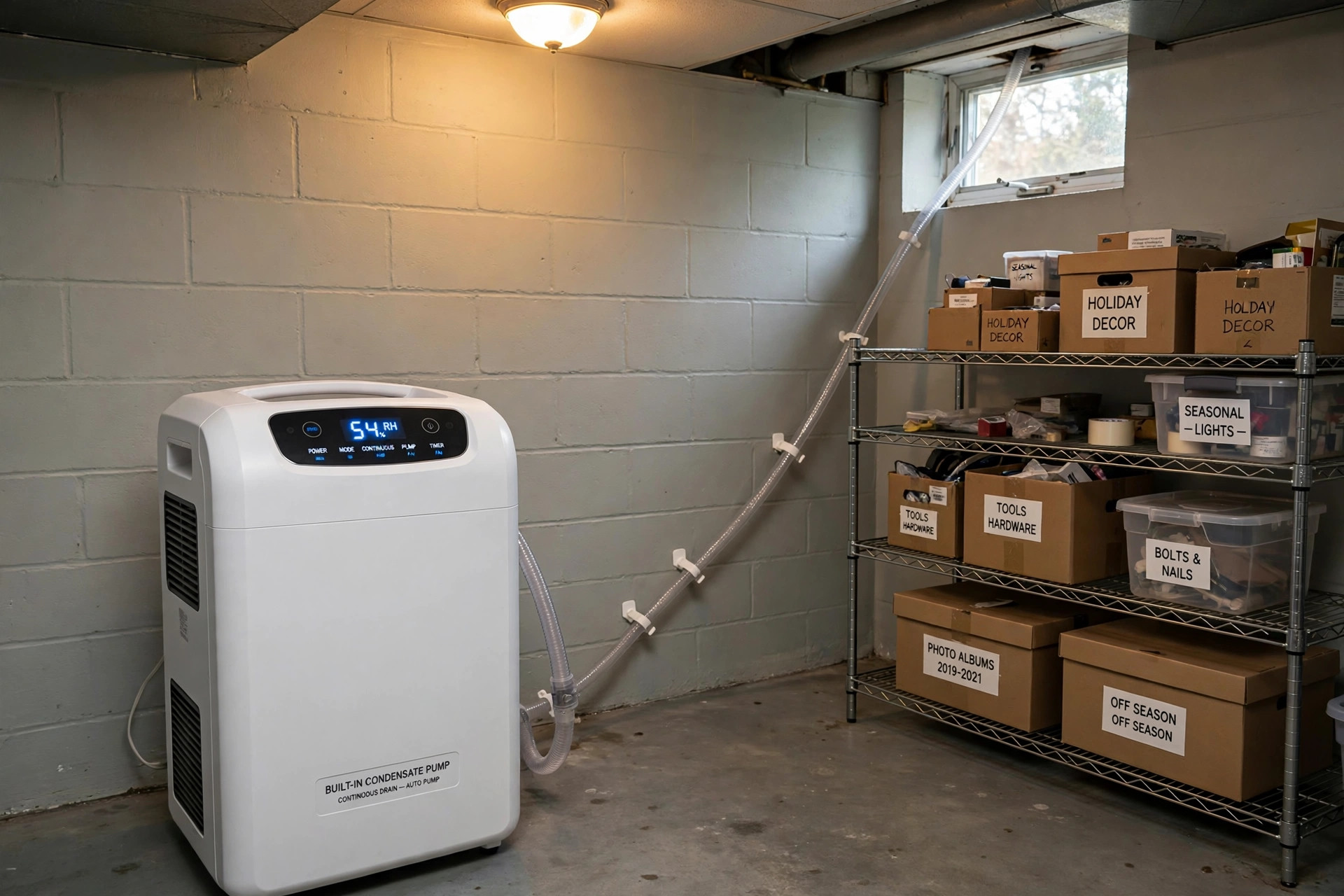
The pump is the key feature of a basement dehumidifier with pump. A normal unit fills an internal bucket. When the bucket is full, the unit stops until you empty it. A pump model pushes the water through a hose instead. You can run the hose up and out a small basement window, into a sink, or into a floor drain.
Check two pump facts before you buy. First, the lift height. This is how high the pump can push water. Basement windows often sit four to six feet above the floor. Make sure the rated lift covers that height with room to spare. Second, the hose length. A longer hose gives you more drain choices. Most pumps include a hose of 15 to 20 feet.
Some units let you choose between pump drain and gravity drain. Gravity drain only works when the drain point is below the unit. A pump removes that limit. If your only drain is a high window, the pump model is the right pick.
Energy Use and Noise
A dehumidifier runs for many hours each day. Energy use matters. Look for the Energy Star label. Energy Star rated dehumidifiers use less power to remove the same amount of water. Over a humid season, the savings add up on the electric bill.
Noise matters too, especially if the basement is finished or used as a living space. Most units run between 45 and 55 decibels. That is about the sound of a quiet conversation or a running refrigerator. Check the listed noise level and read buyer comments about real-world sound. Independent testing groups such as Consumer Reports publish noise and performance ratings for popular models.
Useful Extra Features
A built-in humidistat lets you set a target humidity. The unit runs until the air reaches that level, then rests. Auto-defrost keeps the coils ice-free in cool basements. A washable air filter cuts dust and is easy to rinse. Wheels and handles help you move the unit. A digital display shows the current humidity at a glance.
Types and Options
Portable units with pumps are the most common choice. They roll on wheels and plug into a normal outlet. They suit most basements and cost the least. You set one up in an afternoon with no special tools.
Whole-home dehumidifiers tie into the house ductwork. They dry the whole house, not just the basement. They cost more and need a trained installer. They are a good pick for large homes with wide damp problems.
Commercial-grade units are built for very wet spaces. They remove more water and stand up to hard use. They cost more and run louder. Most homes do not need this level.
Home repair guides such as This Old House and do-it-yourself repair sites like Family Handyman describe these types in more depth. Their project write-ups help you judge which type fits your home.
Where to Place the Unit
Place the dehumidifier near the center of the damp area when you can. Air must reach the unit from all sides. Keep it at least one foot from walls and large furniture. Do not hide it in a closet or behind boxes. A blocked unit works harder and dries less.
Basements often have a natural low point where damp collects. Corners near outside walls are common trouble spots. Set the unit close to that spot. If the basement has two rooms, place the unit in the damper one and leave the connecting door open.
Plan the drain path before you set the unit down. The best drain is a floor drain or a sump pit. A sink or laundry tub works well too. A small basement window is another fine choice. Run the hose with a steady slope toward the drain. Avoid loops and sharp bends that trap water.
Window drain kits help with high windows. The kit fills the window gap around the hose and keeps outside air out. This matters in summer, when hot humid air rushes through any open gap. A tight seal lets the dehumidifier do its job without fighting new damp air.
Keep the unit away from direct heat sources like furnaces and water heaters. Heat can fool the built-in sensor. Keep it off soft carpet if you can, since carpet blocks the bottom air intake on some models. A concrete or tile floor is best.
Cost and Price in the USA
A portable basement dehumidifier with a built-in pump usually costs between 250 and 450 dollars in the USA. Basic 30-pint models sit at the low end. Large 70-pint models with strong pumps sit at the high end. Prices rise in spring when demand peaks.
Running cost is modest. A 50-pint Energy Star unit may draw 500 to 700 watts while running. In a humid month, it might add 20 to 40 dollars to the electric bill. Good insulation and sealed windows lower that cost by keeping humid air out.
Whole-home units cost 1,500 to 3,000 dollars installed. Commercial units cost 800 to 1,500 dollars. For most buyers, the portable pump model is the best value.
While you work on moisture, some owners also improve their household water in other ways. Water filtration system reviews can guide that choice, and filter makers like Aquasana offer whole-home options. If damp is linked to drainage trouble outside, learning the sewer cleanout installation cost helps you plan that repair too.
Care and Upkeep
A dehumidifier needs little care, but it needs regular care. Clean or rinse the air filter every two to four weeks during heavy use. A clogged filter cuts airflow and forces the unit to work harder.
Check the drain hose often. Make sure it slopes toward the drain and has no kinks. Once a month, run the pump and watch water flow out. This test proves the pump still works. If the hose runs to a window, check the window seal so humid outside air does not leak back in.
Empty and wipe the backup bucket now and then, even if the pump handles most of the water. Wipe the outside of the unit with a damp cloth. In winter, if the basement gets very cold, store the unit upright in a dry spot. Do not lay it on its side.
Some basement water work touches other home systems. Owners researching pumps sometimes read permeate pump reviews for RO systems to understand how small pumps move water. The idea is the same: a small pump pushes water where gravity cannot.
Safety Notes
Water and electricity do not mix. Plug the unit into a grounded outlet. Keep the cord dry and away from the drain hose. Do not run the cord under rugs or across walkways.
Place the unit on a level floor. Keep it a foot or more from walls so air flows freely. If the basement floods, unplug the unit and do not touch it while standing in water. Wait until the water is gone and the floor is dry.
Clean filters reduce dust, but they do not remove mold that is already growing. If you see large patches of mold, wear a mask and gloves while cleaning, or call a trained worker. Dry the space fully after cleanup so the mold does not return.
Frequently Asked Questions
How long does a basement dehumidifier last? Most last five to ten years with basic care. Clean filters and open airflow extend the life. The pump may wear out sooner than the rest of the unit in very hard use.
Can I run the drain hose to a sump pit? Yes. A sump pit is a fine drain point. Secure the hose so it does not slip out. Make sure the sump pump still has room to work and the hose does not block the float.
What humidity level should I set? Set 40 to 45 percent for most basements. Below 30 percent feels too dry and wastes power. Above 50 percent lets mold and dust mites thrive.
Will a dehumidifier dry a flooded basement? No. A dehumidifier handles moisture in the air, not standing water. Remove standing water first with a wet vacuum or pump. Then run the dehumidifier to dry the damp air and surfaces.
Do I need a pump model if I have a floor drain? A floor drain lets you use a simple gravity hose. But a pump model still helps if the drain sits across the room or if you want the hose out of the way. Many buyers choose the pump for the extra freedom it gives.
Is a dehumidifier loud enough to hear upstairs? Usually not. Most units hum at the level of a refrigerator. If the basement door is closed, you will hardly notice it. Placing the unit away from the stairs helps even more.
A Final Word
The best basement dehumidifier with pump usa buyers choose is the one that fits the space, drains with ease, and runs at a fair cost. Size it right, place it well, and give it basic care. In return, you get a dry basement, safe stored goods, and cleaner air for the whole home. That is a fair trade for a machine that asks so little of you.
Related guides on this site include best whole house water filter system usa, whole house water filtration cost installed, and reverse osmosis system under sink reviews usa.
References
Aquasana. (n.d.). Water filtration systems. https://www.aquasana.com Consumer Reports. (n.d.). Product reviews and ratings. https://www.consumerreports.org Delta Faucet. (n.d.). Kitchen and bathroom faucets. https://www.deltafaucet.com ENERGY STAR. (n.d.). Energy efficient products. https://www.energystar.gov Family Handyman. (n.d.). DIY home repair and maintenance. https://www.familyhandyman.com Kohler. (n.d.). Bathroom and kitchen fixtures. https://www.kohler.com Lowe’s. (n.d.). Home improvement products. https://www.lowes.com Moen. (n.d.). Faucets and plumbing fixtures. https://www.moen.com The Home Depot. (n.d.). Home improvement products. https://www.homedepot.com This Old House. (n.d.). Home renovation guidance. https://www.thisoldhouse.com U.S. Environmental Protection Agency. (n.d.). Protecting human health and the environment. https://www.epa.gov
Was this guide helpful?

About Sarah Mitchell
The My Garden US editorial team writes practical, in-depth home and garden guides for American homeowners — tested advice, no fluff.
You May Also Like
Hybrid Water Heater vs Gas Comparison USA
February 25, 2026 0 views
Enzyme Drain Cleaner Reviews for Septic USA: What Really Works
February 3, 2026 0 views
Polybutylene Pipe Replacement Cost USA: What Homeowners Should Know
April 14, 2026 0 views