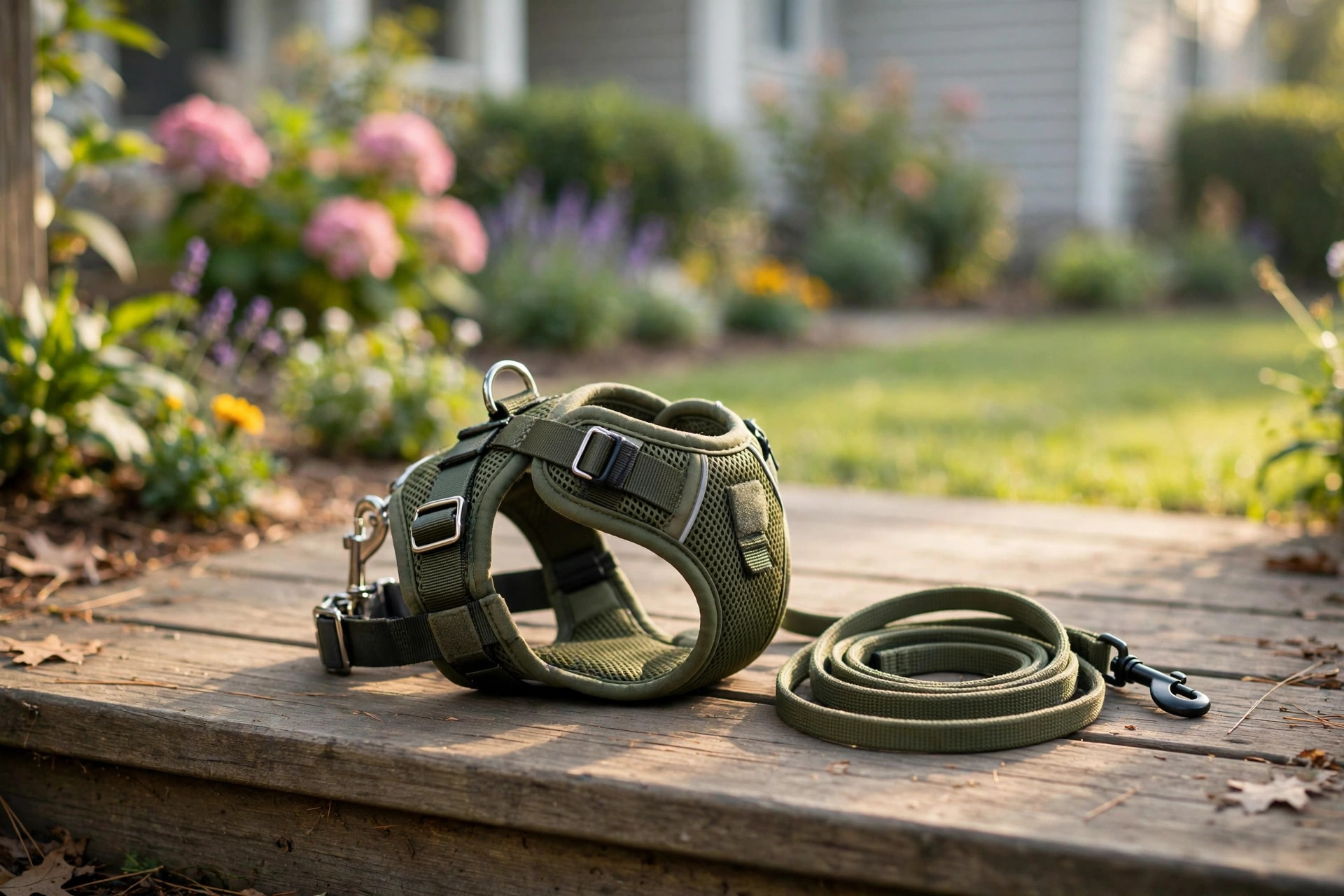

A cat harness and leash set for outdoor walks gives an indoor cat something it can never get inside a house. It gives the cat fresh air, new smells, and the feel of grass under its paws. Many cats live their whole lives indoors. Indoor life is safe, but it can also be dull. A window shows the world. A harness opens it.
Not every cat will take to a leash, and not every owner knows where to start. The market is full of thin straps, padded vests, and elastic leads. Some fit well. Some slip off in seconds. This guide walks through the whole subject in plain terms. It explains why a harness set matters, what to look for in a store, the main types on the market, what one costs, how to keep it clean, how to train a cat to wear it, and how to stay safe outside. By the end, you will know exactly how to pick the right cat harness and leash set for outdoor walks and how to use it with confidence.
Why a Harness Set Matters for an Indoor Cat
Cats kept indoors live longer on average than cats that roam free. Roads, dogs, parasites, and poisons make the outdoors risky. Yet an indoor cat still has the instincts of a hunter. It watches birds from the sill. It paces the hallway at dusk. It needs more than a sofa.
A harness set offers a middle path. The cat goes outside, but it stays under control. It can sniff the garden, sit in the sun, and watch insects. These small events sharpen the mind. Vets often note that indoor cats suffer from boredom, and boredom shows up as weight gain, scratching, and night restlessness. Short walks can ease all three.
The American Society for the Prevention of Cruelty to Animals has long advised that cats kept indoors need planned enrichment to stay healthy. A regular stroll on a leash is one of the simplest forms of enrichment there is. It costs little and takes only twenty minutes a day.
A harness also matters for travel. A cat in a carrier may still need to leave the carrier at the vet or on a trip. A cat wearing a harness can be moved short distances without the risk of a sudden dash. For more on enclosed travel options, see our piece on the best cat carrier for vet visits top loading.
What to Look for When You Choose a Set: Cat Harness and Leash Set for Outdoor Walks
The focus keyword phrase describes a product, but the details decide whether the product works. Look at fit first, then material, then the leash.
Fit Is Everything
A cat can slide out of a loose collar in one twist. A harness spreads pressure across the chest and shoulders, so the cat cannot choke itself. Still, a loose harness is useless. Most makers print size charts based on chest girth. Measure your cat with a soft tape around the widest part of the chest, just behind the front legs. Compare that number to the chart. If your cat falls between two sizes, choose the smaller one. You should be able to slide two fingers under every strap. If you can fit three, the harness is too loose.
A good cat harness and leash set for outdoor walks will have at least two adjustment points, one at the neck and one at the belly. Three or four points give a better fit for long, slim breeds like the Siamese.
Material and Comfort
Nylon webbing is the most common strap material. It is cheap, strong, and easy to wash. Padded mesh vests spread pressure over a wide area and suit cats that pull. Cotton blends feel soft but wear out faster in the sun. Avoid thin rope-style cords. They dig into the skin and frighten the cat.
Check the buckles. Plastic side-release buckles are quick but can crack in cold weather. Metal buckles last longer. Look for smooth stitching with no sharp edges. If a strap edge rubs your finger raw, it will rub the cat raw.
The Leash
A standard leash runs four to six feet long. That length gives the cat room to explore while you keep control. Retractable leashes look tempting, but most trainers dislike them for cats. The thin cord can burn your hand, and the locking button can fail at the worst moment. Choose a flat nylon or rope leash with a small swivel clip. The swivel keeps the leash from twisting as the cat circles.
Reflective stitching on the leash is a plus if you walk near dusk. It helps drivers see you both.
Types of Harness Sets on the Market
Most cat harness and leash sets for outdoor walks fall into three shapes. Each has strengths and weak points.
The H-style harness. Two loops, one for the neck and one for the belly, joined by a strap along the back. It is light and cheap. It suits calm cats that do not pull. Escape artists may back out of it.
The vest or jacket harness. A wide panel of mesh or padded fabric wraps the torso. Velcro and a buckle hold it shut. This type spreads pressure across a broad area, so it is gentle on cats with delicate throats. It also works well in cool weather. The downside is heat. On a hot day, a thick vest can warm the cat too much.
The figure-8 harness. One loop goes around the neck and another around the belly, crossing at the back in the shape of an eight. It is simple and light. It fits best on lean cats. Stocky cats may find it tight under the front legs.
When you shop, compare options at a trusted retailer such as Chewy, which lists dozens of harness sets with owner reviews, or at PetSmart and Petco, where you can handle the straps before you buy. Reading reviews helps you learn which models run small and which buckles break early.
Getting Your Cat Used to the Harness
Never take a cat outside on the first day with a new harness. Training takes patience. Most cats need one to two weeks.
Start indoors. Lay the harness near the food bowl for a day so the cat can sniff it. Next, drape it over the cat’s back for a few seconds and give a treat. Repeat until the cat ignores it. Then fasten it loosely for a minute at a time. Keep sessions short. End each session with praise and a small reward.
Once the cat walks around the house without freezing or flopping, attach the leash. Let the cat drag it under your watch so it learns the tug of the line. Never tie the leash to a chair and walk away. A panicked cat can tangle itself in seconds.
When the cat moves freely indoors, open the back door. Keep the first outdoor trip short, five minutes in a quiet corner of the yard. Let the cat lead. Follow at the cat’s pace. If the cat crouches and refuses to move, pick it up and go back inside. There is no shame in a short session.
The American Kennel Club publishes general leash-training guidance that, while written for dogs, covers pacing and reward timing that apply to cats as well. For health questions about outdoor exposure, PetMD offers vet-reviewed articles on parasites and vaccines.
Where to Walk and When
Choose a calm route. A quiet side yard beats a busy sidewalk. Avoid areas where dogs run loose. Avoid freshly sprayed lawns. Many garden chemicals are toxic to cats, and a cat will lick its paws after a walk.
Walk in the morning or late afternoon when the ground is cool. Hot pavement can burn paw pads in summer. In winter, keep walks brief and watch for salt on sidewalks. Salt irritates paws and is harmful if licked.
Stay away from thick brush where ticks hide. If your region has ticks, ask your vet about prevention before your first walk. Cats that walk outdoors should be current on flea control and on core vaccines, including rabies.
For owners who want fresh air without a leash at all, an outdoor cat enclosure for safe garden roaming is a solid option. For trips across town, a pet stroller for small dogs and cats travel keeps the cat contained while still letting it see the world.
Cost and Price
A basic cat harness and leash set for outdoor walks costs between ten and twenty dollars. Nylon H-style sets sit at the low end. Padded mesh vests run from twenty to thirty-five dollars. Designer jackets with fleece lining can reach forty dollars or more.
Price does not always track quality. Read the stitching and test the buckles in the store. A fifteen-dollar set with strong buckles beats a forty-dollar set with flimsy clasps.
Budget for extras. A breakaway safety collar for the ID tag costs a few dollars. A small bottle of pet-safe paw balm helps in winter. If you walk after dark, a clip-on LED light for the harness costs under ten dollars at The Home Depot, which also stocks outdoor gear that suits a home with pets.
Care and Upkeep
Wash the harness every few weeks, or sooner if the cat rolls in something foul. Hand wash in warm water with mild soap. Rinse well. Hang it to dry in the shade. Machine washing can warp plastic buckles and fray thin straps.
Inspect the set before every walk. Pull each strap and check the stitching where the leash clip meets the harness. This joint takes the most force. If you see fraying, replace the set. A harness that fails at the curb is worse than no harness at all.
Store the set by the door so walks become a habit. Keep a spare leash in the car if you travel with the cat.
Safety Rules for Outdoor Walks
A harness makes walks possible, but it does not make them risk-free. Follow these rules every time.
First, never tie the leash to a post and leave the cat alone. A tethered cat cannot flee a dog. Second, keep the cat away from other animals. A friendly-looking dog can turn in a second, and a stray cat may carry disease. Third, watch what the cat mouths. Cats chew grass, and some garden plants, like lilies, are deadly to cats. Learn the toxic plants in your area.
Fourth, carry your phone and the vet’s number. Fifth, use flea and tick prevention as your vet advises. The American Veterinary Medical Association provides guidance on parasite control and on what to do after a bite or sting outdoors.
Sixth, respect the cat’s limits. Some cats love walks. Some tolerate them. A few never accept the harness, and that is fine. Forcing a frightened cat outside does more harm than good. The Spruce Pets carries plain-language guides on reading feline body language, which helps you tell the difference between curiosity and stress.
Frequently Asked Questions
Can any cat learn to walk on a harness? Most cats can, but age and temper matter. Kittens and young adults adapt fastest. Older cats that have never been outside may learn too, though it takes longer. Very timid cats may never enjoy it. Start training and watch the cat’s response. The cat’s comfort decides the outcome.
Is a collar enough, or do I need a harness? You need a harness. A collar sits on the throat. A cat that lunges can choke or slip free. A harness spreads force across the chest and back. No major pet safety source advises walking a cat on a collar alone.
How long should a walk last? Ten to twenty minutes is plenty for most cats. Some bold cats will stroll for half an hour. End the walk while it is still fun. A cat that is carried home tired but calm will look forward to the next trip.
What if my cat freezes and will not move? Freezing is normal in the first week. The cat is processing new sights and sounds. Stand still, speak softly, and wait. If the cat stays frozen for several minutes, scoop it up and go inside. Try again another day in a quieter spot.
Should the cat wear the harness indoors? Only during training. Once the cat accepts the harness, put it on before a walk and take it off after. Wearing it all day can rub the fur and dull the link between the harness and the treat of going outside.
Can I walk two cats at once? It is possible but hard. Each cat needs its own harness and leash, and cats rarely walk in the same direction. Train each cat alone first. Only combine them when both walk calmly by themselves.
A Short Final Word
A cat harness and leash set for outdoor walks is a small purchase with a large payoff. It turns a dull indoor routine into a daily outing. It trims weight, sharpens the mind, and deepens the bond between cat and owner. Choose a set that fits well, train with patience, and walk where it is calm and safe. Your cat will thank you in the quiet way cats do, by coming to the door when it sees the harness in your hand. For breed and care background on keeping cats healthy at home, Cats.com is a useful free reference.
References
American Kennel Club. (n.d.). Dog care and training resources. https://www.akc.org American Veterinary Medical Association. (n.d.). Pet care resources. https://www.avma.org ASPCA. (n.d.). Pet care and animal welfare resources. https://www.aspca.org Cats.com. (n.d.). Cat breeds, care, and behavior guides. https://www.cats.com Chewy. (n.d.). Pet supplies. https://www.chewy.com Petco. (n.d.). Pet supplies and services. https://www.petco.com PetMD. (n.d.). Pet health information. https://www.petmd.com PetSmart. (n.d.). Pet supplies and services. https://www.petsmart.com The Home Depot. (n.d.). Home improvement products. https://www.homedepot.com The Spruce Pets. (n.d.). Pet care guides and product reviews. https://www.thesprucepets.com
Was this guide helpful?

About James Carter
The My Garden US editorial team writes practical, in-depth home and garden guides for American homeowners — tested advice, no fluff.
You May Also Like

Dog Crate With Wheels for Easy Transport: A Complete Buyer’s Guide
October 2, 2026 0 views
A Self Cleaning Litter Box for Busy Cat Owners
May 20, 2026 0 views
The Best Pet Fence Wireless for Stubborn Dogs: A Plain Guide
July 17, 2026 0 views