Many dog owners in America work long hours. Their dogs sit home alone. A lonely dog can turn a quiet house into a mess. Shoes get chewed. Pillows get torn. Doors get scratched. This is why dog food puzzle toys for boredom relief usa have become so popular. They give the dog a job to do while the owner is away.
A food puzzle toy is simple. It holds kibble or treats inside. The dog must work to get the food out. The dog rolls it, paws it, or noses it. This keeps the dog busy. It also feeds the dog at a slower pace. A bored dog is an unhappy dog. A busy dog is a calm dog.
Why Boredom Is a Real Problem for Dogs
Dogs were once hunters and herders. They used their minds and bodies all day. Modern house dogs live a quiet life. They sleep for hours. They wait by the door. When they wake up, they need something to do. If they find nothing, they make their own fun. That fun often means damage to the home.
Veterinary groups across the country note that boredom can lead to bad habits. A bored dog may chew furniture, dig at rugs, or bark for hours. Some dogs pace or lick their paws until the skin turns raw. Separation anxiety often grows worse in dogs with nothing to do. The American Kennel Club and the ASPCA both stress that mental play is as important as a daily walk.
A tired mind can rest. A bored mind cannot. This is the main point of food puzzles. They give the dog a small problem to solve. Each meal becomes a game. The dog stays focused. Stress goes down. The house stays whole.
What Dog Food Puzzle Toys Do: Dog Food Puzzle Toys for Boredom Relief Usa
A dog food puzzle toy turns eating into work. Instead of eating from a plain bowl in one minute, the dog spends ten or twenty minutes on a puzzle. This is close to how dogs ate in the wild. They hunted for food. They used their noses. They earned each meal.
How They Work
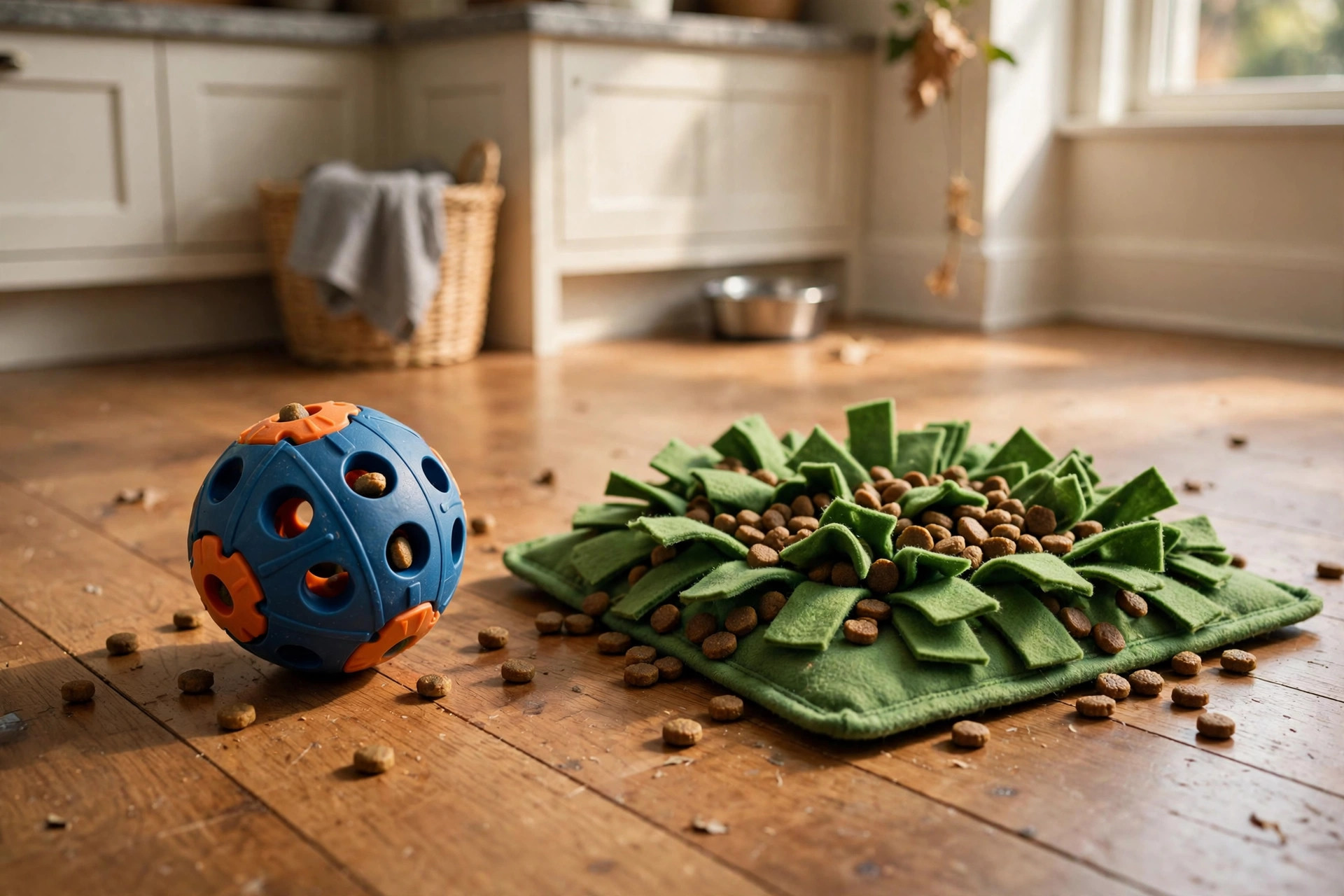
Most puzzles share one idea. Food goes in. It comes out only when the dog does something right. A ball with a small hole drops kibble when the dog rolls it. A flat board hides treats under sliding lids. The dog must push the lids open. A mat made of cloth strips hides food deep in the folds. The dog must sniff and nose through it. Retailers like Chewy and Petco carry wide ranges of these designs, from simple starter balls to hard multi-step boards.
The best puzzles match the dog. A young beagle needs a simple ball. A smart border collie needs a hard board. Start easy. Make it harder as the dog learns.
Types of Dog Food Puzzle Toys
Stores in the USA sell four main kinds of food puzzles. Each kind fits a different dog and a different meal.
Treat Balls and Dispensers
The treat ball is the most common type. It is a hard plastic or rubber ball with a hole. The owner fills it with kibble. The dog rolls it with its nose or paws. Kibble falls out a few pieces at a time. Some balls have adjustable holes. A small hole makes the game last longer. A large hole makes it easy. These balls suit dogs of all sizes. Big brands of pet gear often stock them, and home stores like The Home Depot even carry pet aisles with such basics.
Snuffle Mats
A snuffle mat is a flat pad made of thick cloth strips. The owner drops kibble into the strips. The dog must sniff and push its nose deep to find each piece. This uses the sense of smell. It is calm work. It suits old dogs, shy dogs, and dogs with joint pain. It also suits dogs that eat too fast. Some owners pair a snuffle mat with slow feeder dog bowls to slow meals even more.
Sliding and Lifting Puzzles
These are flat plastic or wood boards with moving parts. The dog slides a lid, lifts a cup, or spins a wheel to find food. They come in levels. Level one is easy. Level three is hard. Smart dogs love them. They learn fast. The owner can raise the level over time. Pet health sites like PetMD note that harder puzzles can cut down on problem behavior in clever breeds.
Lick Mats and Stuffed Toys
A lick mat is a soft rubber mat with raised patterns. The owner spreads peanut butter or wet food on it. The dog licks it clean. Licking calms dogs. It lowers stress. Stuffed rubber toys work the same way. The owner fills them with food and freezes them. The frozen food takes a long time to eat. This is a good trick for hot summer days. Nutrition brands such as Hill’s Pet remind owners to count puzzle food as part of the daily ration, so the dog does not gain weight.
How to Choose the Right Puzzle Toy
Choosing a puzzle is not hard. Follow a few simple rules.
First, match the size. A small ball can choke a large dog. A huge board will bore a small dog. Check the size guide on the box. Buy the size made for your dog’s weight.
Second, match the skill. A dog that has never used a puzzle should start easy. Buy a simple ball or mat. Let the dog win fast. A quick win builds trust. After a week, try a harder toy. If the dog gets bored, the toy is too hard. If the dog finishes in two minutes, the toy is too easy.
Third, check the material. Hard plastic should be thick and smooth. There should be no sharp edges. Rubber toys should be tough. Read the label. Make sure it is made for pets and free of harmful chemicals. The American Veterinary Medical Association advises owners to check toys often for cracks and loose parts.
Fourth, think about cleaning. Food puzzles get dirty. Choose toys that can be washed with warm soap and water. Many plastic toys can go in the dishwasher on the top rack. Cloth mats can often go in the washing machine. A dirty toy can grow germs. Clean toys keep the dog healthy.
Cost and Price in the USA
Prices vary by type and brand. A simple treat ball costs about five to twelve dollars. A snuffle mat costs about fifteen to thirty dollars. A lick mat is cheap, often under ten dollars. Multi-step puzzle boards cost more, from twenty to forty-five dollars. Stuffed rubber toys sit in the middle, about ten to twenty dollars.
Most dog owners start with one ball and one mat. That is enough to learn what the dog likes. Over time, many owners build a small collection. They rotate the toys. A fresh toy feels new. Rotation keeps the dog keen. Shop staff at stores like Petco can often show how each toy works before you buy.
How to Introduce a Puzzle Toy to Your Dog
Do not hand the dog a hard puzzle on day one. Teach in steps.
Step one: let the dog sniff the empty toy. Let it learn that the toy is safe. Praise the dog for touching it.
Step two: put a few treats near the toy, not inside it. Let the dog eat them next to the toy. This builds a good feeling.
Step three: put a few treats just inside the opening. Make them easy to reach. Let the dog win in seconds. Praise the dog.
Step four: fill the toy fully. Let the dog work. Watch from a distance. Do not help too fast. The dog must learn to solve it alone.
Step five: leave the dog alone with the toy for short times. Start with ten minutes. Grow the time as the dog learns.
If the dog barks at the toy or walks away, the toy is too hard. Go back a step. Make it easy again. Every dog learns at its own pace.
Care and Upkeep
A food puzzle needs care. Old food can turn bad. Germs can grow in small cracks.
Wash plastic and rubber toys after every few uses. Use warm water and mild dish soap. Rinse well. Let the toys dry fully before you fill them again. Check the dishwasher label before you use the machine.
Wash cloth mats once a week. Most can go in the washing machine on a gentle cycle. Let them air dry. A damp mat can smell bad.
Inspect each toy once a week. Look for cracks, tears, and loose parts. A broken toy can hurt a dog. Throw away any toy that is falling apart. Replace it with a new one. Sites like The Spruce Pets publish care guides that echo these same simple steps.
Store puzzles where the dog cannot reach them. Bring them out at meal time. This keeps them special. It also keeps the dog from chewing them apart out of boredom.
Safety Notes
Food puzzles are safe when used well. But a few rules matter.
Always watch the dog the first few times. Make sure the dog plays with the toy the right way. Some dogs try to chew through hard plastic. Take the toy away if the dog chews instead of playing.
Pick the right size. A toy that is too small can get stuck in the throat. This is the most serious risk. When in doubt, buy the larger size.
Use safe foods only. Plain kibble, dog biscuits, and dog-safe peanut butter are fine. Never use chocolate, grapes, raisins, onions, or xylitol. These are poison to dogs. If you are unsure about a food, ask your vet.
Count the calories. Food from puzzles is still food. Cut back the meal in the bowl by the same amount. Many dogs gain weight when owners add puzzle treats on top of full meals.
Dogs with anxiety may need more than a toy. An escape-proof crate and a calm routine can help. Some owners also use a pet camera with a treat dispenser to check on the dog during the day. A toy is a tool, not a cure.
Frequently Asked Questions
Are dog food puzzle toys good for puppies? Yes. Puppies love them. Start with a soft, simple toy. Use the puppy’s normal kibble. Keep sessions short. A tired puppy is a well-behaved puppy.
How long should a dog play with a puzzle each day? Fifteen to thirty minutes a day is enough for most dogs. You can split it into two meals. Very active breeds may want more. Watch the dog. If it loses interest, stop for the day.
Can puzzle toys replace walks? No. A walk gives exercise, fresh air, and new smells. A puzzle gives mental work. Dogs need both. Use puzzles to add to the walk, not to replace it.
What if my dog destroys the puzzle toy? Some dogs are rough. Buy toys made for strong chewers. Thick rubber is best. If the dog still breaks it, take it away. Use the toy only under watch. Never leave a known chewer alone with a plastic puzzle.
Do food puzzles help with separation anxiety? They can help. A busy dog thinks less about being alone. Give the puzzle right as you leave. The dog links your exit with a good thing. But deep anxiety needs more help. Talk to your vet if the dog panics, howls, or hurts itself.
How do I clean a snuffle mat? Shake out loose crumbs first. Then wash it in the machine on gentle with mild soap. Air dry it fully. Do not use strong bleach. Check the care tag for exact steps.
A Short Final Word
Dog food puzzle toys for boredom relief usa are a small buy with a big payoff. They turn idle hours into play. They slow down fast eaters. They calm worried minds. Start simple. Watch your dog. Clean the toys. In a short time, meal time will become the best part of your dog’s day.
References
American Kennel Club. (n.d.). Dog care and training resources. https://www.akc.org American Veterinary Medical Association. (n.d.). Pet care resources. https://www.avma.org ASPCA. (n.d.). Pet care and animal welfare resources. https://www.aspca.org Chewy. (n.d.). Pet supplies. https://www.chewy.com Hill’s Pet Nutrition. (n.d.). Pet nutrition guides. https://www.hillspet.com Petco. (n.d.). Pet supplies and services. https://www.petco.com PetMD. (n.d.). Pet health information. https://www.petmd.com The Home Depot. (n.d.). Home improvement products. https://www.homedepot.com The Spruce Pets. (n.d.). Pet care guides and product reviews. https://www.thesprucepets.com
Was this guide helpful?

About Emily Rodriguez
The My Garden US editorial team writes practical, in-depth home and garden guides for American homeowners — tested advice, no fluff.