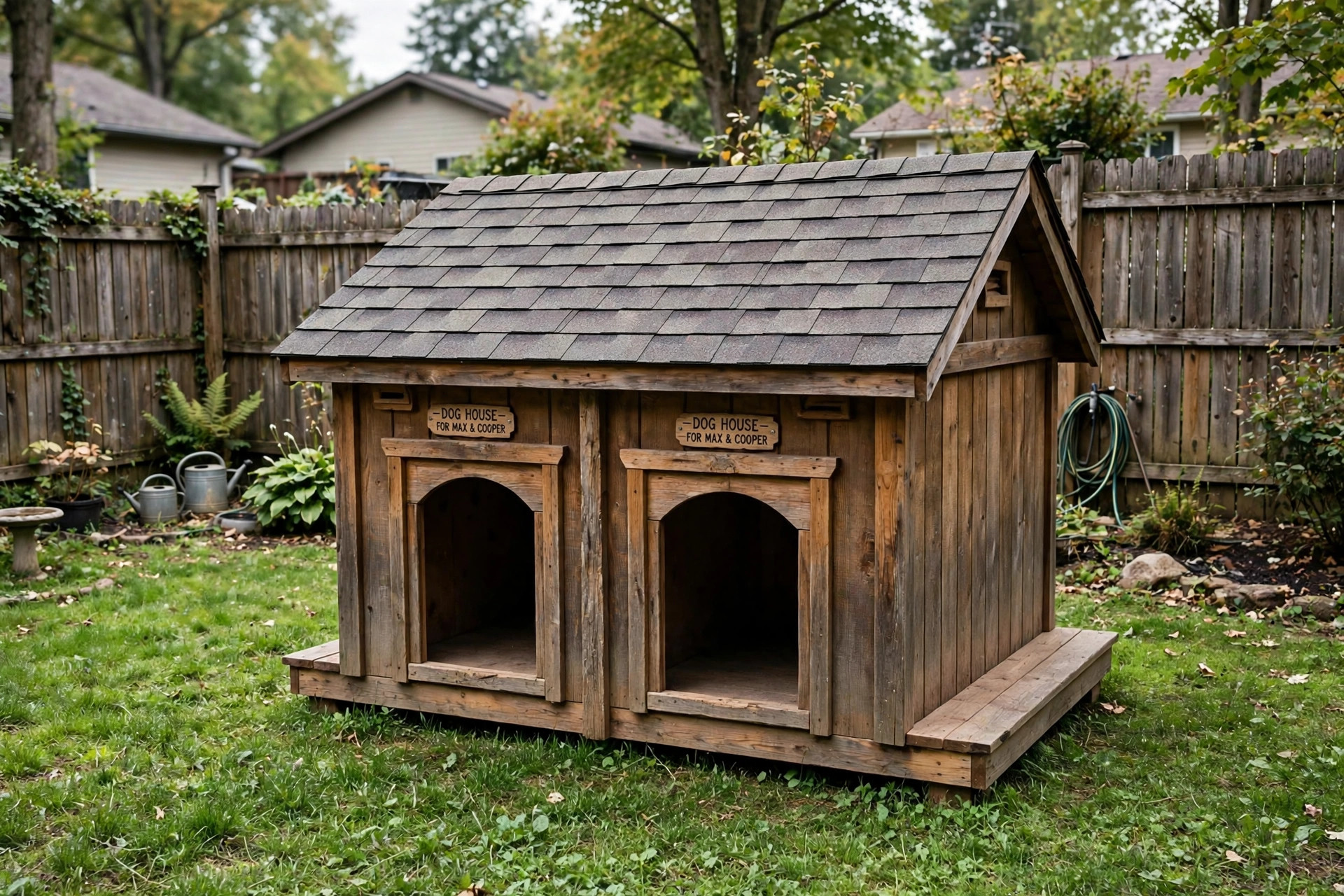

A dog house built for one small pet will not serve two large dogs. Big breeds need room to stand, turn, and lie flat without crowding. When two of them share one shelter, the house must be sized for both at once. This guide explains how to choose an outdoor dog house for two large dogs that keeps both animals dry, warm, and safe through the year.
The focus keyword for this article is the outdoor dog house for two large dogs. The pages that follow walk through size rules, building materials, styles, costs, upkeep, and safety. The goal is simple. Give your dogs a shelter they will actually use.
Why Two Large Dogs Need the Right House
Many owners start with a house sized for one dog. Then a second large dog arrives, and the old house turns into a tight box. Two big dogs in a small space create heat in summer and damp in winter. Fur rubs. Tempers shorten. One dog may refuse to go in at all.
A proper outdoor dog house for two large dogs solves this with space. Each dog should be able to lie on its side with legs out. Each should be able to stand without the back touching the roof. When both dogs are inside at once, neither should press hard against the other.
There are practical gains as well. A roomy house stays cooler in heat because air moves. It stays drier in rain because the dogs are not packed against the walls. And a house both dogs accept is a house that does its job. A dog that will not enter its shelter is a dog with no shelter.
Space also matters for older dogs. Large breeds age fast. A senior dog with stiff joints needs a low step and a flat floor. Plan for that now, and the house will serve for many years.
What to Look For When You Choose: Outdoor Dog House for Two Large Dogs
Size and floor space
The common rule is this. Measure your largest dog from nose to tail base while standing. Add about half again to get the inside length. The inside width should let the dog lie on its side. The door height should reach the dog’s shoulder, and the door width should let the dog pass without squeezing.
For two large dogs, double the floor area you would give one. A common workable size for a pair of Labrador-sized dogs is around 48 by 36 inches inside. For bigger breeds, such as German shepherds or huskies, 60 by 48 inches is closer to right. When in doubt, go larger. A house that is too big beats a house that is too small, and you can add straw or a divider to make a large house feel snug.
Materials
Wood is the classic choice. Cedar and fir resist rot and insects. Wood feels warm to the touch and takes paint well. It needs sealing or stain every year or two. Many owners buy lumber and hardware for the job at a home improvement center or a farm and outdoor supplier.
Heavy-duty plastic is the low-care choice. It will not rot, and it washes out with a hose. Pet supply retailers and large pet stores carry several sturdy plastic models sized for large breeds. Plastic houses can run hot in direct sun, so place them in shade. They also run light, so stake them down in wind.
Metal is rare for dog houses and best avoided. It swings hot in summer and cold in winter, and it sweats with condensation.
Insulation and airflow
In cold regions, look for double walls with foam between them, or add rigid foam panels yourself. A raised floor matters more than many owners think. It keeps damp ground from chilling the dogs from below.
In warm regions, look for vents near the roof line. Hot air rises and leaves through the vents, pulling cooler air in through the door. A light-colored roof reflects sun. Shade from a tree or a porch roof helps more than any vent.
The door
A flap door keeps wind and rain out and heat in. Some dogs dislike pushing through a flap at first. You can train them with treats over a few days. In mild weather, many owners remove the flap and let the door stay open. A wind wall inside the door, a short offset panel, blocks drafts without blocking entry.
Types and Options
Duplex and double-door houses
Some houses are built as a duplex, two rooms joined by a shared wall. Each dog gets its own space. This suits dogs that rest better apart. The shared wall saves lumber and keeps the footprint small.
Other houses are one big room with a door on each end. Two doors give each dog an exit, so neither feels trapped. This is the better pick for dogs that are still learning to share.
Raised and insulated houses
A raised house sits on legs or a pallet base. Air moves under the floor. The floor stays dry after rain. In cold weather, the gap under the floor breaks the chill from frozen ground.
Insulated houses have thick walls with foam cores. They cost more. They pay for themselves in regions with hard winters. A safe low-wattage pad heater adds steady warmth to an insulated shell.
Porch and kennel combinations
Some setups join the house to a fenced run. The dogs move between shelter and yard as they like. A kennel with a roofed house at one end is a fine arrangement for dogs that spend the day outside. Make sure the run has shade and water in summer.
Cost and Price
A plain plastic house for two large dogs often costs between 100 and 250 dollars. A large wooden house from a maker runs from 250 to 600 dollars. Insulated or duplex models can reach 800 dollars or more.
Building your own can cost less in money and more in time. Lumber, screws, shingles, and paint for a large house often total 150 to 300 dollars. The result fits your dogs exactly.
Running costs stay small. Bedding straw is cheap. A washable pad lasts a year or more. Sealant for a wooden house costs a few dollars each year. The biggest cost is getting it wrong. A house the dogs refuse to use is money lost.
Care and Upkeep
Clean the house once a month. Take out bedding. Sweep the floor. Wash it with mild soap and water, and let it dry in the sun. Sunlight kills many germs and dries damp wood. Pet care guides and veterinary advice sites both stress regular cleaning as the best defense against skin problems.
Check the roof each season. Shingles lift. Seams open. A small leak makes the bedding damp, and damp bedding chills dogs fast. Re-caulk and re-shingle as needed.
Check the floor for soft spots. Wood rots from the underside first. If the floor feels spongy, replace the boards. A raised house lets you look underneath with ease.
Change bedding often. Straw mats down and holds water. Cedar shavings smell fresh but can bother some dogs’ skin. A washable pad or old blankets work well in dry weather. In wet weather, straw is hard to beat because it drains.
Watch for insects. Wasps love roof eaves. Ants follow food crumbs. A quick check in spring stops a nest before it starts.
Safety
Place the house on level ground where water does not pool. A low spot turns into a pond in the first storm. Face the door away from the usual wind. In the northern states, that means facing south or east.
Anchor the house. A large wooden house is heavy enough to sit still. A plastic house can slide or flip in a strong gust. Stakes or a tiedown kit cost little.
Keep the yard secure. A house means little if the dogs can wander onto a road. Many owners pair a sturdy house with fencing. A best pet fence wireless for stubborn dogs can add a layer of control for dogs that test boundaries, and pet steps for truck bed access large dogs help older dogs that ride along to outings.
Do not chain dogs to the house. Animal welfare groups and humane organizations warn that a chained dog can wrap the line around the house and strangle. If you must tether for a short time, use a overhead trolley line set well away from the shelter.
Think about heat. A dog house in full sun can turn into an oven. Always give shade and fresh water. On days above 90 degrees, bring the dogs inside if you can.
Think about cold. Two large dogs give off good body heat, and a snug house with straw holds it. But in deep cold, check ears and paws for frostbite. Breed clubs and veterinary associations note that young puppies and old dogs lose heat fast.
Frequently Asked Questions
How big should an outdoor dog house for two large dogs be?
Plan for each dog to lie flat on its side without touching the other or the walls. For two Labrador-sized dogs, an inside space near 48 by 36 inches works. For two German shepherds or larger breeds, aim for 60 by 48 inches. Measure your own dogs and add room. Too big is better than too small.
Can two large dogs share one room, or do they need a divider?
It depends on the dogs. Bonded pairs often sleep piled together and share one room happily. Dogs that guard space do better with a divider or a duplex. Watch them for a week. If one dog blocks the door or growls inside, add a divider.
What is the best material for an outdoor dog house?
Wood suits most owners. It insulates well, looks good, and lasts for years with stain. Plastic suits owners who want low upkeep. It will not rot and washes clean. Avoid thin metal. It bakes in summer and freezes in winter.
How do I keep the house warm in winter?
Raise the floor off the ground. Use thick walls or add foam panels. Hang a flap over the door. Fill the floor with clean straw. Face the door away from the wind. Two large dogs share body heat, which helps. In extreme cold, bring them into a garage or mudroom overnight.
How do I keep the house cool in summer?
Put the house in full shade. Choose a light-colored roof. Open the roof vents. Remove the door flap. Give fresh water nearby. On very hot days, a cool tile or damp towel on the floor helps. Never let the house sit in direct afternoon sun.
Is a plastic dog house good enough for large dogs in winter?
A plain thin plastic house is weak in hard cold. A thick, insulated plastic model with a raised floor does much better. Add straw and a door flap, and it can serve well in mild winters. In regions with long freezes, an insulated wooden house is the safer pick.
A Final Word
An outdoor dog house for two large dogs is not a luxury. It is the shelter your dogs count on when the weather turns. Pick a size that fits both dogs at once. Pick materials that suit your climate. Keep it clean, dry, and anchored. Do those things, and the house will serve your dogs for many years.
Readers who travel with cats may also like the guide on cat stroller for two cats jogging walks.
References
American Kennel Club. (n.d.). Dog care and training resources. https://www.akc.org American Veterinary Medical Association. (n.d.). Pet care resources. https://www.avma.org ASPCA. (n.d.). Pet care and animal welfare resources. https://www.aspca.org Chewy. (n.d.). Pet supplies. https://www.chewy.com Petco. (n.d.). Pet supplies and services. https://www.petco.com PetMD. (n.d.). Pet health information. https://www.petmd.com The Home Depot. (n.d.). Home improvement products. https://www.homedepot.com The Humane Society of the United States. (n.d.). Animal protection and care. https://www.humanesociety.org The Spruce Pets. (n.d.). Pet care guides and product reviews. https://www.thesprucepets.com Tractor Supply Co. (n.d.). Farm and ranch supplies. https://www.tractorsupply.com
Was this guide helpful?

About David Wilson
The My Garden US editorial team writes practical, in-depth home and garden guides for American homeowners — tested advice, no fluff.
You May Also Like
The Best Outdoor Dog House Insulated for Winter: A Warm Home for Your Dog
April 7, 2026 0 views
Best Pet Odor Candle for Dog Smell Removal: A Practical Guide
June 13, 2026 0 views
Best Dog Bed for Crate Washable Insert: A Complete Guide
April 19, 2026 0 views