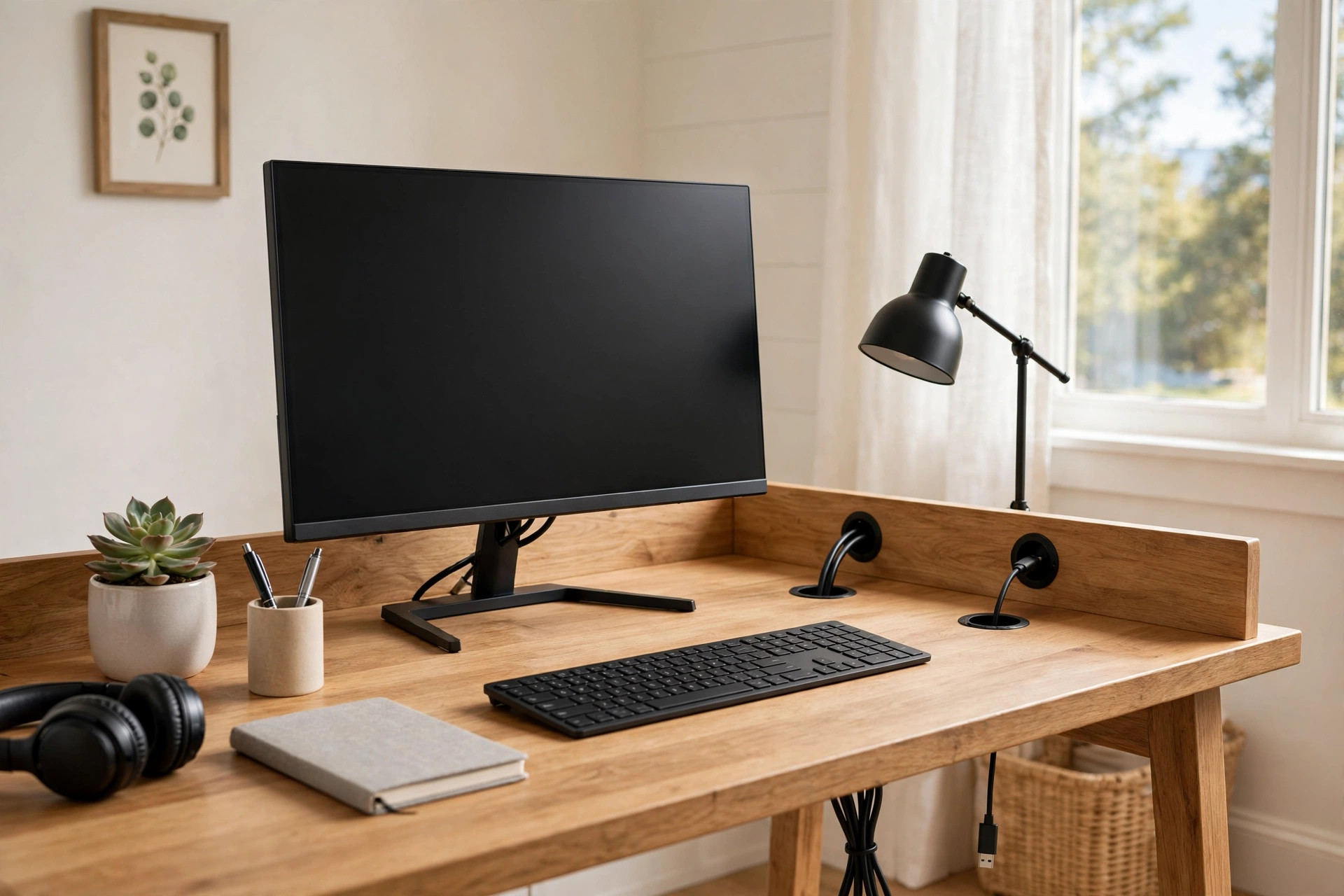

A home office desk with cable management holes is a desk with small round or oval openings cut through the work top. Cords drop through the openings instead of lying in a pile behind the desk. This simple idea keeps a home office neat. It also makes the work area safer and calmer. This guide explains what to look for, what it costs, and how to keep the desk in good shape for years.
Why It Matters
Most home offices run on cords. A monitor cord. A laptop cord. A phone charger. A lamp cord. A printer cord. Soon the back of the desk looks like a nest of snakes. Dust collects on the pile. A foot catches a cord. The lamp falls. The monitor pulls off the edge. A home office desk with cable management holes stops this chain of small troubles before it starts.
When cords run through the holes, the desk top stays clear. A clear desk top is easier to clean. It is easier to work on. It also looks better on video calls. Many workers now join meetings from home. A neat desk behind the camera gives a good first impression. Cable holes help with this at no extra daily effort. Once the cords are routed, the system keeps itself tidy.
There is also a safety side. Cords on the floor can trip a child or a pet. A cord pulled tight can strain a plug and spark. Heat can build up where many cords sit in one tangled bunch. Holes in the desk top let cords take a short, straight path down to the floor or to a power strip. Straight cords stay cooler. Loose cords stay off the floor. The desk becomes a calmer place to work.
A Calm Desk Helps Clear Thinking
A cluttered desk can slow the mind. A home office desk with cable management holes removes one big source of clutter. The work surface holds only what is needed. The rest waits below, out of sight.
What to Look For When You Choose: Home Office Desk with Cable Management Holes
Not all cable holes are made the same. The size matters. A single small hole fits one cord. A desk with two or three larger holes fits a full setup: monitor, charger, lamp, and printer. Measure your gear before you buy. Count every cord that must cross the desk top. Then add one extra hole for growth. New gear arrives sooner than most people plan.
The position of the holes matters too. Holes near the back edge keep cords behind the monitor. This is the most common layout. Some desks place a hole near each back corner. That helps when the printer sits to one side. A center hole suits a single laptop dock. Stand at the desk and picture where each device will sit. The cords should take the shortest path down.
Check the Grommets
Most good desks ship with grommets. A grommet is a plastic or metal ring that sits inside the hole. It covers the raw edge. It stops the cord from rubbing against sharp wood. Some grommets have a split cover. Cords pass through the split and stay put. Others have a sliding lid that closes when the hole is not in use. Look for desks that include grommets in the box. Buying them later costs time and extra money.
The Desk Must Be Sturdy
Holes should never weaken the desk. A well-made desk places holes where the top is strong. Avoid a desk where one large hole sits in the middle of a thin span. Press on the top near the hole in the store, if you can. It should feel solid. Solid wood, thick plywood, and heavy engineered board all hold up well. Thin, hollow tops may crack around the cut. Experts at independent review sites suggest checking the thickness of the work top before buying any office desk, and a desk guide from the Wirecutter team is a good place to compare build quality across brands.
Types and Options
Writing Desks with One Hole
A simple writing desk often has one grommet hole at the back center. This suits a laptop, a lamp, and a phone charger. The design is light and plain. It fits a small room. The price is usually low. For students and part-time workers, this type is often enough.
Computer Desks with Two or Three Holes
A full computer desk may have two or three holes. One sits behind the monitor. Another sits near the printer side. A third may sit at the far corner for a desk lamp or speaker. This layout suits a permanent home office with several devices. Many of these desks also include a modesty panel or a back rail to hide the cords below.
L-Shaped Desks
An L-shaped desk gives more surface. It often needs more holes. Look for at least one hole on each arm of the L. Some L-shaped desks add a corner hole where the two arms meet. This is useful when the monitor sits in the corner. Measure the room before you buy an L shape. It needs more floor space than most buyers expect.
Standing Desks
Standing desks move up and down. The cords must move with them. A home office desk with cable management holes works well here, but the holes are only half the answer. Cords need slack below the desk so they can rise and fall. Many owners pair the holes with an under-desk cable management tray or a fabric sleeve that carries the cords down in one bundle. Plan for movement before you drill or buy.
Cost and Price
Prices vary by size, material, and brand. A basic writing desk with one cable hole often costs between sixty and one hundred fifty dollars. A mid-size computer desk with two holes and grommets often costs between one hundred fifty and three hundred dollars. A large L-shaped desk or a standing desk with cable holes often costs between three hundred and eight hundred dollars.
Material drives much of the price. Laminate over engineered board is the cheapest. Solid rubberwood, oak, or walnut veneer costs more. Metal frames add cost but also add years of life. A good desk is a long-term buy. Paying a little more for a sturdy top often saves money over time. Shoppers can compare prices at large home stores like IKEA, Wayfair, or Lowe’s, which carry many desks with built-in cable routing.
What Raises the Price
Extra features raise the price. Built-in power outlets cost more. USB ports in the desk cost more. A full cable tray under the desk adds to the bill. Drawers and filing cabinets add cost too. Decide which features you will use every day. Pay for those. Skip the rest. A plain desk with good holes beats a fancy desk with features you never touch.
What Lowers the Price
Flat-pack desks cost less than assembled ones. Light colors cost less than dark stains in some lines. Buying during holiday sales cuts the price. Some buyers add their own holes to a plain desk with a hole saw. This is the cheapest path, but it takes care and the right tools. Measure twice. Cut once. Seal the cut edge so the board does not swell.
Care and Upkeep
A desk with cable holes needs little care. Dust the top each week with a soft cloth. Wipe spills at once, before liquid reaches the holes. Liquid that sits in a grommet can seep into the board edge and cause swelling. A quick wipe keeps the top sound.
Check the grommets once or twice a year. Plastic rings can crack with age. A cracked grommet leaves a sharp edge. Replace it before a cord rubs through its cover. Grommets are cheap and easy to swap. Most pop out with a gentle push from below.
Look under the desk now and then. Dust gathers where cords run. A dry cloth or a small brush clears it. While you are there, check that no cord pulls tight when you roll the chair back. Give each cord a little slack. This small habit protects plugs and ports.
If the desk has a laminate top, avoid harsh cleaners. A damp cloth with mild soap is enough. Strong chemicals can dull the finish. For solid wood tops, a light polish once a year keeps the surface rich. Keep the desk out of direct sun if you can. Sun fades the top and dries the wood over time.
Safety
Cable holes improve safety, but only when used with care. Do not overload one power strip. A desk with neat holes can hide the fact that too many devices share one outlet. Count the watts. Keep the load under the rating printed on the strip. When in doubt, use a surge protector with USB ports made for desk use, and plug it into a wall outlet that is in good shape.
Keep cords away from heat. A desk lamp with an old bulb can warm the cords near it. LED lamps run cooler and are safer near cable holes. Keep paper away from the holes too. A printer stack that slides back can push paper into the opening. Give each device its own clear zone.
Homes with small children need extra care. Children pull on cords they can see. A home office desk with cable management holes hides most cords, but the few below the desk are still in reach. Use a cord cover or a tray under the desk to keep them out of small hands. Safety groups such as the U.S. Consumer Product Safety Commission publish free guides on keeping cords and small parts away from children.
Fire Sense
Frayed cords are a fire risk. When you route cords through holes, look at each one. If the outer cover is cracked, replace the cord. Do not run an extension cord through a hole and then under a rug. Heat builds up under rugs. Plug devices straight into a strip or a wall outlet. Unplug chargers you do not use. These small steps cut risk a great deal.
How to Set Up Your Cables Step by Step
Start with an empty desk. Place each device where it will live. Put the monitor at the back. Put the lamp to one side. Put the charger near the front edge. Now look at the holes. Drop each cord through the nearest hole. Let the plugs rest below the desk on a tray or a strip.
Next, group the cords. Use soft ties, not tight zip ties. Tight ties pinch the cord and trap heat. Leave a gentle loop of slack under the desk. Label both ends of each cord with a small tag. Labels save time later when you must unplug one device among many. Finally, step back and look. The top should hold only short cord runs from each device to its hole. Everything else lives below.
If your setup grows, add an under-desk cable tray beneath the work top, such as the cable management trays sold by UPLIFT Desk. The tray holds the power strip and the slack in one neat box. Cords enter through the holes and land in the tray. From there one thick cord runs to the wall. This is the cleanest layout for a busy desk.
Pairing the Desk with the Rest of the Office
A desk is one part of a home office. The chair matters as much. So does the light. A good setup puts the desk near a window for day light, with a lamp for the evening hours. Reviews of office gear at PCMag often note that small upgrades, like a better lamp or a monitor arm, change the feel of a room more than a new desk does.
If you run two screens, plan the cable paths for both before you buy. An affordable dual monitor setup needs at least two display cords and two power cords. Two holes, one behind each screen, keep both cords short and neat. Measure the width of both monitors against the desk width.
Storage near the desk cuts clutter too. A small drawer unit holds paper, pens, and spare cords. When spare cords have a home, they stop piling up behind the desk. Advice on home office layout from The Spruce often starts with the same rule: give every item a place, and the room stays calm.
Buying Tips
Buy the desk after you measure the room. Leave at least three feet behind the chair for walking. Leave two feet on each side for cleaning. A desk that is too large makes a small room feel cramped. A desk that is too small leaves no room for papers.
Sit at the desk before you buy, if the store allows it. Your elbows should rest near a right angle. The top of the monitor should sit near eye level. If you buy online, check the height in the listing. Standard desk height is about twenty-nine to thirty inches. Taller workers may need a higher top or a riser.
Read the return policy. A desk may look right in photos and feel wrong in the room. A good return window gives peace of mind. Keep the box until you are sure.
Look at the weight rating. A desk that holds two monitors, a printer, and books must carry real weight. A rating of one hundred pounds or more suits most home offices.
Frequently Asked Questions
How many cable holes does a home office desk need?
Most setups need two. One hole serves the monitor and laptop dock. The second serves the lamp, charger, or printer. A single-device setup can work with one hole. A large setup with speakers, a printer, and two screens may need three. Count your cords first, then choose.
Can I add cable management holes to a desk I already own?
Yes. A hole saw and a drill cut a clean round hole in most wood and laminate tops. Mark the spot with care. Drill from the top down with a sharp bit. Sand the edge smooth. Press in a plastic grommet to cover the raw edge. If the desk is under warranty, note that cutting may void it. Practice on scrap wood first if you are new to the tool.
What size should the holes be?
Two inches in diameter fits most cords. A two-and-a-half-inch hole fits thick monitor plugs. Holes larger than three inches start to weaken a narrow desk top. When in doubt, choose two holes of medium size over one very large hole. Two medium holes give more routing choices.
Do cable holes weaken the desk?
A well-placed hole does not weaken a good desk. Makers cut holes where the top has support below. Problems start when a hole is cut too close to the edge or too close to another hole. Keep at least two inches of solid board between holes and edges. On a thin hollow top, ask the maker before cutting.
How do I keep dust out of unused holes?
Most desks ship with sliding lids or split covers for this purpose. If yours did not, buy snap-in grommet covers. They cost little and press in by hand. A cover also keeps small items like paper clips from falling through the hole.
Is a desk with cable holes worth the extra cost?
For most home workers, yes. The price gap between a plain desk and one with holes is small, often under fifty dollars. The daily gain is real: less clutter, faster cleaning, and safer cords. It is one of the cheapest upgrades a home office can get.
A Short Final Word
A home office desk with cable management holes is a small idea with a large effect. The holes take cords out of sight. The desk top stays clear. The room feels calm. Work gets easier. Choose a sturdy top with the right number of holes in the right places. Route the cords with care. Check them now and then. That is all it takes. The desk will serve you well for many years.
References
IKEA. (n.d.). Home furnishings. https://www.ikea.com Lowe’s. (n.d.). Home improvement products. https://www.lowes.com PCMag. (n.d.). Technology product reviews. https://www.pcmag.com The Spruce. (n.d.). Home and garden advice. https://www.thespruce.com U.S. Consumer Product Safety Commission. (n.d.). Product safety information. https://www.cpsc.gov UPLIFT Desk. (n.d.). Standing desks and ergonomic office furniture. https://www.uplift-desk.com Wayfair. (n.d.). Furniture and home goods. https://www.wayfair.com Wirecutter. (n.d.). Product reviews from The New York Times. https://www.nytimes.com/wirecutter
Was this guide helpful?

About Emily Rodriguez
The My Garden US editorial team writes practical, in-depth home and garden guides for American homeowners — tested advice, no fluff.
You May Also Like

Corner Bookshelf for Small Home Office Storage: A Practical Guide
April 15, 2026 0 views
Under Desk Cable Management Tray for Clean Setup
April 27, 2026 0 views
Home Office Rug to Protect Hardwood Floors: A Complete Guide
August 7, 2026 0 views