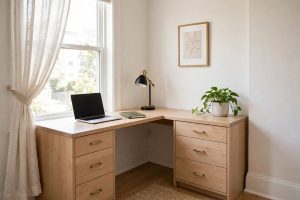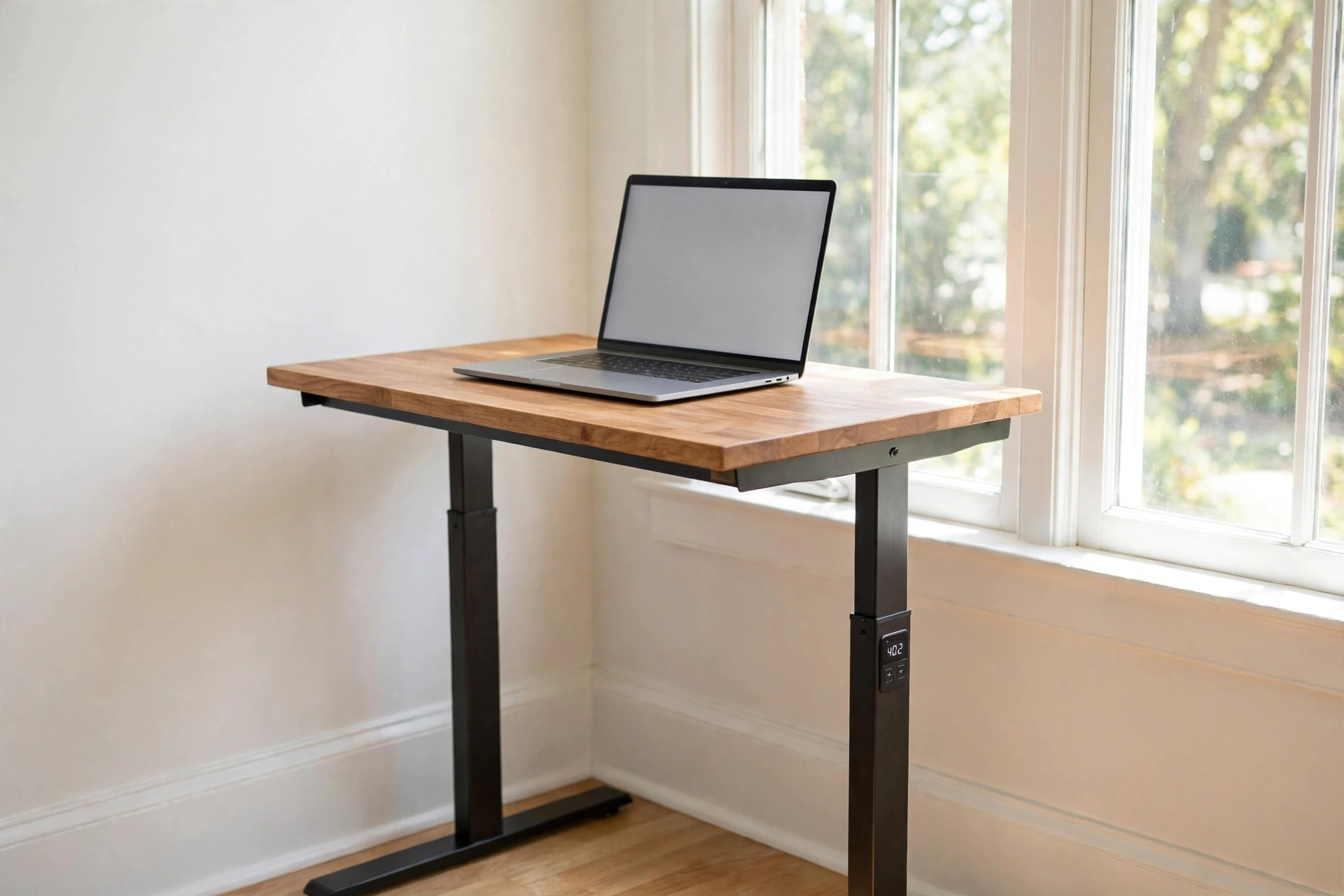

A small standing desk for laptop only use is one of the simplest upgrades a home worker can make. It is small on purpose. It holds a laptop and little else. It takes up no more floor space than a nightstand. And it lets you stand up and work for part of the day, which many desk workers say keeps their backs and legs happier.
This guide walks through the whole subject in plain terms. It explains why such a desk matters, what to look for when you shop, the main types you can buy, what you should expect to pay, how to keep the desk in good shape, and how to use it safely. A short set of questions and answers closes out the piece.
Why a Small Standing Desk for Laptop Only Use Matters
Most of us sit too long. A desk job keeps a person in a chair for eight hours or more. The back grows stiff. The shoulders creep up toward the ears. The legs fall asleep. Doctors have said for years that long hours of sitting are hard on the body, and reviews of standing desk research back up the basic idea that changing posture through the day helps.
A full-size standing desk solves this, but it is wide, heavy, and costly. Many people do not need all that. If your whole work setup is one laptop, a small standing desk for laptop only use is the lighter answer. It gives you the stand-up option at a fraction of the size and price.
The small desk matters for three reasons. First, it fits where a big desk will not. A corner of a bedroom or a nook beside a bookshelf is enough. Second, it keeps the work zone simple. There is no room for paper stacks or clutter. Third, it moves easily.
Renters like these desks too. A small desk leaves no mark on the room. When the lease ends, the desk leaves with you in one trip. Home offices that double as guest rooms or play areas also do well with a desk that can be folded flat and slid behind a door.
What to Look for When You Choose: Small Standing Desk for Laptop Only Use
Shopping for a small standing desk for laptop only use is not hard, but a few details separate a good desk from a wobbling one. Look at these points before you pay.
Height range. The desk must reach a height where your elbows rest near a right angle while you type. For most adults, that is somewhere between 38 and 47 inches. Taller workers need the top end. Check the listed range, not just the word “adjustable.” Adjustable height desks from ergonomic makers like UPLIFT Desk show why a true range matters, and guides from Wirecutter explain how to test a working height at home with a simple stack of books.
Stability. A small desk wobbles more than a wide one because the base is narrow. Test reviews and buying guides warn that a shaky top makes typing feel wrong and can tip a coffee cup. Look for a solid frame, a wide foot or four sturdy legs, and good marks from reviewers for steadiness at full height.
Desktop size. Laptop-only desks run from about 24 to 36 inches wide. A 15-inch laptop needs roughly 20 inches of width and 14 inches of depth. Measure your machine and add a few inches on each side for a mouse or a notebook. Do not buy blind; tape the outline on your table and stand in front of it.
Ease of adjustment. Some desks crank up by hand. Some use a gas piston that lifts with a squeeze of a handle. Some run on an electric motor with up and down buttons. Hand cranks are cheap but slow. Gas pistons are quick and need no power outlet. Electric motors are smooth and hold height settings in memory, which is handy if two people share the desk.
Weight limit. A laptop weighs little, but the desk still needs a stated limit above your load. Most laptop desks rate between 20 and 50 pounds. Keep well under the limit so the lift mechanism lasts. Steelcase and Herman Miller, two long-standing office furniture makers, both stress that rated capacity is about long life, not just safety.
Cord management. A laptop needs power. Some desks include a cable tray or a grommet hole. If yours does not, plan for a simple clip or tray of your own. A cord that drags on the floor is a trip hazard and looks messy.
Assembly. Small desks should set up in under an hour with basic tools. Check whether the maker includes the wrench and whether the manual is clear. Retailers like IKEA and Wayfair list assembly time and tool needs on most product pages, which helps you judge before the box arrives.
Types and Options
A small standing desk for laptop only use comes in several shapes. Each suits a different room and budget.
Fixed-height standing desks. These stand at one height, often 40 to 42 inches, and never move. They are the cheapest and the most stable. They suit a worker who stands for set blocks of time and sits elsewhere for the rest. The drawback is plain: one height fits one person, and it never adjusts.
Crank and pneumatic risers. These sit on a table you already own and lift the laptop platform. A hand crank or a gas piston raises the top. They cost little and store flat. But they add height to a surface that may already be high, so very tall or very short workers can run out of range. For a full converter comparison, see our guide on the adjustable height desk converter for existing table.
Electric sit-stand desks, small size. These are true desks with a motor in the frame. Press a button and the whole top rises. Many remember two or four height presets. They are the smoothest to use and the steadiest under load. They cost more and need a wall outlet.
Rolling laptop stands. These are narrow stands on caster wheels. They roll beside a sofa or a bed. They work well for casual use, such as answering mail or reading. They are less steady than a framed desk, so they suit light typing rather than a full workday.
Wall-mounted fold-down desks. These bolt to a wall and fold flat when not in use. At standing height they make a fine laptop shelf. They save the most floor space of all. They need solid wall studs and a bit of handyman skill to mount.
A paired organizer keeps the tiny top tidy. Our write-up on the best desk organizer set for small office desk shows trays and cups sized for these narrow tops.
Cost and Price
Prices for a small standing desk for laptop only use stretch wide. A simple fixed-height model or a basic rolling stand can cost as little as 60 to 120 dollars. A decent hand-crank or gas-piston desk runs 150 to 300 dollars. A small electric sit-stand desk with memory presets runs 300 to 600 dollars. Designer or solid-wood models can pass 700 dollars.
What drives the price? The lift mechanism is the big one. Motors cost more than cranks. Materials come next: steel frames outlast particleboard, and solid wood costs more than laminate. Brand and warranty add the rest. A five-year warranty on the frame and motor is common in the mid-range.
Shop sales on a calendar. Office furniture drops in price during back-to-school season and the winter holidays. Big-box stores such as Home Depot and Lowe’s run rotating promotions through the year.
Set a budget before you browse. For laptop-only use, the sweet spot is often 150 to 350 dollars. That range buys a steady frame, a real height range, and a warranty worth having. Spend less and you may get wobble. Spend more and you pay for features a laptop worker rarely uses.
Care and Upkeep
A small standing desk needs little care, but small habits keep it working for years.
Dust the top weekly with a soft dry cloth. Wipe spills at once, since water can swell particleboard edges. For laminate tops, a damp cloth with mild soap is enough. For wood tops, use a cleaner made for wood and dry the surface after.
Check the frame bolts twice a year. Daily up-and-down motion loosens hardware over time. A quick pass with the included wrench takes five minutes. If the desk uses a gas piston, listen for hissing, which means the seal is failing. If it uses a motor, keep the legs free of dust and cords so nothing jams the travel.
Keep the lift columns clean and dry. Do not oil them unless the manual says to. Most modern columns run on sealed bearings that need no grease. Do not overload the desk. Even if the rating says 50 pounds, a laptop, a book stack, and a leaning elbow can creep past it.
Sunlight matters more than people think. A desk parked in a hot window can fade a laminate top and dry out a wood one. A curtain or a move a few feet away solves it.
Safety
Standing desks are safe when used with sense. A few rules cover most of the risk.
Anchor tall narrow desks if children or pets share the room. A small desk tips more easily than a wide one. An anti-tip strap or a wall anchor costs little and removes the worry. Safety guidance from the U.S. Consumer Product Safety Commission covers tip-over risks for tall furniture; the same common-sense rules apply to any narrow stand.
Keep cords short and off the floor. Use a cable tray or clips under the top. Run the laptop charger down the back leg, not across the walking path.
Ease into standing. New users should stand for 20 to 30 minutes at a time and build up over two weeks. Standing all day on day one leads to sore feet and a sore lower back. Wear supportive shoes or stand on a cushioned mat. Shift your weight, and sit down when your body asks.
Set the screen at eye level. A laptop screen sits low by design, so add a laptop riser or a small stack of books to lift it. Without that lift, the neck bends down and the standing benefit is lost. This is one reason reviewers at Wirecutter and The Spruce nearly always pair a standing desk with a separate keyboard or at least a riser.
Lock the wheels if your desk has casters. An unlocked stand can roll when you lean on it. Keep hot drinks in a lidded mug on a tiny desk, since one bump can send an open cup across the laptop.
Finally, pair the desk with a good chair for your sitting hours. Our guide to the best office chair for long hours home office explains what to look for in seat support and lumbar shape.
Frequently Asked Questions
Can a small standing desk for laptop only use hold a monitor too? It can hold a small monitor in many cases, but the desk is designed for a laptop. Check the weight limit and the depth of the top. A 24-inch monitor on a narrow top leaves little room for a keyboard, so most users keep it laptop-only.
What is the best height for typing while standing? Your elbows should bend at about 90 degrees with your wrists straight. For most adults this puts the top between 38 and 47 inches. Measure from the floor to your bent elbow and use that number as your target.
Are cheap standing desks worth buying? A cheap desk works if it is stable and reaches your elbow height. The risk with very cheap models is wobble and a short life for the lift parts. Read reviews that mention stability at full height before you buy.
How long should I stand each day? Start with 30 minutes at a time, two or three times a day. Over a few weeks, many workers settle at two to four standing hours in an eight-hour day. There is no rule that fits all bodies; comfort is the guide.
Do I need an anti-fatigue mat? It helps. A cushioned mat cuts pressure on the feet, knees, and lower back during standing blocks. It is a small cost that makes standing much more pleasant, and most standing-desk users call it essential.
Can I use the desk while sitting on a high stool? Yes. A drafting-style stool pairs well with a standing desk. It gives you a perch between full sitting and full standing. Make sure the stool reaches high enough for the desk setting you use.
A Short Final Word
A small standing desk for laptop only use is a modest piece of furniture with an outsized effect. It costs less than a full desk, fits in rooms where a full desk cannot go, and still gives you the choice to stand. Choose a model with a real height range, a steady frame, and a top that fits your laptop. Start standing in short blocks, keep the screen at eye level, and mind your cords. Do that, and this little desk will serve you well for years.
References
Herman Miller. (n.d.). Office furniture and ergonomic seating. https://www.hermanmiller.com IKEA. (n.d.). Home furnishings. https://www.ikea.com Lowe’s. (n.d.). Home improvement products. https://www.lowes.com PCMag. (n.d.). Technology product reviews. https://www.pcmag.com Steelcase. (n.d.). Office furniture and workplace research. https://www.steelcase.com The Home Depot. (n.d.). Home improvement products. https://www.homedepot.com The Spruce. (n.d.). Home and garden advice. https://www.thespruce.com U.S. Consumer Product Safety Commission. (n.d.). Product safety information. https://www.cpsc.gov UPLIFT Desk. (n.d.). Standing desks and ergonomic office furniture. https://www.uplift-desk.com Wayfair. (n.d.). Furniture and home goods. https://www.wayfair.com Wirecutter. (n.d.). Product reviews from The New York Times. https://www.nytimes.com/wirecutter
Was this guide helpful?

About Sarah Mitchell
The My Garden US editorial team writes practical, in-depth home and garden guides for American homeowners — tested advice, no fluff.
You May Also Like

Wall Mounted Folding Desk with Chalkboard: A Smart Space Saver
April 27, 2026 0 views
Under Desk Cable Management Tray for Clean Setup
April 27, 2026 0 views
The Right Adjustable Bookshelf for Home Office Corner Nook Spaces
March 4, 2026 0 views