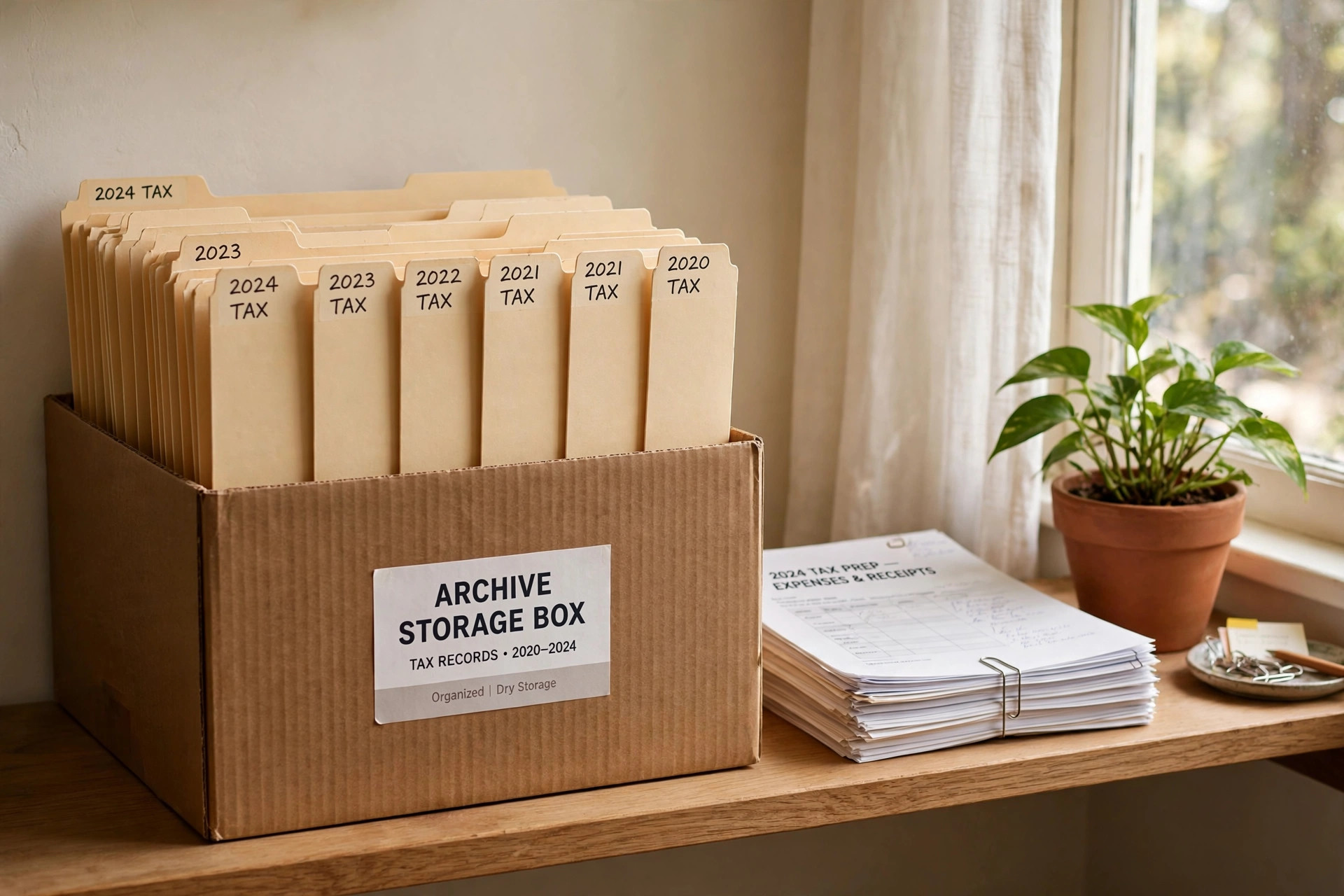
Every year, tax papers arrive in piles. Forms come from employers. Receipts collect in drawers. Bank papers sit in stacks. By April, many people cannot find what they need. A home office storage box for tax records usa solves this problem. It gives every tax paper one safe home.
The box does not need to be fancy. It needs to be strong, dry, and easy to reach. It should hold folders for each year. It should protect papers from dust, water, and loss. With one good box, tax time becomes calm and simple.
Why a Good Storage Box Matters
Tax papers matter long after April. Lenders may ask for old returns. Auditors may ask for proof of income. An employer may ask for past pay stubs. When papers are in one box, you find answers in minutes. When they are spread around the house, you spend days.
A storage box also guards against damage. Paper rots in damp rooms. Ink fades in strong sun. Papers tear in crowded drawers. A closed box on a shelf keeps the papers flat, dry, and dark. That small step saves a lot of worry.
A box also helps families. If you travel or fall ill, another person can find the box and read the labels. Clear labels on folders tell them where to look. No one needs to search the whole house.
What to Look for in a Tax Record Storage Box: Home Office Storage Box for Tax Records Usa
Size comes first. The box should fit letter-size folders. Most tax papers in the United States are letter size. A box that is too small will bend the papers. Bent papers are hard to read and hard to copy. Measure your folders before you buy.
Strength comes next. The box will hold years of paper. Paper is heavy. A full box can weigh several pounds. Look for thick walls and a tight lid. Cardboard archive boxes with metal edges work well. Plastic boxes with snap lids work well too. Avoid thin gift boxes and shoe boxes. They crush and tear.
The lid matters. A tight lid keeps out dust. It also keeps papers from sliding out when you move the box. Lids that stack on top let you store more than one year. Label the outside of each box with the tax year in large letters.
Handles help if you move the box. Carry it from the desk to the shelf without spilling folders. Some boxes have cut-out hand holes. Others have small handles. Either kind works.
A lock is a good extra. Tax papers hold names, numbers, and income details. A small lock or latch keeps curious hands out. A home office storage cabinet with locking doors is another choice if you need to guard larger items with the box inside.
Types of Home Office Storage Boxes
Cardboard bankers boxes are the old standby. They are cheap. They are light. They stack well on shelves. They fold flat when not in use. The weak point is water. One flood or spill can ruin them. Keep them off the floor and away from pipes.
Plastic file boxes are a step up. They have snap lids. Many have a built-in handle. Water will not hurt them. They cost more than cardboard, but they last many years. They are a good fit for a busy home office.
Fabric cube boxes look neat on open shelves. They suit living rooms that double as offices. They do not protect well from water. They also hold less weight than hard boxes. Use them for papers you reach for often, not for deep storage.
Fire-resistant document boxes add real safety. They slow the spread of heat and flame. They also keep out some water. They are smaller than archive boxes. They cost more. Many people use one for this year and one for last year. Older years go in cheaper boxes. Review guides such as The Spruce and Wirecutter for current models and tests.
For large amounts of paper, a rolling cabinet may work better than a box. A rolling file cabinet for home office organization holds many folders and moves with you. Boxes remain best when you want papers grouped by year.
How to Organize Tax Records Inside the Box
Start with one folder per tax year. Write the year in large numbers on the tab. Slip all that year’s papers inside. Put the newest year in front. Old years move to the back. The habit takes only minutes each month.
Inside each year folder, use small groups. Keep W-2 forms together. Keep 1099 forms together. Keep receipts for deductions in their own group. Keep bank and investment papers in their own group. Keep a copy of the filed return at the front. Rubber bands or paper clips hold small groups together.
Label the outside of the box. Write the range of years. For example, “Tax Years 2023-2026.” Add your name. If you have more than one box, number them. Box 1, Box 2, and so on. A simple list taped inside the lid helps too. List the folders and the years. You will thank yourself later.
Once a month, open the box. Drop in the papers that came since your last check. Do not let piles grow on the desk. A five-minute habit keeps the system alive. Home office guides from Herman Miller and Steelcase also stress simple routines for paper flow.
Digital copies add a second layer of safety. Scan key forms with a phone or scanner. Save the files in a folder on your computer with the same year names. Back them up to a USB drive or a cloud account. Paper stays the main record. The digital copy is the backup. Reviews of scanners and office gear on PCMag can help you pick tools that fit a small office.
How Long to Keep Tax Records
The rule most people use is simple. Keep tax returns and supporting papers for at least three years from the date you filed. This matches the time the tax office can check most returns. Many experts suggest keeping them for seven years. Seven years covers almost every case. If you underpaid by a large amount, the time can be longer.
Keep papers for property as long as you own the property. Then keep them for seven years after you sell. This covers home sales, stocks, and rental houses. Keep papers for retirement accounts for the life of the account.
The IRS publishes clear guidance on record keeping. Read its page on how long to keep records before you throw anything away. When in doubt, keep the paper. Storage is cheap. Missing proof is costly.
Cost and Prices in the USA
Prices vary by material and size. Cardboard bankers boxes often cost between five and fifteen dollars each. They often come in packs of ten or twelve. A pack brings the price down.
Plastic file boxes with snap lids often cost between fifteen and forty dollars. Larger ones and name brands cost more. Fabric cube boxes often cost between eight and twenty dollars. Fire-resistant document boxes often cost between thirty and eighty dollars.
You can find boxes at office supply stores, home stores, and online. Retailers such as IKEA, Wayfair, and The Container Store carry many home office storage lines. Standing-desk maker UPLIFT Desk also offers office storage that pairs with work-from-home setups.
Buy one box at a time if money is tight. Start with this year. Add boxes for past years as you need them. A good box lasts for years, so the cost per year is very low.
Care and Upkeep
Check your box once a year. Look for signs of water. Feel the bottom for damp spots. Smell for mold. Look for pests. Move the box if you find problems. A high shelf in a dry room is best.
Do not overfill. Folders should stand upright with room to spare. If you must force the lid shut, you need a second box. Split the years between two boxes. Your papers will stay flat and easy to read.
Keep the box away from heat. Do not store it near a heater, a furnace, or a hot attic vent. Heat makes paper brittle. Cool and dry is the rule. A closet on an inside wall often works best.
Replace worn boxes. Cardboard wears out. Tape holds it for a while. When the corners split, move the folders to a new box. Copy the labels to the new box before you throw the old one away.
Safety Tips
Tax papers hold your name, address, and income. Guard them. Keep the box in a private room, not in an open hall. If you share your home, add a lock. A lockable filing cabinet for home business documents is a strong option for papers you must guard closely.
Shred what you no longer need. Tear by hand is not enough. A crosscut shredder turns papers into small bits. Shred old bills, old receipts, and returns you no longer need to keep. Do not throw tax papers in the open trash.
Be careful with digital copies. Use strong passwords on your computer and cloud account. Do not email tax forms to yourself over open networks. Back up files before you delete the paper copy.
Plan for fire and flood. Know where the box sits. In an emergency, grab the current year box first. Fire-resistant boxes give you more time. No box is fully safe, so digital copies matter.
Frequently Asked Questions
Can I use any box for tax records? You can, but a strong box with a lid works best. The box should hold letter-size folders. It should close tight. Cardboard archive boxes and plastic file boxes are the two most common picks.
How many years fit in one box? It depends on the size of the box and how many papers you keep. One medium archive box often holds three to five years of papers. If you run a business from home, one box may hold only one or two years.
Should I keep the original or is a scan enough? Keep the original. The paper is your proof. Scans are a useful backup. If a paper is lost or damaged, a clear scan is far better than nothing.
Where should I put the box in my home office? Put it on a shelf or in a closet. Keep it off the floor. Keep it away from windows, pipes, and heaters. It should be easy to reach but out of daily foot traffic.
What goes in the box besides the tax return? Put in W-2 and 1099 forms. Put in receipts for deductions. Put in bank, investment, and retirement papers. Put in property papers. Put in any letters about your taxes. If it supports a number on your return, it belongs in the box.
Do I need a fireproof box? It is not required, but it adds safety. Many people use a fire-resistant box for the current and prior year. Older years can sit in a standard archive box. Digital copies give a second layer of safety at no extra cost.
Final Word
A home office storage box for tax records usa is a small buy with a large payoff. It turns a pile of papers into a clean system. It saves time each April. It guards your proof for years to come. Pick a strong box. Label it well. Feed it papers each month. Keep the years you need and shred the rest. Your future self will be glad you started today.
References
Herman Miller. (n.d.). Office furniture and ergonomic seating. https://www.hermanmiller.com IKEA. (n.d.). Home furnishings. https://www.ikea.com Internal Revenue Service. (n.d.). Tax information for individuals. https://www.irs.gov PCMag. (n.d.). Technology product reviews. https://www.pcmag.com Steelcase. (n.d.). Office furniture and workplace research. https://www.steelcase.com The Container Store. (n.d.). Storage and organization products. https://www.containerstore.com The Spruce. (n.d.). Home and garden advice. https://www.thespruce.com UPLIFT Desk. (n.d.). Standing desks and ergonomic office furniture. https://www.uplift-desk.com Wayfair. (n.d.). Furniture and home goods. https://www.wayfair.com Wirecutter. (n.d.). Product reviews from The New York Times. https://www.nytimes.com/wirecutter

About Robert Taylor
The My Garden US editorial team writes practical, in-depth home and garden guides for American homeowners — tested advice, no fluff.
You May Also Like

An Affordable Dual Monitor Setup for Remote Workers USA Can Count On
January 15, 2026 0 views
Best Web Camera for Home Office Zoom Meetings: A Simple Buying Guide
April 10, 2026 0 views
Ergonomic Office Chair with Footrest Reclining: A Complete Buying Guide
August 23, 2026 0 views