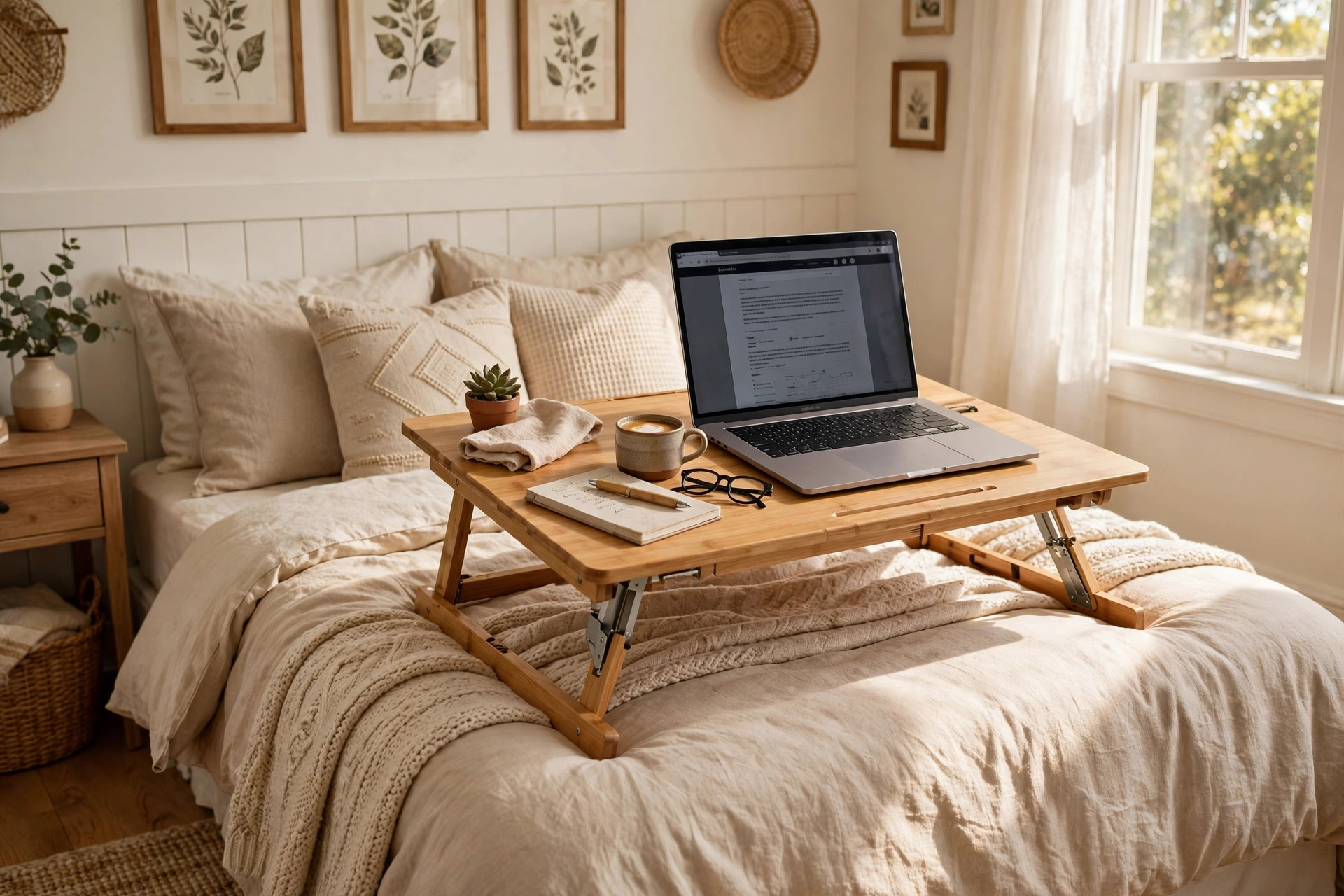

Many people now work from home. Some work at a desk. Many work in bed or on the couch. A laptop gets hot on the lap. The screen sits too low. The neck bends. The back aches. An adjustable laptop desk for bed and couch use solves these problems. It holds the laptop at a better height. It keeps heat away from the body. It can be set up in seconds and folded away when the work is done.
This guide explains what these desks are, why they matter, and how to pick the right one. It covers types, prices, care, and safety. It also answers common questions from buyers.
Why an Adjustable Laptop Desk for Bed and Couch Use Matters
Comfort is not a luxury when you work for hours. A laptop on the knees forces a bent neck. The screen is low. The eyes strain. Over time, the shoulders and upper back grow sore. A riser that lifts the screen to eye level changes the posture at once. The spine stays straighter. The wrists rest in a neutral line.
Heat is another problem. A laptop pulls in air from below and pushes warm air out. When the laptop sits on a blanket or a bare lap, the vents get blocked. The machine runs hotter and louder. The fan works harder. A desk with an open or vented top lets air move. The laptop stays cooler and lasts longer.
There is also a question of focus. A steady surface keeps the laptop still. It leaves room for a mouse pad, a notebook, or a cup of tea. Work feels more settled. Many people find they type faster and make fewer mistakes when the screen does not wobble.
People with small homes gain the most. Not every home has room for a full office desk. A portable desk turns the bed or the couch into a work station. It folds flat and slides under the bed or behind the couch. Students, renters, and travelers like this freedom.
What to Look for When You Choose One: Adjustable Laptop Desk for Bed and Couch Use
Buying the right desk takes some care. The market is full of models. Some are strong and simple. Some are weak and flimsy. The points below will help you judge quality before you buy.
Adjustability
The main feature is the adjustable top. Look for a desk that tilts and changes height. Good models lock at several angles. The best ones adjust with one hand. Check the range of tilt. A tilt of up to 30 degrees suits reading. A flat setting suits typing. Height adjustment matters in bed. A mattress is soft and sinks. The desk must clear the legs and still hold the laptop at a comfortable level.
Size and Weight Capacity
Measure the laptop first. A 13-inch machine needs less space than a 17-inch one. The desk top should be at least two inches wider than the laptop on each side. Leave room for a mouse. A good desk supports 20 to 40 pounds. Lightweight desks are easy to carry but may feel shaky. Heavier desks feel firm but are harder to move around the house.
Build Material
Desks come in wood, bamboo, metal, and plastic. Bamboo is light and strong. It resists moisture and looks warm in a bedroom. Aluminum is light and modern. It cools the laptop well because metal draws heat away. Solid wood is heavy and stable. Plastic is the cheapest option, but it can crack under load. Check the joints. Metal hinges last longer than plastic ones.
Ventilation
A laptop needs air flow. Many desks have holes or slots cut into the top. Some add a small fan powered by USB. Vent slots are simple and never break. Built-in fans help with heavy work like video editing, but they add noise and need a power source. For most users, open vent slots are enough.
Legs and Stability
The legs decide how stable the desk feels. Four-leg desks spread the weight well. Some desks have legs that fold out at an angle for extra strength. Look for rubber feet. They stop the desk from sliding on smooth floors or sheets. In bed, wide legs keep the desk from sinking into the mattress. On the couch, the desk must straddle the cushions without tipping.
Types of Adjustable Laptop Desks
Foldable Table-Style Desks
These look like small tables. They have four folding legs and a flat or tilting top. They are the most common type. They work well for both bed and couch use. Prices range from low to middle. They fold flat for storage. Most models have a lip or stopper bar to keep the laptop from sliding when the top is tilted.
Overbed Rolling Desks
These desks stand on the floor next to the bed. An arm reaches over the mattress. They roll on wheels. They are tall and strong. They suit people who work in bed for long hours, such as those recovering from an illness. They cost more and need floor space. They are less useful on the couch.
Lap Desks With Cushions
These have a hard top and a soft cushion base. They rest on the lap. Some tops tilt. They are light and cheap. They are fine for short sessions. They do not lift the screen high enough for long work days. The cushion traps heat, so they are not the best choice for powerful laptops.
Standing-Style Adjustable Desks
These rise from a low setting to a high one. They can sit on a bed or on the couch and lift the laptop well above the legs. Some fold into a briefcase shape. They suit users who shift between sitting and standing. They are heavier than simple lap desks but more flexible.
If you plan a fuller home office later, a best laptop stand for standing desk posture can pair well with a fixed desk. For now, a portable adjustable desk covers the basics.
Cost and Price
Prices vary with material and features. A simple plastic or light wood model may cost 20 to 40 dollars. These are fine for light use. A mid-range bamboo or aluminum desk with good hinges usually costs 40 to 80 dollars. These last longer and feel steadier. Premium models with built-in fans, USB ports, or extra trays can cost 80 to 150 dollars.
Think about how many hours you will use the desk each day. Light use of an hour or two does not need a costly model. Full work days in bed or on the couch deserve a stronger desk. A good desk protects your back and your laptop. That makes the extra cost worth it.
Watch for hidden costs. Some desks need assembly tools that are not in the box. Some replacement parts, like stopper bars or leg caps, are hard to find. Read the product page before you order. Large retailers such as IKEA and Wayfair list full details and show many models side by side.
How to Set Up Your Desk for Good Posture
A desk alone does not fix posture. How you set it up matters.
– Raise the screen so the top edge sits near eye level. This keeps the neck straight. – Tilt the top slightly when you read. Keep it flat when you type for long stretches. – Sit with your back supported. Use pillows behind you in bed. Sit upright on the couch, not slouched. – Keep the mouse close to the laptop. Reaching far to the side strains the shoulder. – Rest your feet on the floor or on a firm surface. Dangling feet pull the lower back forward. – Take a break every hour. Stand, stretch, and walk for a few minutes.
Good lighting helps too. A lamp behind the screen cuts glare. For a full desk setup, see this guide to best task lighting for home office desk setup. Reviews at Wirecutter and PCMag often test how these desks perform with real laptops.
Care and Upkeep
An adjustable laptop desk needs little care. Wipe the top with a damp cloth once a week. Dust gathers in the vent slots. A soft brush clears it out. Do not use strong cleaners on bamboo or wood. They dry out the finish.
Check the hinges every few months. Tighten loose screws with a small screwdriver. If a hinge squeaks, a drop of light oil quiets it. Keep the desk dry. Do not leave it near a heater or in direct sun for hours. Heat can warp wood and weaken plastic.
Store the desk flat when it is not in use. Do not pile heavy boxes on top of it. The folding legs can bend under weight. With basic care, a good desk lasts many years.
Safety Tips
Safety matters most when the desk is used in bed.
– Keep drinks away from the laptop. A spill can ruin the machine. Use a cup with a lid if you must keep a drink near. – Do not block the laptop vents. Leave space around the sides and back. – Check that the desk is stable before you place the laptop on it. A wobbly desk can drop the laptop onto the floor or onto you. – Keep cords tidy. A charging cord stretched across the bed is a trip hazard. Route it along the side of the bed. – Do not let small children play with folding desks. Fingers can get caught in the hinges. – Unplug the built-in fan when it is not needed. This saves power and reduces wear.
The U.S. Consumer Product Safety Commission offers general guidance on safe home products. It is a good habit to check for product recalls before you buy any furniture.
FAQ
Can an adjustable laptop desk hold a large gaming laptop?
It depends on the model. Gaming laptops are heavy and run hot. Choose a desk rated for at least 30 pounds. Make sure the top is wide enough and has large vent slots. Metal tops cool better than wood. A built-in fan can help, but it will not replace good air flow around the machine.
Is it bad to work in bed every day?
Working in bed now and then is fine. Doing it every day can hurt sleep and posture. The bed should stay linked to rest. If you must work in bed daily, keep a set schedule. Sit upright with back support. Keep the room bright during work hours. A portable desk helps, but a real chair and desk are better for full-time work.
What is the difference between a lap desk and an adjustable laptop desk?
A lap desk rests on your legs and has a fixed top. An adjustable laptop desk stands on its own legs and the top tilts and changes height. The adjustable type lifts the screen higher and suits longer work sessions. For a full remote setup, you might later add an affordable dual monitor setup for remote workers usa at a fixed desk.
Do I need a desk with a built-in fan?
Most users do not. Vent slots and an open design cool a normal laptop well enough. A fan helps only with heavy tasks like video work or gaming. Fans add noise and need USB power. If your laptop already runs hot, try a vented metal desk first.
Can I use the desk on the couch for watching movies?
Yes. Tilt the top toward you and set the laptop back a little. The raised screen is easier to watch than a laptop flat on the coffee table. Use the stopper bar so the laptop does not slide. Keep the remote and snacks on the couch arm, not on the desk.
How do I clean a bamboo laptop desk?
Wipe it with a soft cloth dampened with water. Dry it right away. Do not soak it. Once or twice a year, rub in a thin coat of food-safe mineral oil to keep the bamboo from drying out. Keep it out of long, direct sunlight.
A Short Final Word
An adjustable laptop desk for bed and couch use is a small buy that changes daily comfort. It lifts the screen, cools the laptop, and turns any soft seat into a work spot. Pick a sturdy model with a tilting top, vent slots, and legs that stand firm on a mattress. Set it up with care, keep it clean, and take breaks. Good tools from trusted makers, from office specialists like Herman Miller and Steelcase to desk makers like UPLIFT Desk, show what solid design looks like. Home guides at The Spruce and test labs like Consumer Reports can help you compare models before you spend. With the right desk, work from bed or couch becomes comfortable, safe, and easy on the body.
References
Consumer Reports. (n.d.). Product reviews and ratings. https://www.consumerreports.org Herman Miller. (n.d.). Office furniture and ergonomic seating. https://www.hermanmiller.com IKEA. (n.d.). Home furnishings. https://www.ikea.com PCMag. (n.d.). Technology product reviews. https://www.pcmag.com Steelcase. (n.d.). Office furniture and workplace research. https://www.steelcase.com The Spruce. (n.d.). Home and garden advice. https://www.thespruce.com U.S. Consumer Product Safety Commission. (n.d.). Product safety information. https://www.cpsc.gov UPLIFT Desk. (n.d.). Standing desks and ergonomic office furniture. https://www.uplift-desk.com Wayfair. (n.d.). Furniture and home goods. https://www.wayfair.com Wirecutter. (n.d.). Product reviews from The New York Times. https://www.nytimes.com/wirecutter
Was this guide helpful?

About Emily Rodriguez
The My Garden US editorial team writes practical, in-depth home and garden guides for American homeowners — tested advice, no fluff.
You May Also Like
Home Office Wall Mounted Storage Cabinets: A Practical Guide
August 3, 2026 0 views
Adjustable Footstool for Under Desk Leg Support
May 28, 2026 0 views
Rolling Standing Desk With Locking Wheels: A Practical Guide for the Home Office
January 13, 2026 0 views