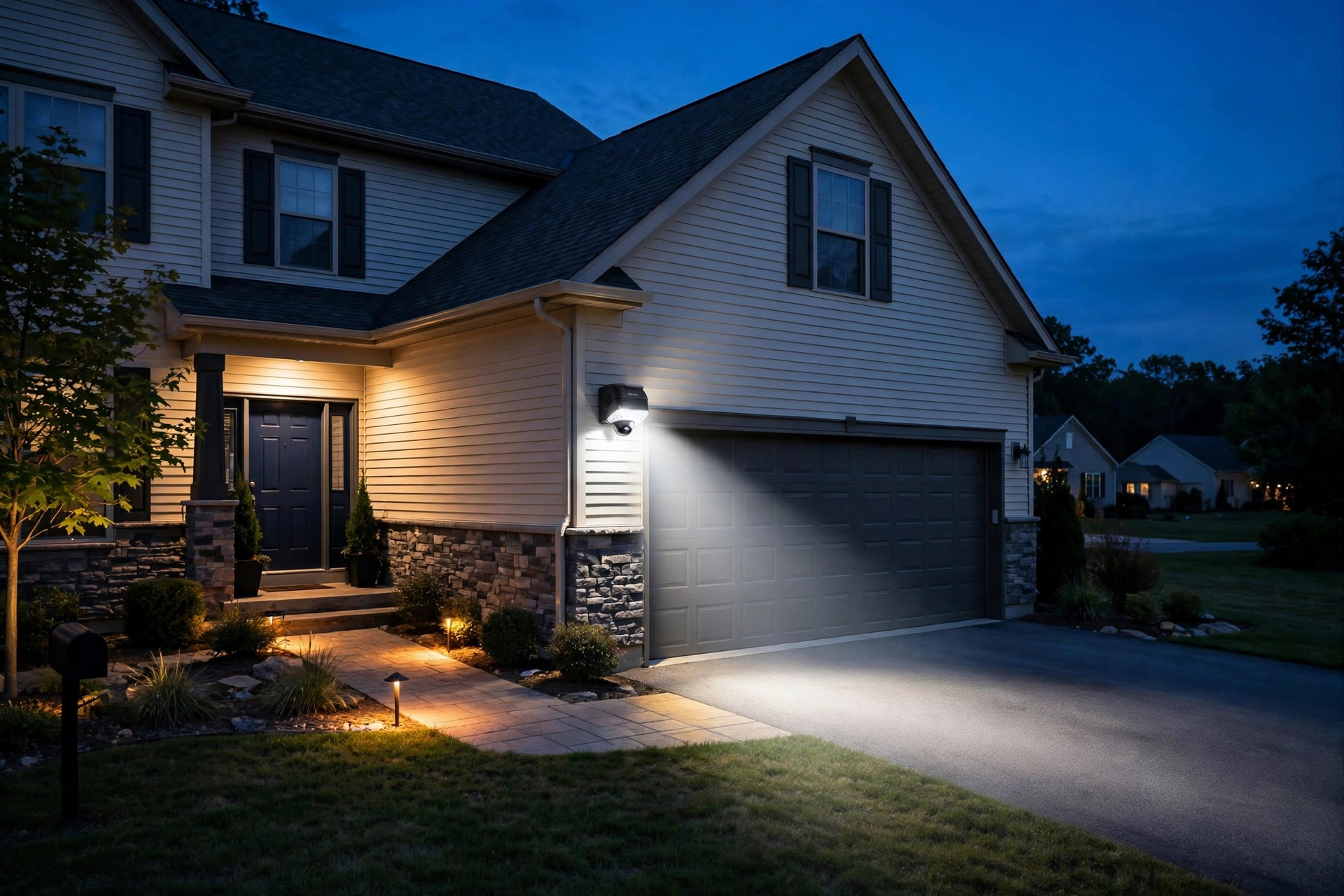

A good light above the garage or the back door can change how a house feels at night. This motion sensor flood lights reviews and buying guide explains what these lights do, which types are worth the money, and how to choose one that fits your home. The market is full of claims. Lumens, detection angles, and color temperatures blur together. A clear plan cuts through the noise. Read the sections below in order and you will know what to buy and where to put it.
Why Motion Sensor Flood Lights Matter
Every house has dark corners. The driveway, the side gate, and the far end of the backyard sit in shadow after sunset. A motion sensor flood light stays off while the night is still. When it detects movement, it snaps on. That burst of light does three jobs at once. It shows you where you are walking. It tells visitors that someone is home. And it discourages unwanted visitors from coming closer.
Security is the reason most people buy these lights. A dark yard invites trouble. A sudden bright light sends a clear signal. Police departments in many American cities have long advised homeowners to keep the outside of the house lit. A motion light does this job without burning power all night. It runs only when it is needed.
Convenience is the second reason. Think of coming home late with groceries in both hands. The light comes on before you reach the steps. You do not fumble for keys in the dark. The same is true for pets. A dog let out at night walks into a lit yard instead of a black one.
Safety is the third reason. Falls on dark stairs and uneven paths cause real injuries every year. Light on a stairway or a slope prevents missteps. For that reason, a flood light aimed at stairs works well beside sturdy exterior stair railings that give footing extra support on cold nights.
How to Choose the Right Flood Light: Motion Sensor Flood Lights Reviews and Buying Guide
Choosing well means looking at five factors. Each one is simple once you understand it. Skip the sales language and judge each model on these points.
Brightness Measured in Lumens
Lumens measure how much light a fixture puts out. Old packages talked about watts. With LED lights, watts no longer tell the story. A 15-watt LED can outshine an old 100-watt bulb. Judge by lumens only.
For a single garage door or a small porch, 700 to 1,500 lumens is enough. For a driveway or a wide backyard, look for 1,800 to 3,000 lumens. Above 3,000 lumens suits large lots and rural driveways. Too much light is a real problem in close neighborhoods. A very bright light that points at a neighbor’s bedroom window causes complaints. Aim the fixture down and shield it when needed.
Detection Range and Angle
The sensor is the heart of the unit. It uses a passive infrared sensor that notices changes in heat across its field of view. When a warm body crosses it, the light turns on.
Two numbers describe the sensor. The first is range, given in feet. Most units reach 30 to 70 feet. Measure the distance you want covered before you shop. The second is the detection angle. A 180-degree sensor covers a wide half circle. A 270-degree sensor covers nearly all around. Wide coverage suits corners and open yards. Narrow coverage suits a single path.
Look for adjustable sensitivity. Wind that moves bushes and small animals crossing the yard can set off a light with no adjustment. Models with a dial or app control let you tune out false alarms. Reviews on Bob Vila and The Spruce often note which brands handle false triggers well.
Power Source: Wired, Solar, or Battery
Wired units connect to the house electrical system. They give steady power and the brightest output. Installation takes more work. If you are comfortable with basic wiring, many guides from Family Handyman walk through the job step by step.
Solar units run on a small panel and a rechargeable battery. They need no wiring and cost nothing to run. They give less light and may fade on cloudy weeks. Place the panel where it gets full sun for most of the day.
Battery units are the easiest to mount. They suit renters and spots far from the house. They give modest light and need battery changes or recharging.
Color Temperature and Head Design
Color temperature is measured in Kelvin. Warm white at 2,700K looks soft and friendly. Daylight at 5,000K looks crisp and shows detail. For security, many buyers prefer 4,000K to 5,000K because faces and license plates show more clearly. Warm tones suit patios where guests gather.
Head design matters too. Single-head units aim one beam. Double-head and triple-head units spread light across a wide area. Adjustable heads let you point beams at two different zones, such as the driveway and the side path. Compare fixture styles while browsing flood lights at Home Depot or checking prices at Lowe’s.
Smart Features
Basic units turn on and off. Smart units add more. Some link to a phone app for scheduling and sensitivity control. Some pair with cameras, like the motion-activated cameras and lights sold by Ring. Others join a home automation system so the light triggers other devices. These features add cost. For most homes, a well-aimed basic unit does the main job. Smart features are a bonus, not a need.
Types of Motion Sensor Flood Lights
The market divides into a few clear groups. Knowing the groups helps you shop faster.
LED Flood Lights
LED is the standard now. It lasts 25,000 to 50,000 hours. It uses little power. It turns on instantly at full brightness, even in cold weather. Most outdoor motion sensor light reviews rate LED models highest for long-term value. Choose LED unless you have a strong reason not to.
Halogen Flood Lights
Halogen was the old standard. It is cheap to buy and very bright. It burns out in months, not years. It uses far more power. Few new models are sold. If you already own one, replacing it with LED is a simple upgrade that pays for itself.
Solar Motion Flood Lights
Solar models suit spots with no wiring. The panel charges by day and the light runs at night. Look for a separate panel you can mount in full sun while the light sits in shade. All-in-one units are simpler but weaker. In northern states with short winter days, expect shorter run times.
Smart and Camera Combination Units
These units join a light, a motion sensor, and a camera in one body. They record video when motion is detected. They cost more and need a wireless connection. They fit homeowners who want a full security setup at one mounting point. Read the camera reviews carefully before you buy, since video quality varies widely.
Cost and Price
Prices run from about 20 dollars to over 200 dollars. What you get for the money is fairly clear.
Budget models at 20 to 40 dollars give one or two heads, modest lumens, and basic sensors. They work for small areas like a side door. Build quality varies, so check recent buyer reviews before you commit.
Mid-range models at 40 to 90 dollars give brighter LED arrays, wider detection, and adjustable settings. This is the sweet spot for most homes. A mid-range unit above a garage covers the driveway well and lasts for years.
Premium models at 90 to 200 dollars and up add smart controls, cameras, or very high output. They suit large properties and buyers who want phone control.
Running cost is small. An LED flood light that runs a few minutes a night adds only a few dollars a year to the power bill. Solar models add nothing. Installation cost is the other factor. A simple replacement of an old porch light takes under an hour. Running a new wired line to a far corner of the yard may call for an electrician, which adds 100 to 300 dollars depending on the job.
Care and Upkeep
A motion sensor flood light needs little care. A few simple habits keep it working well.
Clean the lens and the sensor window twice a year. Dust, pollen, and cobwebs cut brightness and confuse the sensor. Wipe them with a damp cloth. Do not use harsh chemicals.
Check the mounting once a year. Wind and weather loosen screws over time. Tighten the mount and re-aim the heads if the beam has shifted. While you are up the ladder, look at the siding around the mount. Mounting on fiber cement boards from James Hardie or vinyl and polymer panels from CertainTeed holds well when the screws bite into a solid stud or a rated mounting block.
Trim plants in front of the sensor. A bush that sways in the wind can trigger the light all night. Keep the sensor’s view clear. Also check the timer setting after a power outage, since some units reset to defaults.
Safety
These lights run on electricity, and outdoor wiring deserves respect. Turn off the breaker before you touch any wires. Use a voltage tester to confirm the power is off. If the box is old or the wires look damaged, call an electrician. No discount is worth an injury.
Mount the fixture out of easy reach, at least eight to ten feet above the ground. This stops tampering and keeps the beam wide. Keep the light clear of dry plants and flammable storage. LED heads run cool, but the housing still needs air flow.
Aim matters for neighbors and for drivers. Point beams at your own property. A light aimed at the street can blind passing drivers for a moment. Shield the top of the fixture so light spills down, not out. Many cities have outdoor lighting rules. A quick check of local codes saves trouble later. Installation walkthroughs from This Old House cover aiming and code basics in plain language.
When you work on the exterior, remember the rest of the house envelope matters too. Damaged trim lets water in behind fixtures. A guide to weather-resistant soffit and fascia repair helps keep the mounting area sound. And if you want to see how these lights fit into a larger lighting plan, a look at professional-grade exterior lighting fixtures shows what coordinated exterior lighting looks like.
FAQ
How long do motion sensor flood lights last?
LED models last 25,000 to 50,000 hours of on-time. Since they run only minutes per night, the fixture often lasts 10 to 20 years. The sensor may wear out sooner in harsh climates. Solar batteries usually need replacement after two to four years.
Can a motion light stay on all night if I want?
Most units have a manual override. Flipping the wall switch off and on within a few seconds forces the light to stay on. Flipping it again returns the unit to motion mode. Check the manual for your model, since the pattern varies.
Will small animals keep setting off the light?
They can. Most sensors notice heat and movement. A cat or raccoon close to the sensor can trigger it. Mounting the fixture higher and lowering the sensitivity dial reduces false triggers. Some models have a pet-immune setting. For tips on efficient fixtures, ENERGY STAR lists outdoor products that meet strict efficiency rules.
Do motion sensor lights work in cold weather?
LED models work well in the cold. They reach full brightness instantly. The sensor works too, though heavy snow on the lens blocks it. Solar models struggle in winter because short days limit charging. Battery models drain faster in freezing weather.
Should I install it myself or hire an electrician?
If you are replacing an existing fixture on the same box, many homeowners do it themselves in under an hour. If you need a new circuit or a new mounting box, hire an electrician. The cost is modest and the work is safe.
What is the best height for a motion sensor flood light?
Eight to twelve feet is the standard range. Lower than eight feet gives a narrow beam and invites tampering. Higher than twelve feet weakens the sensor and spreads the beam too thin. The eave above a garage is the classic spot.
A Final Word
A motion sensor flood light is one of the simplest upgrades a homeowner can make. It costs little to run, needs little care, and pays back in safety and peace of mind every night. Pick the brightness and power source that fit your property, aim the beam with care, and the light will do its job for years. Use this guide to shortlist two or three models, read the latest reviews for each, and buy with confidence.
References
Bob Vila. (n.d.). Home improvement advice. https://www.bobvila.com CertainTeed. (n.d.). Building materials and exterior products. https://www.certainteed.com ENERGY STAR. (n.d.). Energy efficient products. https://www.energystar.gov Family Handyman. (n.d.). DIY home repair and maintenance. https://www.familyhandyman.com James Hardie. (n.d.). Fiber cement siding and exterior products. https://www.jameshardie.com Lowe’s. (n.d.). Home improvement products. https://www.lowes.com Ring. (n.d.). Smart home security devices. https://www.ring.com The Home Depot. (n.d.). Home improvement products. https://www.homedepot.com The Spruce. (n.d.). Home and garden advice. https://www.thespruce.com This Old House. (n.d.). Home renovation guidance. https://www.thisoldhouse.com
Was this guide helpful?

About Emily Rodriguez
The My Garden US editorial team writes practical, in-depth home and garden guides for American homeowners — tested advice, no fluff.
You May Also Like
Professional Grade Exterior Lighting Fixtures for California Apartments
January 13, 2026 0 views
Where to Buy House Number Plaques in Florida: A Complete Guide
June 1, 2026 0 views
Weather Resistant Basement Waterproofing Services Near Me
April 16, 2026 0 views