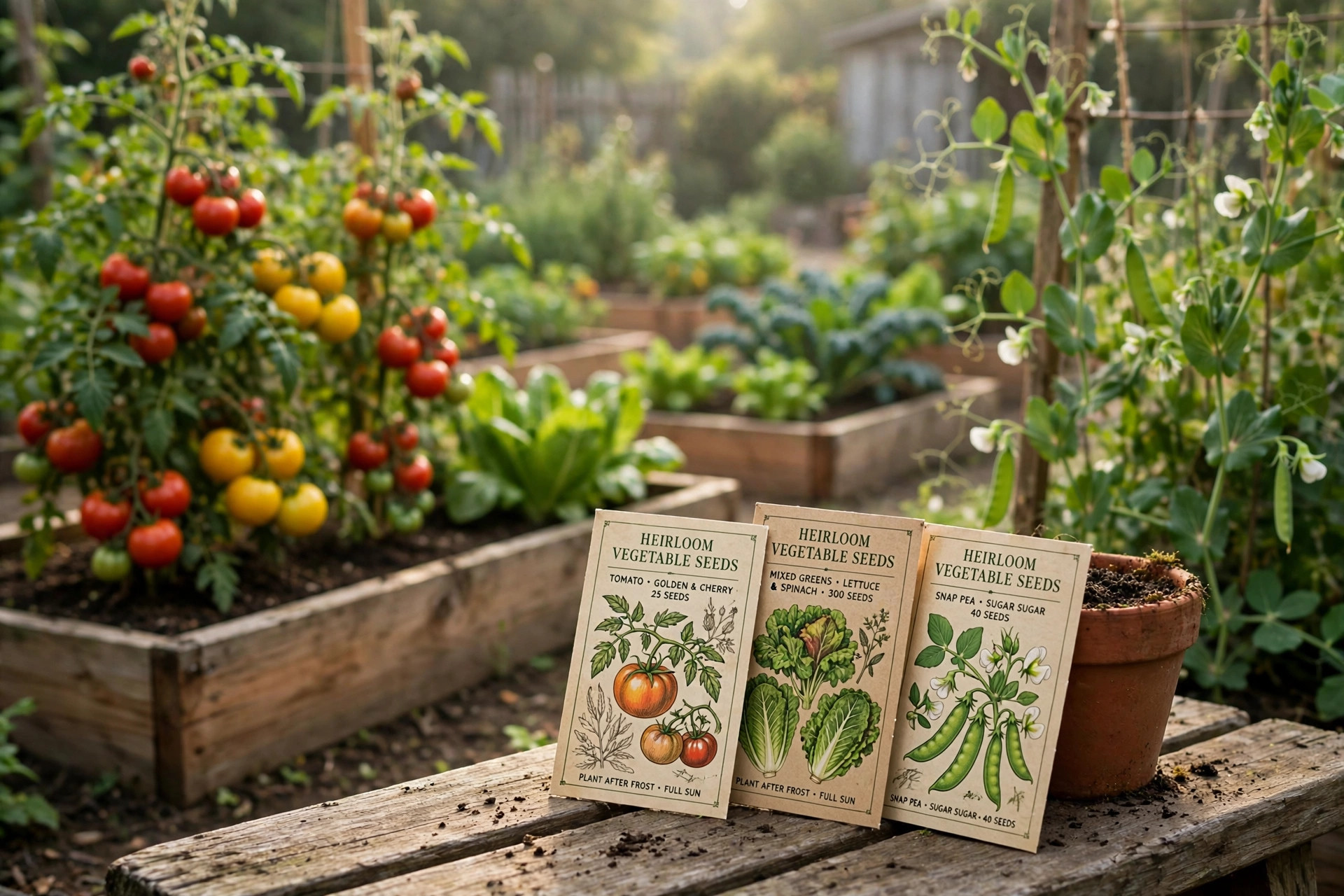

More Americans are planting their own food each year. If you are one of them, you may have seen the words heirloom vegetable seeds for sale usa in seed catalogs and garden shops. The phrase points to something simple. Heirloom seeds come from open pollinated plants whose seed has been saved and passed down, often for fifty years or more. When you plant them, you get plants that match their parents in taste, color, and shape. This article explains what heirloom vegetable seeds are, how to shop for them, what they cost, and how to grow them well.
Why Heirloom Seeds Matter
Most vegetable seed sold in stores today is hybrid seed. A hybrid is made by crossing two parent lines. It often grows fast and yields well. But seed saved from a hybrid does not grow true. The next generation may look and taste different. Heirloom seeds are different. They are open pollinated, which means bees, wind, or the plant itself moves the pollen. The seed you save from an heirloom plant grows into a plant like the one before it.
Flavor is the first reason gardeners choose heirlooms. Many old varieties were kept by farm families because they tasted good at the table, not because they shipped well in a truck. A Brandywine tomato, a Cherokee Purple tomato, or a Moon and Stars watermelon often has a depth of flavor that modern shipping types lack. This is a matter of taste, and millions of home growers agree.
Seed saving is the second reason. When you buy heirloom vegetable seeds for sale in the USA, you buy more than one season of food. You can let a few fruits ripen fully, collect the seed, dry it, and plant it next spring. Over the years, your plants adapt to your soil and your weather. This old practice of seed stewardship connects you to the gardeners who kept these varieties alive before you.
Diversity is the third reason. At one time, thousands of local bean, corn, and squash types filled American gardens. Many have vanished as farms turned to a few uniform types. Buying heirloom seed helps keep the rest in the ground. Seed companies that sell organic heirloom vegetable seeds keep rare lines in production, and garden groups share them through seed libraries.
If you are new to this, our heirloom vegetable seeds buying guide USA walks through the basics of choosing a seed company and reading a packet.
What to Look For When You Buy: Heirloom Vegetable Seeds for Sale Usa
Shopping for seed is easy once you know the terms on the packet. Here is what to check.
Open pollinated. The packet should say open pollinated or heirloom. Either term tells you the seed will grow true to type. Avoid packets that say F1 or hybrid if your goal is seed saving.
Germination rate and test date. Good companies print the germination rate and the date the seed was tested. A rate above 80 percent is fine for most vegetables. Seed packed for the current year gives the best results.
Days to maturity. This number tells you how many days from planting to harvest. Match it to your season length. A tomato that needs 90 days will not ripen in a short northern summer if you plant it late.
Non-GMO. All heirloom vegetable seed is non-GMO by definition, since heirloom lines predate genetic engineering. Many sellers still print non-GMO on the packet as a comfort to buyers. Garden resources at The Spruce explain these seed labels in plain terms.
Source and freshness. Buy from sellers who store seed cool and dry and who turn over their stock each season. Large mail order houses, regional seed companies, and local nurseries all carry heirloom vegetable seeds for sale USA shoppers trust. Regional companies often sell varieties bred for your climate, which can give you a head start.
Packet Size and Seed Count
Packets vary in size. A tomato packet may hold 30 seeds. A bean packet may hold an ounce, enough for a long row. Check the seed count or weight before you compare prices. A three dollar packet with 100 seeds is a better value than a two dollar packet with 15 seeds.
Types and Options Worth Trying
Heirloom vegetables cover nearly every crop a home garden can hold. A few stand out for beginners.
Tomatoes. The most popular heirloom crop in the country. Try Brandywine for rich flavor, Cherokee Purple for dark fruit, or Green Zebra for a tart bite. Indeterminate types need stakes or cages. Determinate types stay compact and suit pots.
Beans. Pole beans like Kentucky Wonder and bush beans like Provider are easy and productive. Beans fix nitrogen in the soil, which helps the crops that follow them.
Peppers. Jimmy Nardello frying peppers and California Wonder bells are old favorites. Peppers need warm soil, so wait until nights stay above 55 degrees before you set them out.
Squash and pumpkins. Crookneck, pattypan, and Long Island Cheese pumpkin all grow well from direct sowing. Give them room. One hill can spread six feet across.
Greens. Lettuce types like Black Seeded Simpson, spinach like Bloomsdale, and kale like Lacinato grow fast in cool weather. Sow them in early spring and again in late summer for fall harvest.
Root crops. Detroit Dark Red beets and Scarlet Nantes carrots are reliable heirlooms. They need loose soil without stones so the roots grow straight.
Seed collections from Park Seed and Gurney’s group these crops into beginner bundles, which can simplify a first order.
Cost and Price
Heirloom seed is one of the cheapest ways to feed a family from a garden. Most packets cost between two and five dollars. A ten dollar order can plant a full spring garden. Compare that to the price of seedlings at a garden center, where one tomato transplant can cost four or five dollars.
The true value shows up over time. One packet of tomato seed holds enough plants for several years if you store it well. One packet of bean seed gives you food this year and seed for next year, free. Few garden purchases pay back like a packet of open pollinated seed.
Shipping adds to the cost of mail orders. Many companies offer free shipping above a set order size, often twenty five or thirty five dollars. If you plan to order from several companies, combine your list to reach the free shipping level. Local garden centers and farm stores carry no shipping cost at all, though the variety choice may be smaller.
Watch for sales. Seed companies discount leftover stock in midsummer. The seed is still good for next year if you store it cool and dry.
Starting Seeds Indoors
Many gardeners start seeds inside to get a jump on the season. You will need containers, a seed starting mix, light, and warmth. Trays with a clear dome hold moisture while seed sprouts. A simple shop light hung two inches above the seedlings works as well as costly grow lights for most crops. For a full list of supplies, see our page on seed starting trays for sale USA.
Follow the packet directions for planting depth. As a rule, plant seed twice as deep as the seed is wide. Tiny seeds like lettuce sit on the surface. Large seeds like beans go an inch deep.
Keep the soil moist but not soaked. Most vegetable seed sprouts best between 70 and 80 degrees. A heat mat under the tray speeds peppers and tomatoes. Once seedlings show true leaves, feed them with a half strength liquid fertilizer every two weeks.
Move seedlings outside gradually. This step is called hardening off. Set trays in shade for a few hours on the first day, then add more sun and wind each day for a week. Plants moved straight from a warm house to full sun will wilt.
Care and Upkeep Through the Season
Heirloom plants need the same care as any garden crop: sun, water, food, and attention.
Sun. Most vegetables need six to eight hours of direct sun each day. Leafy greens tolerate a little shade in hot climates. Watch your yard for a season if you are unsure where the sun falls.
Water. Deep watering once or twice a week beats a light sprinkle every day. Soaker hoses and drip lines put water at the roots and keep leaves dry, which cuts disease. Mulch with straw or shredded leaves to hold moisture in the soil.
Feeding. Work compost into the bed before planting. Side dress heavy feeders like tomatoes and corn with compost or a balanced organic fertilizer when they start to bloom. A soil test from your state extension service tells you exactly what your ground lacks. The National Institute of Food and Agriculture supports the extension system that offers these tests in every state.
Pests. Walk the garden often and pick off hornworms, beetles, and slugs by hand. Row covers keep flying insects off young plants. Healthy soil and mixed plantings reduce pest pressure more than any spray. The Old Farmer’s Almanac planting calendars help you time crops to dodge peak pest seasons.
Disease. Give plants space for air to move. Water at the base, not overhead. Remove sick leaves at once and put them in the trash, not the compost. Choose resistant heirloom types if blight or wilt has struck your garden before. Garden guides at Gardening Know How describe common vegetable diseases with photos.
Saving Your Own Seed
Seed saving is the heart of the heirloom tradition. It is simple for self pollinating crops like tomatoes, beans, lettuce, and peas. Let the fruit ripen fully on the plant. For tomatoes, squeeze the seed and pulp into a jar, add a little water, and let it ferment for three days. Rinse the seed clean and dry it on a screen. For beans and peas, let the pods dry brown on the vine, then shell and store the seed.
Cross pollinating crops like squash, corn, and cucumbers need more care. Plant only one variety, or separate varieties by distance, or pollinate by hand. Many gardeners start with tomatoes and beans and learn the rest in later years.
Dry seed fully before you store it. Good seed snaps when bent. Put it in a paper envelope, label it with the variety and year, and keep it in a cool dry place. A jar in the refrigerator works well. Most vegetable seed stays viable for three to five years, and some lasts longer. Companies like White Flower Farm and Monrovia publish seed storage guides for home growers.
Safety
Gardening is safe work, but a few rules keep it that way.
Read every product label. Follow the rates and wait times on any fertilizer or pest product you use. Keep all garden chemicals locked away from children and pets.
Wash your hands and your harvest. Rinse vegetables under running water before you eat them. This removes soil and any residue.
Protect yourself from the sun and heat. Wear a hat, drink water, and rest in shade during the hot part of the day. A tetanus shot should be current for anyone who works soil with hand tools.
Some plants can irritate skin. Wear gloves when you handle tomato vines, squash leaves, or hot peppers, and keep your hands away from your eyes. If you grow organic herb seeds for sale USA shoppers often buy alongside vegetables, note that some herbs like rue can cause rashes in sensitive people.
FAQ
Are heirloom seeds harder to grow than hybrid seeds? No. They need the same sun, water, and soil as any vegetable. Some heirlooms yield a little less or need staking, but most grow with ordinary care. Beginners do well with beans, lettuce, and cherry tomatoes.
Where can I find heirloom vegetable seeds for sale USA with fast shipping? Large mail order seed houses ship within days during the spring rush. Order early, in January or February, for the best choice. Local nurseries stock the most popular types with no wait at all.
Can I save seed from grocery store heirloom tomatoes? You can try, but results vary. Store fruit is often picked green and may carry disease. Seed from your own garden plants, grown from trusted heirloom stock, gives far better results.
How long does heirloom seed last in storage? Most kinds stay good for three to five years in cool dry storage. Onion seed is short lived and best bought fresh each year. Bean, tomato, and cucumber seed often lasts five years or more. Test old seed by sprouting ten seeds in a damp paper towel before planting day.
Are heirloom vegetables organic? Not always. Heirloom describes the breeding history of the variety. Organic describes how the seed was grown. You can buy heirloom seed that is certified organic, conventionally grown, or untreated. Read the packet or listing to know which you are getting.
What is the difference between heirloom and open pollinated? All heirlooms are open pollinated, but not all open pollinated types are heirlooms. Heirloom usually means the variety is at least fifty years old and has a history of being passed down. A new open pollinated variety may be excellent, but it is not yet an heirloom. Trial garden reports from Proven Winners often note which new introductions are open pollinated.
A Final Word
A garden planted from heirloom seed ties you to a long line of growers. The tomato on your table may trace back to a family in Ohio, a market grower in Italy, or a seed saver in the Ozarks. Start small, keep notes, save seed from your best plants, and share the extra with neighbors. The harvest will reward you, and the seed you save will carry the story forward.
References
Burpee. (n.d.). Seeds, plants, and gardening supplies. https://www.burpee.com Gardening Know How. (n.d.). Gardening guides and plant care. https://www.gardeningknowhow.com Gurney’s Seed & Nursery Co. (n.d.). Seeds, plants, and garden supplies. https://www.gurneys.com Monrovia. (n.d.). Plants for home gardens. https://www.monrovia.com National Institute of Food and Agriculture. (n.d.). Agricultural research and extension. https://www.nifa.usda.gov Park Seed. (n.d.). Seeds, plants, and gardening supplies. https://www.parkseed.com Proven Winners. (n.d.). Plants and gardening inspiration. https://www.provenwinners.com The Old Farmer’s Almanac. (n.d.). Gardening calendars and advice. https://www.almanac.com The Spruce. (n.d.). Home and garden advice. https://www.thespruce.com White Flower Farm. (n.d.). Plants, bulbs, and garden supplies. https://www.whiteflowerfarm.com
Was this guide helpful?

About James Carter
The My Garden US editorial team writes practical, in-depth home and garden guides for American homeowners — tested advice, no fluff.
You May Also Like
Monstera Plants for Sale: Where to Buy Them in the USA
May 6, 2026 0 views
Morning Glory Seeds Buying Guide USA
April 20, 2026 0 views
Fiddle Leaf Figs Deals Near Me: A Plain Guide to Buying a Healthy Tree
May 10, 2026 0 views