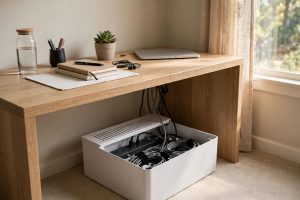
Many people work from a corner desk. The desk fits well in a room. But long hours of sitting can hurt the back, the neck, and the legs. A full new standing desk costs a lot of money. A standing desk converter is a cheaper fix. It sits on top of the desk you already own. It raises your screen and keyboard so you can stand. The question is how to find the best standing desk converter for corner desk use. Corner desks have an L shape. Not every converter fits that shape well. This guide explains what matters, what types exist, what they cost, and how to use one safely.
Why a Standing Desk Converter Matters
The human body was not made to sit all day. Doctors have said for many years that long sitting slows blood flow. It tightens the hips. It rounds the shoulders. It strains the lower back. Many office workers feel a dull ache by the middle of the day. Standing for part of the day can help. It shifts the weight. It wakes the legs. It can ease pressure on the spine.
A converter makes standing easy without buying new furniture. You do not need to throw away your corner desk. You do not need to hire a mover. You place the converter on the desk top. When you want to stand, you lift it. When you want to sit, you press it down. The change takes a few seconds.
Corner desks bring a special benefit. The L shape gives a wide work area. You can place the converter on one arm of the L. The other arm stays free for papers, books, or a printer. This split keeps the desk tidy. It also gives room for a drink and a phone where the converter does not reach.
How to Choose: What to Look For: Best Standing Desk Converter for Corner Desk
Measure Your Corner Desk First
Corner desks differ in size. Some have short arms. Some have long arms. Measure the depth and width of the spot where the converter will sit. Most converters need a flat area of at least 24 inches deep and 30 inches wide. Write the numbers down before you shop. Compare them to the base size of each model. A unit that hangs over the edge is not safe.
Weight Capacity
A converter holds your monitor, keyboard, mouse, and small items. Add up the weight. A single monitor may weigh 10 to 15 pounds. Two monitors can weigh 25 to 35 pounds. Pick a converter rated well above your total. A rating of 30 to 40 pounds suits most single-screen setups. A rating of 40 to 50 pounds or more suits dual screens. Never test the limit. A unit that struggles will sink slowly during the day.
Lift Type
There are two main lift types. A manual lift uses a lever or handle. You squeeze it and raise the unit by hand. It is simple and it never breaks down from a dead motor. An electric lift uses a small motor. You press a button and the unit moves on its own. Electric lifts cost more. They suit people who change height often or who lift heavy screens. Many buyers like the smooth motion of an electric unit. Many others like the low price and long life of a manual one. Read product specs on sites like The Spruce and PCMag to compare lift types side by side.
Height Range
The converter must rise high enough for your height. Tall users need more lift. A person who is six feet tall may need the keyboard tray to reach 20 inches above the desk. Shorter users need less. Check the maximum height in the product details. If you can, test the height in a store. Stand straight. Let your arms hang. Your elbows should bend at about a right angle when you type. That is the right height.
Keyboard Tray and Monitor Space
Look at the top deck and the keyboard tray as two zones. The top deck holds the screen. The keyboard tray holds the keyboard and mouse. A tray that is too small will crowd your hands. A tray that sits too far forward will force you to reach. Some models have one wide deck for everything. Others have two tiers. Two tiers are better for posture. They let the screen sit at eye level while the keyboard sits at elbow level.
For ideas on desk layout and monitor placement, the ergonomic guides at Herman Miller and Steelcase are useful reading. Both firms have studied office posture for decades.
Types of Converters for Corner Desks
Post Style Converters
A post style unit has one center column. The work surface wraps around the post. It takes up little desk depth. It suits narrow corner arms. The trade is a smaller work area. It fits one monitor well. It is a poor pick for two large screens.
X-Frame Converters
An X-frame unit has legs that fold like a scissor. It is the most common type. It is wide and steady. It suits the longer arm of an L-shaped desk. It lifts straight up and down. It handles two monitors. It needs more depth than a post style unit.
Electric Sit-Stand Risers
Electric risers look like X-frame units with a motor. They move at the touch of a button. Some remember two or three heights. You press a number and the unit returns to your saved spot. They cost more than manual units. They are a good pick for shared desks where two people of different heights use the same space.
Corner-Specific Wide Decks
Some makers sell wide decks shaped for corners. They sit across the bend of the L. They use space that flat units waste. They are harder to find. They cost more. But if your desk has a true corner seat, a wide deck may use the space best.
If you are also sizing a new desk for a tight room, read about the small corner desk with drawers for apartment office and the ergonomic standing desk for small home office. Both cover small-space planning.
Cost and Price
A standing desk converter costs far less than a full standing desk. Manual X-frame models often sell for 150 to 300 dollars. Electric models often sell for 300 to 600 dollars. Wide or corner-specific models can reach 700 dollars or more. Price rises with weight capacity, deck size, and motor quality.
Think of cost over time. A good unit lasts many years. There is no motor to replace on a manual model. Electric models may need a new power cord or switch after years of use, but this is rare. Compare prices at large stores such as IKEA and Wayfair. Also check the standing desk lines at UPLIFT Desk to see what full electric desks cost. The gap between a converter and a full desk shows the saving.
Watch for hidden costs. A dual-monitor mount adds cost if you want screens off the deck. A floor mat adds cost but helps tired feet. A better chair matters too, since you still sit part of the day. A plain plan keeps the budget low. A converter plus a mat is enough for most people.
For shoppers comparing converter models to risers for a table they already own, the notes on adjustable height desk converter for existing table explain the trade-offs in plain terms.
Care and Upkeep
A converter needs little care. Wipe the decks with a damp cloth once a week. Dust builds up under the unit. Lift it or slide it aside and clean the desk top below. Crumbs and paper clips can jam the lift arms of an X-frame model. Keep the area under the unit clear.
Check the screws every few months. Vibration from typing can loosen them over a year or two. Tighten with the tool that came in the box. Do not use force. A stripped screw weakens the frame.
For electric models, keep the cord away from the moving parts. Route it down the back of the desk. Do not let it pinch between the unit and the desk top. If the motor sounds strained or moves unevenly, stop using the lift and call the maker. Do not open the motor housing yourself. That ends most warranties.
Safety
Safety starts with placement. Set the converter well back from the desk edge. Leave at least two inches of desk in front of the base. A unit that overhangs can tip when raised. On a corner desk, do not push it hard into the bend. Leave room so the lift arms move free.
Raise and lower with care. Keep fingers away from the scissor arms on X-frame models. Keep cords, ties, and loose sleeves clear. If children are in the room, teach them not to play with the lift. A raised converter can pinch small fingers.
Balance the load. Place heavy items in the center of the deck. Do not hang bags from the keyboard tray. Do not lean on the raised unit. It is built to hold screens and typing hands, not body weight.
Stand in a safe way. Wear shoes with support or stand on a mat. Concrete or hard wood floors tire the feet fast. Change between sitting and standing every 30 to 60 minutes. Standing all day brings its own strain. The goal is change, not one fixed pose.
The Consumer Product Safety Commission notes on furniture tip-over apply here too: heavy top loads and unstable bases are a real hazard. The product safety explainers at Wirecutter also stress checking weight ratings before purchase.
Frequently Asked Questions
Will a standing desk converter fit any corner desk?
Most will fit, but not all. The desk arm must be deep enough for the base. Measure first. Some corner desks have a curved front edge that steals depth. Some have a modesty panel that blocks the lift arms. Check depth, width, and clearance under the desk before you order.
Can I use two monitors on a converter?
Yes, if the weight rating allows it. Two 24-inch monitors usually weigh less than 35 pounds together. Pick a unit rated for at least 40 pounds. Use a dual-monitor mount on the deck to save space. Place the screens so the tops sit near eye level.
Is a manual or electric lift better?
Manual lifts cost less and last long. Electric lifts move with less effort and can save height presets. For one person with one screen, manual is fine. For heavy dual screens or shared use, electric is worth the extra cost.
How high should the converter rise?
High enough that your elbows bend near 90 degrees when you type standing. For most adults this means 16 to 22 inches of lift above the desk top. Tall users should check the maximum height in the specs.
Does a converter damage the desk?
A converter sits on the desk top. It does not screw in. It will not damage a solid desk. On soft wood or thin tops, place a mat under the base to stop scratches and dents. Move the unit now and then so pressure marks do not set.
Can I still sit at my desk with the converter on it?
Yes. Press the unit down to its lowest point. The keyboard tray drops near desk height. You can sit and type as before. Many people sit for part of the day and stand for the rest. The switch takes seconds.
A Short Final Word
The best standing desk converter for corner desk use is the one that fits your desk, holds your gear, and lifts high enough for your body. Measure first. Pick a solid weight rating. Choose manual for value or electric for ease. Place it with care. Then stand a little each day. Your back will thank you.
References
Herman Miller. (n.d.). Office furniture and ergonomic seating. https://www.hermanmiller.com IKEA. (n.d.). Home furnishings. https://www.ikea.com PCMag. (n.d.). Technology product reviews. https://www.pcmag.com Steelcase. (n.d.). Office furniture and workplace research. https://www.steelcase.com The Spruce. (n.d.). Home and garden advice. https://www.thespruce.com U.S. Consumer Product Safety Commission. (n.d.). Product safety information. https://www.cpsc.gov UPLIFT Desk. (n.d.). Standing desks and ergonomic office furniture. https://www.uplift-desk.com Wayfair. (n.d.). Furniture and home goods. https://www.wayfair.com Wirecutter. (n.d.). Product reviews from The New York Times. https://www.nytimes.com/wirecutter
Was this guide helpful?

About Jennifer Lee
The My Garden US editorial team writes practical, in-depth home and garden guides for American homeowners — tested advice, no fluff.
You May Also Like

Best Home Office Desk for College Students Dorm: A Guide to Small-Room Study Furniture
February 27, 2026 0 views
Adjustable Height Coffee Table for Laptop Work
April 7, 2026 0 views
Home Office Noise Machine for Focus and Privacy
September 21, 2026 0 views