A thin, yellow lawn can make a whole house look tired. Many owners feed their grass and still see pale blades. The missing piece is often iron. A lawn fertilizer with iron for greening adds this small but mighty nutrient to the soil and to the blades. The result is a rich green color that ordinary nitrogen alone does not always give.
Iron does not make grass grow taller. It makes grass grow greener. When the grass leaf has enough iron, it builds more chlorophyll. Chlorophyll is the green pigment in plants. More chlorophyll means a darker, deeper color. This guide explains how iron fertilizer works, how to choose one, when to apply it, and how to keep the lawn safe while you use it.
Why Iron Matters for a Green Lawn
Grass needs many nutrients. Nitrogen gets the most attention. It pushes growth. Phosphorus helps roots. Potassium helps the plant stand stress. Iron is a micronutrient. The grass needs only a small amount. But without it, the lawn cannot turn a full green.
Iron helps the grass make chlorophyll. Without enough iron, new leaves come out yellow. The veins may stay green while the rest of the leaf fades. Gardeners call this iron chlorosis. It shows up most on high pH soils. Many parts of the United States have alkaline soil. In these soils, iron is present but locked up. The roots cannot take it in.
A lawn fertilizer with iron for greening solves two problems at once. It feeds the grass with base nutrients. It also supplies iron in a form the plant can absorb. Many iron fertilizers use chelated iron. Chelation keeps the iron soluble. The leaf or root can take it up before the soil locks it away.
Warm season grasses such as St. Augustine, Bermuda, and zoysia often show iron hunger. If you grow one of these, read our notes on best fertilizer for St. Augustine grass in Texas. Cool season grasses such as Kentucky bluegrass and fescue also answer well to iron. They green up fast after a spring or fall feeding.
How Iron Fertilizer Works: Lawn Fertilizer with Iron for Greening
Iron plays a direct role in chlorophyll formation. It is part of the enzyme system that builds the green pigment. When you apply iron to the lawn, the blades pull it in through the leaf surface or the roots pull it in from the soil. Within days, the color deepens.
There are two main delivery paths. Soil application feeds the roots. The iron moves up into the blades through the plant. Foliar application sprays iron straight onto the leaves. The blades absorb it at once. Foliar feeding gives the fastest green-up. The effect may last two to four weeks. Soil feeding works slower. It can last six to eight weeks.
Most products combine iron with nitrogen. A common mix has 20 to 30 percent nitrogen and 2 to 5 percent iron. The nitrogen feeds growth. The iron feeds color. Some products also add sulfur, which helps lower soil pH in small steps. Lower pH frees more natural iron in the soil.
Do not expect iron to fix every yellow lawn. Yellow grass can come from many causes. Lack of water, compacted soil, grubs, and disease all cause yellowing. Check these first. Pull up a small patch and look at the roots. Make sure the mower is set high enough. Toro and other mower makers note that cutting too short stresses the grass and fades color. Toro offers guidance on proper mowing height for common turf types.
What to Look For When You Buy
Read the label before you buy. The front of the bag tells the three big numbers. These are nitrogen, phosphorus, and potassium. Iron shows up in the small print under guaranteed analysis. Look for “iron” listed as Fe. A good lawn fertilizer with iron for greening carries at least 2 percent iron by weight.
Granular vs. Liquid
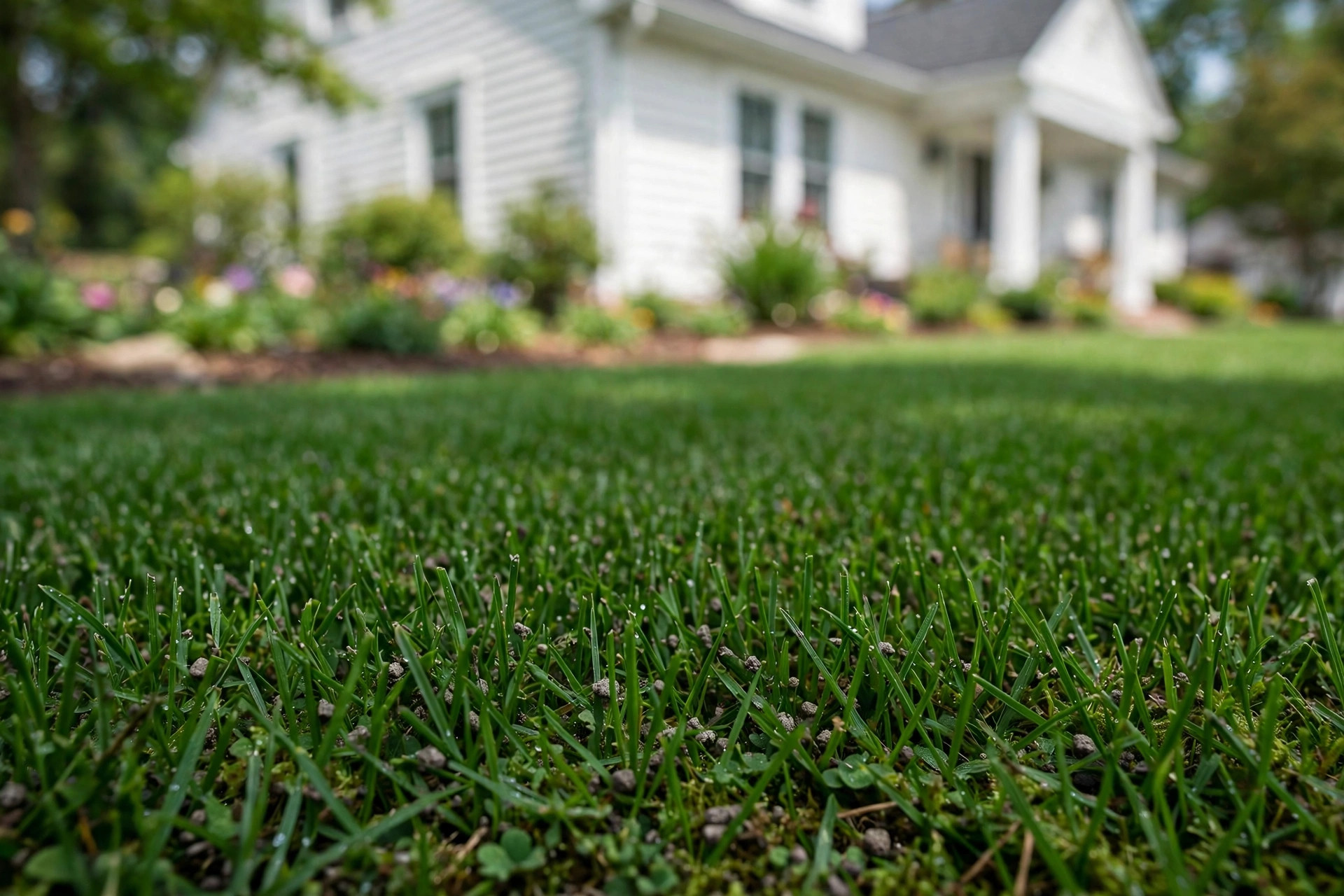
Granular products come as small pellets. You spread them with a broadcast spreader. They feed over weeks. They are easy for beginners. They cost less per pound of nutrient. The drawback is slower green-up. The iron must dissolve and reach the roots.
Liquid products come as concentrates. You mix them with water and spray. They green the lawn in days. They are good for a quick fix before a party or a photo. The drawback is short life. You must spray again in a few weeks. They also risk leaf burn if you spray in hot sun.
Chelated Iron
The form of iron matters as much as the amount. Chelated iron stays available in the soil longer. Common chelates include EDTA, DTPA, and EDDHA. EDDHA works best in high pH soils. It costs more. For most home lawns, EDTA or DTPA is fine. Ferrous sulfate is the cheapest form. It works fast as a foliar spray. It stains concrete orange if it runs off. Sweep driveways and walks after you apply it.
Also check the bag for slow-release nitrogen. Sulfur-coated or polymer-coated urea feeds the lawn for weeks. It lowers the risk of burn. A bag that pairs slow-release nitrogen with chelated iron is the safest pick for most homes.
Types and Options
Iron lawn products fall into a few clear groups.
Iron plus complete fertilizer. These bags carry nitrogen, phosphorus, potassium, and iron. They are all-in-one feeds. Use them for regular spring and fall feeding. They suit owners who want one product for the whole season.
Iron supplements. These add iron with little nitrogen. They are for lawns that already get enough nitrogen but still look pale. Liquid iron supplements are common. They are a good second step after your normal feeding.
Organic iron sources. Some organic fertilizers carry iron from natural sources. They feed slowly. They improve the soil over time. They cost more per feeding. They suit owners who prefer organic care.
Weed and feed with iron. Some products mix iron with weed control. Read the label with care. Apply them only at the right time of year. If you plan weed control, see our pre-emergent weed killer application timing guide before you mix tasks.
Match the product to your grass type. Warm season grasses take iron well in late spring and summer. Cool season grasses take it best in spring and fall. When in doubt, ask your local extension office. They know your soil type and can read a soil test for you.
When and How to Apply
Timing decides the result. Apply iron fertilizer when the grass is actively growing. For cool season lawns, that means April through May and September through October. For warm season lawns, that means May through August. Do not apply iron to dormant grass. It will sit on the surface and wash away.
Follow the label rate. More is not better. Too much iron can turn the lawn gray or black. It can also stain sidewalks. A normal rate for granular products is about 3 to 5 pounds of product per 1,000 square feet. Liquid products often call for 2 to 4 ounces per 1,000 square feet mixed in water. Check your bag. Every product is different.
Water the lawn before and after a granular application. Moist soil helps the pellets dissolve. Water lightly after to move the iron off the blades and into the soil. For foliar sprays, apply in the cool of the morning or evening. Do not spray when the air is above 85 degrees. Hot sun on wet iron spray can burn leaf tips.
Calibrate your spreader. Walk at a steady pace. Overlap each pass by a few inches. Missed strips show up as pale lines. Striped lawns are the classic sign of a spreader that moved too fast. Mower and spreader makers like Deere publish spreader setting charts for common products. Use them.
Keep pets and children off the lawn until the product is watered in and dry. Read the label for the exact wait time. Most labels ask for a few hours. Store the bag in a dry place out of reach.
Cost and Price
Iron fertilizers cost a bit more than plain nitrogen feeds. A 40 to 50 pound bag of granular lawn fertilizer with iron for greening runs about 30 to 60 dollars at most home stores. It covers 10,000 to 15,000 square feet. That works out to a few dollars per 1,000 square feet per feeding.
Liquid iron concentrates cost 15 to 30 dollars per quart or gallon. A quart often covers 5,000 to 10,000 square feet. The cost per feeding is similar. But you feed more often with liquids. Over a season, liquids can cost more.
Organic options run higher. Expect to pay 40 to 80 dollars for a bag that covers 5,000 square feet. The soil benefits are real. The budget impact is real too.
Compare cost per 1,000 square feet, not cost per bag. Bags vary in size and strength. A cheap bag with low iron may cost more per feeding than a dear bag with high iron. Read the guaranteed analysis. Do the math. Two feedings per year is normal for most lawns. Four feedings is a heavy program for lawns that need it.
Care and Upkeep After Application
Iron greens the lawn. Good care keeps it green. Mow high. Set the mower to 3 inches or more for most grasses. Tall grass shades the soil. It keeps roots cool. It fights weeds. Engine makers such as Briggs & Stratton remind owners to keep blades sharp. A dull blade tears the grass. Torn tips turn brown and undo the green you just bought.
Water deep and seldom. Give the lawn about 1 inch of water per week from rain or sprinklers. Water in the early morning. Evening watering keeps blades wet all night. Wet blades invite disease.
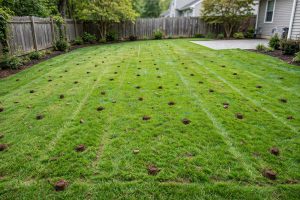
Aerate compacted soil once a year. Iron cannot reach roots that cannot breathe. A core aerator pulls small plugs from the soil. Water and nutrients move into the holes. Fall is the best time to aerate cool season lawns. Late spring suits warm season lawns.
Overseed thin spots in fall for cool season grass. A thick lawn shows color better than a thin one. See our overseeding lawn in fall step by step for the full method. Test your soil every two to three years. A soil test tells you the pH and the iron level. It stops you from guessing.
Safety Notes
Iron fertilizer is safe when used as directed. Still, take care. Keep the product away from children and pets. Do not let the dust blow into ponds or streams. Iron and nitrogen can feed algae in water. Sweep granules off driveways, walks, and patios. Iron stains concrete a rusty orange. The stain is hard to remove.
Wear gloves when you handle the product. Wash your hands after. If the product contacts eyes, rinse with water. Read the first aid section on the label before you start. Store the bag sealed and dry. A damp bag cakes up and is hard to spread.
Do not mix iron fertilizer with other chemicals unless the label says you can. Some mixes react and lose strength. Some mixes burn the lawn. When in doubt, apply products a week apart.
Frequently Asked Questions
How fast does lawn fertilizer with iron for greening work? Liquid iron sprays show color in 24 to 72 hours. Granular products take 7 to 14 days. Full color builds over two to three weeks. If you need a fast green-up for an event, use a liquid spray a few days before.
Will iron fertilizer burn my lawn? It can if you over-apply or spray in hot sun. Follow the label rate. Water granular products in after spreading. Spray liquids in cool morning or evening air. Slow-release formulas lower the risk.
Can I apply iron fertilizer in summer heat? Use care. Warm season grasses take summer iron well if the lawn is watered. Cool season grasses may be stressed in high heat. Wait for a cool stretch. Never spray when the air is above 85 degrees.
How often should I apply it? Two to four times per growing season is normal. Space feedings 6 to 8 weeks apart. A soil test can tell you if the lawn still needs iron. More is not better. Excess iron can darken blades to an unnatural gray.
Does iron fertilizer stain concrete? Yes. Iron, especially ferrous sulfate, leaves rust-colored stains on concrete, stone, and siding. Sweep or blow granules off hard surfaces right after you spread. Rinse spray drift off walks at once.
Is iron fertilizer safe for pets? Most products are safe once watered in and dry. Keep pets off the lawn during application and until the label says it is safe. Store the bag where pets cannot reach it. If a pet eats the product, call your vet.
A Final Word
A lawn fertilizer with iron for greening is one of the simplest upgrades a home owner can make. It does not ask for new tools. It does not ask for new skills. It asks only for the right product, the right rate, and the right timing. Buy a bag with chelated iron and slow-release nitrogen. Spread it when the grass is growing. Water it in. Mow high and keep the blade sharp. The lawn will answer with a deep green that lasts for weeks. Pair that color with steady care, and the whole yard will look its best from spring to fall.
References
Toro. (n.d.). Lawn mowers and yard care equipment. https://www.toro.com Deere. (n.d.). Lawn care equipment and spreader guidance. https://www.deere.com Briggs & Stratton. (n.d.). Small engines and mower maintenance. https://www.briggsandstratton.com
Was this guide helpful?

About Sarah Mitchell
The My Garden US editorial team writes practical, in-depth home and garden guides for American homeowners — tested advice, no fluff.