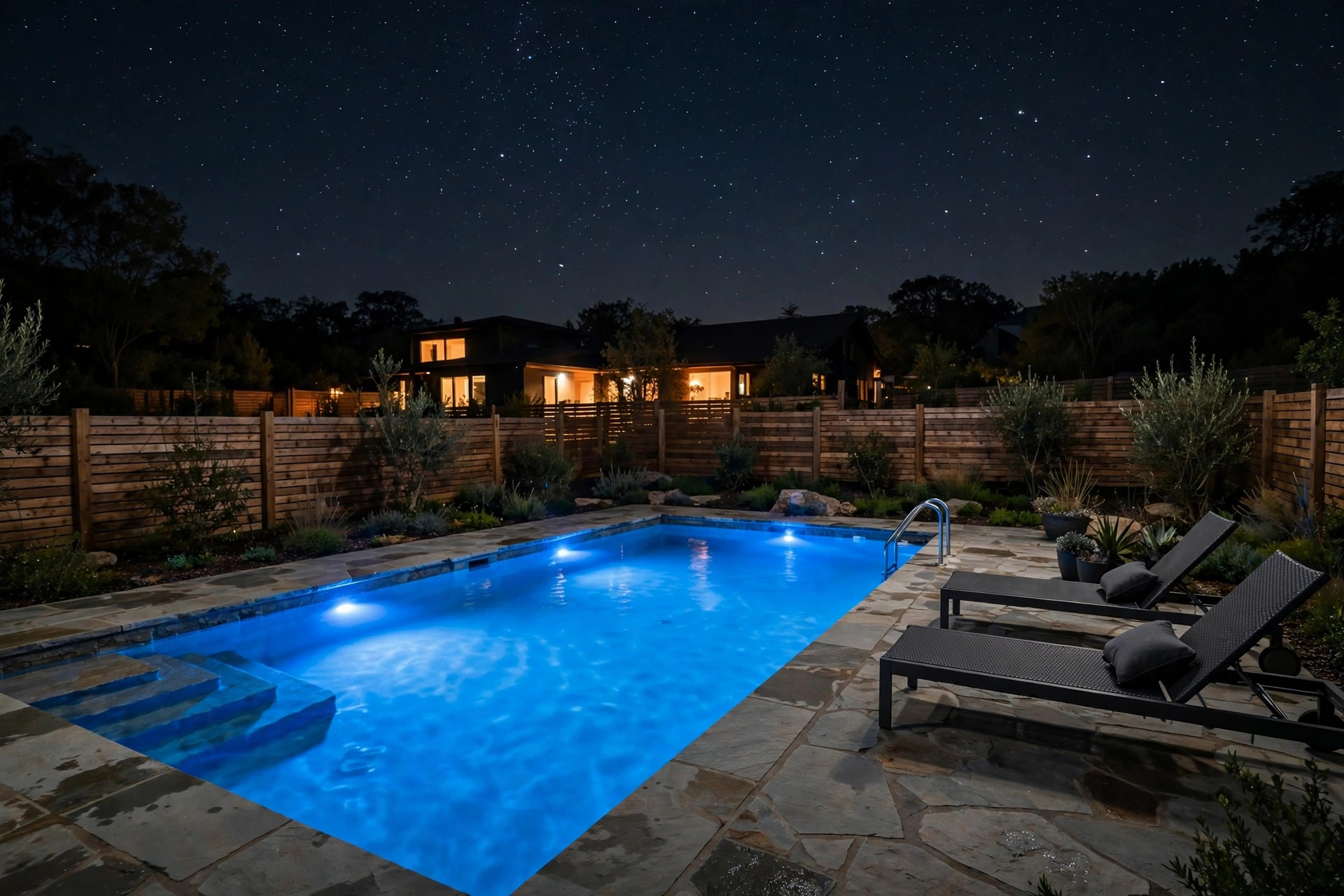
A pool looks different after dark. The water turns black. The steps disappear. A swim at night can still be safe and pleasant, but only with the right light. This guide will help you find the best pool light for night swimming. It covers the main types of lights, what to look for when you buy, what they cost, and how to keep them working for years.
Why Good Pool Light Matters at Night
Swimming at night is a joy many pool owners love. The air is cooler. The yard is quiet. But a dark pool hides danger. You cannot see the deep end. You cannot see the ladder or the steps. Good light solves these problems. It shows the full shape of the pool. It marks the depth. It makes the water inviting instead of frightening.
Light also makes night swimming more fun. Colored lights can change the mood of a party. Soft white light makes a calm place to float after a long day. Many owners say pool lighting is the best upgrade they ever made. It costs less than most pool projects. It also extends the hours you can use your pool. In summer, the water may be too warm to enjoy at noon. At nine in the evening, with the best pool light for night swimming glowing below the surface, the same pool feels perfect.
Light has a practical side too. It helps you spot leaves and dirt on the bottom. It makes evening cleaning easier. And in some towns, local rules require working pool lights for any pool used after dark.
How to Choose the Best Pool Light for Night Swimming
Match the Light to Your Pool Size
A small above-ground pool needs less light than a large in-ground pool. One underwater light can serve a pool up to about 15 feet across. Larger pools need two or three lights on opposite walls so the whole bottom is covered. A good rule is one light for every 200 square feet of surface. Too many bright lights can cause glare on the water. Glare makes it harder to see below the surface, which defeats the purpose.
Look at Brightness, Not Just Watts
Older guides talk about watts. Modern lights are LED, so look at lumens instead. Lumens measure actual brightness. A light of 1,000 to 2,000 lumens suits most home pools. For a large pool, look for 3,000 lumens or more. Check the beam angle too. A wide beam spreads light across the pool floor. A narrow beam makes a bright spot but leaves corners dark. For night swimming, an even spread of light is what you want.
Choose the Right Color
White light is the classic choice. It shows the water and the bottom clearly. It is the safest option for night swimming because it gives the truest view of depth. Colored LED lights can switch between blue, green, red, and other colors. They are fun for parties. Some models let you set a slow color change. If you swim laps at night, stick with bright white. If you host evening gatherings, a color-changing light adds atmosphere. Many of the best underwater LED pool lights now offer both white and color modes in one unit.
Check Voltage and Power
Pool lights come in 12-volt and 120-volt versions. Low-voltage 12-volt lights are the common choice for home pools today. A 120-volt light must be wired by a licensed electrician and needs special protection. Most buyers should choose 12-volt LED lights. They plug into a transformer that steps the power down. The transformer should be rated for outdoor use and placed at a safe distance from the water.
Types of Pool Lights
In-Wall Underwater Lights
In-wall lights sit in a niche built into the pool wall. They are the standard for in-ground pools. The light face sits flush with the wall under the water line. Most new in-ground pools are built with at least one niche. If your pool already has a niche, you can often swap an old bulb-style light for a modern LED unit without changing the wiring. Readers planning a full install may want our guide on how to install inground pool lights before they begin.
These lights give the most even glow across the water. They are protected from weather because they sit inside the pool structure. The downside is cost. Adding a niche to an existing pool is a big job. But for owners who want the cleanest look, in-wall lights remain the top pick.
Magnetic and Clamp-On Lights
Magnetic lights attach to the metal wall of an above-ground pool. They need no cutting and no niche. You place the light below the water line and hold it with a strong magnet or clamp. This makes them the easiest option for above-ground pools. Many models are LED with remote controls for color changes.
The light from these units is not as even as in-wall lights. Using two of them on opposite walls fixes this. For budget owners, they are often the best pool light for night swimming because they cost little and install in minutes. If your above-ground pool sits beside a deck, you can pair the lights with simple upgrades from our list of above ground pool deck ideas on budget to make the whole area safer and nicer at night.
Floating and Solar Lights
Floating lights drift on the surface of the pool. Many are solar powered. They charge during the day and glow at night. They are the cheapest option and need no wiring at all. Children love them because they look like glowing balls or flowers.
Do not rely on floating lights alone for night swimming. They move with the wind and give weak light compared to a fixed underwater light. Use them as decoration on top of a real pool light. Also note that solar floating lights need strong sun to charge. In shaded yards they may glow for only an hour or two. Keep the panels clean so they can catch light. Our article on how to clean pool solar cover explains simple cleaning steps that also work for solar light panels.
Landscape and Deck Lights
Pool lighting is not only about the water. The area around the pool needs light too. Deck lights along the edge stop trips and falls. Step lights mark stairs and ladders. Path lights guide guests from the house to the pool. Low-voltage landscape lights are cheap to run and easy to place. Many come in kits with a transformer and ten or more small lights.
A good night setup uses both underwater light and deck light. The underwater light shows the water. The deck light shows where to walk. Together they make the whole backyard safe after dark. When you shop for deck lighting, look for weatherproof ratings and warm white color, which feels more natural than harsh blue-white light.
Cost and Price of Pool Lights
Prices vary widely. A simple floating solar light can cost less than twenty dollars. A pair of magnetic LED lights for an above-ground pool often costs between fifty and one hundred fifty dollars. A quality LED replacement bulb for an existing in-wall niche runs from one hundred to three hundred dollars. A full new in-wall light with niche and transformer can cost five hundred dollars or more, plus installation labor.
LED lights cost more up front than old-style incandescent pool lights. They pay back the difference through lower power bills. An LED pool light may use only 30 watts. An old incandescent pool light can use 300 to 500 watts. LED bulbs also last much longer. A typical LED pool light is rated for 30,000 to 50,000 hours. That can mean ten years or more of evening swims before you need a new bulb.
Installation cost is the other half of the price. Swapping a bulb in an existing niche is a job many owners do themselves. Adding a new niche or new wiring needs a licensed electrician. Expect to pay a few hundred dollars for professional wiring work. Always get a written quote before the work starts. Cheap wiring around water is never worth the risk.
Installation Tips
Safety comes first with any pool light that uses house power. Turn off the breaker before you touch any wiring. If you are not sure what you are doing, call an electrician. Local codes in most states require a ground fault circuit interrupter, known as a GFCI, on all pool light circuits. The GFCI cuts power in a fraction of a second if it senses a leak of current. Never bypass it.
For in-wall niche lights, follow the maker instructions step by step. Do not run the light out of water for more than a few seconds. Pool lights cool themselves with the surrounding water. Running one dry can crack the lens or burn out the bulb in minutes. After installation, test the light at dusk. Walk around the pool and check for dark corners.
Battery and solar lights need the least work. Charge them fully before first use. Place solar units where they get at least six hours of direct sun. Replace batteries at the start of each swim season for the brightest glow.
Care and Upkeep
Pool lights need little care, but a few simple habits will keep them bright. Clean the lens once a month during swim season. Algae and mineral film build up on the lens and dim the light. Use a soft cloth and a mild pool-safe cleaner. Do not use harsh scrubbers that can scratch the lens.
Check the seals each spring. The gasket around the light keeps water out of the wiring. A worn gasket can let water seep in and cause a short. Replacement gaskets are cheap and easy to fit. While you check the light, look at the cord for nicks or cracks. A damaged cord should be replaced, not taped.
LED lights rarely burn out, but drivers and transformers can fail. If a light stops working, check the GFCI and the transformer before you blame the bulb. A tripped GFCI is the most common cause of a dead pool light. Reset it once. If it trips again, call an electrician. Do not keep resetting a tripping GFCI.
Safety Rules for Night Swimming
Light helps, but it does not replace safe habits. Never swim alone at night. Keep the pool area well lit, not just the water. Dark paths to the pool cause more injuries than dark water does.
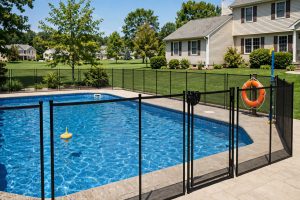
Make sure all electrical work meets code. The U.S. Consumer Product Safety Commission publishes pool safety guidance that every owner should read (cpsc.gov). Use a pool alarm or a safety cover when the pool is not in use. Small children are drawn to glowing water. A fence with a self-closing gate remains the best barrier.
Frequently Asked Questions
How many lights does my pool need for night swimming?
Most home pools need one light per 200 square feet of surface. A small pool can get by with one light. A medium pool needs two. A large pool needs three or more. Place them on opposite walls for even coverage. Walk the pool at night after installation and add lights where you see dark spots.
Are LED pool lights really better than old-style lights?
Yes, for most owners. LED lights use far less power. They last many years longer. They run cool and come in color-changing models. The light they give is bright and even. The only advantage of old incandescent lights is a lower purchase price. Over a few seasons, the LED wins on total cost.
Can I add a light to a pool that has no niche?
Yes. Magnetic lights work on steel-wall above-ground pools with no cutting. Clamp-on lights fit many pool edges. Floating lights need no mounting at all. For in-ground pools without a niche, some makers sell retrofit lights that mount to the wall with screws and sealant. A pool supply store such as Leslie’s or Pool Warehouse can show you the options that fit your pool type.
Is it safe to swim at night with pool lights on?
It is safe when the lights work properly and basic rules are followed. The wiring must meet code with GFCI protection. The water must be clear enough to see the bottom. Never swim alone at night. Keep the deck lit too. If a light flickers or trips the breaker, stay out of the water until an electrician checks it.
How long do pool lights last?
A quality LED pool light lasts 30,000 to 50,000 hours. Used three hours a night through a five-month season, that is more than twenty years. In practice, seals and drivers may need service sooner. Battery floating lights last two to four seasons before the battery fades. Solar lights last three to five years before the panel weakens.
Do colored lights cost more to run than white lights?
No. A color-changing LED uses the same low power as a white LED. The color comes from the LED chips, not from extra power. Running costs are the same. The purchase price of a color model may be a little higher. Many owners find the extra cost worth it for parties and evening mood.
Final Word
The best pool light for night swimming is the one that fits your pool, your budget, and your habits. Start with the basics: enough brightness to see the bottom, even coverage with no dark corners, and safe low-voltage wiring with GFCI protection. White light is best for safety. Color is best for fun. Many modern lights give you both. Compare options from trusted pool sources like Swim University guides, The Home Depot product lines, and The Spruce buying advice. Spa owners can also look at lighting ideas from Hot Spring and Bullfrog Spas. With the right light in place, every evening swim feels a little like a small holiday at home.
References
Bullfrog Spas. (n.d.). Hot tubs and spas. https://www.bullfrogspas.com Hot Spring Spas. (n.d.). Hot tubs and spas. https://www.hotspring.com Leslie’s Pool Supplies. (n.d.). Pool supplies and equipment. https://www.lesliespool.com Pool Warehouse. (n.d.). Pool equipment and supplies. https://www.poolwarehouse.com Swim University. (n.d.). Pool and hot tub care guides. https://www.swimuniversity.com The Home Depot. (n.d.). Home improvement products. https://www.homedepot.com The Spruce. (n.d.). Home and garden advice. https://www.thespruce.com U.S. Consumer Product Safety Commission. (n.d.). Product safety information. https://www.cpsc.gov
Was this guide helpful?

About Michael Thompson
The My Garden US editorial team writes practical, in-depth home and garden guides for American homeowners — tested advice, no fluff.