Simple Ways to Add a Deck Without Spending a Fortune
An above ground pool brings real joy to a family. It cools the summer days. It gives children a place to play. Yet most owners soon learn one truth. Getting in and out of the pool by a thin ladder is hard. It is awkward for older people. It is unsafe for small children. The answer is a deck. A deck gives you a safe place to enter the water and a spot to sit and dry off.
The problem is cost. Many people hear the word deck and think of a big bill. But above ground pool deck ideas on budget prove that this does not have to be the case. With a simple plan and cheap materials, you can build a deck for far less than most people expect.
Why a Deck Matters for an Above Ground Pool: Above Ground Pool Deck Ideas on Budget
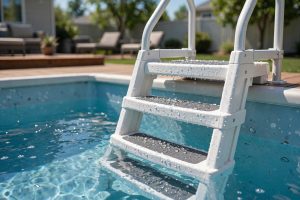
A pool deck is more than a nice extra. It is a safety feature first of all. The ladders that come with above ground pools are narrow. They wobble. They are hard to climb when you are wet. A deck lets swimmers walk up steps and step into the pool. This is much safer for children, older adults, and anyone with weak knees.
A deck also keeps dirt out of the water. Without a deck, swimmers walk across the grass and bring mud in with them. With a deck, people walk on clean wood before they enter, so the pool stays cleaner longer.
Then there is comfort. A deck gives you a place to put chairs, a towel, and a cold drink. It turns the pool into a backyard living space. Many families find the pool gets used twice as much once a deck is in place.
Finally, a deck protects the pool wall. When people climb over the side using the ladder, they push and pull on the pool rim. Over time this can bend the wall or tear the liner. A deck built at the right height lets people step over gently. The pool lasts longer.
What to Look for When Planning a Budget Deck
Before you buy a single board, sit down with paper and pencil. Good planning is what keeps the project cheap. Rush in without a plan and costs grow fast.
Start with size. A small deck costs far less than a large one. For most pools, an eight-by-ten foot platform is enough. It gives room for steps and a few chairs. Some people build only a small landing with stairs, which costs even less. Keep it small and your budget will thank you.
Next, look at the height. Your deck floor should sit just below the top rail of the pool. Measure from the ground to the top of the pool wall. This number tells you how tall your posts must be and how many stair steps you need. A shorter pool needs fewer steps and less lumber.
Check your local rules next. Some towns want a permit for a deck. Some want a fence or a locking gate around the pool. The U.S. Consumer Product Safety Commission offers plain guidance on pool barriers that can help you understand common safety rules. Know the rules early to avoid tearing down work later.
Think about the ground under the deck. The site must be level. If your yard slopes, you will need longer posts on one side. A flat spot keeps things simple. Also check for wet soil. A deck over soft ground needs good footings so it does not sink.
Finally, be honest about your skills. A simple platform deck is a fine weekend project for a beginner. A curved or multi-level deck is not. Stay inside your skill level and you will finish faster and cheaper.
Types of Budget Deck Designs
There is no single right design. The best choice depends on your pool, your yard, and your wallet. Here are the most popular low-cost options.
The Simple Platform
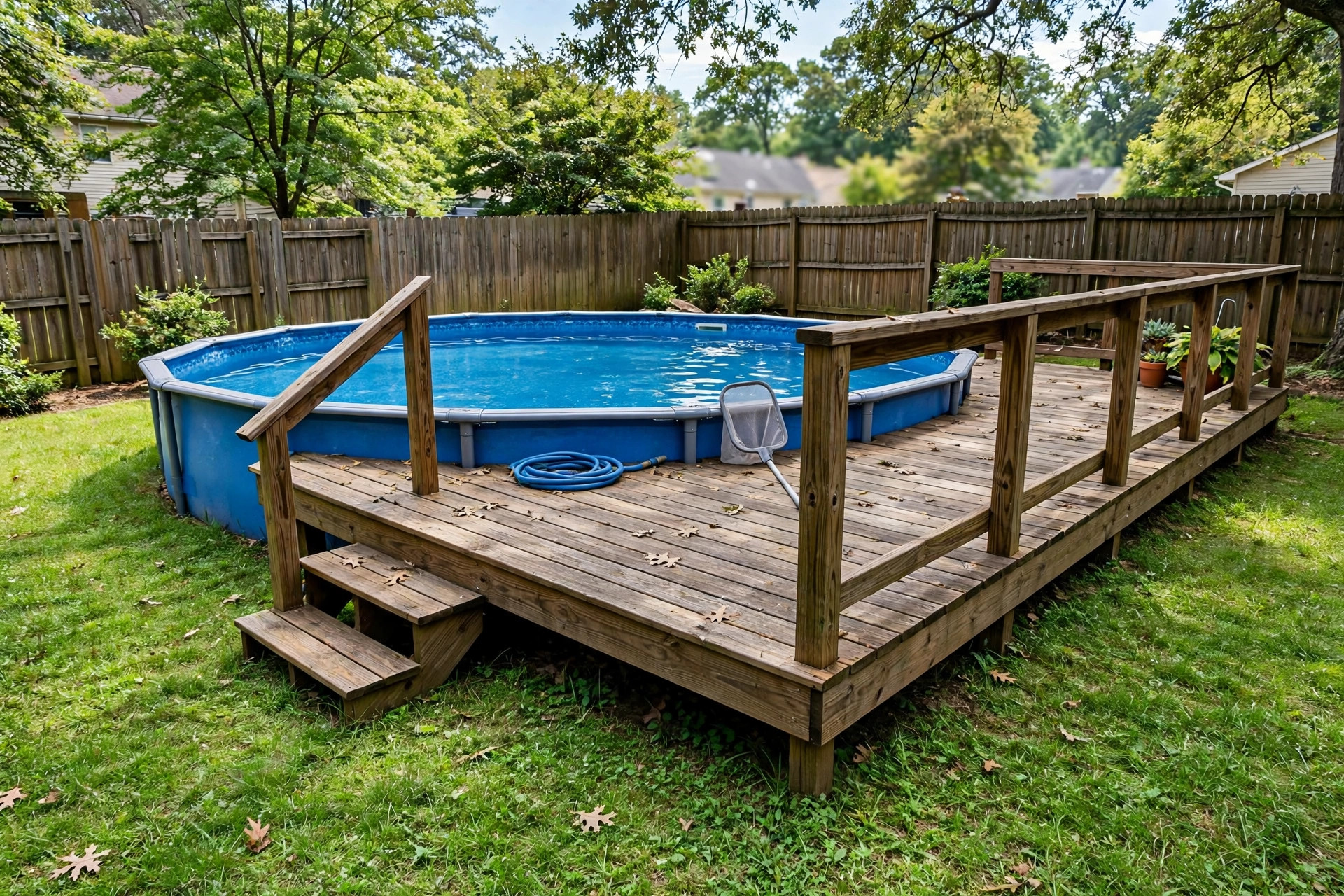
The simple platform is the cheapest full deck you can build. It is a square or rectangle of wood that sits next to the pool at the right height. One side touches the pool wall. Stairs or a ladder lead from the ground up to the platform. Swimmers step from the platform into the pool.
This design uses the least lumber and the fewest parts. It is also the easiest to build. Most people finish it in one weekend. Because it is a plain shape, there is very little wasted wood.
The Partial Surround
A partial surround wraps around part of the pool, often one-third to one-half of the circle. It looks nicer than a simple platform and gives more room to walk and sit. It costs more because it uses more lumber, but it is still far cheaper than a full surround.
This design works well when the pool sits near a fence or a tree line. You put the deck on the open side where people gather. The back side stays bare.
The Small Landing with Steps
If money is very tight, build only a landing. This is a small platform, perhaps four by four feet, with a set of steps from the ground. It gives you safe entry and nothing more. It uses the least material of any option.
A landing will not hold chairs or loungers. But it solves the main problem, which is safe and easy entry. You can always add a bigger deck later when funds allow.
The Pallet or Reclaimed Wood Deck
Some builders save money by using wood pallets or reclaimed lumber. Pallets can work for a very small deck if you pick them apart and use only the sound boards. Reclaimed lumber from a torn-down fence or an old porch can also be fine.
Be careful with this approach. Old wood may be weak or rotten. Inspect every board and replace anything soft or split.
How to Choose Cheap Materials That Last
The material you pick decides both the price and how long the deck lasts. Let us look at the main choices.
Pressure-treated lumber is the best value for most budget builds. It resists rot and insects and costs far less than cedar or composite. A standard treated deck board is one of the cheapest building materials you can buy. For frames, posts, and joists, treated lumber is the clear choice.
Untreated pine is cheaper on the shelf but it will rot fast outside. Do not use it for a pool deck. The money you save at the store will be lost when you rebuild in two years.
Composite boards look nice and need little care, but they cost two to three times as much as treated wood. They do not fit a true budget project. The same goes for cedar and redwood, which are lovely but pricey.
For screws and hardware, use coated or galvanized fasteners rated for outdoor use. Near a pool, stainless steel is even better because pool chemicals attack cheap metal. This small extra cost prevents rust stains and loose boards later.
Ground-rated lumber matters for posts that sit in soil. Check the tag on the board. It should say the wood is rated for ground contact. Posts are the part you never want to replace, so buy the right grade. The Home Depot project library has free plans and material lists that help beginners plan a low-cost build.
Cost and Price: What a Budget Deck Really Runs
Prices change by region and by year, but the ranges below give a fair picture. A small landing with steps, built by the homeowner from treated lumber, can cost as little as two to three hundred dollars in materials. This is the lowest real price for a safe, code-worthy entry.
A simple platform deck of about eight by ten feet usually costs between five hundred and one thousand dollars in materials when the owner builds it. Hiring a helper for a day may add a few hundred more. This is the sweet spot for most budgets.
A partial surround that wraps halfway around a twenty-four foot round pool may run one thousand to two thousand dollars in materials. It takes more time and more lumber, but it still costs far less than a custom contractor job.
If you hire a contractor for the whole project, expect labor to roughly double the material cost. That is why so many budget builders do the work themselves. Sweat equity is the biggest saver of all.
When you budget, remember the extras. You may need concrete for footings, screws, stair stringers, and railing parts. Railings are often required by local rules, so price them in from the start. If a fence is needed around the pool area, read up on pool fence installation cost near me to plan that part of the budget too.
Building the Deck: Basic Steps
First, mark the site. Use stakes and string to lay out the deck shape. Make sure it is square by measuring the diagonals. Equal diagonals mean square corners.
Second, set the footings. Dig holes below the frost line in cold climates and set concrete footings or deck blocks. This is the base of everything, so take your time and get it level.
Third, build the frame. Set the posts on the footings, then attach the beams and joists. Check level often. A frame that starts level is easy to deck.
Fourth, lay the deck boards. Leave small gaps between boards for water to drain. Start from the pool side so the fit against the pool wall is clean.
Fifth, build the stairs. Stairs are the hardest part for beginners. Measure the rise and run carefully, or buy ready-made stair stringers, which are cut at the store and cost little.
Sixth, add railings and a gate. Rails keep people from falling off the edge. A self-closing, self-latching gate keeps small children from wandering into the pool area alone.
For pool owners who want to learn more about pool care in general, Swim University has clear beginner lessons on water balance and filter care that pair well with any pool project.
Care and Upkeep Through the Seasons
A budget deck still needs care. Treated lumber lasts a long time, but it is not care-free. Each spring, walk the deck and look for loose boards, popped nails, and soft spots. Tighten or replace what you find. A small repair now stops a big repair later.
Clean the deck once a year. A broom and a garden hose do most of the work. For tough algae or mildew, a deck cleaner and a stiff brush help. Avoid a harsh pressure washer setting, which can chew up soft wood.
Seal or stain the deck every two to three years. A water-repelling stain keeps rain from soaking in and keeps boards from graying and cracking. This one job adds years to the life of the deck.
Watch the area where the deck meets the pool. Splash water sits there. Make sure it can drain away and does not pool against the boards. Trim back grass and weeds that grow under the deck, since they trap moisture.
At the end of the season, store chairs and toys off the deck. Put away anything that holds water against the boards. If you live where winters are cold, a quick fall check for damage before the snow comes is worth the effort. Owners planning winter tasks may also want to see how to handle a salt water pool conversion cost guide before the next season starts.
Safety First Around the Pool and Deck
Water and height together demand respect. A deck makes the pool safer, but only if you build and use it with care.
Guard rails are a must on any deck more than a couple of feet off the ground. The rails should be tall enough and close enough that a small child cannot slip through. Many local codes set exact numbers, so check yours.
The gate matters as much as the rails. It should close by itself and latch on its own. The latch should sit high enough that a toddler cannot reach it. Test it every spring. A gate that no longer latches gives a false sense of safety.
Keep the deck surface free of clutter. Wet boards are slippery. Toys, hoses, and towels left on the deck cause trips. A simple storage box on the deck helps everyone put things away.
Never let children swim alone. A deck does not replace watchful eyes. Keep rescue gear, like a pole and a ring, within reach of the pool. If a leak ever shows up, a local pool leak detection service near me can find the source fast.
For a full picture of safe pool equipment choices, Leslie’s Pool Supplies carries safety gear and clear guides for home pool owners. And if you ever move up to a larger setup, brands like Hot Spring and Bullfrog Spas show how the big pool and spa makers design for safe entry. Pool Warehouse is another useful stop for comparing liners, covers, and entry systems, while The Spruce offers plain-language how-to articles on decks and pool care.
Frequently Asked Questions
How much does the cheapest safe pool deck cost?
A small landing with steps built by the homeowner can cost two to three hundred dollars in treated lumber and hardware. It gives safe entry without extra space, which is the lowest real cost for a deck you can trust.
Can I build an above ground pool deck myself?
Yes, if you keep the design simple. A platform or landing deck is a common beginner project. You need basic tools, a level, and patience. Measure twice and do not rush the frame.
What is the cheapest wood for a pool deck?
Pressure-treated pine is the cheapest wood that will last outdoors. Do not use untreated lumber outside. It will rot in one or two seasons. Treated boards cost a little more but save you a full rebuild.
Do I need a permit for a small pool deck?
It depends on your town. Some places want a permit for any deck over a certain height or size. Call your local building office before you start. A short call can save a fine or a tear-down order.
How close should the deck be to the pool?
The deck floor should sit just below the top rail of the pool. Leave a small gap, about an inch, between the deck boards and the pool wall. This lets the wall move a little and makes liner replacement easy later.
How long will a budget deck last?
A well-built treated-lumber deck that is cleaned and sealed on schedule can last ten to fifteen years. The posts and frame last longest. Deck boards wear first and can be replaced one by one.
A Short Final Word
A deck does not have to be costly to be good. Start small. Use treated lumber. Build it yourself. Keep the design simple and the plan clear. For a few hundred dollars and a few weekends, you can turn a bare pool into a safe and pleasant place the whole family will use. The best above ground pool deck ideas on budget are the ones you finish, enjoy, and keep safe for years to come.
References
Bullfrog Spas. (n.d.). Hot tubs and spas. https://www.bullfrogspas.com Hot Spring Spas. (n.d.). Hot tubs and spas. https://www.hotspring.com Leslie’s Pool Supplies. (n.d.). Pool supplies and equipment. https://www.lesliespool.com Pool Warehouse. (n.d.). Pool equipment and supplies. https://www.poolwarehouse.com Swim University. (n.d.). Pool and hot tub care guides. https://www.swimuniversity.com The Home Depot. (n.d.). Home improvement products. https://www.homedepot.com The Spruce. (n.d.). Home and garden advice. https://www.thespruce.com U.S. Consumer Product Safety Commission. (n.d.). Product safety information. https://www.cpsc.gov
Was this guide helpful?

About Emily Rodriguez
The My Garden US editorial team writes practical, in-depth home and garden guides for American homeowners — tested advice, no fluff.