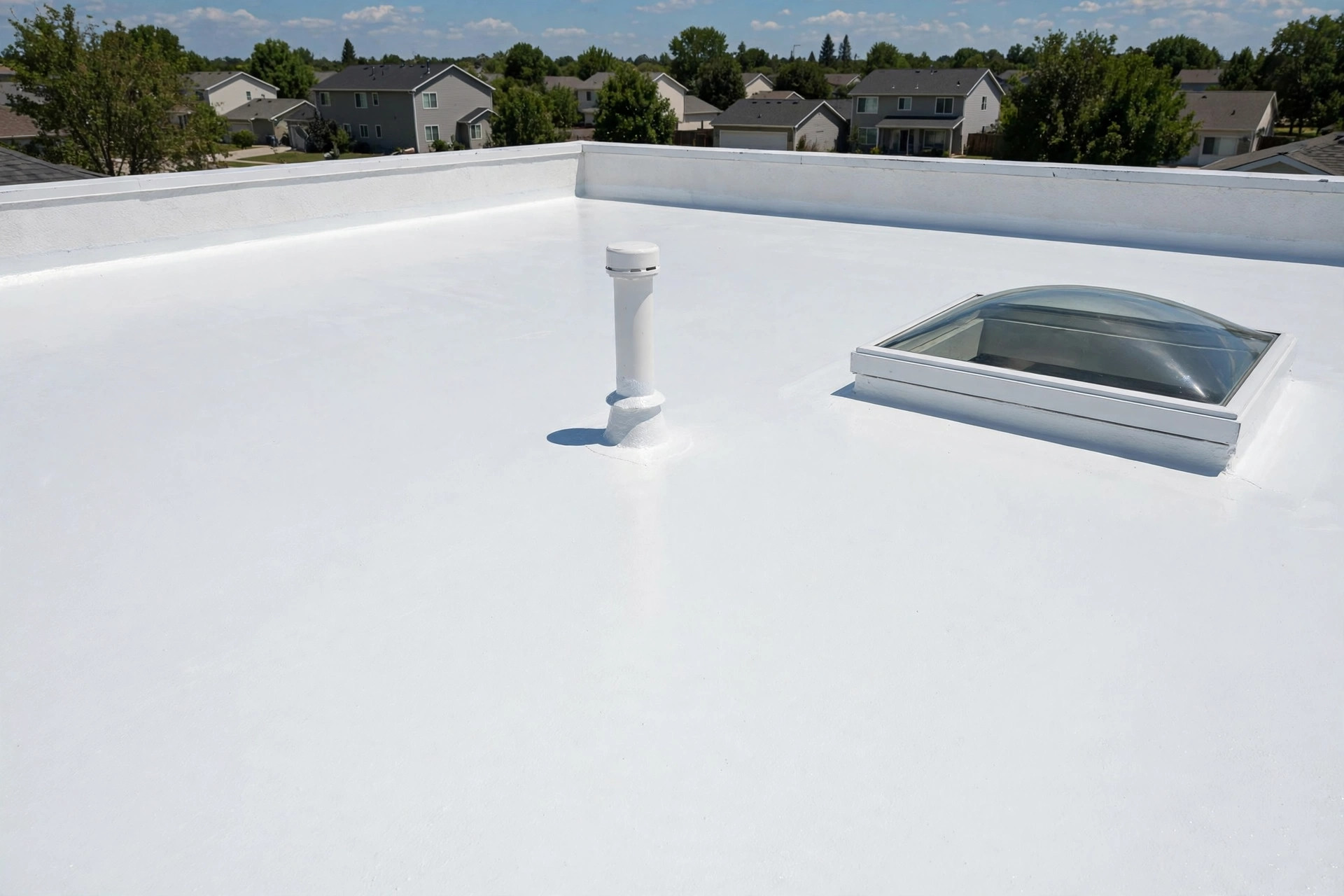

A flat roof takes the full force of the summer sun. Dark roofing can reach temperatures of 150 degrees Fahrenheit or more on a hot afternoon. That heat moves into the rooms below and forces the air conditioner to run longer. Homeowners looking for relief often turn to a reflective roof coating. This guide gathers reflective roof coating reviews for flat roofs from homeowners, contractors, and product tests. It explains what these coatings are, how they work, what the reviews say, and how to pick the right one. The goal is plain talk, so you can decide with confidence.
Why a Reflective Roof Coating Matters
A reflective coating is a paint-like product rolled or sprayed over a flat roof. It is usually white or light gray. The pale surface bounces sunlight back into the sky instead of soaking it up. A coated roof can run 50 to 60 degrees cooler than a dark roof on the same day. Rooms under the roof stay cooler. The air conditioner runs less, and the roof itself lasts longer because heat and ultraviolet light wear roofing out faster.
The U.S. Department of Energy explains the idea of cool roofs in its homeowner guides. A cool roof is simply one that reflects more sunlight and sheds heat well. For a flat roof, a reflective coating is one of the cheapest ways to get there. It does not change the roof structure. It adds a thin shield that does the work.
Reviews from homeowners in hot states tell a common story. Many say the coating cut roof surface heat in a big way. Several report that upstairs rooms felt two to four degrees cooler after coating. A few mention that their air conditioner cycled less often in late afternoon. No one calls it a miracle. It is a steady gain, not a fix for a worn-out roof.
What to Look for When You Read Reviews: Reflective Roof Coating Reviews for Flat Roofs
Not all reviews are worth the same. A review that says “worked great” tells you little. A review that gives numbers, climate, and roof type tells you a lot. When you read reflective roof coating reviews for flat roofs, look for these details.
First, solar reflectance. This is the share of sunlight the coating bounces back. Good products list a number near 0.80 or higher when new. Energy Star ratings for roof products include reflectance values, so compare numbers side by side.
Second, thermal emittance. This is how well the coating lets go of heat it does absorb. A high number here means the roof cools faster at night.
Third, the roof it went on. A coating that shines on a clean EPDM rubber roof may struggle on a dirty or cracked one. The best reviews name the surface: built-up roofing, modified bitumen, EPDM, TPO, concrete, or metal.
Fourth, the climate. Heat helps reflective coatings pay off. A review from Arizona means more than a review from Maine if you live in Texas.
Fifth, time. Some reviews are written one week after the job. Look for reviews written a year or two later. They tell you whether the coating held up, chalked, peeled, or kept its brightness.
Sixth, how it was applied. Reviews that note thick coats and clean prep tend to show better results. Reviews that mention a rushed job on a dirty roof often end with peeling.
Types of Reflective Roof Coatings
Four main types show up in most reflective roof coating reviews for flat roofs. Each has strengths and weak spots.
Acrylic Elastomeric Coatings
Acrylic coatings are the most common. They go on like thick paint with a roller or sprayer. They stretch as the roof moves with heat and cold. They are cheap and easy to find. Most cost 50 to 100 dollars for five gallons. The weak spot is ponding water. If water sits on your flat roof for days, acrylic can soften and lift. Reviews praise them for price and ease of use. Reviews in rainy areas warn about ponding.
Silicone Coatings
Silicone coatings cost more but handle standing water well. Silicone does not break down in ponding water the way acrylic can. It stays rubbery for years. A five-gallon pail may run 150 to 250 dollars. Reviews say silicone spreads easily and cures fast. The main complaint is that dirt sticks to it over time, and recoating later is tricky because new silicone bonds to old silicone only. Once you pick silicone, you stay with silicone.
Polyurethane Coatings
Polyurethane coatings are tough and thick. They resist foot traffic and hail better than the other two. They are common on commercial flat roofs. For homes, they cost the most and take more skill to apply. Reviews from contractors rate them highly for durability. Homeowner reviews are fewer, since most DIY jobs use acrylic or silicone.
Aluminum or Fibered Asphalt Coatings
These are older products made from asphalt with aluminum flakes. They give a silver-gray finish that reflects some sun. They are cheap and go well on asphalt-based roofs. Reviews note they do not reflect as well as modern white coatings. They also track with footprints and can stain. Some owners use them as a budget fix on older built-up roofs.
What the Reviews Say: Pros and Cons
Across hundreds of homeowner and contractor reviews, the same themes appear again and again.
The most common praise is lower heat. Owners report roof temperatures dropping sharply the same day the coating cures. Many say second-floor rooms are noticeably cooler. Some in the deep South say their air conditioner runs one or two fewer hours a day in summer.
The second common praise is longer roof life. Ultraviolet light and heat cycles crack and age roofing. A reflective coat shields the surface. Several reviewers mention that an aging roof bought them five to ten extra years with a coating. Contractors on This Old House often note that protecting the roof surface delays replacement.
The most common complaint is fading reflectance. White coatings turn gray as dust and mildew build up. A coating that reflected 85 percent of sunlight new may reflect 60 percent after a few years of dirt. The fix is washing the roof once a year. Reviews from owners who wash their roofs stay positive. Reviews from owners who never wash it often say the gain faded.
The second common complaint is poor prep. Coatings fail when they go on dirty, damp, or flaking roofs. Peeling reviews almost always trace back to prep. Power washing and patching first is the advice in nearly every long-term review, and roofing repair guidance from the Family Handyman stresses the same point.
A smaller set of complaints covers color choice and slipperiness. White roofs look bright and can be slippery when wet. A few reviewers note glare near skylights.
Cost and Price
Cost is a big reason these coatings get such long attention. A full roof replacement on a flat roof can run 8,000 to 15,000 dollars or more. A coating job costs a fraction of that.
For a do-it-yourself job on a 1,000-square-foot flat roof, expect to spend 300 to 800 dollars on materials. That covers cleaner, primer if needed, coating, and tools. Silicone pushes the high end. Acrylic sits at the low end.
A professional job for the same roof usually runs 1,500 to 4,500 dollars. The price depends on roof condition, prep needed, and coating type. Commercial-grade polyurethane jobs cost the most.
Reviews agree that the savings show up in cooling bills. A home with heavy summer cooling costs can see savings of 5 to 15 percent on the cooling part of the bill. That adds up over five to ten years. The bigger win is often roof life. Pushing a roof replacement out by seven years saves far more than the energy savings.
Related projects also trim cooling costs. Better SEER ratings on an air conditioner for Texas homes can multiply the gains from a cooler roof. Homeowners weighing big upgrades sometimes compare coating a flat roof against what geothermal heat pumps cost per ton before deciding. And once the system runs less, lower yearly mini split maintenance costs are a welcome side effect.
Care and Upkeep
A coated roof is low maintenance, not no maintenance. The single most important habit is washing. Dust, leaves, and mildew dull the white surface. Wash the roof once a year with water and mild soap. Avoid harsh chemicals that can eat the coating.
Check the roof twice a year, in spring and fall. Look for ponding water that lasts more than 48 hours. Look for cracks, blisters, and worn spots near drains and seams. Touch up small areas with a brush. A gallon of coating keeps well for touch-ups.
Plan to recoat every 8 to 15 years for acrylic, 10 to 20 for silicone, and longer for polyurethane. The warranty on the pail often matches these ranges. Reviews from owners who recoated on time describe it as a simple weekend job. Reviews from owners who waited until peeling started describe a much bigger job.
Keep foot traffic low. Coatings handle walking but wear under heavy use. Lay boards or mats on paths used by service workers.
Safety
Roof work has real risks, and reflective coatings add a few of their own.
White roofs reflect sun upward into your eyes. Wear sunglasses. The bright surface can blind you at noon in summer. Schedule work for morning hours when possible.
Roofs get slick. Coatings are slippery when wet, and algae film makes it worse. Wear shoes with soft rubber soles. Never work on a wet coated roof.
Heat is a hazard. You are standing in full sun on a bright surface. Drink water often. Take breaks in shade. Stop if you feel dizzy.
Some coatings give off fumes as they cure. Water-based acrylics are mild. Solvent-based products are stronger. Read the label. Keep windows near the roof closed during application and until the smell clears. HVAC manufacturers and air quality guides agree that fresh air and ventilation matter around any fresh coating.
Do not walk backward off the edge. Set up a clear work zone. If the roof is steep at the edges or the pitch feels wrong, hire a professional with fall protection.
Frequently Asked Questions
How long does a reflective roof coating last?
Most reflective roof coating reviews for flat roofs report 8 to 15 years for acrylic and 10 to 20 years for silicone. Warranties vary by brand and by how thick the coating was applied. Thick coats last longer. Sun and weather shorten the range. A yearly wash helps the coating reach the high end of its range.
Does it work on any flat roof?
It works on most: EPDM rubber, TPO, modified bitumen, built-up roofing, concrete, and metal. Each surface may need its own primer. Very old or badly damaged roofs may not be worth coating. If the roof deck is soft or leaks in many places, replacement makes more sense than coating.
Will it really cut my air conditioning bills?
It can, most in hot climates with high cooling use. Expect single-digit to low-teen percentage cuts on cooling costs. The roof surface will be much cooler, and rooms below will feel better. Cooling equipment makers such as Trane, Lennox, Rheem, and Goodman all note that lowering heat gain reduces the load on air conditioners.
Can I apply it myself?
Yes, if the roof is in decent shape and you can work safely up there. The job is like painting: clean, patch, prime, and roll on two thick coats. Follow the coverage rate on the pail. Thin coats fail early. If your roof has ponding problems or you are unsure about the surface, get a contractor quote first.
What is the best time of year to coat a flat roof?
Late spring or early fall in most of the country. You want dry weather above 50 degrees Fahrenheit for a few days. Morning starts keep you off the hottest roof. Avoid coating in rain season or when dew stays heavy.
Does the color of the coating matter?
Yes. White reflects the most. Light gray runs close. Silver aluminum coatings reflect less than bright white acrylic or silicone. Some historic districts limit bright white roofs, so check local rules before you buy.
A Short Final Word
Reflective roof coating reviews for flat roofs keep coming back to the same point. The coating is cheap, it works, and it works best when the roof is clean and the job is done right. It will not fix a dead roof, and it will not cut your cooling bill in half. What it will do is keep the roof far cooler, ease the load on the air conditioner, and buy the roof more years. For homeowners with flat roofs in sunny country, that is a deal worth taking.
References
Carrier. (n.d.). Heating and cooling systems. https://www.carrier.com ENERGY STAR. (n.d.). Energy efficient products. https://www.energystar.gov Family Handyman. (n.d.). DIY home repair and maintenance. https://www.familyhandyman.com Goodman. (n.d.). Heating and cooling equipment. https://www.goodmanmfg.com Lennox. (n.d.). Heating and cooling systems. https://www.lennox.com Rheem. (n.d.). Heating, cooling, and water heating. https://www.rheem.com This Old House. (n.d.). Home renovation guidance. https://www.thisoldhouse.com Trane. (n.d.). Heating and air conditioning. https://www.trane.com U.S. Department of Energy. (n.d.). Energy efficiency and renewable energy. https://www.energy.gov
Was this guide helpful?

About Lisa Anderson
The My Garden US editorial team writes practical, in-depth home and garden guides for American homeowners — tested advice, no fluff.
You May Also Like

Wood Stove vs Pellet Stove Cost Comparison
June 24, 2026 0 views
Daikin vs Mitsubishi Mini Split Reviews USA: Which Ductless System Should You Buy
August 22, 2026 0 views
Best Evaporative Cooler for Garage USA: A Practical Buying Guide
June 30, 2026 0 views