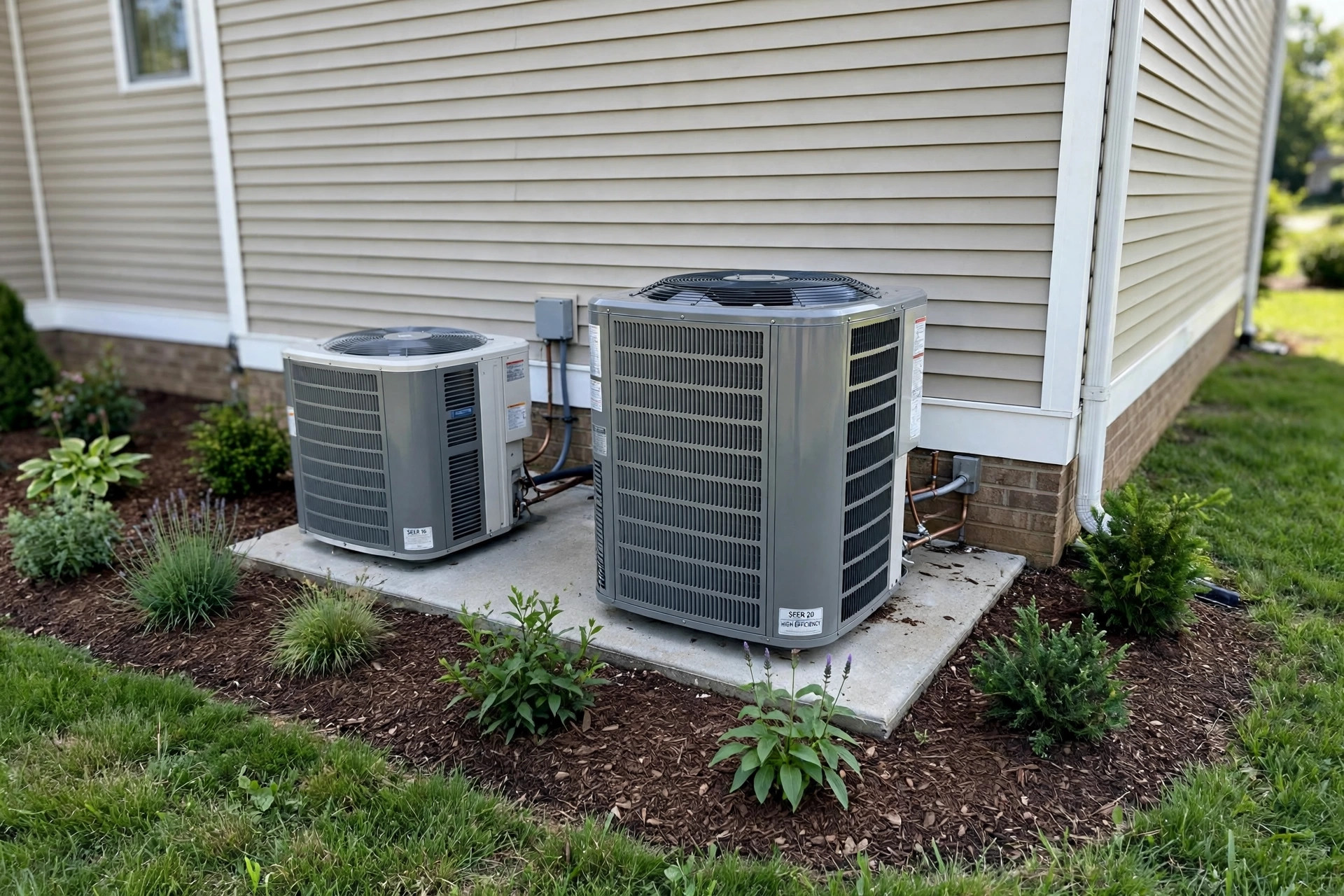

The 16 vs 18 seer ac cost difference usa is one of the most common questions American homeowners ask when a central air conditioner needs replacement. A 16 SEER unit costs less to buy and install. An 18 SEER unit costs more up front but uses less electricity each summer. The choice matters because a central air conditioner is one of the largest energy users in the home. Cooling can be a large share of the summer electric bill, especially in hot states. This guide lays out the facts in plain terms so the choice can be made with confidence.
Why the SEER Rating Matters
SEER stands for Seasonal Energy Efficiency Ratio. It is the standard measure of cooling efficiency in the United States. The Department of Energy sets minimum SEER ratings for new air conditioners, and the ratings have risen over time. An 18 SEER unit converts electricity into cooling more efficiently than a 16 SEER unit. That means it delivers the same cooling with less power.
The difference is not a guess. It is tested and certified under national rules. Two units of the same size but different SEER ratings will cool the same home the same amount. The higher-rated unit will draw less current while doing it. The U.S. Department of Energy explains how these efficiency standards work and why they were created to cut wasted energy in homes.
What SEER Means in Plain Terms: 16 vs 18 Seer Ac Cost Difference Usa
How the rating is calculated
SEER is the total cooling output over a season divided by the total electricity used. A higher number means more cooling per unit of electricity. Moving from 16 to 18 is a real gain. In round terms, an 18 SEER unit is about 11 to 13 percent more efficient than a 16 SEER unit. That gain shows up on the monthly bill, not on the thermostat.
SEER versus SEER2
In 2023 the testing method changed, and the new rating is called SEER2. It uses a stricter test that better matches real duct conditions. A unit rated 18 SEER under the old test is about 17.2 SEER2 under the new one. A 16 SEER unit is about 15.2 SEER2. Most product labels now show SEER2. The comparison below still holds either way, since both units were tested by the same method.
A quick example
Take a home with a 3-ton central air conditioner, a common size in the United States. With a 16 SEER unit, that system uses a set amount of electricity over the summer. With an 18 SEER unit of the same size, it uses roughly one-tenth less. The exact saving depends on the climate, the size of the home, and how the family uses the thermostat.
Upfront Cost: 16 SEER vs 18 SEER
The installed price is where the difference is largest. Across the United States, a complete installed 16 SEER central air conditioner system often runs from about 5,000 to 8,000 dollars, depending on the size of the unit and the region. An 18 SEER system of the same size often runs from about 6,500 to 10,000 dollars installed. The gap between the two is commonly 1,000 to 2,500 dollars.
Why the gap exists is simple. Higher-efficiency units use better compressors, often two-stage or variable-speed designs, larger coils, and smarter controls. These parts cost more to make. The installation labor is much the same. The equipment pages at Lennox and Carrier show how efficiency levels climb with price across product lines, and Trane and Rheem publish similar ranges.
Equipment-only prices tell the same story. A 16 SEER condenser and coil set may cost the homeowner 2,500 to 4,000 dollars before labor. An 18 SEER set of the same size may cost 3,500 to 5,500 dollars. Retail listings at Lowe’s give a feel for these price steps. The final bill also depends on the contractor, the ductwork, and whether the furnace or air handler is replaced at the same time.
Goodman units often sit at the low end of these ranges. Goodman is known for value pricing, and its 16 and 18 SEER lines show a smaller premium than some premium brands. Independent testing groups such as Consumer Reports review reliability and owner satisfaction across brands, which matters as much as efficiency when a system must last fifteen years.
Yearly Operating Cost and Savings
The operating side is where the 18 SEER unit earns back its price. The exact dollar saving depends on local electricity rates and how many hours the system runs each year.
Consider a 3-ton system in a warm climate where air conditioning runs about 1,200 hours a season. At 14 cents per kilowatt-hour, the cooling season might cost roughly 850 dollars with a 16 SEER unit. The same season with an 18 SEER unit might cost roughly 755 dollars. That is a saving of about 95 dollars a year.
Now consider a hot climate, such as Phoenix or Houston, where the system runs 2,000 hours or more. The saving grows to about 150 to 200 dollars a year. In a mild climate, such as Seattle or the coast of Oregon, where cooling runs only a few hundred hours, the saving may be only 30 to 50 dollars a year.
Electricity rates change the math too. In states with high rates, such as California or Hawaii, each hour of cooling costs more, so the efficient unit saves more dollars per hour. In states with low rates, such as Louisiana or Washington, the dollar saving is smaller. The ENERGY STAR program offers guidance on how efficiency translates into savings at different usage levels.
When the 18 SEER Unit Pays for Itself
Payback is the upfront premium divided by the yearly saving. With a premium of 1,500 dollars and a yearly saving of 150 dollars, the payback is ten years. With a premium of 1,500 dollars and a yearly saving of 75 dollars, the payback is twenty years. A central air conditioner usually lasts fifteen to twenty years.
This gives a clear rule. The 18 SEER unit makes financial sense when the home is in a hot climate, the system runs many hours, electricity rates are high, and the family plans to stay in the home for a long time. In that case the saving pays back the premium with years to spare.
The 16 SEER unit makes sense when the home is in a mild climate, the system runs little, electricity is cheap, or the budget is tight. It also makes sense for rental homes or homes the family plans to sell soon, since the owner will not stay long enough to recover the premium. A 16 SEER system is already an efficient machine by the standards of older units it often replaces.
Home guides at This Old House, Bob Vila, and Family Handyman walk through similar payback math and stress that the honest answer depends on the home, not on the brochure.
Factors That Change the Math
The SEER rating is not the only thing that decides the bill. Several factors can matter as much as the rating itself.
Ductwork comes first. Leaky or poorly insulated ducts can waste a large share of the cooled air before it reaches the rooms. A new 18 SEER unit connected to bad ducts will save little. Some contractors test the ducts and seal them as part of the job. This is money well spent.
Proper sizing matters too. An oversized unit cycles on and off quickly. That wastes energy and leaves humidity in the air. An undersized unit runs constantly and wears out early. A good contractor measures the home and runs a load calculation rather than guessing from the old unit.
The thermostat and controls matter. A programmable thermostat that raises the temperature when no one is home can save as much as a SEER step. Variable-speed air handlers, often paired with 18 SEER units, add comfort by running long and quiet instead of blasting in short bursts.
The age of the unit being replaced sets the baseline. Many homeowners compare 16 and 18 SEER while replacing a unit from the 1990s rated at 10 or 12 SEER. Either new unit will cut the cooling bill by a third or more. The choice between 16 and 18 is fine-tuning on top of a large gain.
Rebates and tax credits can tip the balance. Utility companies and federal programs sometimes offer rebates for higher-efficiency equipment. A rebate that cuts 500 dollars off the premium shortens the payback by years. The ENERGY STAR program lists current incentives by region.
Homeowners also thinking about lowering their winter heating bills should look at the whole system. Many 18 SEER air conditioners are sold as part of a heat pump, which also heats the home efficiently. A heat pump can cut heating costs in mild-winter states. The heating side of the math is worth running before the final choice.
Care and Upkeep to Protect Your Savings
An efficient unit only stays efficient if it is cared for. The steps are simple and cheap.
Change or clean the air filter every one to three months during the cooling season. A clogged filter makes the system work harder and can cut efficiency by several percent. Keep the outdoor condenser unit clear of grass, leaves, and bushes. Leave two feet of clear space around it. Hose the coil gently each spring to wash off dirt.
Have a technician service the system once a year, ideally in spring. The visit should include checking the refrigerant charge, cleaning the coils, testing the controls, and inspecting the electrical parts. A low refrigerant charge alone can raise operating costs by ten percent or more.
Inside the home, keep supply vents open and unblocked. Closing vents in unused rooms does not save much and can strain the system. If the home has rooms that run too hot or too cold, that points to duct or sizing problems worth fixing.
For homes with other cooling needs, the same efficiency logic applies. A look at through-the-wall AC reviews shows how smaller units carry the same kind of efficiency ratings. Even kitchen ventilation plays a part in comfort; a good kitchen exhaust fan for an island cooktop keeps cooking heat from fighting the air conditioner.
Safety Notes
Air conditioner work involves high voltage and pressurized refrigerant. Homeowners should never open the electrical panel of the outdoor unit or handle refrigerant lines. Those jobs belong to a licensed technician.
During installation, the power to the old unit must be off and locked out. Refrigerant must be recovered by law, not vented into the air. A licensed contractor handles all of this as part of the job.
Condensate drains can grow mold if they clog. A slow drip near the indoor unit is a warning sign. Keep the drain line clear, and ask the technician to check it during the yearly visit. A clogged drain can flood a ceiling or a closet.
Electrical safety matters at the disconnect box by the outdoor unit. It should be weather-tight and properly rated. If the breaker trips often, that is a fault to fix, not a nuisance to live with. Do not reset a tripping breaker again and again without finding the cause.
Frequently Asked Questions
Is 18 SEER worth the extra cost over 16 SEER?
It depends on use. In hot climates with long cooling seasons and high electricity rates, the 18 SEER unit often pays back its premium within the life of the system. In mild climates with short seasons, the 16 SEER unit is usually the better value. Run the payback math with local rates before deciding.
How much more does an 18 SEER AC cost to install than a 16 SEER?
The premium is commonly 1,000 to 2,500 dollars for a full installed system of the same size. The gap is larger for premium brands and smaller for value brands. Local labor rates also shift the numbers.
Will an 18 SEER unit cool better than a 16 SEER unit?
It cools the same. Both units are sized to the same load. The difference is energy use, not cooling power. Comfort can feel better with an 18 SEER unit if it uses a two-stage or variable-speed compressor, which holds temperatures steadier and controls humidity better.
What is the difference between SEER and SEER2?
SEER2 is the newer test standard, adopted in 2023. It tests the unit against higher static pressure, which better matches real ductwork. Ratings under SEER2 run a bit lower than the old SEER number for the same unit. Both ratings measure the same thing: seasonal cooling efficiency.
How long does a central air conditioner last?
Most systems last fifteen to twenty years with regular care. Units in hot climates that run long hours may last a bit less. Units that are well maintained and correctly sized often reach the far end of the range.
Should I replace the furnace or air handler at the same time?
Often yes. The SEER rating applies to the matched system, not to the outdoor unit alone. Mixing an old indoor unit with a new outdoor unit can void the rated efficiency and sometimes the warranty. A matched set costs more now but delivers the promised savings.
A Final Word
The 16 vs 18 seer ac cost difference usa comes down to a trade between price today and savings over time. The 16 SEER unit is the value choice: lower cost, solid efficiency, and a fine fit for mild climates and short stays. The 18 SEER unit is the efficiency choice: higher cost, lower bills, and a fine fit for hot climates and long stays. Either one is a strong upgrade over an aging system. Get three quotes from licensed contractors, ask each one to run a load calculation, and let the numbers for the specific home make the call.
References
Bob Vila. (n.d.). Home improvement advice. https://www.bobvila.com Carrier. (n.d.). Heating and cooling systems. https://www.carrier.com Consumer Reports. (n.d.). Product reviews and ratings. https://www.consumerreports.org ENERGY STAR. (n.d.). Energy efficient products. https://www.energystar.gov Family Handyman. (n.d.). DIY home repair and maintenance. https://www.familyhandyman.com Goodman. (n.d.). Heating and cooling equipment. https://www.goodmanmfg.com Lennox. (n.d.). Heating and cooling systems. https://www.lennox.com Lowe’s. (n.d.). Home improvement products. https://www.lowes.com Rheem. (n.d.). Heating, cooling, and water heating. https://www.rheem.com This Old House. (n.d.). Home renovation guidance. https://www.thisoldhouse.com Trane. (n.d.). Heating and air conditioning. https://www.trane.com U.S. Department of Energy. (n.d.). Energy efficiency and renewable energy. https://www.energy.gov
Was this guide helpful?

About Sarah Mitchell
The My Garden US editorial team writes practical, in-depth home and garden guides for American homeowners — tested advice, no fluff.
You May Also Like
Gas Boiler Installation Cost for Old House: A Plain 2026 Guide
September 21, 2026 0 views
Two Stage vs Single Stage AC Comparison USA
May 19, 2026 0 views
Mini Split Line Set Cover Kit Reviews: What American Buyers Need to Know
February 16, 2026 0 views