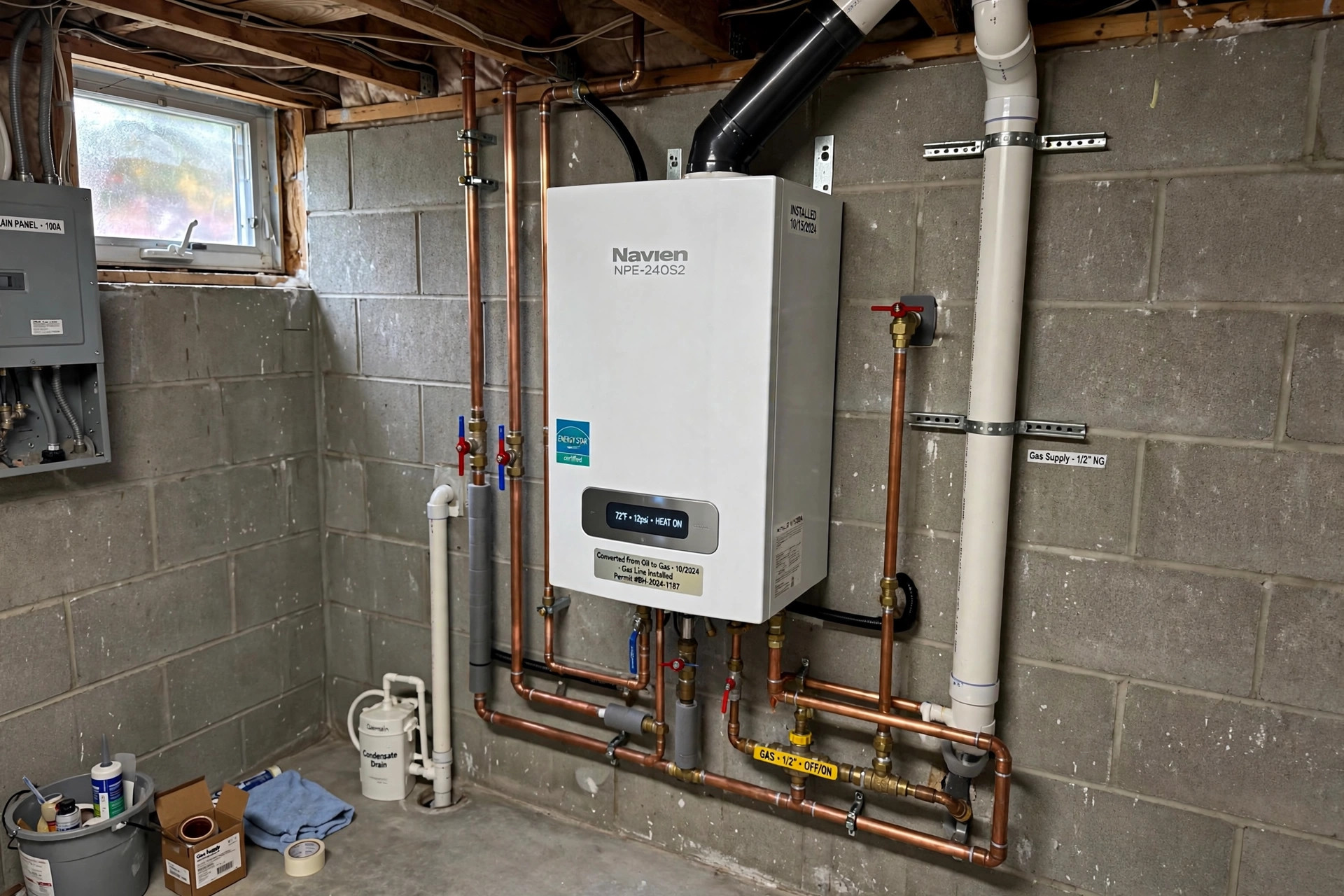

Many American homes still heat with oil. This is common in the Northeast and the Midwest. These homes often have old boilers in the basement. Oil prices swing up and down each winter. Deliveries can be late in bad weather. Tanks can leak and cause damage. For these reasons, many home owners look at oil to gas boiler conversion cost usa. They want to know what the switch costs. They want to know what work is needed. They want to know if the change is worth the money.
This guide walks through every part of the job. It covers the cost of the new boiler. It covers the cost of the gas line. It covers chimney work, permits, and removal of the old oil tank. It also covers savings, rebates, and the questions to ask a contractor. The aim is to help you plan with clear facts.
Why Convert From Oil to Gas
The Main Reasons Home Owners Switch
The first reason is fuel cost. Natural gas often costs less than heating oil per unit of heat. In many years, gas bills run 30 to 50 percent lower than oil bills for the same home. This adds up over a long winter.
The second reason is ease. Gas comes through a pipe in the ground. There is no tank to fill. There are no delivery trucks. There is no risk of running out on a cold night.
The third reason is cleanliness. Gas burns cleaner than oil. A gas boiler makes less soot and less smoke. This means less work for the chimney. It also means lower emissions from your home.
The fourth reason is safety of the property. An old oil tank can leak. A leak in a basement can cost thousands to clean. Some states make the home owner pay the full cost of soil cleanup. A gas line removes this risk for good.
The fifth reason is the value of the home. Buyers in many markets prefer gas heat. A home with gas heat can sell faster. It can also sell for a higher price in areas where gas is common.
Reasons to Wait or Not Switch
A conversion is not right for every home. If your street has no gas main, the gas company may charge you to extend the line. That charge can be high. It can erase the savings.
If your oil boiler is fairly new and runs well, the payback takes longer. It may make sense to wait until the old boiler wears out.
Some homes sit far from the gas main. Rural homes may have no access at all. If the street has no gas main, a heat pump or a new high efficiency oil boiler may be the better plan. Read our heat pump vs furnace cost comparison usa for an alternate path.
What to Look For Before You Decide: Oil to Gas Boiler Conversion Cost Usa
Check Gas Availability at Your Address
The first step is a call to your local gas company. Give them your street address. Ask if a gas main runs in front of your home. Ask what it costs to run a service line to the house. Get this number in writing. It shapes the whole budget.
Check Your Chimney and Flue
A gas boiler needs a safe way to vent exhaust. Many old oil boilers vent into a masonry chimney. Gas exhaust is cooler and more acidic than oil exhaust. Over time, it can damage the inside of a masonry flue. Most conversions add a stainless steel flue liner. The liner protects the chimney. It also keeps the draft right. Plan this cost into the job.
Some high efficiency gas boilers do not use the chimney at all. They vent out through a side wall with a plastic pipe. This can save the cost of a liner. It may not work in every home, so ask your contractor.
Check Local Codes and Permits
Most cities and towns require a permit for a boiler change. Gas work must be done by a licensed fitter in many states. Ask your contractor to pull the permits. Make sure the price you get includes permit fees.
Get More Than One Bid
Prices for this job vary a lot. Get at least three written bids. Each bid should list the boiler make and model, the size in BTU, the venting plan, the gas line plan, and the tank removal plan. A clear bid protects you from surprise charges. Do not take a bid that lists only a total price with no detail.
Types of Conversion Work
Full Boiler Replacement
This is the most common type. The old oil boiler comes out. A new gas boiler goes in. The new boiler connects to your existing radiators or baseboards. The pipes that carry hot water or steam stay the same. Only the heat source changes.
Full replacement costs the most up front. It also gives the best results. A new gas boiler can reach 84 to 96 percent efficiency. An old oil boiler may run at 60 to 75 percent. The gap in fuel use is large. If you are comparing options, our boiler replacement cost near me 2026 page shows typical replacement prices.
Conversion Burner on the Same Boiler
Some contractors offer a gas conversion burner. This is a burner that fits into your existing oil boiler. The boiler stays. Only the burner changes from oil to gas.
This costs less than a full swap. It can work when the old boiler is in good shape. It does not raise efficiency much. An old boiler is still an old boiler. Most heating pros advise against this unless the boiler is less than ten years old.
Combi Boilers as a Replacement Option
Some homes use the boiler for heat and for hot water. A combi boiler does both jobs in one box. It heats the home and makes hot water on demand. A combi can save space. It can also cut the cost of a separate water heater. See our combi boiler vs tankless comparison usa to weigh this choice.
A combi works best in homes with moderate hot water needs. Large homes with many baths may still need a separate water heater or an indirect tank.
Cost and Price: The Full Breakdown
National Price Range
For most American homes, oil to gas boiler conversion cost usa falls between $6,000 and $15,000. This covers the new gas boiler, the install labor, and the basic gas hookup. The mid point of most jobs lands near $9,000 to $11,000.
The range is wide because homes differ. A small house with simple venting sits at the low end. A large house that needs a new chimney liner, a long gas line, and oil tank removal sits at the high end. Jobs in high cost cities can pass $18,000.
Cost of the New Gas Boiler
The boiler itself is the biggest single cost. A standard efficiency gas boiler costs about $2,500 to $4,500 for the unit. A high efficiency condensing gas boiler costs about $4,000 to $7,000 for the unit.
High efficiency units save more fuel each year. They cost more up front. The payback depends on your climate and your fuel prices. In cold states with long winters, the high efficiency unit often pays for itself. In mild states, the standard unit may be the smarter buy. Sources like Consumer Reports publish boiler ratings that can guide your pick.
Gas Line and Hookup
If gas already serves your home for a stove or dryer, this step is small. The contractor adds a branch line to the boiler. This may cost $300 to $800.
If your home has never had gas, the gas company must run a service line from the main to your house. Many utilities do this free within a set distance. Past that distance, the charge runs about $15 to $25 per foot in many areas. A 100 foot run can add $1,500 to $2,500. Confirm the number with your gas company before you sign a boiler contract.
Venting and Chimney Liner
A stainless steel flue liner for a gas boiler costs about $1,500 to $3,000 installed. The price depends on the height of the chimney and the ease of access. Some jobs need a full chimney rebuild at the top. That adds more.
Direct vent units skip the chimney. They use a plastic pipe through the wall. This saves the liner cost. Not every home layout allows it.
Oil Tank Removal
The old oil tank must go. An above ground tank in the basement is simple to remove. Removal and disposal often costs $500 to $1,000. An underground tank is harder. If the soil is clean, removal costs about $1,000 to $2,500. If the soil is dirty, cleanup costs can climb very high.
Permits, Inspections, and Extras
Permits often cost $100 to $500. Some towns add a fee for the gas pressure test. You may also need a new thermostat or a new circulator pump.
A Sample Budget
Here is how a typical job adds up for a mid size home:
– Gas boiler, standard efficiency: $3,500 – Install labor: $3,000 – Gas line branch and hookup: $600 – Chimney liner: $2,000 – Oil tank removal: $800 – Permits and extras: $400 – Total: about $10,300
Your numbers will differ. Use this list to check each bid you get. Every bid should account for each line.
How Much You Can Save Each Year
Fuel Cost Math
A typical oil heated home in the Northeast burns 800 to 1,000 gallons of oil per winter. At $3.50 per gallon, that is $2,800 to $3,500 per year. The same heat from natural gas often costs $1,400 to $2,200. The yearly saving lands near $1,000 to $1,500 for many homes.
Rebates and Tax Credits
Money back programs can cut the cost. Gas utilities in many states offer rebates for high efficiency boilers. Rebates often run $500 to $1,500. Some states add low interest loans for heating upgrades.
The federal government has offered tax credits for high efficiency heating equipment. The rules change from year to year. Check Energy Star and the Department of Energy for the current credit rules before you file. Your contractor or your tax preparer can also confirm what applies in 2026.
The Effect on Home Value
Real estate agents in the Northeast report that gas heat helps a sale. Buyers know oil means deliveries and tank worries. Treat it as a bonus on top of the fuel savings, not the main reason to convert.
Care and Upkeep After the Switch
Yearly Service
A gas boiler needs a yearly check. The tech cleans the burner, checks the flue, and tests the safety controls. Yearly service costs about $150 to $300. It keeps the warranty valid. It also keeps efficiency high.
This is less work than an oil boiler needed. Oil burners make soot. They need more cleaning. Gas burns cleaner, so the service visit is shorter and often cheaper.
What You Can Do Yourself
Keep the area around the boiler clear. Do not store boxes or paint cans near it. Check the pressure gauge once a month during heating season. Hot water boilers should read near 12 to 15 psi when cold. Learn where the gas shutoff valve sits. Show every adult in the home where it is and how to turn it.
If you smell gas, leave the house. Call the gas company from outside. Do not light matches. Do not flip switches.
Parts That Wear Out
Pumps, zone valves, and thermostats wear with time. A circulator pump lasts about 10 to 15 years. Zone valves last about as long. Keep the install papers and the warranty cards in one folder. Note the boiler make and model. When you call for service, give the tech these details. It speeds the visit.
Safety During and After the Job
During Installation
The old oil in the tank must be pumped out before removal. Oil lines must be capped. The gas line must be pressure tested before the boiler fires. A licensed gas fitter should do all gas pipe work. Do not let an unlicensed handyman run gas pipe. The risk is not worth the saving.
Keep children and pets away from the work area. The basement will be dusty. A good contractor sets up barriers and cleans up each day.
Carbon Monoxide
Every home with gas heat needs carbon monoxide alarms. Put one on each floor. Put one near the bedrooms. Test them each fall. Replace them as the maker directs, often every 7 to 10 years. A well vented boiler makes almost no carbon monoxide. Alarms are the backup that guards your sleep.
The Gas Line Outside
Know where your gas service line enters the house. Do not dig in the yard without calling 811 first. The free 811 service marks buried lines. This applies to fence posts, tree planting, and any trench work. Hitting a gas line is dangerous and costly.
FAQ
How long does an oil to gas boiler conversion take?
Most jobs take two to four days of work. Day one is often the gas line and the tank work. Day two and three are the boiler swap and the venting. The gas company may need a separate visit to set the meter and turn on the gas. Permit inspections can add a few days of waiting. Plan for one to two weeks from start to finish.
Do I need a new chimney for a gas boiler?
Often you do not need a new chimney. You may need a new flue liner inside the old chimney. Gas exhaust can harm a bare masonry flue over time. A stainless steel liner solves this. High efficiency boilers can vent through a side wall instead. Your contractor will advise based on your chimney’s state.
Can I keep my radiators and pipes?
Yes, in most cases. The radiators, baseboards, and pipes stay. Only the boiler changes. The contractor flushes the system and may add new valves or a new pump.
What happens to my oil tank?
The contractor pumps out any oil left in the tank. Then the tank is cut up or lifted out and hauled away. Above ground tanks are simple. Underground tanks need more care and may need soil tests. Ask for a written record that the tank was removed and disposed of in line with state rules. Keep this paper with your home records.
Is natural gas cheaper than oil right now?
In most years and most states, yes. Gas has cost less than oil per unit of heat for a long stretch. Prices move, so check current local rates.
Should I convert the burner or replace the whole boiler?
A full replacement is the better choice in most cases. A conversion burner on an old boiler saves less fuel. The old boiler will still need replacement in a few years. You pay twice. If the oil boiler is under ten years old and in great shape, a burner swap can make sense as a short term step. Get prices for both and compare the payback.
A Short Final Word
An oil to gas boiler conversion is a big job with a clear payoff. The work touches the boiler, the gas line, the chimney, and the old tank. The total cost for most homes runs $6,000 to $15,000. The yearly fuel savings often reach $1,000 or more. Rebates can trim the up front cost.
Start with a call to your gas company. Confirm that gas reaches your home and learn the hookup cost. Then get three detailed bids from licensed contractors. Check each bid line by line. Ask about the boiler efficiency, the venting plan, and the tank removal. With good planning, the switch brings lower bills, less hassle, and a warmer home for decades. Makers like Carrier, Trane, Lennox, Rheem, and Goodman all make gas boilers worth pricing, and guides at This Old House, Family Handyman, and Bob Vila walk through the install details.
References
Bob Vila. (n.d.). Home improvement advice. https://www.bobvila.com Carrier. (n.d.). Heating and cooling systems. https://www.carrier.com Consumer Reports. (n.d.). Product reviews and ratings. https://www.consumerreports.org ENERGY STAR. (n.d.). Energy efficient products. https://www.energystar.gov Family Handyman. (n.d.). DIY home repair and maintenance. https://www.familyhandyman.com Goodman. (n.d.). Heating and cooling equipment. https://www.goodmanmfg.com Lennox. (n.d.). Heating and cooling systems. https://www.lennox.com Rheem. (n.d.). Heating, cooling, and water heating. https://www.rheem.com This Old House. (n.d.). Home renovation guidance. https://www.thisoldhouse.com Trane. (n.d.). Heating and air conditioning. https://www.trane.com U.S. Department of Energy. (n.d.). Energy efficiency and renewable energy. https://www.energy.gov
Was this guide helpful?

About Sarah Mitchell
The My Garden US editorial team writes practical, in-depth home and garden guides for American homeowners — tested advice, no fluff.
You May Also Like
Furnace Maintenance Checklist for Fall USA: Get Ready Before Winter
June 14, 2026 0 views
How to Choose HVAC Contractor USA Guide
June 7, 2026 0 views
Trane vs Carrier AC Comparison Reviews USA
August 26, 2026 0 views