
Many homeowners ask about the wood stove installation cost near me before they buy a stove. A wood stove can cut heating bills and keep a house warm during power outages. But the total price varies a lot from one home to the next. This guide explains what you should expect to pay, what shapes the price, and how to find a fair deal in your area.
Why Installation Cost Matters
A wood stove is not a small purchase. The stove itself costs several hundred to several thousand dollars. The installation often costs as much as the stove. If you plan the budget before you buy, you will not face surprise charges later.
Good installation also protects your home. A stove that sits too close to a wall can start a fire. A bad chimney can fill a room with smoke and carbon monoxide. Professional installers know the local building codes. They place the stove at safe distances and vent it the right way. The money you spend on proper work is money well spent.
Some buyers compare heating systems before they commit. Many people check how ductless mini splits compare (/mrcool-vs-pioneer-mini-split-comparison-usa/) when they weigh a stove against electric heat. A stove suits those who want freedom from the power grid. Other systems suit those who want heat at the push of a button.
Typical Price Ranges: Wood Stove Installation Cost near Me
Across the United States, a full wood stove installation costs between $1,500 and $5,000 in most cases. A simple job can cost less. A hard job can cost more. Here is a rough breakdown of the parts:
– The stove: $500 to $3,000 for most models. High-end soapstone stoves can pass $4,000. – Labor: $500 to $2,000, based on hours and local rates. – Chimney and flue parts: $400 to $2,500, based on height and roof type. – Hearth pad and wall shields: $100 to $600. – Permits and inspection: $50 to $300.
A simple swap of an old stove for a new one on an existing chimney sits at the low end. A new stove with a brand new chimney through a two-story house sits at the high end. Ask any installer how much it costs to install a wood stove in your exact home, and the answer will land somewhere in this range.
What Shapes the Price in Your Area
Labor rates differ by town. Installers in large cities often charge more per hour than those in small towns. The cost of living in your state also matters. Fuel prices and the length of winter can shift demand. In cold regions, many installers book up in the fall. Prices may rise when they are busy.
Your home shapes the price too. A single-story ranch with an easy roof is simple to vent. A tall colonial with a steep roof takes more pipe, more labor, and more safety gear. Masonry chimneys often need new liners. Wood stoves must sit on non-flammable floors. If your floor needs a new hearth pad, that adds to the bill.
The question of wood stove installation price has no single answer. Local rules, local labor, and the shape of your house all play a part. That is why three written quotes beat any national average.
Types of Wood Stoves and Their Prices
Cast Iron Stoves
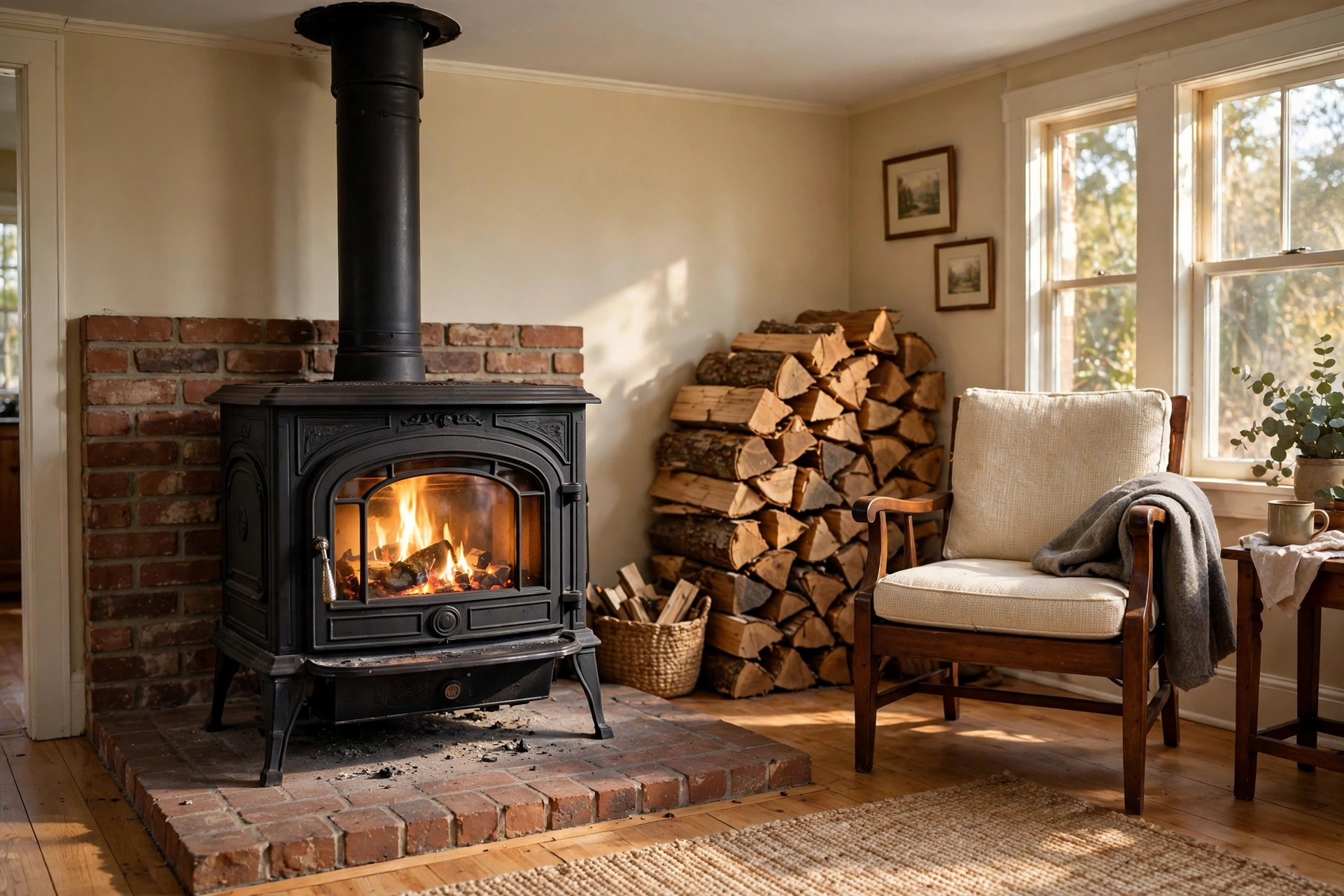
Cast iron stoves are the classic choice. They heat up slowly and hold heat for a long time. Prices run from $800 to $2,500. They fit older homes and cabins well. They weigh a lot, so the floor must be strong enough to hold them.
Steel Stoves
Steel stoves heat up fast and cool down fast. They cost from $500 to $1,800. They come in modern styles that suit newer homes. Steel is lighter than cast iron. That can make delivery and setup easier and cheaper.
Soapstone Stoves
Soapstone holds heat longer than iron or steel. A soapstone stove can warm a room for hours after the fire dies down. Prices start near $2,000 and can top $4,500. These stoves suit large living rooms and open floor plans where heat must travel far.
Pellet Stoves
Pellet stoves burn wood pellets instead of logs. They cost from $1,500 to $3,000. They need an electrical outlet and regular cleaning. They are not true wood stoves, but many shoppers compare them side by side. Installation is often simpler since the vent pipe is smaller.
When you shop, the large home improvement retailers (https://www.homedepot.com) list many models with prices. Browsing these listings helps you set a budget before you call installers for quotes.
How to Find an Installer Near You
Search online for “wood stove installer” plus your town name. Read reviews from past customers. Ask friends who heat with wood. Local hardware stores often know the best installers in town.
Look for certification. The National Fireplace Institute certifies stove installers in the United States. A certified installer knows the codes and the safety rules. Ask to see proof of insurance. A good installer carries liability coverage. That protects you if something goes wrong on the job.
Major heating brands keep lists of local dealers. Carrier (https://www.carrier.com), Lennox (https://www.lennox.com), and Trane (https://www.trane.com) all offer dealer locators on their sites. These firms focus on furnaces and heat pumps, but their dealer networks show how professional heating work is organized in your area. Goodman (https://www.goodmanmfg.com) and Rheem (https://www.rheem.com) also serve the heating market and publish guidance on professional installation.
How to Get Accurate Quotes
Call three installers. Invite each one to visit your home. A phone quote is only a guess. A home visit gives a real number. Show the installer where you want the stove. Ask what chimney route they plan to use. Ask how many days the work will take.
Give each installer the same details. That way you can compare the quotes side by side. Ask for every quote in writing. A written quote should list the stove price, the pipe and parts, the labor, and the permit fees.
Do not pick the cheapest quote by habit. A very low bid may skip the permit or use thin pipe. A mid-range bid from a certified installer is often the best value in the long run.
What to Look For in an Estimate
A good estimate names the stove model and its price. It lists the length and type of chimney pipe. It states the labor hours and the hourly rate. It includes the permit fee and the inspection fee. It gives a start date and a finish date.
Ask about the warranty. Stove makers offer warranties on the firebox and the parts. Installers often guarantee their labor for one year. Get that promise in writing before work starts.
Ask who pulls the permit. In most towns, the installer pulls the permit and schedules the inspection. If the installer asks you to pull the permit, ask why. It may be fine, but you should know the reason.
Planning Your Budget
Before you call anyone, set a budget range. Write down the highest amount you can spend. Then list the parts: stove, chimney, labor, hearth, permit. Leave a ten percent cushion for surprises. Old houses often hide surprises behind walls and floors. A cushion keeps the job moving when the installer finds a problem.
Ask installers about payment terms. Most ask for a deposit of 30 to 50 percent. The rest is due when the work passes inspection. Never pay the full amount up front. A fair payment schedule protects both sides.
Keep records of every cost. You will need them for insurance and for resale. A neat folder of receipts shows buyers that the work was done right.
Timing Your Installation
Fall is the busiest season for stove installers. Everyone wants heat before the first frost. Prices can rise in October and November. Booking in spring or summer often gets you a better price and a faster schedule.
Spring sales on stoves can save real money. Retailers clear out last year’s models. Floor models sell at a discount. Ask the store about open-box deals. A scratch on the side panel does not change how the stove heats your home.
Plan ahead and you will have the stove ready long before the cold nights arrive. That is the calm way to handle the project.
Insurance and Home Value
Call your home insurance agent before you buy. Some policies cover wood stoves with no change. Others add a small yearly fee. A few require an inspection report from a certified sweep. Ask what proof they need. Get the answer in writing.
A well-installed wood stove can add value to a home. Buyers in cold regions like the idea of backup heat. Keep your receipts, the permit, and the inspection report. Show them to buyers when you sell. Paperwork proves the work was done right and done safely.
Care and Upkeep After Installation
A wood stove needs regular care. Clean the ash from the firebox once a week during the heating season. Check the door gasket each fall. If the gasket is loose, replace it. A tight seal keeps the fire under control and the heat in the room.
Sweep the chimney once a year. Creosote builds up inside the flue. Creosote can catch fire. A professional sweep removes it. This simple step prevents most chimney fires. Guides from Family Handyman (https://www.familyhandyman.com) explain the basic tools and steps for homeowners who want to learn more about the process.
Burn dry, seasoned wood. Wood should dry for at least six months after it is split. Wet wood makes more smoke and more creosote. It also gives less heat for your money. Split logs dry faster than whole logs. Store wood off the ground under a cover.
Have the stove checked each year before winter. The installer or a chimney sweep can look for cracks, loose parts, and worn gaskets. This yearly check keeps the stove safe and efficient for years to come.
Safety Rules to Know
Follow the clearance rules in the stove manual. Most stoves need 36 inches of space from bare walls. Heat shields can cut that distance in half. Your installer will set the stove at the right distance from every surface.
Keep a fire extinguisher near the stove. Place smoke alarms and carbon monoxide alarms on each floor of the house. Test the alarms every month. Change the batteries twice a year.
Never burn trash, painted wood, or treated lumber in the stove. These fuels release toxic smoke into your home and your yard. Burn only clean, dry firewood. Never leave a fire burning when you leave the house for a long trip.
The EPA sets emission standards for new wood stoves (https://www.epa.gov). Buy a stove that meets current EPA standards. These stoves burn cleaner and use less wood per winter. The U.S. Department of Energy (https://www.energy.gov) also publishes tips on stove efficiency and safe wood heat for homeowners.
This Old House (https://www.thisoldhouse.com) offers detailed guides on chimney work and hearth building. These resources help you understand what your installer plans to do in your home.
FAQ
How long does installation take?
Most jobs take one to three days. A simple replacement on an existing chimney takes one day. A new chimney through a tall roof takes two or three days. Weather can slow roof work in winter.
Do I need a permit to install a wood stove?
In most towns, yes. The permit fee runs from $50 to $300. The installer usually handles the paperwork. The town inspector checks the work when it is done. Never skip this step.
Can I install a wood stove myself?
Some owners do their own work. But most towns require a licensed installer for the permit. Insurance firms may also require professional work. A bad chimney can cause a fire. For most people, professional installation is the safer choice.
Does a wood stove raise my home insurance?
It can. Tell your insurance firm before you install the stove. Some firms add a small fee to the policy. Some ask for proof of a professional installation and a yearly chimney sweep. A wood stove chimney installation cost is easier to justify when the work is certified and inspected.
What is the cheapest way to install a wood stove?
Buy the stove in the spring or summer when demand is low. Use an existing chimney if it is sound and the right size. Get three written quotes from certified installers. But never skip the permit, the inspection, or the right pipe just to save money. Cheap work on a stove is never cheap in the end.
How does a wood stove compare to a furnace for heating cost?
Wood can be cheaper than oil or electric heat if you have a good wood supply. A certified installer can size the stove to your rooms so it heats them well. For whole-house comfort, some homes pair a stove with a furnace. Homeowners also protect air quality with a high-quality MERV 13 filter (/best-merv-13-filter-for-hvac-reviews-usa/) when they burn wood indoors. Those who need cooling too often compare the cost of cooling a 2,000 square foot home (/ac-unit-for-2000-sq-ft-cost-usa/) as part of a full-year comfort plan.
A Final Word
The wood stove installation cost near me question has a range, not a fixed number. Most homeowners pay $1,500 to $5,000 for the full job. The stove, the chimney, and the labor set the price. Your town and your house shape it further.
Start with research. Pick a stove that fits your rooms. Find a certified installer. Get three written quotes. Check the permit and the inspection. With careful planning, a wood stove will warm your home for many winters to come.
Related guides on this site include energy efficient mini split for 1500 sq ft, ductless mini split installation cost per zone, and best mini split for cold climates reviews usa.
References
Carrier. (n.d.). Heating and cooling systems. https://www.carrier.com Family Handyman. (n.d.). DIY home repair and maintenance. https://www.familyhandyman.com Goodman. (n.d.). Heating and cooling equipment. https://www.goodmanmfg.com Lennox. (n.d.). Heating and cooling systems. https://www.lennox.com Rheem. (n.d.). Heating, cooling, and water heating. https://www.rheem.com This Old House. (n.d.). Home renovation guidance. https://www.thisoldhouse.com Trane. (n.d.). Heating and air conditioning. https://www.trane.com U.S. Department of Energy. (n.d.). Energy efficiency and renewable energy. https://www.energy.gov
Was this guide helpful?

About Michael Thompson
The My Garden US editorial team writes practical, in-depth home and garden guides for American homeowners — tested advice, no fluff.
You May Also Like
Baseboard Heater Thermostat Reviews 2026 USA: How to Choose the Right Control
October 4, 2026 0 views
What Does Attic Fan Installation Cost Near Me?
January 13, 2026 0 views
Electric Fireplace Insert Reviews 2026 USA: A Plain Buyer’s Guide
January 24, 2026 0 views