
Why the Question “Steam Mop for Hardwood Floors Safe” Matters
The search “steam mop for hardwood floors safe usa” is one of the most common questions in American floor care. Steam mops clean with hot water vapor. They use no soap. They kill germs with heat. They leave floors dry in minutes.
But wood and water have never been good friends. Wood can swell and warp when too much wetness soaks in. A bad cleaning job can dull a finish or lift a board. That is why so many people ask whether a steam mop for hardwood floors safe use is really true, or just sales talk.
The honest answer is simple. A steam mop for hardwood floors safe cleaning is possible when three things line up. Your floor must be sealed. The steam setting must be low. The mop must keep moving and never stand still in one spot.
This guide walks through the full story. You will learn why steam helps, when it harms, how to choose a steam mop for hardwood floors, what such a machine costs in the USA, how to use it step by step, and how to keep your floors in fine shape for years.
How Steam Mops Work and Why Wood Floors Care: Steam Mop for Hardwood Floors Safe Usa
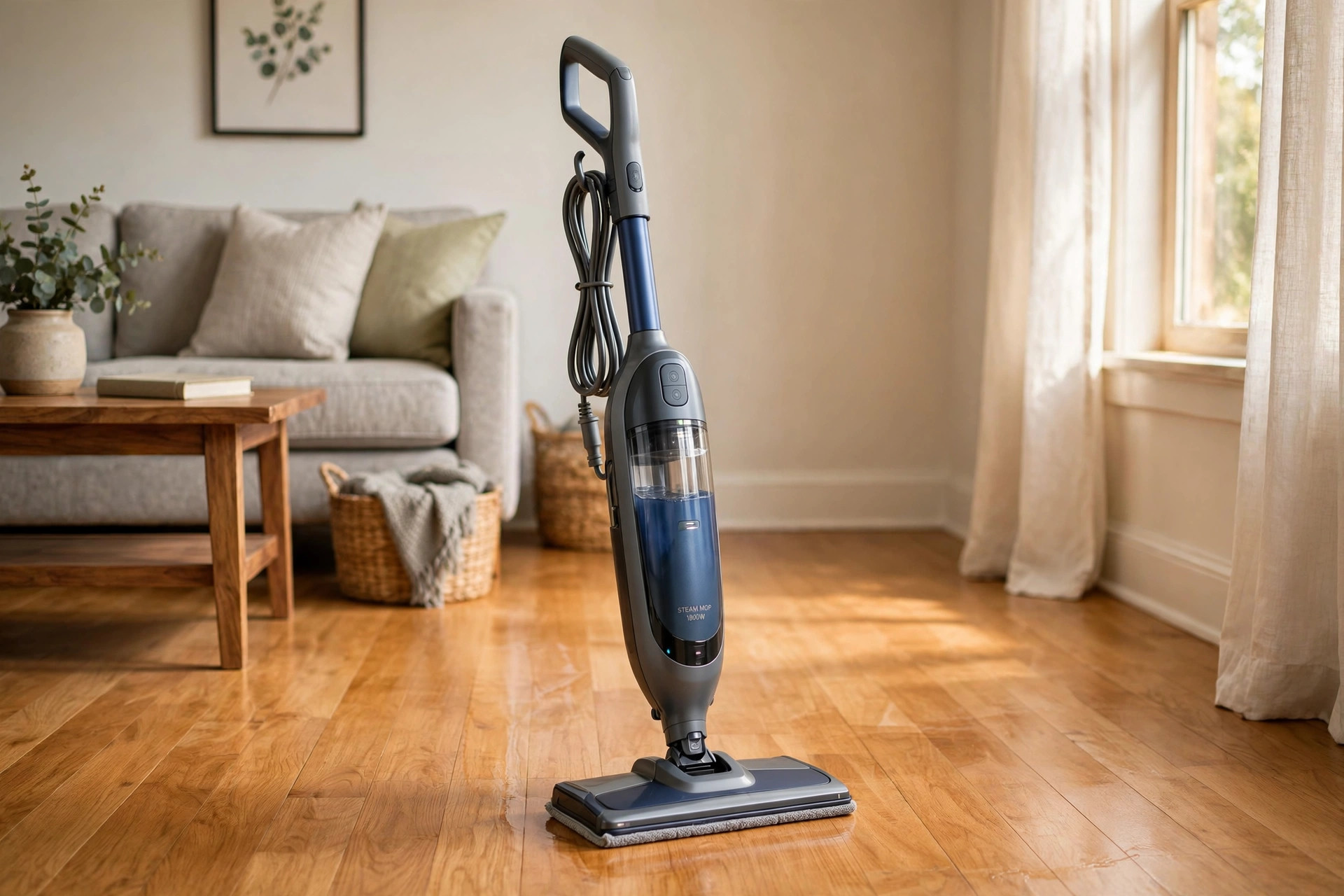
A steam mop holds a small tank of plain tap water. A heating plate turns the water to vapor. The vapor travels down through a microfiber pad. The heat loosens dirt. The pad picks it up. No bucket is needed. The floor dries fast because steam leaves little wetness behind. That is the whole appeal.
Hardwood floors in most American homes wear a clear top coat, often polyurethane. This coat is a shield. Steam sits on the shield and does no harm. But the shield can wear thin near doors or under sliding chairs. Small scratches can break the shield. Gaps between boards can let steam reach raw wood, which drinks water and swells.
Older floors with oil or wax finishes are different. Oil soaks into the wood. Steam can pull the oil out and leave a dull white mark. Wax melts under heat. A steam mop for hardwood floors safe for a polyurethane floor can still ruin a waxed floor. Know your finish before you begin.
What to Look for When You Choose a Steam Mop
Shoppers who type steam mop for hardwood floors safe usa into a store search want a machine that treats wood with respect. Look for these points before you buy.
First, heat control. The best steam mops for wood offer two or three steam levels. The low level gives a light, dry vapor. High heat is for tile and grout, not for wood. A dial or button for steam level is a must.
Second, a thick microfiber pad. Thick pads spread the heat and absorb the vapor. Thin pads let too much heat reach the finish. Buy a mop that comes with extra pads, and wash pads after each use.
Third, weight and balance. A heavy mop tires your arm. A light mop glides and is easier to keep moving. Keep the mop moving at a steady pace so no board takes too much heat. Choose washable microfiber pads over throwaway pads: a fresh clean pad each time means less grit dragged across the finish, and floor makers such as Shaw Floors and Mohawk Flooring both stress that grit and dirt are the true enemies of a wood finish.
Fourth, quick heat up and a long cord. Most good models heat in about 30 seconds. A cord of 20 feet or more lets you clean a whole room with few plug changes.
Fifth, a lift-away or detachable handle if you also want to clean stairs or small corners. This is a nice extra, not a must.
Sixth, a clear warning from the maker. Good brands say plainly whether their machine suits sealed hardwood. When the box or manual says nothing about wood, take it as a no. A store page at The Home Depot often lists approved floor types for each model, which makes comparison easy.
Types and Options on the American Market
Steam mops come in three main shapes.
Stick steam mops
These are the most common. They look like a tall vacuum. They are light and easy to store. Most have a water tank of about 12 to 16 ounces. They suit small and mid-size homes. Many well-known models from big box stores sit in this group, and a quick look at Lowe’s will show how wide the choice has grown.
Cylinder steam mops
A cylinder mop has a small body that rolls on wheels, with a long hose and mop head. The tank is larger, so fewer refills are needed. They cost more and take more closet space. They suit large homes with long runs of wood floor.
Steam mop and vacuum pairs
Some machines first lift dry dirt with suction, then follow with steam. This sounds clever, and it can save a step. But the steam side still needs low heat on wood. Read the manual with care.
Cost and Price: What a Steam Mop Costs in the USA
Prices in the USA fall into two main bands, with premium cylinder machines above them.
A basic stick steam mop costs about 40 to 80 dollars. It has one steam level or a simple on-off switch. It suits tile more than wood. If you plan to steam wood floors, a basic model without heat control is a poor pick.
A mid-range steam mop with adjustable steam costs about 80 to 160 dollars. This is the sweet spot for hardwood. You get heat control, extra pads, and a longer cord. Most American buyers land here.
Running costs are low. The machine uses tap water and a small amount of power. The real running cost is the pads. A set of two washable pads runs about 10 to 20 dollars and can last a year with care. Cheap throwaway pads can cost a few dollars per cleaning, which adds up fast.
When you shop, compare the cost of the machine with the cost of refinish work. A professional screen and recoat of a room can run several hundred dollars. A cheap steam mop that ruins a finish is no bargain. Guides on wood floor care from This Old House often put this trade-off in plain terms, and sellers such as LL Flooring carry recoat products and explain the bead test in their care guides.
If you are also thinking about bigger floor projects, read our guide on the cheapest way to redo floors USA guide before you spend on tools.
The Right Way to Use a Steam Mop on Hardwood
A steam mop for hardwood floors safe practice follows a clear routine. Do these steps every time.
Step 1: Check that your floor is sealed
Look at a worn spot near a doorway. Drop one small bead of water there. If it sits on top and beads up, your seal is good. If it sinks in and darkens the wood within minutes, your seal is worn. Do not steam that floor until it is resealed.
Step 2: Vacuum or sweep first
Grit under a steam pad acts like sandpaper. Vacuum the whole floor with a hard-floor head. This one step stops most scratch damage. For a deep look at when to call in help instead, see our piece on professional carpet cleaning cost per room and why the same dirt-first rule applies to every floor type.
Step 3: Set the mop to low steam
Plug in the mop. Wait for the ready light. Set the steam dial to its lowest level.
Step 4: Use a clean, damp pad
Put a fresh microfiber pad on the head. Lightly mist it with clean water if the manual allows. A pad that is already damp makes drier, gentler steam.
Step 5: Keep the mop moving
Glide the mop in slow, even passes. Count one to two seconds per foot. Never leave the mop standing on one board while you answer the phone or move a chair. Rest the mop on a mat or on tile when you pause.
Step 6: Let the floor dry and check your work
Steam mops leave floors nearly dry. Still, give the floor ten minutes before you put rugs back. Look for dull spots or white haze. A light haze often means the pad was dirty. Rewash the pad and try again.
Care and Upkeep of the Mop and the Floor
A steam mop lasts longer with small habits. Empty the tank after each use so water does not sit and grow stale. Wash pads in warm water with mild soap and no fabric softener. Let pads air dry. Once a month, run a tank of half white vinegar and half water through the mop to break up mineral scale, then run one tank of plain water to rinse. Hard water is common across the USA, and scale is the main cause of weak steam.
For the floor itself, keep a steady routine. Sweep or vacuum each week. Steam clean no more than once a week, and once every two weeks is plenty for most homes. Too much steam, even at low heat, adds up over time. Put felt pads under chair legs. Use a mat at each door to catch grit. Wipe up spills the same day.
Safety for You, Your Family, and Your Pets
Steam is hot, and hot means care. Keep children and pets out of the room while you steam. The mop head and the pad stay hot for several minutes after you switch off the machine. Never touch the pad with bare hands until it cools.
Keep the cord behind you so you do not trip. Never yank the cord from the wall by the cord itself. Do not fill the tank past the max line, and never open the tank cap right after use. Let the machine cool first.
For the floor, the safety rule is restraint. If a board is loose, cupped, or cracked, skip it with the steam mop and clean it with a dry microfiber cloth instead. Steam will find every weak spot in a floor, so only steam floors that are sound.
Ventilate the room if you steam a large area. Open a window or run a fan. This keeps the air fresh and helps the floor dry fast.
People with outdoor rooms sometimes ask about tile too. Wood and tile follow different rules, so if you are planning an outdoor space, our guide to the best deck tiles for rooftop deck USA covers those surfaces instead.
Mistakes That Ruin Hardwood Floors
Most steam damage comes from a few common errors. Learn them and your floor will thank you.
The first error is steaming an unsealed or worn floor. The water bead test takes one minute. Skip it and you gamble with the whole floor.
The second error is using the high steam setting on wood. High heat is for bathroom tile, not for a living room oak floor. Low steam cleans wood just as well when the pad is clean.
The third error is letting the mop sit still. A steam mop that rests on one board for a minute can leave a white spot or lift the finish. Always park it on a mat.
The fourth error is steaming too often. Once a week is the ceiling for most homes. Daily steaming soaks the wood with small doses of water that never fully leave.
The fifth error is ignoring the maker of your floor. Some floor brands void the warranty if a steam mop is used. Check your warranty paper or the brand site before you steam. Maker guidance from Daltile covers tile, while wood floor makers set their own steam rules, so always check the brand that made your floor.
General floor care reading from The Spruce is a good second source for these habits, since it tests products in real homes and reports what holds up.
FAQ: Steam Mop for Hardwood Floors Safe Use
Is a steam mop safe for all hardwood floors?
No. It is safe only for sealed, solid, or engineered hardwood with a sound finish, such as polyurethane. It is not safe for unsealed wood, waxed floors, oiled floors, or floors with a worn or damaged finish. Always run the water bead test first.
Will steam void my floor warranty?
It can. Some hardwood makers state in their warranty that steam mops are not allowed. Read your warranty or call the maker before you buy. This check takes five minutes and can save you thousands.
How often can I steam clean hardwood floors?
For most American homes, once every one to two weeks is enough. Homes with pets or small children can go weekly. Never steam daily. Sweeping or vacuuming should handle the days in between.
Can I add soap or scent to the water tank?
No. Use plain water only, unless the manual names a specific product. Soap leaves a film that dulls the finish and can void the warranty. Scent oils can stain the wood.
Why did my floor turn white or cloudy after steaming?
Cloudy marks usually come from steam heat on a waxed or worn finish, a dirty pad, or too much steam in one spot. Let the floor dry fully and check again. If the mark stays, the finish may need a professional recoat.
Is a steam mop better than a damp mop for hardwood?
For germs and sticky dirt, steam has the edge because heat does the work without soap. For daily dust, a dry microfiber mop is faster and puts zero water on the wood.
A Short Final Word
A steam mop for hardwood floors safe in the USA is no myth, but it is no magic wand either. It works when the floor is sealed, the steam is low, the pad is clean, and the mop keeps moving. It fails when any of those rules break.
Buy a mop with heat control. Test your finish first. Steam on a light schedule, not every day. Your hardwood floors can stay clean, bright, and sound for many years when steam is used with a steady hand and a clear head.
References
Daltile. (n.d.). Ceramic and porcelain tile. https://www.daltile.com LL Flooring. (n.d.). Hardwood, vinyl, and tile flooring. https://www.llflooring.com Lowe’s. (n.d.). Home improvement products. https://www.lowes.com Mohawk Flooring. (n.d.). Flooring products. https://www.mohawkflooring.com Shaw Floors. (n.d.). Flooring products. https://www.shawfloors.com The Home Depot. (n.d.). Home improvement products. https://www.homedepot.com The Spruce. (n.d.). Home and garden advice. https://www.thespruce.com This Old House. (n.d.). Home renovation guidance. https://www.thisoldhouse.com
Was this guide helpful?

About Jennifer Lee
The My Garden US editorial team writes practical, in-depth home and garden guides for American homeowners — tested advice, no fluff.
You May Also Like

Waterproof Vinyl Flooring for Kitchen Reviews: What Real Buyers Say
April 23, 2026 0 views
Polished Concrete Floors Cost Residential USA: A Plain Guide
January 14, 2026 0 views
Best Flooring for Home Gym Basement USA: A Practical Guide
January 12, 2026 0 views