
Introduction
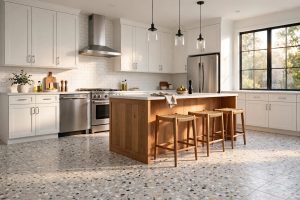
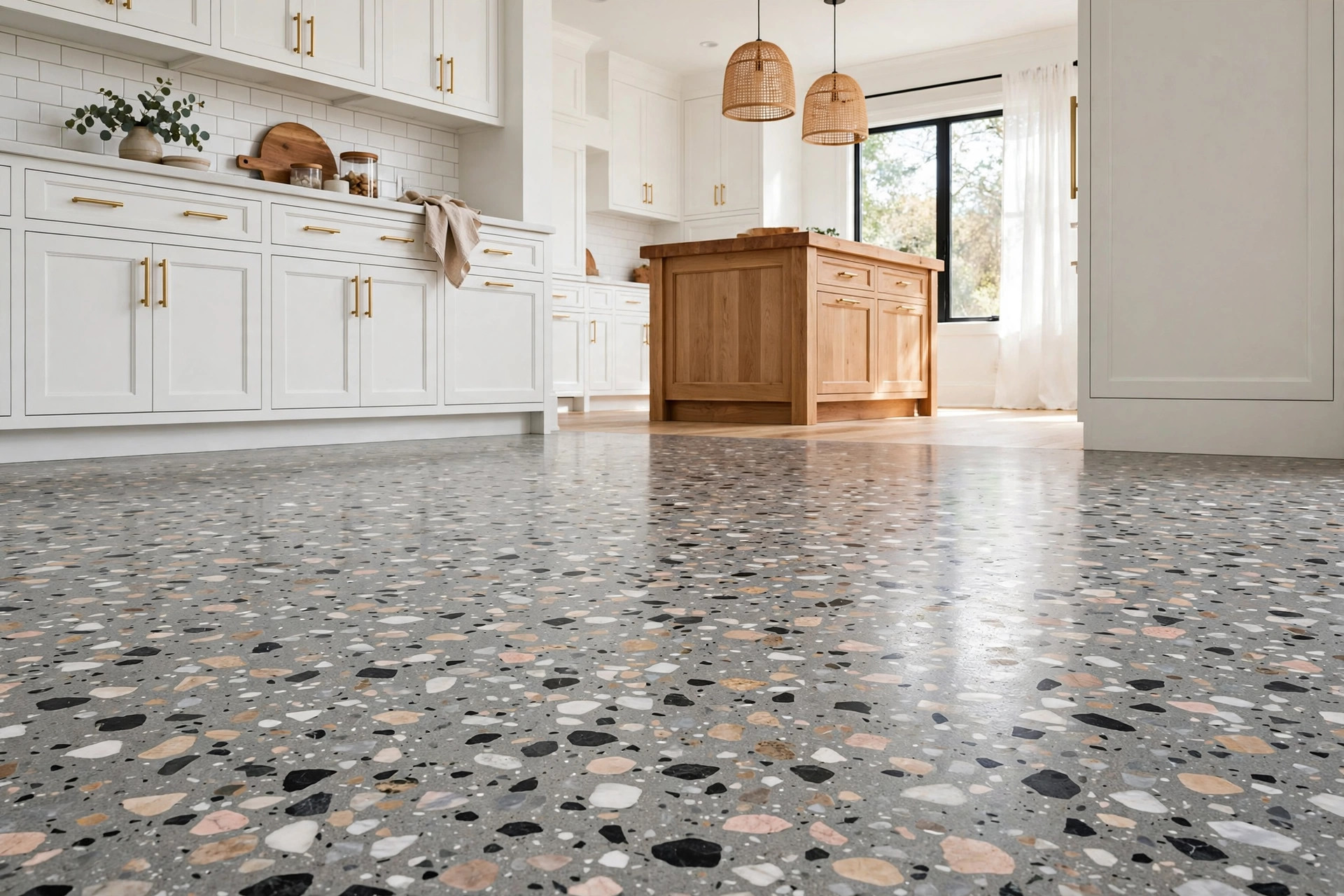
Terrazzo tile flooring cost per square foot is one of the first facts a homeowner wants before planning a remodel. Terrazzo is an old material with a new face. It is made of chips of marble, quartz, glass, and granite set in cement or resin. The mix is pressed into tile form, cut, and polished. The result is a floor with bright specks of color on a soft plain ground. It looks at home in kitchens, baths, halls, and entryways. It wears well and can last for many decades when cared for. But the price of terrazzo tile varies a great deal. The tile itself may run from four dollars to twenty dollars a square foot. Labor can add three to twenty dollars more. When you add setting bed, grout, sealer, and trim, the full installed price often lands between eight and forty dollars per square foot. This guide breaks down where the money goes. It shows what raises the price, what lowers it, and how to shop with a clear head.
Why Terrazzo Tile Is Worth Knowing About: Terrazzo Tile Flooring Cost Per Square Foot
Terrazzo began in Venice more than five hundred years ago. Workers set leftover marble chips in clay to make cheap floors. Over time the craft grew into a fine trade. Today terrazzo tile brings that old look to modern homes without the cost of poured terrazzo floors.
Terrazzo tile is strong. The chips are real stone. The surface resists dents and scratches from chairs, pets, and daily foot traffic. It does not show dust the way a plain dark tile does, because the specks hide small marks. It also takes color well, so makers offer many shades from soft gray to deep green to warm pink.
It is a long life floor. A poured terrazzo floor can last seventy five years or more in schools and airports. Tile terrazzo is thinner, but still outlasts most vinyl and laminate by a wide margin. For a homeowner who plans to stay in one place, that long life spreads the cost over many years.
It is also easy to clean. A damp mop and mild soap is enough for weekly care. It does not trap dust the way carpet does. This helps homes with allergy concerns.
What Raises or Lowers the Price
Several things move the price up or down. Know them before you get quotes.
Chip size and mix. Fine chips look calm and cost less. Large chips of rare marble cost more. Glass chips add color but can raise the price too.
Tile size. Small tiles, like twelve by twelve inches, cost less per box and fit small baths. Large tiles, like twenty four by twenty four inches, cost more to make and ship, as shaw’s tile lines show in wide plank formats. They give a grander look with fewer grout lines.
Thickness. Most terrazzo tile runs about three eighths to one half inch thick. Thicker tile costs more in material and freight.
Finish. Honed tile has a soft matte face and costs less. Polished tile shines and costs a bit more to grind.
Brand and source. Italian and Spanish terrazzo tile carries a name premium. Domestic lines and stock patterns cost less. Special order colors can add weeks of wait and a price bump.
Labor rates in your state. Tile setters in high cost cities charge sixty to ninety dollars an hour. In smaller towns the rate may be forty to sixty dollars. A large open floor sets faster per square foot than a bath full of cuts around a toilet.
Prep work. A floor that is flat and sound costs less to tile. A floor that needs patching, leveling, or old vinyl removed costs more.
Types of Terrazzo Tile You Can Buy
Cement based terrazzo tile. This is the classic form. Marble and stone chips sit in a cement base. It feels like stone underfoot. It is the most common tile form in American stores. Prices run four to fourteen dollars a square foot for the tile alone.
Resin based terrazzo tile. Here chips sit in a polymer resin. The tile is lighter and a bit more bendable, which suits thin installs. It resists stains better than cement terrazzo. Prices run six to twenty dollars a square foot.
Precast terrazzo pavers. These are thick tiles made for outdoor use or heavy wear. They cost eight to twenty five dollars a square foot. They suit patios and pool decks in warm states.
Terrazzo look porcelain. This is not true terrazzo. It is porcelain printed to look like terrazzo. It costs two to six dollars a square foot and needs no sealer. Many budget buyers pick it, but it lacks the depth and feel of real stone chips.
When you search, make sure the box says real terrazzo. Some ads use the word for look alike tile. The price gap between real and look alike is wide, so read the label.
How to Choose Terrazzo Tile
Start with the room. Kitchens and baths take spills, so pick a sealed tile with a stain resistant finish. Entryways take grit from shoes, so pick a honed finish that hides scuffs. Living rooms can take polished tile for shine.
Check the shade in your own light. Store lights are bright and cool. Take a sample home. Lay it on the floor and view it in morning and evening light. The chips can read brighter or darker than you expect.
Ask for the water absorption rating. Good terrazzo tile has low absorption, near porcelain. High absorption means more staining and more sealing.
Ask about the sealer. Some tiles come pre sealed. Others need a penetrating sealer after grout. A pre sealed tile saves a step and a cost.
Buy ten percent extra. Cuts around doorways and corners waste tile. For a diagonal layout, buy fifteen percent extra. A short box is worse than a spare box.
A Note on Grout
Grout lines are part of the look. Thin lines, about one sixteenth to one eighth inch, suit large modern tile. Wider lines suit small classic tile. Unsanded grout fits thin lines. A grout that matches the base color calms the floor. A grout that contrasts with it wakes the floor up. Grout and labor for grouting add about one to three dollars per square foot. Sealing the grout adds a bit more, but it keeps stains from settling in.
Cost and Price Breakdown
Here is a plain view of where the dollars go.
Tile material. Expect four to twenty dollars per square foot. Stock cement tile in soft gray runs four to eight dollars. Domestic lines and stock patterns cost less than imports. Designer colors and resin tile run ten to twenty dollars. Terrazzo look porcelain runs two to six dollars.
Setting materials. Thinset mortar, backer board if needed, and grout run one to three dollars per square foot.
Labor. Setting terrazzo tile is skilled work. The tile is heavy and must be laid flat. Expect three to twelve dollars per square foot for labor on a clear floor. Complex baths with many cuts run ten to twenty dollars per square foot for labor.
Prep. Removing old floor runs one to three dollars per square foot. Leveling a wavy slab runs two to six dollars per square foot.
Sealer. A penetrating sealer applied after grout runs fifty cents to one dollar fifty per square foot in material, plus labor if the setter applies it.
Trim and transitions. Metal edge trim, thresholds, and stair nosings add one to four dollars per linear foot.
Full installed range. A simple job in a low cost area can finish near eight to fifteen dollars per square foot. A mid range job with good tile and a skilled setter runs fifteen to twenty five dollars. A high end job with large resin tile, complex cuts, and polish runs twenty five to forty dollars.
To size a budget, take your room in square feet and multiply. A two hundred square foot kitchen at twenty dollars a square foot is four thousand dollars. Add ten percent waste and you have a fair working number.
How Terrazzo Compares to Other Tile Costs
It helps to set terrazzo next to common choices. Standard porcelain floor tile runs two to seven dollars a square foot for material, and the full job often lands at seven to fifteen dollars installed. Natural marble tile runs five to fifteen dollars for material, with full jobs near twelve to twenty eight dollars. If you want a fuller view of trade rates, read our piece on tile installation cost per square foot usa. For a stone with bold veins rather than specks, see marble bathroom floor tile pros cons usa. Small mosaic fans can compare with penny tile floor cost per square foot usa.
Terrazzo sits above porcelain and near marble. The difference is the look. Porcelain copies stone. Marble has wide veins. Terrazzo has confetti chips that read cheerful and modern. If that look is what you want, the price is the price of the look.
Care and Upkeep
Terrazzo tile asks for simple care. Sweep or vacuum each week to lift grit. Mop with warm water and a pH neutral cleaner. Avoid vinegar, bleach, and harsh acids. They dull the polish and eat at cement based tile.
Wipe spills soon. Coffee, wine, and oil can stain unsealed cement terrazzo. A sealed floor resists most spills for hours, but prompt wiping is still best.
Reseal when water stops beading. For most homes this is every three to five years. The job is simple. Clean the floor, let it dry, roll on a thin coat of penetrating sealer, and wipe the excess.
Fix chips early. A small chip can be filled with a stone epoxy matched to the base color. A large cracked tile may need replacement, so keep spare tiles from the original lot. Tile dye lots shift, and a later batch may not match.
Do not drag heavy furniture. Lift it or use felt pads. Grit under chair legs is the main cause of fine scratches on polished terrazzo.
Safety in the Home
Terrazzo tile can be slick when wet, like most polished stone. In baths and entryways, choose a honed finish or a tile with a higher slip rating. Small rugs with rubber backs help at tubs and sinks. Keep the floor dry after mopping.
Dust from cutting tile harms lungs. If you cut tile yourself, work outside, wear a fitted dust mask rated P100, and use a wet saw to keep dust down. A pro setter will handle this as part of the job.
Check floor height at doorways. Terrazzo tile plus thinset adds about three quarters of an inch. Doors may need trimming. Plan for this before the tile goes down.
Common Mistakes to Avoid
Skipping the sample. Photos lie about color. A ten dollar sample saves a four thousand dollar regret.
Picking grout too late. Grout color changes the whole floor. Decide before the tile is ordered.
Hiring on price alone. The cheapest bid often means rushed layout and lippage, where tile edges sit uneven. Ask to see past work.
Forgetting the sealer. Unsealed cement terrazzo stains fast. Sealing is cheap insurance.
Ordering exact square footage. Cuts and breaks eat tile. Order ten to fifteen percent extra.
FAQ
How much does terrazzo tile flooring cost per square foot installed? Most installed jobs run eight to forty dollars per square foot. The tile costs four to twenty dollars. Labor, mortar, grout, and sealer add the rest. Simple rooms in low cost areas land near the low end. Complex baths with designer tile land near the high end.
Is terrazzo tile cheaper than poured terrazzo? Yes, in most cases. Poured terrazzo needs a skilled crew, metal divider strips, grinding, and polishing. It often runs twenty five to seventy dollars a square foot. Terrazzo tile gives a similar look for eight to forty dollars installed.
Does terrazzo tile need sealing? Cement based terrazzo tile needs a penetrating sealer after grouting. Resin based tile resists stains better but still benefits from sealer in wet rooms. Plan to reseal every three to five years.
Can terrazzo tile go over an old floor? Sometimes. It can go over a sound, flat tile floor with the right primer and mortar. It should not go over soft vinyl, carpet, or a cracked slab that still moves. A setter should check the old floor first.
Is terrazzo tile good for kitchens? Yes. It resists heat, dents, and daily wear. Pick a sealed honed tile so spills wipe up and dropped pans do not chip the shine. Use mats at the sink and stove.
How long does terrazzo tile last? With normal care it lasts forty to seventy five years. The chips are stone, and the color runs through the tile. Even after decades of wear it can be honed and repolished to look near new.
A Short Final Word
Terrazzo tile is not the cheapest floor, and it is not meant to be. It is a stone floor with a playful face that outlasts trends and most budgets stretch to meet it. Get three bids. Compare tile grade, not just price. Order extra tile. Seal it well. Done right, a terrazzo floor will serve your home for decades and still draw a smile from guests at the door.
References
Bob Vila. (n.d.). Home improvement advice. https://www.bobvila.com Daltile. (n.d.). Ceramic and porcelain tile. https://www.daltile.com LL Flooring. (n.d.). Hardwood, vinyl, and tile flooring. https://www.llflooring.com Lowe’s. (n.d.). Home improvement products. https://www.lowes.com Mohawk Flooring. (n.d.). Flooring products. https://www.mohawkflooring.com Shaw Floors. (n.d.). Flooring products. https://www.shawfloors.com The Home Depot. (n.d.). Home improvement products. https://www.homedepot.com The Spruce. (n.d.). Home and garden advice. https://www.thespruce.com This Old House. (n.d.). Home renovation guidance. https://www.thisoldhouse.com
Was this guide helpful?

About Jennifer Lee
The My Garden US editorial team writes practical, in-depth home and garden guides for American homeowners — tested advice, no fluff.
You May Also Like
Stamped Concrete vs Pavers Cost Comparison
May 11, 2026 0 views
Flooring Waste Factor Calculator for DIYers: How Much Extra Flooring to Buy
February 23, 2026 0 views
Radiant Floor Heating Installation Cost in the USA: A Complete Guide
February 26, 2026 0 views