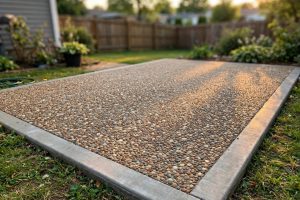

When a homeowner asks about the brick paver driveway cost per square foot, the answer is rarely a single number. Prices move with the type of paver, the ground under the driveway, the pattern of the brickwork, and the local cost of labor. Still, there is a useful range most buyers can trust. In the United States, a brick paver driveway usually costs between eight and twenty-five dollars per square foot, fully installed. Small and simple jobs land near the low end. Large jobs with fine brick and complex patterns land near the high end.
That range matters because a driveway is a big surface. A two-car driveway may cover four hundred to six hundred square feet. At these prices, a few dollars per square foot can change the total by thousands. The price is not a mystery, though. With a little study, any homeowner can learn what goes into the number and how to get a fair bid.
Why the Cost Per Square Foot Matters
A driveway is one of the largest paved surfaces on a property. It takes the weight of cars every day and faces rain, snow, heat, and frost. A well-built brick paver driveway can last twenty-five years or more with basic care. The cost per square foot is the fairest way to compare bids, because it strips away the tricks of lump-sum pricing. When every contractor bids per square foot, the homeowner can see who charges more and ask why.
The paver itself is only one part of the bill. The base of crushed stone, the bedding sand, the edge restraints, and the labor to lay each brick by hand all add up.
What Drives the Price Up or Down: Brick Paver Driveway Cost Per Square Foot
Several forces push the brick paver driveway cost per square foot one way or the other. Each is worth a look before any contractor is called.
The Type and Quality of the Paver
Brick pavers come in two main kinds: true clay brick and concrete pavers that look like brick. True clay brick is fired in a kiln. It holds its color for decades because the color runs through the whole brick, and it is often the more expensive choice. Concrete pavers are cast in molds and can be dyed to any shade. They cost less and come in a wide range of locking shapes. For most driveways, concrete pavers are the common choice. The paver alone can run from two to ten dollars per square foot of finished surface.
Thickness also changes the price. Driveway pavers should be at least two and three-eighths inches thick. Thinner pavers are made for patios, not for cars, and they crack under tires. Thicker pavers cost more per piece but pay for themselves in long life.
The Condition of the Ground
Every paver driveway needs a deep, firm base. The old surface must be removed, the soil graded so water runs away from the house, and a layer of crushed stone, often four to eight inches deep, spread and packed hard. A thin bed of coarse sand goes on top. This base is the hidden half of the job and a big reason professional work costs what it does.
If the ground is flat and firm, the base work is quick and the price stays low. Soft soil, slopes, roots, or heavy clay mean more work: extra stone, a fabric layer to stop sinking, or added drainage. Each step adds to the brick paver driveway cost per square foot. A site visit by an honest contractor will reveal these issues before the bid is written.
The Pattern and the Borders
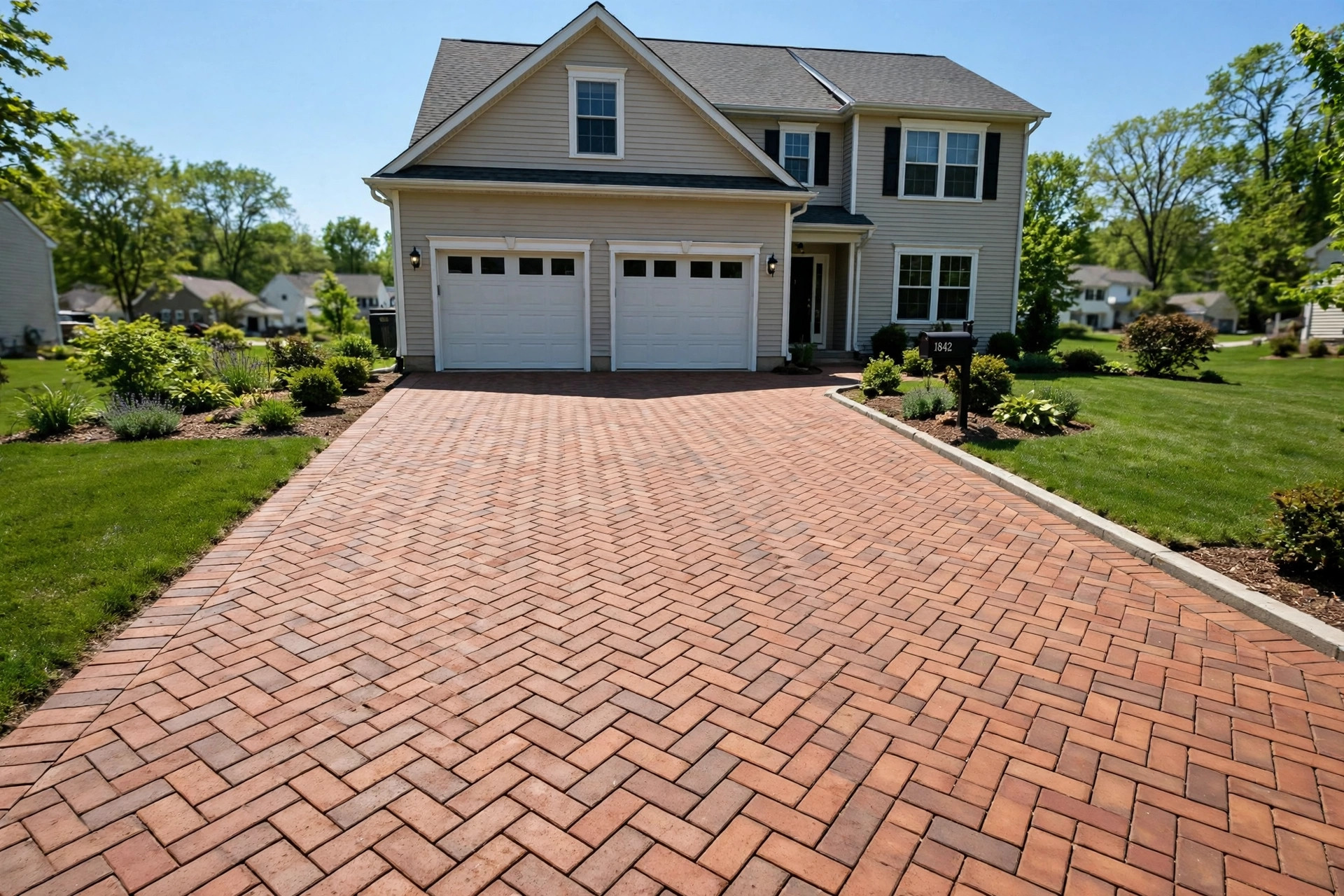
A simple running bond, with each row offset by half a brick, is fast to lay and keeps labor costs down. A herringbone pattern looks richer but takes more time and more cuts. Basket weave and circular patterns take still more skill. Fancy borders, such as a soldier course of bricks standing on end, also add labor. A clean, simple pattern costs less; a rich, custom look costs more.
Labor and Local Prices
Labor is often half the total bill. In cities with high wages, the installed price can run several dollars more per square foot than in rural areas. The season matters too. In cold states the paving season is short, and contractors book up fast in spring. Getting three or more written bids is the best defense against an unfair price. Guides from sources such as This Old House and The Spruce give useful background on what a fair paving bid should include.
Types of Brick Pavers for Driveways
It helps to know the main options before shopping. Each has its own look, price, and strength.
True Clay Brick Pavers
Clay brick pavers are made from natural clay, shaped and fired at high heat. They come in warm reds, browns, and earth tones, and their color never fades because it is baked in. They resist stains and salt well. They are the most costly paver and can be harder to find in some regions. For a classic, old-world street look, clay brick is the gold standard.
Concrete Brick Pavers
Concrete pavers are the most common choice for American driveways. They are made from cement, sand, and color dyes pressed in molds, and they come in many shades and in shapes that lock together like puzzle pieces. The locking shapes spread the weight of cars across a strong surface. They cost less than clay brick and are easy to find at any large home improvement store. Their color may fade slightly over many years, but a sealant slows that down.
Tumbled and Antique-Finish Pavers
Some pavers are tumbled in drums to round their edges and give an aged look. They suit older homes and cottage styles and cost a little more than standard pavers because of the extra finishing step.
Permeable Pavers
Permeable pavers let rainwater pass through small gaps into the ground. They help with drainage and may be required by local rules in some areas. They need a special deep base of open-graded stone, which raises the installed price, and they need regular sweeping so the gaps do not clog.
Average Cost and Price Ranges
The figures below are national averages for the brick paver driveway cost per square foot, including materials and professional labor. Local prices will differ.
Budget Range: Eight to Twelve Dollars Per Square Foot
At this level, the job uses basic concrete pavers in a simple pattern on a standard base, on a flat and easy site. This is a fair price for a plain but well-built driveway. Be wary of bids below this range. They may leave out proper base depth or use thin pavers.
Mid Range: Twelve to Eighteen Dollars Per Square Foot
This is where most driveways land. The pavers are of better quality, with richer colors or tumbled edges. The pattern may be herringbone, and a decorative border is often included. The base is full depth, and drainage is handled with care. Most homeowners get the best value in this range.
Premium Range: Eighteen to Twenty-Five Dollars Per Square Foot
Premium jobs use true clay brick, complex patterns, wide borders, or difficult sites. Large circular medallions, inlays, and custom color blends push the price up. Sloped sites that need extra drainage work land here too. Product background from makers such as Shaw Floors, Mohawk Flooring, and Daltile can help set expectations for how area-priced paving products are quoted.
To turn the rate into a total, multiply by the driveway area. A four-hundred-square-foot driveway at fifteen dollars per square foot costs about six thousand dollars. Measuring the driveway first, in feet, is the first step of any honest budget.
How to Choose the Right Paver and Contractor
Choosing well is mostly a matter of asking the right questions. The answers tell a clear story.
Start With the Brick
Ask to see full-size samples, not just pictures. Lay them on the ground and view them in morning and evening light. Wet one sample to see how it looks after rain. Check that the color runs through the brick and not just on the surface. Retailers such as Lowe’s and specialty sellers like LL Flooring often carry sample kits that can be taken home for a few days.
Match the brick to the house. A red brick colonial looks best with true clay brick or a warm red concrete paver. A modern gray home suits charcoal or slate tones. Keep a record of the exact product name and color so future repairs can use the same brick.
Compare Bids Line by Line
A proper bid lists the paver type and thickness, the base depth, the area in square feet, the pattern, and the price per square foot. It should also name the edge restraint, the joint sand, and whether sealant is included. If one bid is much lower than the others, ask what was left out. Often the answer is base depth or proper compaction, the very steps that keep a driveway flat.
Ask each contractor how many paver driveways they have built, and ask to see two or three past jobs. A driveway that is three years old and still flat is the best proof of good work. Homeowners planning several projects may find the same habit useful elsewhere, such as when checking the engineered hardwood flooring cost per square foot for an interior remodel.
Watch Out for Hidden Costs
Tearing out an old driveway, hauling away the old material, city permits, drainage pipes, and sealant coats are sometimes listed as extras. Ask for the full total in writing, not just the per-square-foot rate. The same habit serves for other area-priced jobs, from a doormat that suits a rainy climate at the front step to foam tiles for a home gym in a finished basement.
Care and Upkeep
A brick paver driveway is not a fit-and-forget surface, but its care is simple.
Sweep often. Dirt and leaves hold moisture against the brick and feed weeds in the joints. A stiff broom once a week is enough in most seasons.
Wash the surface once or twice a year. A garden hose and mild soap remove most grime. For oil spots, use a cleaner made for pavers or a paste of baking soda and water. Use a pressure washer only at a safe distance and moderate setting, since a hard blast can wash joint sand out from between the bricks.
Refill the joints when they look low. Pour dry sand over the surface, sweep it into the joints, and mist lightly with water. Done every year or two, this keeps the bricks locked tight and stops weeds.
Consider a sealant every three to five years. Sealant deepens the color and blocks stains from oil and rust. Use a sealant made for pavers and follow the maker’s directions.
Fix low spots early. Lift the bricks in that spot, add packed stone or sand, and relay them. This is the great advantage of pavers over poured concrete: a cracked slab is a big repair, while a sunken paver is an afternoon’s work.
Safety
A driveway must be safe to walk and drive on. Most brick pavers have enough texture for good footing, but smooth or heavily sealed bricks can get slick when wet. Ask for a textured face if the driveway slopes toward the street, and keep moss and algae off the surface.
The edges must be firm. A good contractor sets a solid concrete or plastic edge restraint so tires cannot catch the border bricks. If edge bricks start to lean outward, have them reset before the problem spreads.
Keep the driveway lit at night. A dark driveway hides the step down to the street and any low spots. In icy weather, use sand or a paver-safe de-icer. Rock salt can harm some pavers and the joints, so check the maker’s advice first.
Frequently Asked Questions
How much does a brick paver driveway cost per square foot in 2026?
Most installed jobs fall between eight and twenty-five dollars per square foot. Simple driveways with basic concrete pavers sit near the low end. Jobs with clay brick, complex patterns, or difficult ground sit near the high end. Get the price in a written bid that lists materials and base depth.
Is a brick paver driveway cheaper than concrete or asphalt?
Per square foot, pavers usually cost more to install than plain concrete or asphalt. Asphalt may cost three to seven dollars per square foot, and plain concrete six to twelve. Pavers earn back the difference in long life and easy repairs: a single cracked paver can be swapped in minutes, while a cracked slab is a costly fix.
How long does a brick paver driveway last?
With a proper base and basic care, a paver driveway can last twenty-five to fifty years. The bricks themselves are hard to wear out. What fails is usually the base, which is why base depth and compaction matter more than the price of the brick.
Can I install a brick paver driveway myself?
A small patio is a fair do-it-yourself project. A driveway is not. Cars weigh thousands of pounds, and the base must be perfectly compacted to carry them. The cost of renting compactors and saws, plus the risk of a sinking driveway, makes professional work the wiser choice for most homeowners.
Do brick paver driveways need to be sealed?
Sealing is not required, but it helps. A sealant deepens color, resists oil stains, and slows fading. Plan to reseal every three to five years if a sealed look is wanted. An unsealed driveway still lasts for decades; it simply weathers to a softer tone.
A Short Final Word
The brick paver driveway cost per square foot is more than a price tag. It is a summary of the brick, the base, the pattern, and the skill of the hands that lay it. Homeowners who learn these parts can read a bid with clear eyes. They can spot a price that is too good to be true and pay a fair price with confidence. Measure the area, gather three bids, choose the brick that suits the home, and the rest will follow.
References
Daltile. (n.d.). Ceramic and porcelain tile. https://www.daltile.com LL Flooring. (n.d.). Hardwood, vinyl, and tile flooring. https://www.llflooring.com Lowe’s. (n.d.). Home improvement products. https://www.lowes.com Mohawk Flooring. (n.d.). Flooring products. https://www.mohawkflooring.com Shaw Floors. (n.d.). Flooring products. https://www.shawfloors.com The Home Depot. (n.d.). Home improvement products. https://www.homedepot.com The Spruce. (n.d.). Home and garden advice. https://www.thespruce.com This Old House. (n.d.). Home renovation guidance. https://www.thisoldhouse.com
Was this guide helpful?

About Lisa Anderson
The My Garden US editorial team writes practical, in-depth home and garden guides for American homeowners — tested advice, no fluff.
You May Also Like
Rigid Core Vinyl Flooring Reviews USA: A Plain Guide for American Homeowners
May 25, 2026 0 views
Large Format Tile for Small Bathroom USA: A Complete Homeowner Guide
March 20, 2026 0 views
Carpet to Hardwood Stair Conversion Cost: A Plain Guide for Homeowners
February 9, 2026 0 views