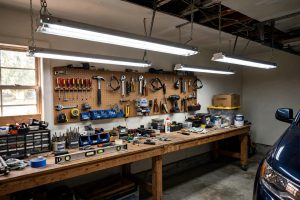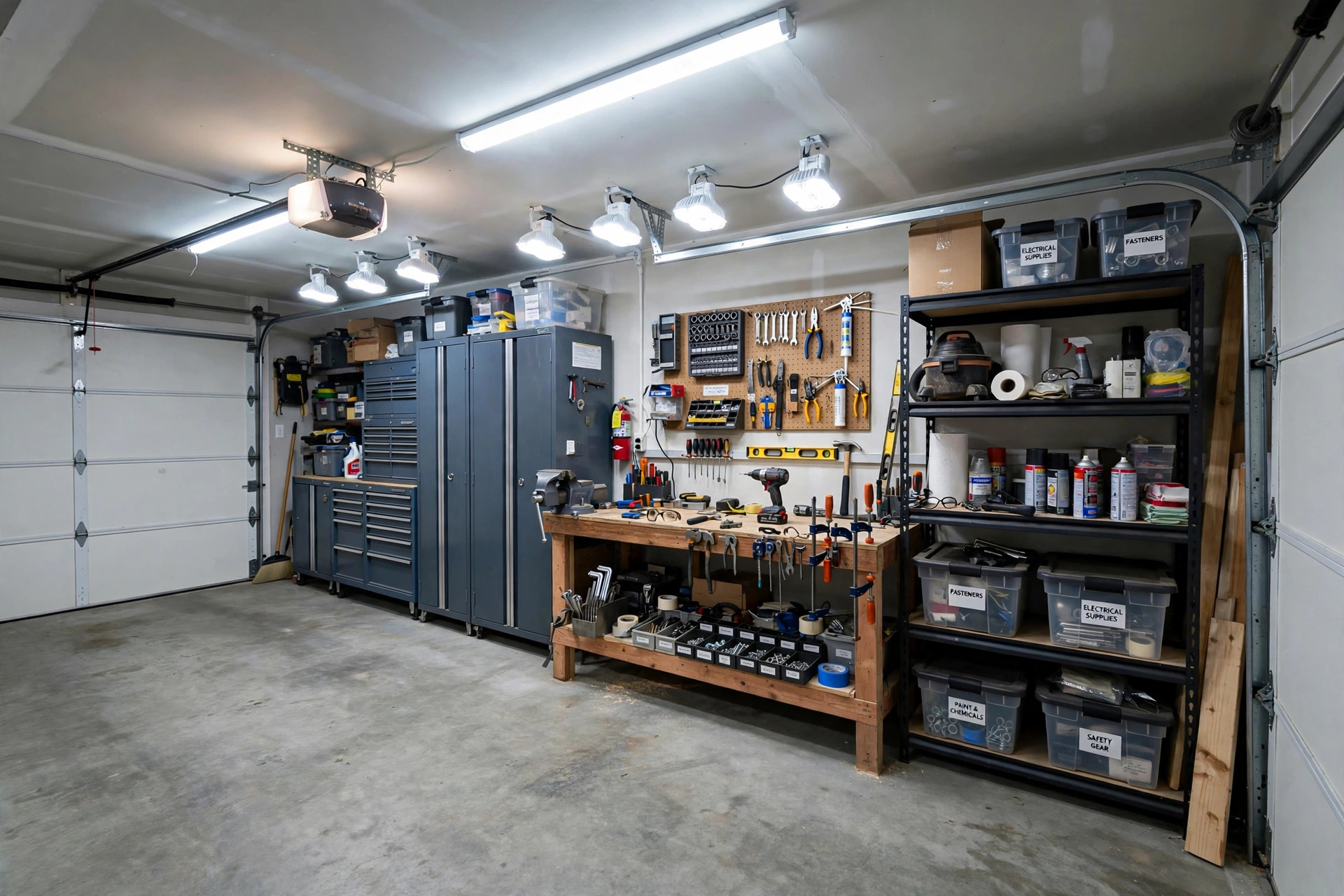

Good light changes a garage. Most American homes come with one bare bulb in the garage. That bulb leaves dark corners. It makes small work hard. A garage shop lights american homes guide helps owners pick better light. Better light makes the garage a real work space. It helps with car repair. It helps with woodwork. It helps with simple chores like sorting tools or reading labels.
Shop lights were made for factories. Today they are made for homes. They hang from the ceiling. They mount on the wall. They plug into a normal outlet. New LED models use little power. They last for years. This guide explains what shop lights are, how to pick them, what they cost, and how to keep them safe.
Why Good Garage Light Matters
A garage is more than a place to park a car. Many families use it as a workshop. They fix bikes there. They build shelves. They do paint work. Poor light slows all of this. It can also be unsafe. A dark step can cause a fall. A dim corner can hide a sharp tool.
Good shop lights give even light across the room. They cut shadows on the workbench. They show true colors, so paint and stain look right. They also make the space feel clean and open. Homeowners who add shop lights often say the garage feels twice as big.
Light also matters in winter. Days are short. Many people work in the garage after dark. Strong shop lights turn night into day. They let a hobby continue through the cold months.
What Are Garage Shop Lights: Garage Shop Lights American Homes Guide
Shop lights are long, bright fixtures made to light wide areas. The classic style is a metal strip with two long tubes. Newer styles use LED tubes or flat panels. Most shop lights are four feet long. Some are two feet or eight feet.
Shop lights differ from normal ceiling lights. They give more lumens, the measure of brightness. They spread light wide instead of in one cone. Many plug into a wall outlet with a cord. Some wire straight into the ceiling box. Many are linkable, so one fixture can plug into the next in a row.
Types of Shop Lights for Home Garages
LED Tube Shop Lights
These are the most popular choice today. They look like the old fluorescent strips. Inside are LED tubes. They turn on at once, even in cold weather. Old fluorescent tubes flicker and buzz. LED tubes do not. They use far less power. Most last 50,000 hours or more. That can be ten years of normal use.
LED Flat Panel and High Bay Lights
Flat panels are thin squares or rectangles. They sit close to the ceiling. They give soft, even light with no dark spots. High bay lights are round or dome shaped. They suit garages with tall ceilings, ten feet or more. They throw light down over a wide area. Both types are LED and save energy.
Linkable Utility Lights
These are small, cheap LED bars, often one to four feet long. They have a plug on each end. You can link them in a chain along the ceiling. They suit small garages or a single workbench. Many come in packs of four or six. They are the easiest type to install.
Motion Sensor Shop Lights
Some shop lights have a built in motion sensor. They turn on when you enter the garage. They turn off after you leave. This saves power. It also helps when your hands are full of tools or groceries. Many families pair these with sensor porch lights for the same hands-free ease at the entry.
Plug In Versus Hardwired
Plug in shop lights use a cord and a standard outlet. You can hang them with chains or hooks in minutes. Hardwired lights connect to the ceiling wiring box. They need an electrician or basic wiring skill. Hardwired models look cleaner. They free up the outlet for tools. For most homeowners, plug in models are enough.
How to Choose: What to Look For
Brightness in Lumens
Look at lumens, not watts. A two-car garage, about 400 to 500 square feet, needs 8,000 to 10,000 lumens of total light for shop work. One bright LED shop light gives about 4,000 to 5,000 lumens. So two or three fixtures cover most garages. More light is better for fine work like soldering or engine repair.
Color Temperature
Color temperature is measured in Kelvin. It tells you if the light looks warm or cool. For garage shop lights, 4000K to 5000K works best. That range looks like clean daylight. It shows detail well. Warm light under 3500K feels cozy, but it can hide flaws in paint and wood. Very cool light over 6000K can feel harsh.
CRI, the Color Score
CRI stands for Color Rendering Index. It runs from 0 to 100. A high CRI means colors look true. Pick shop lights with a CRI of 80 or higher. A CRI of 90 is better for paint work and car detailing. The box or product page lists the CRI.
Size and Shape
Four-foot fixtures fit most garages. Measure the space above the workbench. Keep the light a few feet above your head when you stand. If the ceiling is low, flat panels sit closer and keep headroom. If the ceiling is high, hang strip lights on short chains to bring them lower.
Cold Weather Performance
Many garages are not heated. Old fluorescent tubes fail in the cold. LED shop lights work fine below freezing. Check the product rating if you live in a cold state. Most LED models list a working range down to minus four degrees.
Energy Use and Labels
LED shop lights use a third of the power of old fluorescent models. A 40-watt LED can replace a 100-watt old tube set. The ENERGY STAR program lists efficient models. The Department of Energy also publishes guides on home lighting choices. Lower watts mean lower bills and less heat in summer.
Dimmable or Not
Some shop lights dim with a wall dimmer or a pull chain. Dimmable lights help when you want soft light for parking but bright light for work. Make sure the dimmer matches the light. Not all LED shop lights can dim.
Layout: Where to Put the Lights
Plan before you buy. Walk the garage and note dark zones. The workbench needs the most light. So does the area in front of the tool chest.
Hang one fixture over the workbench. Hang one or two over the open floor where cars park. Keep lights away from the garage door tracks so the door does not hit them. In a long garage, run two rows down the length. Linkable lights make this easy.
Aim for even coverage. Two dim lights beat one bright light with dark corners. If the garage has no outlets in the ceiling, use plug in lights and run a neat cord to the wall. Keep cords off the floor and away from tools. A lighting store like Lamps Plus or Lumens shows layout ideas for workshops.
Installation Basics
Most plug in shop lights install in under an hour. The box has chains and hooks. Screw the hooks into ceiling joists, not just drywall. Hang the light level. Plug it in. That is all.
Hardwired lights take more care. Turn off the breaker first. Test that the power is off with a tester. Connect black to black and white to white. Ground the green wire to the box. If you are not sure, call an electrician. The cost of one hour of work is small next to the risk.
Keep the lights at least a few inches from stored boxes. Heat is low with LED, but air flow still matters. Do not cover a shop light with insulation or a blanket. Guides at This Old House walk through safe garage wiring step by step.
Cost and Price
Prices vary by type and brand. Here are plain ranges seen in American stores.
– Linkable LED utility bars, pack of four: 40 to 80 dollars. – Four-foot LED tube shop light, single: 25 to 60 dollars. – Dimmable or motion sensor models: 50 to 100 dollars. – Flat panel or high bay LED: 80 to 200 dollars each.
For a two-car garage, most owners spend 100 to 300 dollars on lights. Installation is often free if you do it yourself. An electrician may charge 100 to 200 dollars to wire a new ceiling box. Running costs are low. Three LED fixtures at 40 watts each, used four hours a day, cost only a few dollars a month to run.
Shop for sales at big home stores. Home Depot and Lowe’s carry wide ranges in store and online. Bulb makers like Philips publish full specs for their shop light lines. Checking specs before you buy avoids a wrong pick.
Care and Upkeep
LED shop lights need little care. Dust them once or twice a year. Dust on the lens cuts light output. Wipe the cover with a dry cloth. Do not use water on the fixture.
Check the hanging hardware each year. Chains and hooks can loosen with vibration from the garage door. Tighten what is loose. Look at the cord for wear. Replace a cord that is cut or cracked.
LED tubes last many years, but they do fade. If a fixture looks dim after five or six years of heavy use, swap the tubes or the whole light. Keep the box and receipt. Many brands give a five-year warranty. Project guides at Family Handyman show how to swap tubes safely.
Safety Tips
Light and power go together, so safety matters. Follow these rules.
First, match the light to the space. A garage can be damp. If your garage gets wet, pick fixtures rated for damp locations. The label on the box will say.
Second, do not overload outlets. A shop light draws little power, but a row of linked lights plus power tools can add up. Use a separate circuit for tools if you can.
Third, keep lights clear of the garage door path. A door that hits a fixture can break glass or pull down wiring.
Fourth, mind the ladder. Many garage falls happen off step ladders while changing bulbs or hanging lights. Set the ladder on flat ground. Have someone hold it.
Fifth, watch for heat near paint and fuel. LED lights run cool, but keep all fixtures away from gas cans and paint thinner. Store fuel in a locked cabinet far from any light fixture.
Smart Upgrades for the Garage
Once the main lights are up, small upgrades add ease.
Smart plugs let you turn shop lights on from your phone. They also run on a timer. The light can switch on before you get home. WiFi bulbs fit some shop fixtures and dim from an app. If you like smart gear, start with the guide on wifi smart bulbs.
A motion sensor switch on the wall is a cheap upgrade. It costs about 20 dollars. It turns the whole garage light set on when the door opens. Battery puck lights add light inside dark cabinets and under shelves.
For the rest of the house, the same ideas apply. LED recessed lights bring the same bright, clean light to kitchens and halls. Advice from The Spruce covers whole-home lighting plans room by room.
Garage Shop Lights and Home Value
Buyers notice a bright garage. A dark garage feels like storage. A bright garage feels like a workshop or a gym. Real estate agents say a finished, well lit garage can lift a home’s appeal. The cost is small. The change is big. If you plan to sell in a few years, good shop lights are a cheap upgrade with a clear payoff.
Renters can use plug in lights too. They hang with hooks and leave no marks. When you move, take them down and take them with you.
Frequently Asked Questions
How many shop lights does a two-car garage need?
Two to three four-foot LED shop lights suit most two-car garages. That gives 8,000 to 12,000 lumens. Add one more over the workbench if you do fine detail work.
Are LED shop lights better than fluorescent?
Yes. LED lights turn on at once in the cold. They use less power. They last longer. They do not buzz or flicker. Old fluorescent tubes also hold mercury, which makes disposal harder.
Can I install shop lights myself?
Plug in models are simple. Hang them from joists and plug them in. Hardwired models need care with house wiring. If you have no wiring skill, hire an electrician for that part.
What color temperature is best for a garage workshop?
A range of 4000K to 5000K is best. It looks like daylight. It shows true colors. It keeps you alert during long jobs.
Do shop lights work in an unheated garage?
LED shop lights work well in the cold. Most are rated below freezing. Old fluorescent tubes are the ones that fail in cold weather.
How long do LED shop lights last?
Most are rated for 35,000 to 50,000 hours. At four hours a day, that is 20 years or more. Heavy daily use still gives many years.
A Short Final Word
Picking garage shop lights is not hard. Measure the space. Aim for 8,000 to 10,000 lumens in a two-car garage. Pick LED. Pick 4000K to 5000K. Hang them over the work area. Keep wiring safe. The result is a garage that works as hard as you do. This garage shop lights american homes guide gives you the full picture. The next step is yours: a brighter, safer, more useful garage.
References
ENERGY STAR. (n.d.). Energy efficient products. https://www.energystar.gov Family Handyman. (n.d.). DIY home repair and maintenance. https://www.familyhandyman.com Lamps Plus. (n.d.). Lighting and home decor. https://www.lampsplus.com Lowe’s. (n.d.). Home improvement products. https://www.lowes.com Lumens. (n.d.). Lighting and ceiling fans. https://www.lumens.com Philips. (n.d.). Lighting products. https://www.philips.com The Home Depot. (n.d.). Home improvement products. https://www.homedepot.com The Spruce. (n.d.). Home and garden advice. https://www.thespruce.com This Old House. (n.d.). Home renovation guidance. https://www.thisoldhouse.com U.S. Department of Energy. (n.d.). Energy efficiency and renewable energy. https://www.energy.gov
Was this guide helpful?

About Michael Thompson
The My Garden US editorial team writes practical, in-depth home and garden guides for American homeowners — tested advice, no fluff.
You May Also Like
Deck Cap Lights Buying Guide USA: How to Choose the Best Lights for Your Deck Posts
May 18, 2026 0 views
LED Recessed Lights Texas Homes USA: A Plain Guide
April 21, 2026 0 views
LED Recessed Lights USA Online Deals: How to Shop Smart
April 25, 2026 0 views