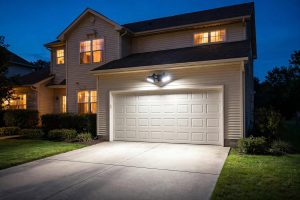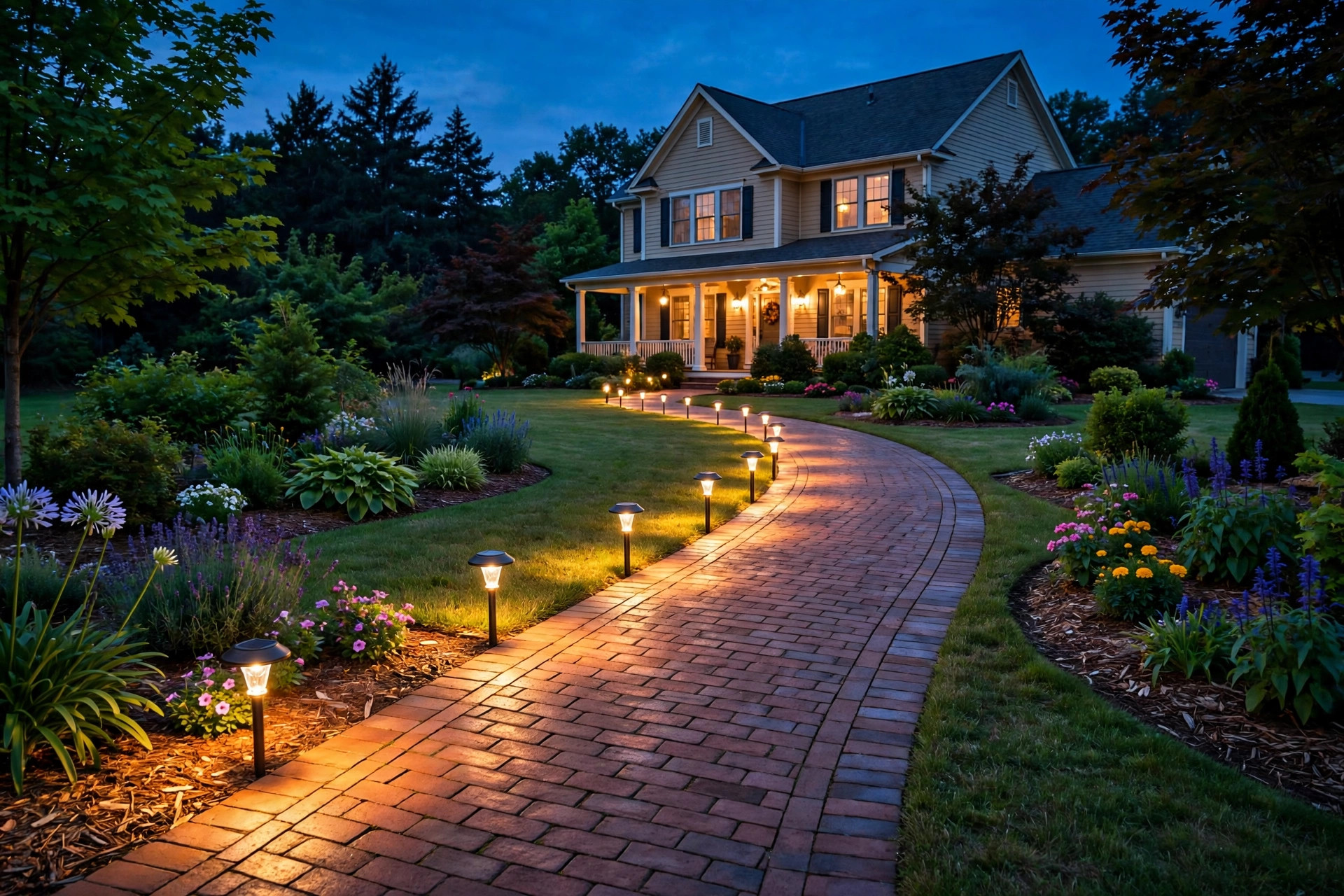

This solar path lights american homes guide is for anyone who wants a safer, prettier walkway without digging trenches or calling an electrician. Solar path lights are small lamps that sit along driveways, garden paths, and sidewalks. They soak up sun by day and switch on by themselves at night. They cost little to run. They ask for almost no care. For many homes across the United States, they are the easiest way to add light where people walk after dark.
Why Solar Path Lights Matter
A dark path is a small risk that grows. Guests miss a step. A child trips over a stone edge. A delivery driver cannot find the front door. Light along the walk fixes all of this at once. It also changes how a house looks from the street. A row of soft lights gives a yard shape and warmth at night. Many homeowners say it is the one small change that made their house feel finished.
Electric bills are another reason people choose solar. A wired landscape system adds a few dollars a month to the bill, plus the cost of an electrician to put it in. Solar lights use no house current at all. The sun pays for the power. This is why they fit so many budgets. The U.S. Department of Energy notes that solar-powered lighting is one of the simplest ways to cut home energy use outdoors.
Solar path lights also fit renters and older homes. There is no digging for wire. No holes in the house wall. Each light stakes into the soil by hand. If you move, you can pull them out and take them with you.
How Solar Path Lights Work: Solar Path Lights American Homes Guide
Every solar path light has the same small set of parts. A solar panel on top catches daylight. A small battery inside stores the power. A light sensor watches the sky. When the sky darkens, the sensor tells the light to turn on. At dawn it turns off and starts charging again.
Most models use LED bulbs. LEDs give a lot of light for very little power. That is why a small panel and a small battery can keep a light on for six to ten hours. The quality of the battery matters most. Good nickel-metal hydride or lithium batteries hold charge through cloudy days better than cheap ones. The ENERGY STAR program points out that efficient LEDs keep outdoor fixtures bright while using far less energy than older bulb types.
Placement decides how well this system works. The panel needs direct sun for much of the day. A light placed under a tree or on the north side of a tall fence will charge poorly. Before you set any light in the ground, watch your yard for a day and mark the sunny spots.
What to Look For When You Choose
Brightness comes first. Outdoor lighting is measured in lumens. A soft glow for a garden path needs only 10 to 30 lumens per light. Steps and stairs need more, about 50 to 100 lumens, so feet can see each edge. Buying more lights with modest output often looks better than buying a few very bright ones. Rows of gentle light feel calm. A single harsh lamp feels like a parking lot.
Color temperature matters too. Most solar path lights come in warm white, around 2700 to 3000 kelvin. Warm white flatters brick, wood, and plants. Cool white, above 4000 kelvin, looks bright and modern but can feel cold near a front door. For most American homes, warm white is the safer pick. Retailers like LampsPlus list the color temperature on each product page, so check before you buy.
Look at the materials next. Plastic housings cost less but can fade and crack in strong sun. Stainless steel and cast aluminum last far longer. Glass lenses spread light better than plastic ones. If you live where winters are hard, check the temperature rating. Cheap lights often die in the first deep freeze.
Check the battery size and whether it can be replaced. Lights with replaceable batteries can last years longer than sealed ones. Many good lights use standard rechargeable AA batteries. When they wear out, a fresh set brings the light back to life for a few dollars.
Weather rating is printed on the box. Look for IP44 or higher. That rating means the light can stand rain and splashing water. The Philips lighting pages explain how weather ratings work for outdoor fixtures and what each number stands for.
Finally, think about style. Lights should match the house. A colonial brick home looks right with lantern-style heads. A ranch house suits simple modern posts. The Spruce outdoor lighting guides show many style pairings that help homeowners match fixtures to house types.
Types of Solar Path Lights
Stake lights are the common kind. A pointed post pushes into the soil. The lamp head sits on top, usually two to three feet high. They line walkways and flower beds well. They are cheap, simple, and easy to move.
Bollard lights are taller and sturdier. They stand two to four feet high and spread light wider. They suit driveways and long garden paths where a bigger presence is needed. Many are metal and look like small street lamps.
Deck and step lights mount on flat surfaces. Some screw onto stair risers. Others sit flush in deck boards. They are not stake lights, but many run on small solar panels. They are the right pick for stairs, where each step edge must be clear.
Decorative and mosaic lights trade brightness for beauty. They cast colored or patterned light. They are nice near a patio or a pond. Do not count on them to light a walkway alone. Use them with plainer lights that do the real work.
Smart solar lights are newer. They connect to a phone app or a home hub. Some let you set schedules or dim the light. They cost more. For a simple path, plain lights with good batteries often do just as well. Shoppers comparing smart options can read buying guides like this one on wifi smart bulbs buying guide usa to see how connected lighting works indoors before deciding for the yard.
Cost and Price
Solar path lights are cheap. A basic plastic set of six often costs between ten and thirty dollars. Mid-range metal lights run five to fifteen dollars each. High-end bollards and designer sets can reach twenty-five to fifty dollars per light.
A full walkway needs more lights than most people guess. Plan one light every six to eight feet. A fifty-foot walk needs about eight lights. At mid-range prices, that is forty to one hundred twenty dollars for the whole path. There are no wiring costs and no electrician bill. Large retailers such as Home Depot and Lowe’s carry wide ranges, so it is easy to compare prices in one place.
Long-term cost is almost nothing. The batteries need replacement every one to three years. A pack of rechargeable batteries costs a few dollars. If a light head breaks, you replace only that one light. There is no system to repair.
One caution on price: the cheapest lights often fail within one season. If a set costs less than two dollars per light, expect weak output and short life. Spending a little more on the first set usually costs less over five years than buying cheap sets twice.
Setting Up Your Lights
Setup takes an afternoon. Start by laying the lights along the path without pushing them into the ground. Walk the path at night with a flashlight held at the height of the light head. This shows where the dark gaps are. Move the lights until the gaps are gone. Then push the stakes in.
Keep lights about a foot back from the path edge. This keeps them clear of mowers and shovels. It also keeps bright light out of walkers’ eyes. Angle each head so the light falls across the path, not straight up into the air.
Give each panel clear sun. Do not place lights under bushes or under the eaves where the house blocks the sky. If part of the yard is shady, put the brighter lights there and the dimmer ones in full sun. The shady spots need the most help at night, but the lights there will charge least. This is the one real puzzle of solar lighting. Plan for it before you buy.
After setup, leave the lights off for one full day to let them take a first deep charge. Most lights have a small on-off switch under the head. Charge first, then switch on.
Care and Upkeep
Solar path lights ask for little care, but a little care matters. Wipe each solar panel twice a year. Dust, pollen, and bird droppings block light and cut charging. A damp cloth is enough. Clean panels can charge twice as fast as dirty ones.
Check the stakes after storms. Wind and mowers knock lights crooked. A crooked panel may face away from the sun and charge poorly. Straighten any that have shifted.
Replace batteries when lights dim early. If lights that used to stay on till dawn now die by midnight, the battery is worn. Open the battery cover, swap in fresh rechargeables, and the light should run full nights again. Specialty lighting stores like Lumens stock replacement parts and battery types for many outdoor fixtures.
In snowy states, pull cheap plastic lights inside for winter. Ice can crack them. Good metal lights can stay out, but brush snow off the panels so they can charge on clear days.
Trim plants around the lights each spring. Fast-growing bushes can shade a panel in one season. A small trim keeps the light working at full strength.
Safety and Smart Placement
Light is a safety tool. Put the brightest lights near steps, doorways, and uneven stones. The path from the driveway to the front door is the first line of light. The path to the mailbox and the side gate come next.
Do not over-light. Too many bright lights waste the effect and can annoy neighbors. Light the path, not the whole yard. Aim heads downward. Downward light shows the ground clearly and keeps glare out of eyes and windows.
Keep lights clear of flammable mulch if the head runs warm, though LEDs run cool. Keep wiring-free lights away from pools of standing water where the stake could tip. If a light falls over in a storm, set it back up before it lies in a puddle for days.
Motion-sensor solar lights add safety near dark corners. They shine bright when someone walks by, then dim again. They are good for side yards and back gates. Plain always-on lights suit the main walk, where steady light looks best.
For porches and walls, pair path lights with fixtures mounted on the house. A guide to outdoor wall lanterns buying guide usa can help match wall lights to the path lights along the walk.
Frequently Asked Questions
How long do solar path lights stay on at night? Most good lights run six to ten hours on a full charge. Cheap lights may run three to four hours. In winter, with short days, expect less. Battery size and panel size set the limit.
Do solar path lights work on cloudy days? Yes, but weaker. Panels still catch light through clouds, just less of it. After two or three gray days in a row, lights may dim early. Good batteries ride through cloudy spells better than weak ones.
Can I leave them out in winter? Quality metal lights can stay out. Check the rated temperature range first. In very cold states, cheap plastic lights often crack. Batteries also hold less charge in the cold, so winter nights will be shorter.
How many lights do I need for my walkway? Plan one light every six to eight feet. Measure the path and divide by seven. That gives a good count. A straight fifty-foot path needs about seven or eight lights.
Why are my solar lights dim after a few months? The usual causes are dirty panels, dead batteries, or shade that grew over the panel. Clean the panel first. If that fails, replace the battery. If the light still dims, a plant or fence may now block the sun.
Are solar path lights as bright as wired lights? Wired lights are usually brighter, often 100 lumens or more per fixture. Good solar lights reach 50 to 100 lumens each. For walking paths, solar is bright enough. For security lighting of a whole yard, wired or motion-sensor floodlights do more. Indoors, wired fixtures still rule; see the led recessed lights installation guide usa for how wired lighting works inside the home.
A Short Final Word
Solar path lights are one of the simplest upgrades a homeowner can make. They need no wiring, no electrician, and no power bill. A sunny afternoon of setup gives years of warm light along the walk. Choose sturdy lights, place them where the sun reaches, and keep the panels clean. Do that, and the path will welcome everyone home after dark.
References
ENERGY STAR. (n.d.). Energy efficient products. https://www.energystar.gov Lamps Plus. (n.d.). Lighting and home decor. https://www.lampsplus.com Lowe’s. (n.d.). Home improvement products. https://www.lowes.com Lumens. (n.d.). Lighting and ceiling fans. https://www.lumens.com Philips. (n.d.). Lighting products. https://www.philips.com The Home Depot. (n.d.). Home improvement products. https://www.homedepot.com The Spruce. (n.d.). Home and garden advice. https://www.thespruce.com U.S. Department of Energy. (n.d.). Energy efficiency and renewable energy. https://www.energy.gov
Was this guide helpful?

About Michael Thompson
The My Garden US editorial team writes practical, in-depth home and garden guides for American homeowners — tested advice, no fluff.
You May Also Like
Garage Shop Lights for Sale USA: A Plain Buyer’s Guide
August 31, 2026 0 views
Garage Shop Lights Reviews Buying Guide USA
June 1, 2026 0 views
Landscape Spot Lights for Florida Homes: A Complete USA Buyer’s Guide
February 15, 2026 0 views