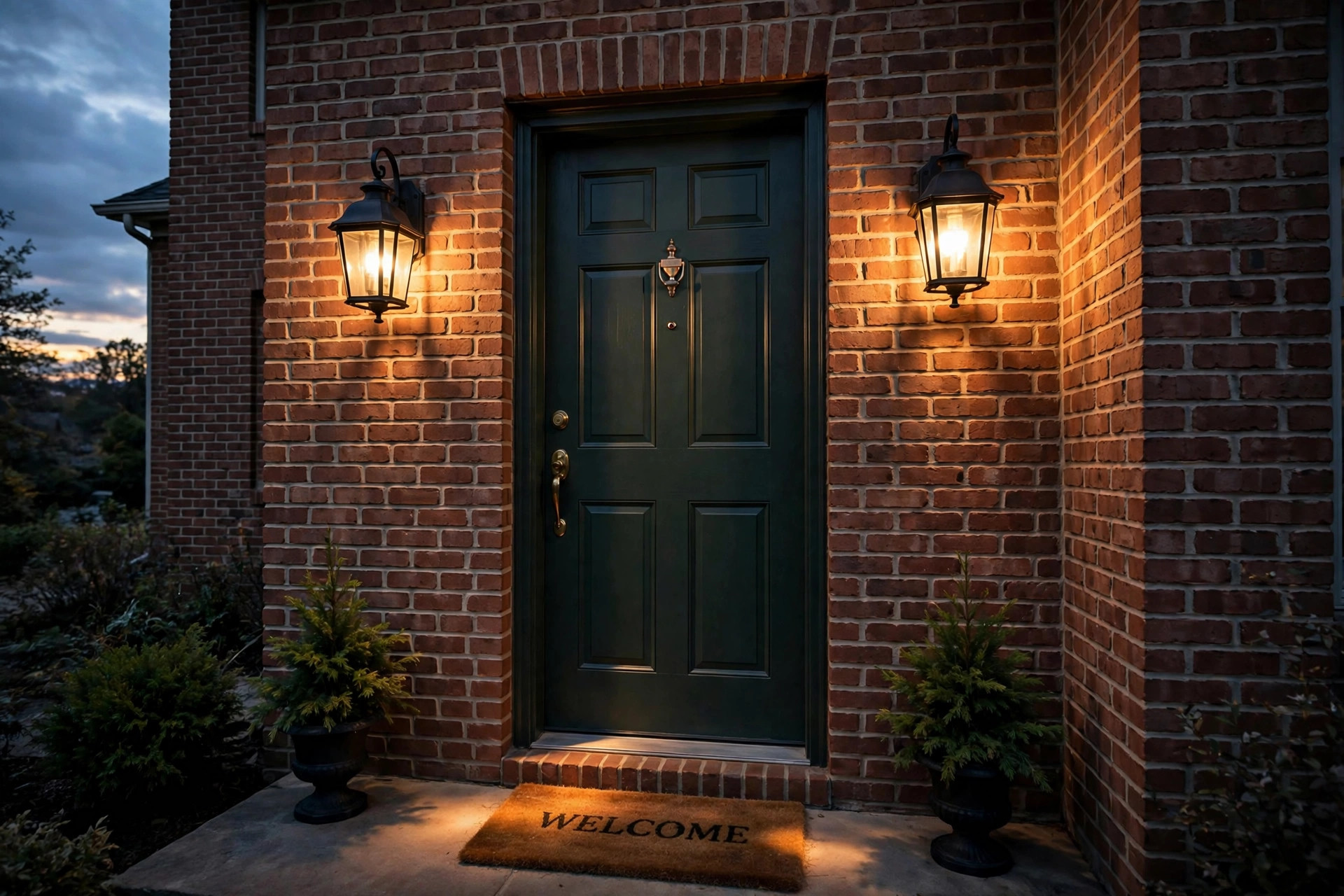

This outdoor wall lanterns buying guide usa starts with a simple truth. A good wall lantern does more than light a doorway. It greets guests, marks the entrance, and keeps the steps safe after dark. Many homeowners treat the fixture as a small detail. In truth it sets the tone for the whole front of the house. This guide walks through size, style, bulb type, price, and care. Read it before you buy, and you will avoid the common mistakes that leave a porch too dim, too harsh, or out of scale with the house.
Why Outdoor Wall Lanterns Matter
The front door is the face of the home. A wall lantern frames it. A lamp that is too small gets lost on a wide wall. A lamp that is too bright floods the yard and annoys the neighbors. The right fixture lands in the middle: bright enough to see a keyhole and a welcome mat, soft enough to look warm and kind.
Lanterns also serve a plain purpose. They light the path to the door. They make steps visible. They let visitors find the bell or the knocker without fumbling. They help you see who is at the door. For all these reasons, outdoor wall lanterns are one of the most practical upgrades a homeowner can make. They cost less than most fixtures, and they change the look of a house more than paint in some cases.
Security is another reason people buy them. A lit entrance looks occupied. Many fixtures now include a dusk-to-dawn sensor or a motion sensor. The light comes on when the sun goes down or when someone walks up the drive. That small change can make a home feel safer at night.
What to Look for When You Choose a Lantern: Outdoor Wall Lanterns Buying Guide Usa
Before you shop, take stock of the house. Look at the door, the siding, the trim, and the garage. A lantern should suit the style of the home. It should also suit the wiring. These points below will guide the choice.
Size and Scale
Size is the first thing to get right and the easiest to get wrong. A fixture beside a front door should be about one third the height of the door. Most front doors stand six feet eight inches tall. That points to a lantern roughly twenty to twenty-four inches high. If the door has two sidelights or a transom window, you can go a little larger.
Place the lantern so its center sits about sixty-six inches above the ground or porch floor. That height puts the light at eye level. It avoids harsh shadows on the face of a visitor. If you mount two lanterns, one on each side of the door, keep them even and symmetric. For a garage, choose a fixture of similar size and center it over the garage door, or mount two smaller lanterns on either side.
Finish and Style
Outdoor lanterns come in many finishes. Black is the most common. It suits most homes and hides dirt well. Oil-rubbed bronze adds warmth and suits brick or stone. Brushed nickel and satin silver look modern. Aged copper or brass can suit older homes but may patina with time.
Match the finish to the other hardware on the house. Door handles, house numbers, and mailboxes should share the same tone if you can manage it. Glass matters too. Clear glass gives the most light and shows the bulb. Seeded or hammered glass hides the bulb and softens the glow. Frosted glass gives a soft, even light but hides the filament. Dark sky friendly fixtures throw light downward and cut glare. They suit buyers who want to reduce light pollution.
Bulbs and Light Color
Almost all new lanterns use LEDs. An LED bulb lasts years and uses little power. Look at lumens, not watts. A porch lantern usually needs 400 to 800 lumens per fixture. That is plenty to light a small entry. Color temperature matters too. A warm white around 2700K to 3000K looks like the old incandescent glow. It suits a home entrance. Cooler temperatures above 4000K look harsh and clinical on a front porch. Keep those for work areas.
Check whether the bulb is built in or replaceable. Built-in LED boards often last longer but cannot be changed when they fail. Replaceable bulbs give you choice. You can swap color temperature later. Some homeowners pair a wall lantern with solar path lights buying guide usa so the walkway and the entry share the same warm color.
Types of Outdoor Wall Lanterns
Wall lanterns fall into a few broad types. Each suits a different need.
Traditional carriage lanterns are the classic shape. They look like old coach lamps with a top, glass panels, and a base. They suit colonial, farmhouse, and craftsman homes. Many brands build them in cast aluminum so they resist rust.
Modern lanterns use clean lines. They may be rectangular boxes or slim cylinders. They suit ranch houses and new builds with plain trim. Finishes are often matte black or brushed steel.
Lanterns with sensors add function. A dusk-to-dawn photocell turns the lamp on at sunset and off at sunrise. A motion sensor turns the lamp on when it detects movement. Some fixtures combine both. These cost a little more but save energy and add security.
Flush or half-wall lanterns suit tight spaces. If the wall beside the door is narrow, a shallow fixture will not stick out and block the path. Half-wall lanterns sit against the wall and read as a trim piece with light. They suit porches with low clearance.
For buyers who want a coordinated look, the lantern brand often sells matching fixtures. Many makers offer wall lanterns, post lights, and ceiling lights in one family, the same way indoor lines pair kitchen island pendants with dining room chandeliers for a whole-house look.
Cost and Price
Outdoor wall lanterns range widely in price. A basic aluminum fixture with clear glass and a replaceable socket can cost twenty to forty dollars. A mid-range lantern with a dusk-to-dawn sensor, seeded glass, and a powder-coated finish runs forty to one hundred dollars. High-end fixtures from known lighting brands cost one hundred to three hundred dollars or more. Copper and brass fixtures sit at the top of the range.
Price often tracks the housing material. Cheap fixtures use thin stamped metal. They can bend during install and rust within a year or two. Mid-range fixtures use cast or die-cast aluminum with a powder-coat finish. That coating resists weather for many years. Check the wet rating. A fixture marked for wet locations can take direct rain. A fixture marked for damp locations only suits a covered porch. Buying the right rating saves the cost of a replacement.
Do not forget the bulb. Some fixtures include an LED bulb or board. Others sell it separately. Add ten to twenty dollars if the bulb is not included. Also plan for the electrician if the box and wiring are not in place. A new box and circuit can cost far more than the fixture itself. Most swaps of an old lantern for a new one take a handy homeowner under an hour.
Care and Upkeep
Outdoor lanterns need little care, but they do need some. Wipe the glass twice a year with a soft cloth and mild soap. Dirt and bugs dim the light faster than you think. Check the finish each spring. If the coating chips, touch it up with exterior paint or a rust-inhibiting spray made for outdoor metal.
If the lantern has a sensor, keep the eye clean. A dirty photocell can make the light stay on all day or never come on at all. Trim plants that grow over the fixture. Leaves trap moisture against the metal and shorten its life.
For fixtures with replaceable bulbs, keep one spare bulb on the shelf. LED bulbs fail rarely, but a porch light is not the fixture you want to leave dark while you wait for a store run. If the fixture uses a sealed LED board, read the warranty. Good brands offer five to ten years on the LED engine.
In cold regions, check the fixture before winter. Make sure the gaskets sit tight and the mounting screws hold firm. Ice and freeze-thaw cycles test every joint. In coastal regions, salt air attacks finishes. A fixture rated for coastal use will last far longer near the sea.
Safety
Work with the power off. Turn off the breaker before you touch any wiring. Test the wires with a non-contact tester before your hands go near them. If the old box is cracked or the wires look scorched, call an electrician. A new fixture is no place to inherit an old wiring fault.
Mount the fixture to a box rated for its weight. Most wall lanterns are light enough for a standard round box. Heavy fixtures may need a braced box. Seal the top and sides of the mounting plate with silicone if the fixture does not have a gasket. Water that runs behind the plate can reach the wiring.
Choose bulbs that suit the socket. Never force a bulb into the wrong base. If the fixture sits near a walkway, make sure the glass is not cracked and the corners are not sharp. Use lampsplus.com style specialty retailers or your local hardware store to find replacement glass panels for broken lanterns.
Check local rules. Some towns and homeowner associations limit the brightness and the direction of outdoor light. Dark sky rules ask for fixtures that point light down. Following them keeps the peace with neighbors and may be required where you live.
Frequently Asked Questions
How bright should an outdoor wall lantern be? For most front doors, 400 to 800 lumens per fixture is enough. That lights the steps and the lock without flooding the yard. Two fixtures beside a wide door can each be a little dimmer than one lone fixture. Start with warm white, around 2700K, for a welcoming look.
Should I buy a lantern with a motion sensor or a dusk-to-dawn sensor? Both have their place. Dusk-to-dawn gives steady light all night, which suits a main entrance. Motion sensors save energy and startle intruders, which suits a side door or garage. Some fixtures carry both: the lamp glows softly all night and brightens when someone approaches.
What finish lasts longest outdoors? Powder-coated cast aluminum lasts very well in most climates. Black and bronze hide wear. Near the ocean, look for a marine-grade or coastal-rated finish. Brass and copper last long too, but they change color as they age. Many people like the patina. If you do not, choose coated aluminum.
Can I install an outdoor wall lantern myself? If a proper box and wiring already exist, most handy homeowners can swap a fixture in under an hour. Turn off the breaker, match the wires by color, and seal the plate. If you need a new box, a new circuit, or you see damaged wiring, hire a licensed electrician. Electrical work is not the place to guess.
Do I need a wet-rated fixture on a covered porch? A covered porch still gets wind-driven rain and morning damp. A damp-rated fixture is the minimum there. If any part of the lantern sits beyond the roofline or faces the open yard, buy wet-rated. The cost difference is small and the protection is real.
How high should I mount the lantern? About sixty-six inches from the ground to the center of the fixture works for most doors. That puts the lamp near eye level. For tall carriage lanterns, measure from the middle of the glass, not the top of the cap. Keep the height the same on both sides of the door.
A Final Word
Buying an outdoor wall lantern is a small decision with a long shadow. The fixture will greet you every evening for years. Take ten minutes with a tape measure. Note the door height, the wall space, and the finish of the other hardware. Choose a wet rating that suits the spot. Pick warm light that flatters the house. Then shop with confidence, whether you browse a big retailer such as homedepot.com or a lighting specialist such as lumens.com. This outdoor wall lanterns buying guide usa sums it up in one line: right size, right rating, right warmth, and the door takes care of itself.
For more detail on energy use, the energy.gov lighting pages explain lumens and color temperature in plain terms. The energystar.gov site lists certified fixtures that meet federal efficiency standards. Design inspiration and buyer reviews appear on thespruce.com and on retailer sites like lowes.com. Brand catalogs from kichler.com, hinkley.com, and philips.com show the full range of styles, finishes, and smart features now on the market.
References
ENERGY STAR. (n.d.). Energy efficient products. https://www.energystar.gov Hinkley Lighting. (n.d.). Outdoor wall lighting. https://www.hinkley.com Kichler Lighting. (n.d.). Outdoor lighting fixtures. https://www.kichler.com Lamps Plus. (n.d.). Lighting and home decor. https://www.lampsplus.com Lowe’s. (n.d.). Home improvement products. https://www.lowes.com Lumens. (n.d.). Lighting and ceiling fans. https://www.lumens.com Philips. (n.d.). Lighting products. https://www.philips.com The Home Depot. (n.d.). Home improvement products. https://www.homedepot.com The Spruce. (n.d.). Home and garden advice. https://www.thespruce.com U.S. Department of Energy. (n.d.). Energy efficiency and renewable energy. https://www.energy.gov
Was this guide helpful?

About David Wilson
The My Garden US editorial team writes practical, in-depth home and garden guides for American homeowners — tested advice, no fluff.
You May Also Like
Patio String Lights Texas Homes USA: A Practical Buying and Care Guide
July 6, 2026 0 views
Patio String Lights for California Homes
May 2, 2026 0 views
Dining Room Chandeliers Reviews Buying Guide USA
September 5, 2026 0 views