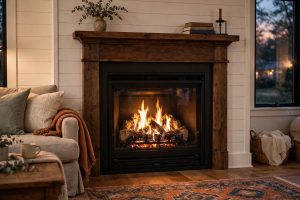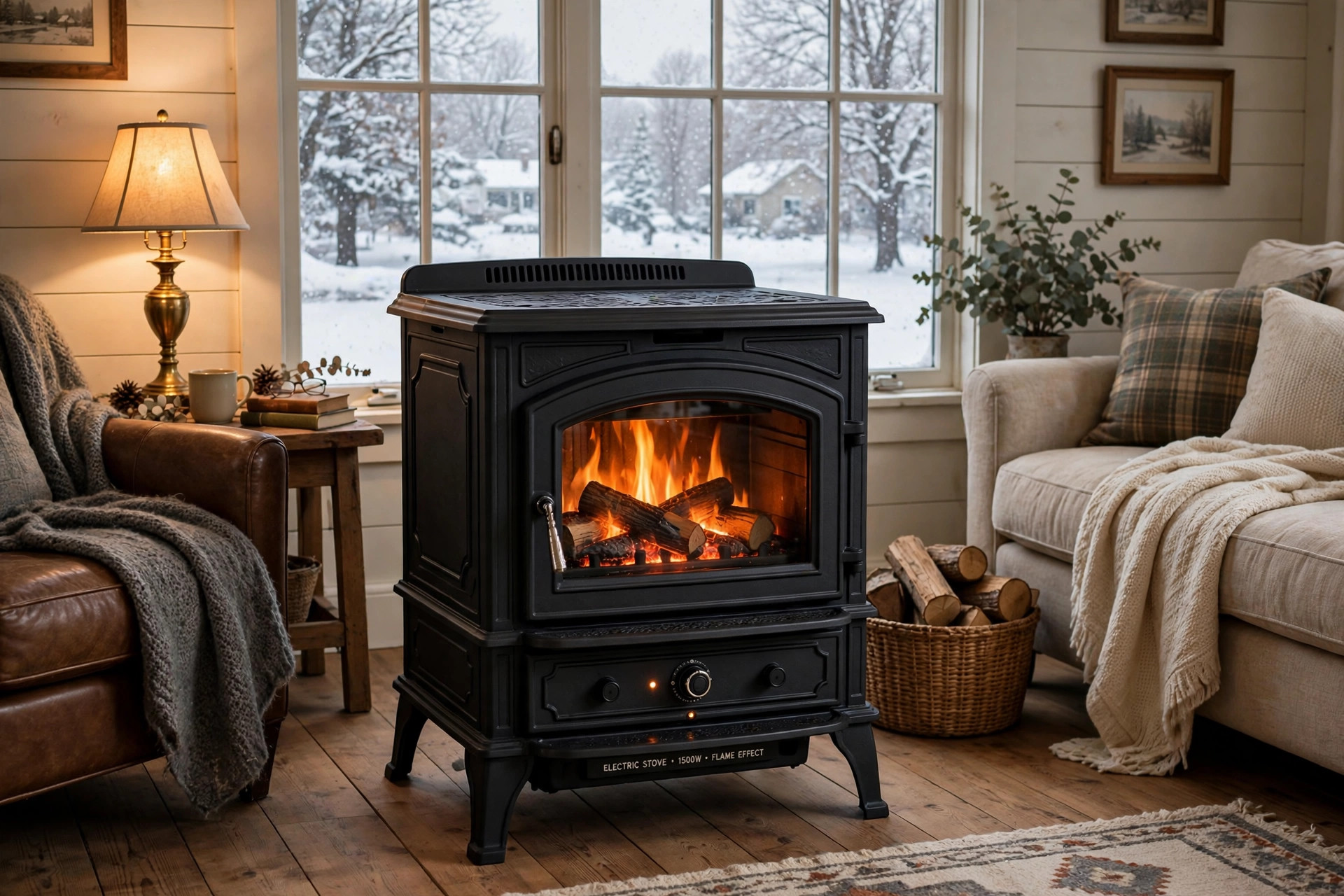

Winters in the midwest are long and hard. The wind cuts through old windows. The furnace runs day and night. Heating bills climb fast. Many families look for a second source of heat that is simple and safe. That is where top rated freestanding electric stoves for midwest homes earn their place. They look like the cast iron stoves of the past. They sit on the floor in the living room, the family room, or the finished basement. They give steady, even warmth. They need no chimney. They need no gas line. They plug into the wall.
A freestanding electric stove is not a fireplace insert. It stands on its own legs. It rolls or carries into any room with an outlet. It turns on with a switch or a remote. The flames look real through the glass door. Most models let the flame effect run with no heat at all, so they look fine in summer too.
This guide walks through what matters, how to choose, what types exist, what they cost, how to care for them, and how to use them safely. It also answers common questions from midwest homeowners.
Why It Matters
Heat is not a luxury in the midwest. It is a need. In states like Illinois, Iowa, Minnesota, Wisconsin, Indiana, and Ohio, the cold season runs from late fall to early spring. Night temperatures drop well below freezing for weeks at a time. A furnace does the main work. But furnaces heat the whole house at once. That costs money. Rooms that sit empty still get heated.
A freestanding electric stove heats one room at a time. This is called zone heating. You warm the room you are in. You let the thermostat for the rest of the house rest a little lower. Many families find this cuts their winter bills in a real way. The savings come from using less gas or oil in the main system.
There is comfort in it too. Forced air heat can feel dry and loud. A stove in the corner of the room gives a gentle, quiet warmth. It looks like a real fire. It becomes a spot where the family gathers. Old farmhouses and new ranch homes both take to it well.
What to Look for When You Choose: Top Rated Freestanding Electric Stoves for Midwest Homes
Start with heat output. Electric stoves are rated in watts. Most full size models run near 1,500 watts. That is about the heat of a small space heater. It warms a room of 400 square feet or so. Check the box for the rated room size. A stove that is too small will run all day and still feel weak. A stove that is too big will cycle on and off and cost more than it should.
Look at the flame effect. Newer models use LED lights and mirrors to make the flames. The best ones look close to real. Some have glowing logs or coals. Some have a crackling sound built in. None of this changes the heat. It changes how much you enjoy it. If the stove will sit in the main living room, spend the extra for a good flame.
Check the thermostat. Better models have a built-in thermostat that holds the room at a set temperature. Cheaper ones have only low and high heat. A real thermostat keeps the room even and uses less power. It is worth having.
Think about the cord and the outlet. A 1,500 watt stove draws a lot of power. It should plug into a grounded outlet on its own circuit if possible. Do not run it through a thin extension cord. The cord that comes with the stove is made for the job. If the outlet is far away, have an electrician add one near the stove.
Look at size and weight. Freestanding stoves are heavy on purpose. The weight makes them stable and holds heat a little after they shut off. Measure your floor space before you buy. Leave a few inches of air space on all sides. Read the manual for the exact clearance it needs.
Remote control matters more than people think. The best rated models come with a remote. You can turn the heat up from the couch. You can set a timer so the stove shuts off after you fall asleep. Timers and remotes add real daily value.
Types and Options
Cast iron style stoves are the most common. They copy the look of old wood stoves. They are black or dark bronze. They have a glass door and a fake log set inside. They fit old houses, cabins, and farmhouse style rooms. Many of the top rated freestanding electric stoves for midwest homes are this type.
Modern style stoves have clean lines. They may be white, gray, or brushed metal. They suit newer homes and small apartments. They often have a wide flat top that works as a shelf for a plant or a lamp when the heat is off.
Corner and slim models fit tight rooms. If your living room is small, look for a slim unit. It puts out the same heat but takes less floor space. Some are made to tuck into a corner at an angle.
Stoves with media beds offer choice. Some come with logs. Some come with glass crystals. The crystals look modern. The logs look old. You can swap them on many models. This is a small thing. It lets the stove match the room as your taste changes.
Smart features are growing. A few models now connect to home apps. You can set a schedule from your phone. You can turn the stove on before you get home from work. For more on connected home gear, see the buying guides at Consumer Reports.
Cost and Price
Prices run wide. A small basic model costs about 150 dollars. A mid range stove with a good flame and thermostat costs 250 to 450 dollars. Large, top rated models with remote, timer, and smart features can run 500 to 900 dollars.
What you pay to run it matters too. Electricity in the midwest costs less than in many other regions. Still, a 1,500 watt stove uses real power. At average rates, an hour of full heat costs roughly 20 cents. Run it five hours a day and that is about a dollar a day. A full cold month adds up. Zone heating can still save money if the furnace would have run harder without the stove. Do the math for your own bill. The U.S. Energy Department has clear pages on how space heaters use power, and ENERGY STAR explains how to judge efficient heating.
Compare with the cost of other heat. Wood needs a chimney, a wood supply, and yearly cleaning. Gas needs a line and a vent. Electric stoves have no install cost beyond the price of the unit. There is no yearly chimney sweep. That makes the true cost lower than it first looks.
Care and Upkeep
Electric stoves need little care. That is one of their selling points. Dust the outside with a soft cloth. Wipe the glass door with a damp cloth when it gets hazy. Never use harsh cleaners on the glass or the finish. They can scratch and dull the surface.
Clean the air vents. Most models have vents at the bottom or back where air flows in. Dust gathers there. Vacuum the vents with a brush attachment a few times a year. Blocked vents make the stove run hot and can trip its safety shutoff.
Check the cord each fall. Look for cracks, frays, or stiff spots. If the cord is damaged, stop using the stove. Do not tape it and keep going. A damaged cord is a fire risk. Have it replaced by the maker or a repair shop.
Store the remote where you will find it. Remotes get lost in couch cushions. Some models have a slot on the stove for the remote. Use it. Replace remote batteries once a year, at the start of heating season.
Keep the manual. It lists the part numbers for bulbs and logs. LED flames last many years, but nothing lasts forever. When a bulb dims, order the right part from the maker instead of guessing. Good advice on long term home care appears at This Old House and Family Handyman.
Safety
Electric stoves are safer than wood stoves. There is no real flame. There is no carbon monoxide. But they still get hot. The glass door and the top can burn skin. Keep children and pets from touching the hot surfaces. Teach small children that the stove is hot, the same as you would for a kitchen range.
Give the stove space. Keep curtains, blankets, papers, and furniture at least three feet away from the front and sides. Do not drape laundry over it to dry. Do not set books or magazines on top while it runs.
Plug it in directly. Do not use a power strip or a long extension cord. If you must use an extension, it must be heavy duty and rated for the stove’s wattage. The best practice is a wall outlet on a circuit that is not shared with other big loads.
Use the timer. Many fires start because a heater was left on by accident. Set the shutoff timer when you go to bed or leave the room. Never leave the stove running in an empty house.
Look for safety marks. Buy a stove that is listed by a testing lab such as UL or ETL. This means it passed fire and shock tests. The U.S. Consumer Product Safety Commission tracks heater recalls and publishes safety tips for the home. It is wise to check there before you buy.
Smoke alarms matter in every home. A stove does not replace them. Test your alarms twice a year. Put one on each floor and near sleeping rooms. This is basic home safety that every midwest family should follow.
FAQ
How big a room will a freestanding electric stove heat? Most full size models heat 400 square feet. That is a normal living room. Larger rooms need two units or a stronger main furnace. Measure your room first. Match the stove’s rated coverage to the space.
Do these stoves raise the electric bill a lot? They use about 1,500 watts at full heat. At midwest rates, five hours a day costs near a dollar. Over a month that is about 30 dollars. Zone heating can offset this by letting the main furnace rest. Track one bill and judge for yourself.
Can I leave it on while I sleep? You can, but use the timer and thermostat. Set the temperature low and the timer to shut off in a few hours. Never leave it on in a room with no one home. Never run it near bedding or curtains.
Does it need a chimney or vent? No. That is the main point of an electric stove. There is no smoke and no fumes. It works in any room with a good outlet. It is fine for apartments and rented homes where real stoves are not allowed.
Will it work during a power outage? No. It needs electricity for both the heat and the flame effect. Midwest ice storms do knock out power. Keep a backup plan for outages, such as blankets, a battery radio, and a safe place to go. For outage planning tips, see the guides at The Spruce and Bob Vila.
Which style suits an old midwest farmhouse best? The cast iron style fits best. Its shape and finish match old woodwork and stone. It looks like it belongs. Many owners pair it with a stove fan to push warm air across the room. If you want to learn about those fans, read our guide on heat powered stove fans reviews and buying guide.
A Short Final Word
Top rated freestanding electric stoves for midwest homes are a simple answer to a hard winter. They cost little to install. They run quiet. They look good. They let you heat the room you live in instead of the whole house. Pick a size that fits your room. Buy a listed model with a thermostat and a timer. Keep it clear of clutter. Clean the vents each year. Then enjoy the warm corner it makes in your home.
If you heat a porch or an outdoor space instead, our best electric patio heaters buying guide covers units made for the open air. And if you ever plan a real fire outside, see our best outdoor fire pits for florida homes for how fire features are chosen in warm climates. For shopping options and price checks, browse the stove selections at Lowe’s and The Home Depot. You can also compare major brands like Napoleon and Heatilator to see the range of styles and prices.
References
Bob Vila. (n.d.). Home improvement advice. https://www.bobvila.com Consumer Reports. (n.d.). Product reviews and ratings. https://www.consumerreports.org ENERGY STAR. (n.d.). Energy efficient products. https://www.energystar.gov Family Handyman. (n.d.). DIY home repair and maintenance. https://www.familyhandyman.com Heatilator. (n.d.). Fireplaces and fireplace products. https://www.heatilator.com Lowe’s. (n.d.). Home improvement products. https://www.lowes.com Napoleon. (n.d.). Fireplaces, grills, and heating products. https://www.napoleon.com The Home Depot. (n.d.). Home improvement products. https://www.homedepot.com The Spruce. (n.d.). Home and garden advice. https://www.thespruce.com This Old House. (n.d.). Home renovation guidance. https://www.thisoldhouse.com U.S. Consumer Product Safety Commission. (n.d.). Product safety information. https://www.cpsc.gov U.S. Department of Energy. (n.d.). Energy efficiency and renewable energy. https://www.energy.gov
Was this guide helpful?

About Michael Thompson
The My Garden US editorial team writes practical, in-depth home and garden guides for American homeowners — tested advice, no fluff.
You May Also Like
High Efficiency Fireplace Blowers and Fans for Sale: A Buyer’s Guide
February 26, 2026 0 views
Affordable Electric Fireplace Mantels with Free Shipping
March 13, 2026 0 views
Premium Fire Starters and Kindling for Humid Climates
February 20, 2026 0 views