
Why New England Homes Love Marble Surrounds
Few things say home in New England like a fireplace on a cold winter night. When owners look for the best marble fireplace surrounds for new england homes, they want more than a pretty face. They want stone that can stand up to long heating seasons, dry indoor air, and old houses that settle and shift. Marble meets that need with a mix of beauty and strength that few other stones can match.
A fireplace surround is the stone that frames the firebox, running up the chimney breast and out along the wall. It is the part of the fireplace your eye rests on. A good surround makes the whole room feel settled and warm.
Marble has framed fires in New England for more than two hundred years. The region sits near some of the oldest marble quarries in the country, around Dorset and Danby in Vermont. Old farmhouses in Massachusetts and Connecticut still show white marble mantels from the early 1800s. That long history gives marble a natural home here. It fits colonial, federal, and Greek revival houses, and it fits newer colonials built to look like the old ones.
The stone itself is limestone that changed under heat and pressure deep in the earth. The result is a stone with fine veins and a soft glow. It takes a polish well. No two slabs are alike, so each surround is one of a kind.
What Marble Does for a New England Winter: Best Marble Fireplace Surrounds for New England Homes
New England winters are long, and many houses burn fires from October into April. The surround takes the full force of that heat, day after day. Marble stands up well: it is dense, heat does not crack it in normal use, and it will not warp or burn. It also keeps some warmth after the fire dies down, which adds comfort on bitter nights.
A marble surround is also easy to keep clean in a season of heavy use. Ash and soot wipe off a polished surface with a damp cloth. That ease of care matters in a house where the fireplace is a working part of the heating plan, not just a showpiece.
Types of Marble to Consider
Not all marble is the same. The type you pick will shape the look, the cost, and the care.
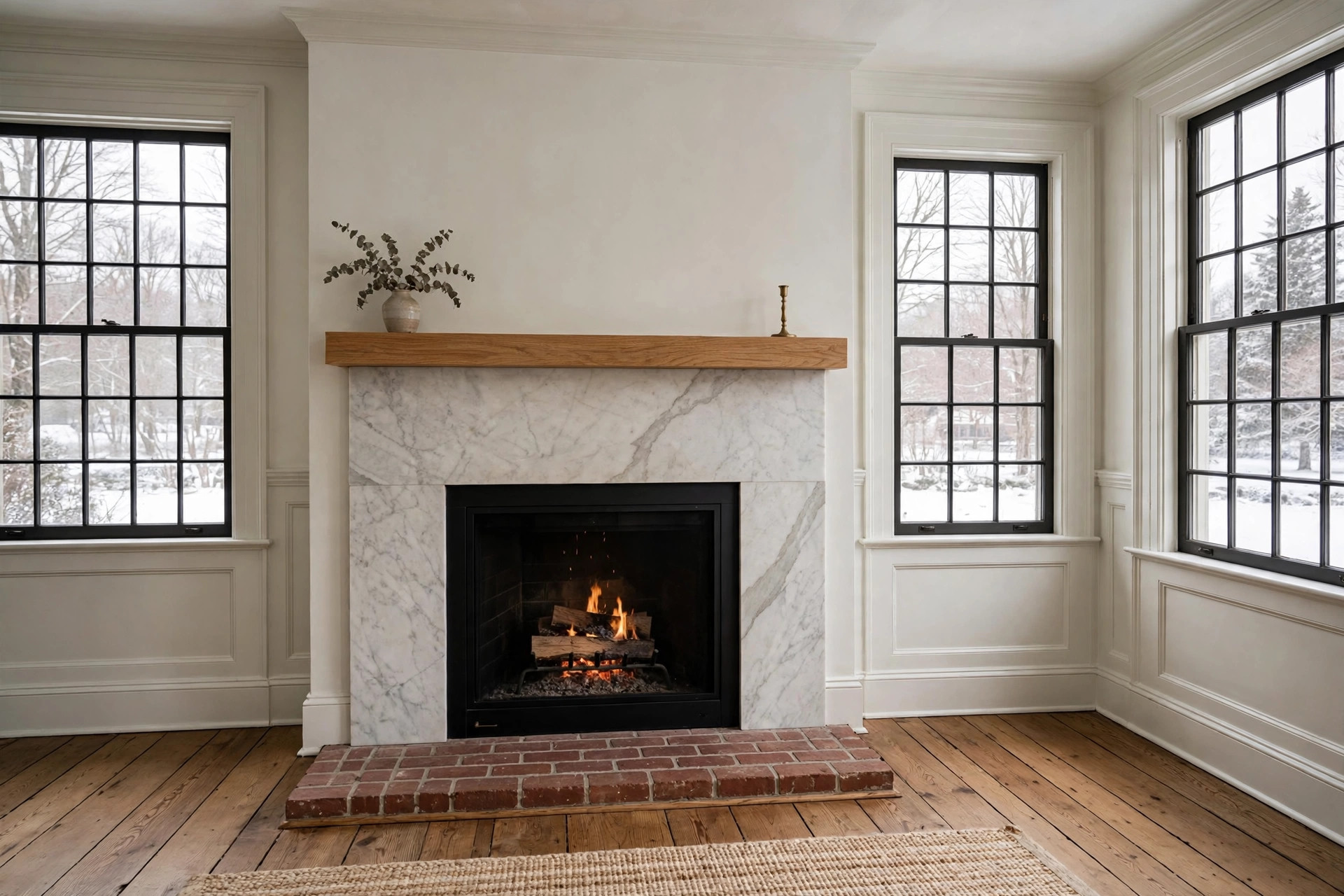
Carrara marble comes from Italy. It is white to pale gray with soft gray veins. It is one of the most common choices for a fireplace mantel shelves look in white stone. It suits both old and new houses.
Calacatta marble is also Italian. It is whiter than Carrara, with bold, dark veins. It makes a strong statement. It costs more. A Calacatta surround can be the center of a room.
Statuary marble is another white Italian stone. It is closer to Calacatta in look but often a bit more even in tone. It was the favorite of carvers in the 1800s, and it fits period houses well.
Crema Marfil is a warm beige marble from Spain. It brings warmth to rooms that run cool. It works well with wood floors and brick hearths that are common in the region.
Emperador marble is a dark brown stone from Spain. It reads almost like wood grain. A dark surround can anchor a big room and hide soot marks better than white stone.
Vermont marble comes from the Green Mountain State in gray and white with quiet veins. Using local stone ties the house to its ground, and local suppliers often carry it with short delivery.
Honed marble has a soft, low-shine finish. It shows fewer scratches and fingerprints than polished marble, so many New England owners pick honed for a lived-in house. Polished marble shines like glass and gives the classic formal look.
Styles That Fit New England Houses
The style of the surround should match the house. A colonial house from 1780 asks for something different from a 1990s colonial revival.
Colonial style uses plain, flat panels of white marble with a simple wood shelf above. The lines are straight and there is little carving. This was the most common look from 1750 to 1820, and it still suits these houses.
Federal style adds a bit more detail. The surround may have fluted legs, a keystone block at the top, and a mantel with a carved frieze. The proportions stay light and tall.
Greek revival brings bold, heavy lines. Thick square legs and a deep shelf give the fireplace weight. Dark marble works well in this style.
Victorian style allows more ornament. Marble tiles, carved corner blocks, and shaped mantels belong here. Green and pink marbles show up in Victorian houses.
Cottage and cape style calls for simple surrounds. A single slab of honed marble on each side and a plain wood mantel can be just right. Small capes do not need heavy stone.
If your house is new but built in an old style, match the surround to the style the house is copying. That choice keeps the room honest.
When you look at tile and stone options, it can help to compare marble with other choices. Some owners pair marble legs with a stone fireplace surrounds look on the chimney breast. Others put fireplace glass doors in front of the firebox to cut drafts while the marble frame shows around it.
How to Choose the Right Surround
Start with the firebox. Measure the opening. The surround must clear it by the distance your local code demands, and a mason or hearth shop can confirm the numbers for your town.
Next, look at the wall. Marble is heavy. A full surround can weigh several hundred pounds, and old plaster walls may need backing added. New drywall needs plywood or cement board behind the stone. A good installer checks this first.
Think about the mantel shelf. Many marble surrounds come with a matching wood shelf, which warms the look and gives you a place for candles and photos. Cherry and oak are the common picks in New England, and painted shelves suit farmhouses.
Decide on the finish. Honed marble is more forgiving in a house with kids and dogs, while polished marble is dressier. You can mix them: polished legs with a honed header gives a quiet contrast.
Ask about sealing. Marble soaks up stains. A stone sealer keeps soot and ash from leaving marks. Most installers seal the stone after they set it. You will need to reseal every year or two in a working fireplace.
Look at full slabs before you buy. Marble varies a lot from slab to slab: veins run in different directions and color shifts. A photo will not show this, so visit the stone yard and look at the actual slabs.
Cost and Price in New England
Marble surrounds range widely in price. The stone, the size, and the labor all play a part.
A simple prefabricated marble surround in Carrara may run from $800 to $2,000 for the stone alone. These come in set sizes and fit standard fireboxes. They are the low-cost path.
A custom surround cut from slabs costs more. Expect $2,500 to $6,000 for the stone and fabrication for a typical fireplace. Calacatta and other bold stones push the top higher.
Installation adds $1,000 to $3,000 in most of New England. Old houses cost more, since the installer may need to fix the wall, level the floor, or rebuild the hearth. Vermont marble may cost less to deliver within New England than Italian stone shipped from a port.
Extra work adds cost. A new hearth of matching stone, a raised firebox, or a rebuilt chimney breast each add to the bill. Get three quotes, ask what each price covers, and add ten percent for surprises. Old houses hide things: a wall may be out of plumb, a floor may sag.
The Energy Star site has plain guidance on home heating choices that can sit beside a fireplace upgrade. If you also use a Napoleon gas insert or a Heatilator wood unit inside the old firebox, the marble surround frames it just as well as it frames an open fire.
Care and Upkeep Through the Heating Season
Marble asks for little, but it does ask for steady care.
Seal it. A penetrating stone sealer keeps soot, ash, and drink spills from staining. Test the seal each fall. Drop a little water on the stone. If it beads, the seal is good. If it soaks in, reseal before the heating season starts.
Clean it gently. Use warm water and a soft cloth. For soot, add a drop of mild dish soap. Wipe and rinse. Do not use vinegar, lemon, or bathroom cleaners with acid. Acid eats marble and leaves dull spots.
Wipe ash soon. Ash can mark stone if it sits wet for days. Brush it off the hearth and surround after the fire is fully cold. A small brush and dustpan near the fireplace make this easy.
Watch the mantel. Wood shelves above marble pick up soot too. Dust the shelf when you clean the stone. Keep candles in holders so wax does not drip on the marble.
Check the joints. The lines between stone pieces may open a little as the house moves through the seasons. A tube of color-matched caulk fixes small gaps. Call the installer if a gap grows or a stone shifts.
A simple routine keeps the surround looking fine for decades. Many marble mantels in New England have served for a hundred years or more with just this level of care.
Guides from This Old House and the Family Handyman cover stone care in working fireplaces with step by step photos. The Spruce also keeps a plain how-to on sealing natural stone around heat.
Safety Around a Marble Fireplace
Marble does not burn, but safety still matters. The surround is only one part of the fireplace.
Keep wood and paper at least three feet from the firebox. The marble may look cool, but heat builds in front of a working fire.
Use a screen or glass doors in front of an open fire. Sparks pop out of burning wood. A fireplace glass doors set keeps sparks in and drafts out while the marble stays in view.
Have the chimney swept each year before the season starts. Creosote builds up in New England chimneys from slow, cool burns, and a sweep finds cracks and blockages too.
Do not hang stockings, garlands, or cloth from the mantel while a fire burns. Dried greens catch fast. Decorate the mantel when the fire is out, and take the decor down before you light it.
Keep a fire extinguisher in the room. Check it once a year. Make sure everyone in the house knows where it is.
The EPA publishes clear rules on wood burning and indoor air that every fireplace owner should read. Safe burning starts with dry, seasoned wood and a clean flue.
Where to Buy in New England
Stone yards in Boston, Hartford, Providence, Portland, and Burlington carry marble slabs, and many stock Vermont marble. Hearth shops sell ready-made surrounds and can order custom sizes. Big home centers like Lowe’s and Home Depot list options online that ship to New England stores, and design sites like HGTV show marble fireplaces in real houses for ideas before you shop. Salvage yards are worth a look too: old marble mantels turn up across the region and can fit an old house better than anything new. Measure twice before you buy.
FAQ
Does marble crack from fireplace heat? Marble stands up to normal fireplace heat well. Cracks come from sudden shocks, like cold water on hot stone, or from a house fire that runs far too hot. A normal wood fire will not crack a good marble surround.
Is marble safe for a wood-burning fireplace? Yes. Marble does not burn and it does not give off fumes. It must be set with proper clearances and a sound backing. Your installer should follow local fire codes.
White marble or dark marble for soot? White marble shows soot more, but soot wipes off sealed white marble with ease. Dark marble hides marks between cleanings. Pick the color you love. Care is easy either way.
Can I install a marble surround myself? Small tile surrounds are a fair do-it-yourself job. Full slab surrounds are not. The stone is heavy and breaks if it is set wrong. Hire a mason or hearth installer for slab work.
How often should I reseal the marble? Test the seal each fall. Most working fireplaces need a fresh coat every one to two years. A surround on a rarely used fireplace can go longer.
Does Vermont marble cost less in New England? Often, yes. The stone travels a short distance, and some yards stock it at fair prices. Ask your yard to quote both Vermont and imported marble for the same job.
A Short Final Word
A marble fireplace surround is one of the oldest choices a New England homeowner can make. It has framed fires in this region for centuries, and it still suits the houses here. Pick the stone with care, match it to the house, seal it each fall, and sweep the chimney before the cold sets in. Do these simple things, and the surround will warm your rooms for the rest of your life in the house. Writers at Bob Vila have long said the fireplace is the heart of a cold-climate home, and a marble surround gives that heart a fitting face.
References
Bob Vila. (n.d.). Home improvement advice. https://www.bobvila.com ENERGY STAR. (n.d.). Energy efficient products. https://www.energystar.gov Family Handyman. (n.d.). DIY home repair and maintenance. https://www.familyhandyman.com Heatilator. (n.d.). Fireplaces and fireplace products. https://www.heatilator.com HGTV. (n.d.). Home and garden ideas. https://www.hgtv.com Lowe’s. (n.d.). Home improvement products. https://www.lowes.com Napoleon. (n.d.). Fireplaces, grills, and heating products. https://www.napoleon.com The Home Depot. (n.d.). Home improvement products. https://www.homedepot.com The Spruce. (n.d.). Home and garden advice. https://www.thespruce.com This Old House. (n.d.). Home renovation guidance. https://www.thisoldhouse.com U.S. Environmental Protection Agency. (n.d.). Protecting human health and the environment. https://www.epa.gov
Was this guide helpful?

About James Carter
The My Garden US editorial team writes practical, in-depth home and garden guides for American homeowners — tested advice, no fluff.
You May Also Like
Best Propane Fire Pits Buying Guide for American Homes
March 1, 2026 0 views
Smart Gas Fireplace Inserts for Sale: A Plain Guide for American Homes
July 7, 2026 0 views
Luxury Fireplace Ash Buckets With Free Shipping
August 20, 2026 0 views