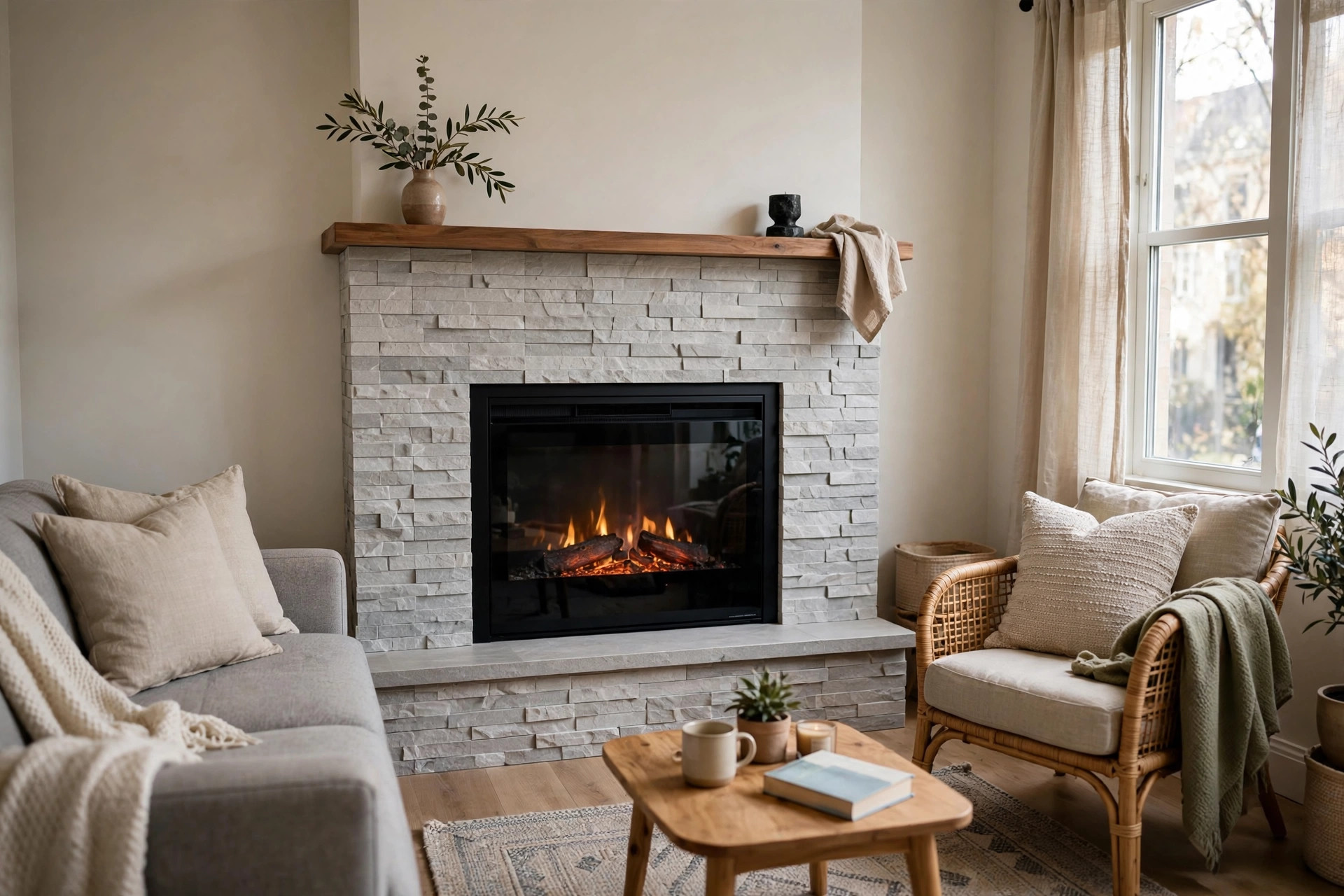

A stone fireplace gives a room warmth that few other features can match. Even a small living room feels richer when a fireplace sits at its center. Yet apartment dwellers face a plain fact. A full masonry surround built for a country house will not fit a third floor walkup. It would swallow the room, overload the floor, and break the lease besides.
That is why shoppers now search for top rated stone fireplace surrounds for small apartments. They want the look of stone without the mass. They want a surround that fits a room of twelve by fourteen feet and leaves space to walk. This guide walks through what matters, what to buy, and what to avoid.
Why Stone Surrounds Suit Small Apartments
Stone is the oldest facing material known to builders. It reads as solid and permanent, even in a small quantity. A narrow column of stacked stone draws the eye upward. That vertical line makes a low ceiling look taller. Designers have used this trick for decades. A fireplace surround becomes the room’s focal point. The rest of the room can stay simple.
Stone also pairs well with the kinds of fireplaces that fit apartments. Most small units use electric inserts or ventless gel fuel. These units give little heat compared to a wood burner, but they give a fine flame picture. A stone frame turns a plain black box into a piece of furniture. Readers looking at gel fuel choices may also find the buy gel fuel fireplaces online in florida guide useful for comparing fuel options before choosing a surround.
Weight is the main worry. Real quarried stone is heavy. A solid limestone surround can weigh four hundred pounds or more. Apartment floors and building rules rarely allow that. The answer is manufactured stone veneer. These panels weigh a tenth of solid stone. They mount on cement board or directly on a frame. The best units look real at arm’s length. Many buyers rate them higher than cut stone for apartment use, since they keep the load light.
How to Choose a Surround for a Small Space: Top Rated Stone Fireplace Surrounds for Small Apartments
Start with the wall, not the stone. Measure the wall where the fireplace will sit. Then measure the door swing, the walkway, and the nearest window. A surround that sticks out twelve inches may be fine on a twelve foot wall. On a nine foot wall it can crowd the room. Top rated stone fireplace surrounds for small apartments share one trait. They stay shallow. Four to eight inches of depth is plenty for an electric or gel insert.
Next, check the rules. Many leases forbid mounting anything to a masonry wall or drilling into the chimney breast. Some buildings ban real flame altogether. Before you spend a dollar, read the lease and ask the manager. A freestanding electric fireplace with a stone-look front needs no permit in most cases. A ventless gas insert needs a gas line and a local permit. The federal guidance on home heating appliances from the U.S. Environmental Protection Agency sets a plain baseline for combustion safety, and the Consumer Product Safety Commission publishes hearth safety rules worth reading before any install.
Then think about the insert you will use. The surround must fit the firebox opening. Standard small inserts run about thirty inches wide. Buy the insert first or buy a matched pair. Retailers such as The Home Depot and Lowe’s sell electric fireplaces sized for apartments, and their listings show the exact surround dimensions. If you plan a gas unit instead, the gas fireplace inserts reviews and buying guide can help you size the firebox before you shop for stone.
Color comes last, but it matters most for the eye. Light limestone or pale ledgestone opens a small room. Dark slate or charcoal stone can make the same room feel like a cave. If the room gets little daylight, pick a pale stone. If the room is bright, a mid tone stone adds welcome depth.
Types of Stone Surrounds That Fit Apartments
Manufactured Stone Veneer Panels
These are the most popular pick for small apartments. Makers cast them from concrete or polyurethane to copy real stone. They come as interlocking panels, often twelve by twenty-four inches. A full surround for a small insert needs six to ten panels. The panels screw to cement backer board. Total weight runs thirty to sixty pounds. That is safe for almost any wall.
Polyurethane panels are lighter still. They cut with a hand saw. They cost less than cement veneer. The surface detail is good at normal viewing distance. For a renter who may move in two years, these panels are the smart pick. They can come off the wall with little damage.
Thin-Cut Natural Stone Veneer
This is real stone sawn thin, about one inch thick. It weighs about thirteen pounds per square foot. It looks real because it is real. The price runs higher than manufactured veneer. It suits buyers who own their unit or plan to stay long. The stone takes a sealant well, which helps near a working firebox.
Electric Fireplace with Built-In Stone Face
Some makers sell a full electric fireplace where the stone front is built in. The buyer sets it against the wall and plugs it in. No mounting, no contractor. Brands sold through big retailers offer limestone and stacked stone fronts. These units run thirty-six to forty-eight inches wide. They fit small rooms because they need no clearance for venting. Reviews on Consumer Reports often rank electric units high for apartment use on safety and ease.
Surround Kits from Hearth Makers
Established hearth makers sell surround kits made for their own inserts. Napoleon and Heatilator are two long-standing names in this trade. Their kits fit their fireboxes exactly, which removes guesswork. Many kits come in cast stone or lightweight concrete. Ask the dealer whether the kit is rated for apartment use and for your specific insert model.
What the Best-Rated Options Have in Common
When you read reviews of top rated stone fireplace surrounds for small apartments, the winners share plain traits. They arrive with clear instructions. The mounting hardware is included. The stone edges look finished, not raw. The depth stays under ten inches. The color runs even from panel to panel, with enough shade variation to look natural.
Practical guides from This Old House and Family Handyman stress the same point. A surround is only as good as its install. A crooked panel line will show every day. Take time to level the first row. Use a ledger board while the adhesive sets. These small steps separate a good result from a poor one.
Design sites such as The Spruce add a style note. In small rooms, the mantel shelf should stay narrow. A deep shelf invites clutter and eats floor space. A four inch shelf holds a frame or two. That is enough.
Cost and Price Ranges
Prices vary with material and size. A polyurethane stacked stone surround for a small electric insert runs from about two hundred to five hundred dollars. Manufactured cement veneer for the same area runs four hundred to nine hundred dollars, before install. Thin-cut natural stone runs eight hundred to one thousand five hundred dollars for the material alone.
Labor adds cost if you hire out. A handyman can set a panel surround in half a day. Expect two hundred to four hundred dollars for labor in most cities. A full thin stone install with a mason runs higher. Most apartment buyers choose the DIY route with polyurethane panels. The tools are a saw, a level, and a drill.
Do not forget the insert itself. A decent electric insert costs three hundred to eight hundred dollars. A ventless gel fuel insert costs less, but the fuel cans add up over time. Plan the whole project budget before you buy the stone.
Care and Upkeep
Stone surrounds ask for little care. Dust them with a soft brush or a vacuum with a brush head. Manufactured stone should not need sealing, but a yearly wipe with a damp cloth keeps it fresh. Natural stone veneer benefits from a stone sealant every two to three years. This keeps soot and stains from setting in.
Keep the firebox clean. For electric units, dust the glass front monthly. For gel fuel units, wipe up any spilled fuel at once. Spilled gel can stain stone. A small mat under a freestanding unit guards the floor.
Check the mounting once a year. Press gently on the surround and feel for movement. Tighten any loose screws. In an apartment, a loose panel can fall and hurt someone. A five minute check each fall costs nothing and keeps the unit safe.
Safety Rules for Apartments
Safety comes first with any fireplace. Electric units are the safest pick for apartments. They give no real flame and no carbon monoxide. Keep paper, curtains, and furniture at least three feet from the front. Do not run the heater on an extension cord. Plug it straight into the wall.
Ventless gas and gel fuel units need more care. They burn real fuel and use room air. Crack a window when they run. Never leave them burning while you sleep or while you are out. A working carbon monoxide alarm on the same floor is a must. The CPSC safety pages linked earlier spell out these rules in plain terms.
Renters should also think about the building. Tell the property manager what you plan to install. Get written approval for anything that mounts to the wall. Keep the manual and the approval letter together. When you move out, the surround should come down clean or stay by written agreement.
Shoppers comparing grate and screen options for a working firebox can check best fireplace grates for southern states for related hearth hardware that pairs with stone surrounds.
Frequently Asked Questions
Can a renter install a stone fireplace surround?
Often yes. Freestanding electric fireplaces with stone fronts need no wall work at all. Panel surrounds that screw into drywall anchors can work, but you need written approval from the landlord. Avoid anything that needs masonry anchors or a gas line unless you own the unit.
How much weight can an apartment wall hold?
It depends on the wall. A wood stud wall with proper screws into the studs can hold a fifty pound panel surround with ease. A drywall-only mount with anchors holds less. If you are unsure, mount into studs or buy a freestanding unit. When in doubt, ask a handyman to check the wall.
Is manufactured stone as good as real stone?
For an apartment, it is often better. It weighs far less, costs less, and installs faster. At normal room distance, good manufactured stone fools most eyes. Real stone wins on durability and resale value in an owned home. In a rental, light and simple wins.
Will a stone surround make a small room look smaller?
Not if you choose well. A pale stone with a shallow profile can make the room look larger by drawing the eye up. A dark, deep surround in a dim room will crowd it. Match the stone tone to the room light and keep the depth under ten inches.
Do I need a permit for an electric fireplace surround?
In most cities, no. An electric fireplace that plugs into a standard outlet is treated like furniture. A surround that mounts to the wall is treated like shelving. Permits enter the picture with gas lines, venting, or structural work. Check your local code to be sure.
What is the cheapest good option?
Polyurethane stacked stone panels around a basic electric insert give the best value. The full project can land under seven hundred dollars. Buy during fall sales, when hearth retailers clear stock before the heating season.
A Short Final Word
The top rated stone fireplace surrounds for small apartments are not the grandest ones. They are the lightest, the shallowest, and the easiest to install. Measure your wall. Check your lease. Pick a pale stone that fits your light. Keep safety rules close. Do it right and a small room gains a hearth that feels like it was always there.
References
Consumer Reports. (n.d.). Product reviews and ratings. https://www.consumerreports.org Family Handyman. (n.d.). DIY home repair and maintenance. https://www.familyhandyman.com Heatilator. (n.d.). Fireplaces and fireplace products. https://www.heatilator.com Lowe’s. (n.d.). Home improvement products. https://www.lowes.com Napoleon. (n.d.). Fireplaces, grills, and heating products. https://www.napoleon.com The Home Depot. (n.d.). Home improvement products. https://www.homedepot.com The Spruce. (n.d.). Home and garden advice. https://www.thespruce.com This Old House. (n.d.). Home renovation guidance. https://www.thisoldhouse.com U.S. Consumer Product Safety Commission. (n.d.). Product safety information. https://www.cpsc.gov U.S. Environmental Protection Agency. (n.d.). Protecting human health and the environment. https://www.epa.gov
Was this guide helpful?

About Sarah Mitchell
The My Garden US editorial team writes practical, in-depth home and garden guides for American homeowners — tested advice, no fluff.
You May Also Like
Energy Efficient Stone Fireplace Surrounds for Sale
July 31, 2026 0 views
Best Fireplace Blowers and Fans for California Apartments
March 6, 2026 0 views
Affordable Freestanding Electric Stoves With Free Shipping: A Plain Guide
June 22, 2026 0 views