
A home sewing corner can turn into a mess in a single weekend. Thread spools roll under the chair. Pins hide in the carpet. Scissors disappear right when a seam needs trimming. A good basket puts an end to that trouble. The best sewing basket for supplies organization home crafters pick is not the prettiest one on the shelf. It is the one that keeps every tool in its place and travels from the table to the couch without a spill.
This guide walks through the choices in plain terms. It covers why a basket matters, what to look for, the main types, what they cost, how to keep one in good shape, and how to stay safe while you work. By the end you will know how to pick the right basket for the way you sew.
Why a Good Sewing Basket Matters
A sewing basket does more than hold thread. It sets the order of your work. When each tool has a home, you spend your time sewing instead of hunting. A study of home craft habits reported for decades by family magazines has made one point clear. The crafters who finish the most projects are the ones who keep their supplies close and tidy.
A well laid out basket also protects your tools. Scissors stay sharp when they rest in a slot instead of rattling loose in a drawer. Needles stay straight when they sit in a pin cushion or a case. Fabric pieces stay clean when they lie flat instead of crushed under a pile of paper patterns. Over a year of steady sewing, this care saves real money.
There is a comfort in it as well. Many people sew in shared rooms. A basket lets you gather your work in one lift. You can sew by the window in the morning and clear the table for dinner at night. Nothing is lost in the move. That ease keeps the hobby pleasant instead of turning it into another chore.
What to Look for When You Choose One: Best Sewing Basket for Supplies Organization Home
The market holds hundreds of baskets. A few simple tests will narrow the field fast. Look at size first, then material, then the inside layout. Check the handle and the lid last. These five points matter more than brand names.
Size and Capacity
Think about what you actually sew. A basket for mending buttons and hems can be small. A basket for quilting or garment sewing needs to be large. Measure your longest tools. A good ruler should fit without bending. Your largest spool box should sit inside the lid or beside the base. Leave a little spare room. A basket filled to the brim will spill when you lift it.
Material and Build
Most baskets are woven wicker, wood, plastic, or fabric. Wicker looks warm and traditional. It also breathes, which keeps stored thread dry. Wood lasts for decades and holds a crisp shape. Plastic cleans with a wipe and weighs very little. Fabric baskets fold flat for storage. Pick the material that suits the room where you will use it. A damp basement argues against untreated wood. A bright sunroom argues against thin fabric that will fade.
Compartments and Trays
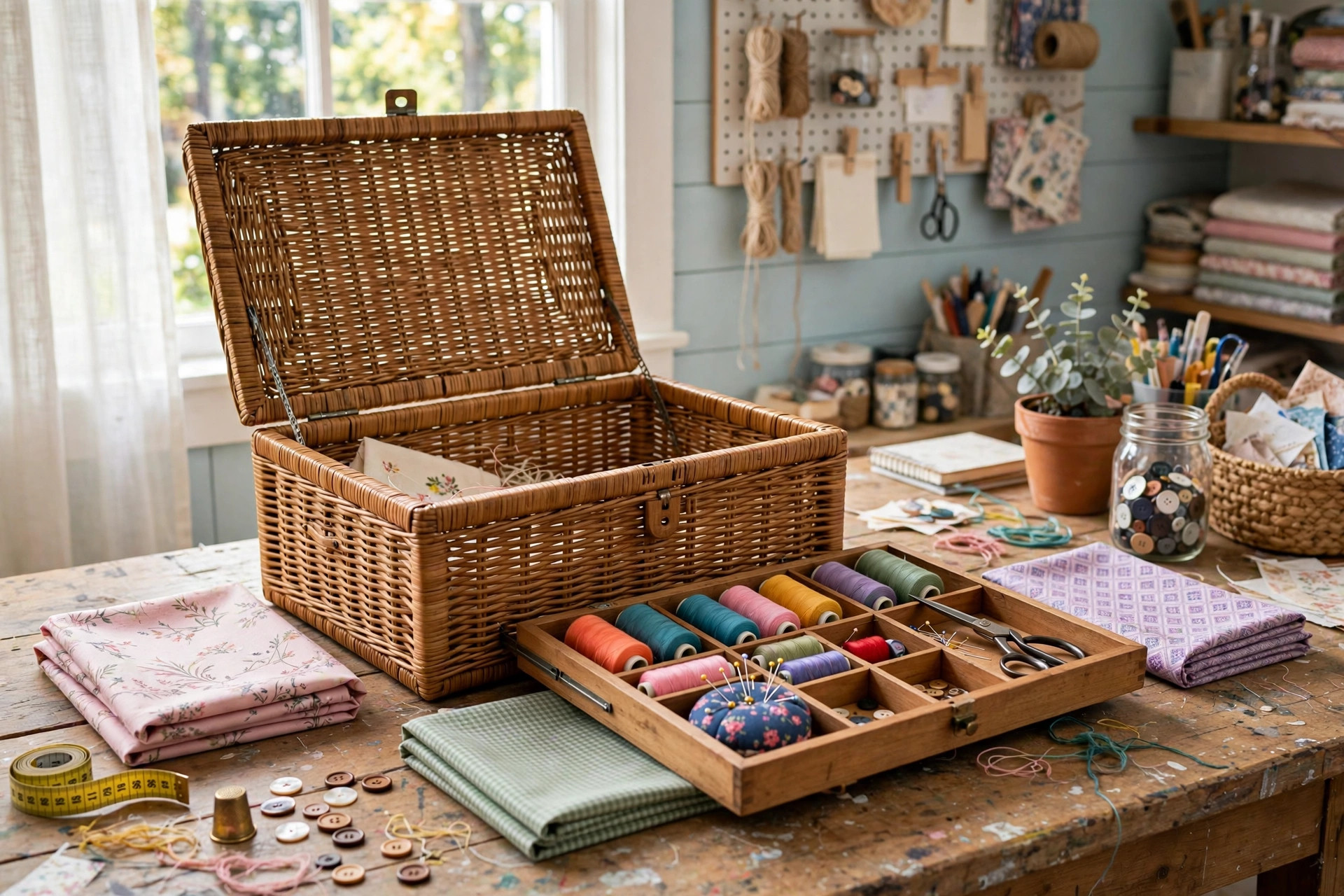
A single open box is a poor organizer. Look for a lift out tray with divided sections. The tray should hold the small things you reach for most. Needles, pins, thimbles, and spare bobbins belong here. The space below the tray can hold larger items. Scissors, measuring tape, and folded fabric fit well in the base. Some baskets add side pockets. These are handy for patterns and instruction sheets.
Handle and Lid
A sturdy handle makes the basket portable. Test it in the shop if you can. It should feel firm and stay upright when the basket is full. The lid should close snug and latch or tie shut. A lid that falls open will dump your pins across the floor. If you sew with children or pets nearby, a firm lid is not a luxury. It is a need.
Types of Sewing Baskets
Shoppers will meet several common designs. Each has its strengths. The right one depends on your craft and your space.
Traditional woven baskets. These are the classic oval or rectangular baskets with a fitted lid and a top tray. They hold a generous mix of tools. They suit sewers who do a bit of everything. Many come in cane, rattan, or willow. The natural weave adds charm to a living room shelf.
Wooden sewing boxes. These are firm boxes with hinged lids and tiered trays. They open wide and lock shut. The wood guards sharp tools better than wicker. They are heavier to carry. They suit a sewer who works mostly at one table and values order above all.
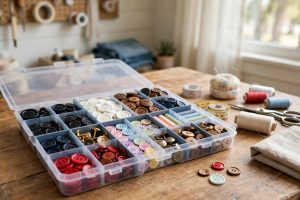
Plastic and molded organizers. Light and cheap, these come in many sizes. They often have snap latches and clear lids. The clear lid is a real help. You can see your thread colors without opening the box. They suit beginners and anyone who sews in more than one room.
Fabric and quilted baskets. Soft, light, and easy to store, these fold flat when empty. They often have pockets on the outside and dividers inside. They suit travelers and people with small closets. They offer less guard for sharp points, so pair them with a needle case.
Stacking and modular sets. Some makers sell sets of boxes that stack or link. These suit the crafter who also quilts, embroiders, and mends. Each box can hold one craft. The set grows as your hobby grows. Shoppers looking for ideas on how crafters group related supplies may also browse guides to a soft yarn for crochet blankets, which show the same one craft one box thinking.
Prices run from under fifteen dollars for simple plastic boxes to over a hundred for hand made wooden chests. Mid range woven baskets with trays usually cost between thirty and sixty dollars. That range holds the best value for most home sewers. You can compare options at Michaels, which carries a wide line of craft storage, or at JOANN, long known for sewing goods.
How to Organize Supplies Inside
A basket works best when it follows a plan. Start by sorting your tools into groups. Put cutting tools together. Put marking tools together. Put fasteners such as buttons, snaps, and hooks in small boxes. Put thread by color family.
Place the tools you touch most in the top tray. That means pins, needles, a thimble, and a seam ripper. Place scissors in a slot or sheath so the blades stay covered. Place measuring tape and a small ruler in the base where they lie flat. Place thread spools upright in a divided section so they do not tangle.
Small extras earn their place too. A small trash bag or thread catcher keeps clippings off the floor. A magnet on a wand picks up stray pins from carpet in seconds. A labeled pouch for each project keeps half finished work apart. Many crafters keep a notebook in the side pocket. In it they write the settings for each machine project. This saves trial and error the next time.
If your sewing shares a room with other crafts, think in zones. One basket for sewing, one for painting supplies, one for holiday projects. Crafters who make gifts by season often keep a separate ornament kit for Christmas tree crafts apart from daily sewing tools. The separation keeps the basket light and the table clear.
Cost and Price
What should you expect to pay? The answer depends on material and size.
Entry level plastic organizers cost between ten and twenty five dollars. They do the job well for beginners and for children learning to sew. Mid level woven and fabric baskets run from twenty five to sixty dollars. This is where most buyers find the best balance of looks, weight, and room. High end wooden boxes and hand woven willow baskets cost from sixty to one hundred fifty dollars or more. These are built to last for many years.
Do not judge a basket by price alone. Open the lid in the store. Lift the tray. Flex the handle. Check the hinges and the latch. A thirty dollar basket with a firm tray beats a ninety dollar box with a loose lid. Watch for sales at big craft chains. Sewing storage goes on sale often, and a patient buyer can save a third of the price. Bargain hunters also do well at estate sales and thrift shops, where solid wooden boxes appear for a few dollars.
Think of cost over time. A basket used weekly for ten years costs a few dollars a year even at the high end. A cheap basket that breaks in six months costs more. Spend where the build is strong.
Care and Upkeep
A sewing basket asks for little care. A few habits will keep it sound for years.
Dust the outside with a dry cloth each month. For wicker, wipe with a slightly damp cloth and dry at once. Do not soak wicker. Water makes it swell and then crack as it dries. For wooden boxes, a light coat of furniture oil once a year keeps the grain rich. For plastic, wash with warm soapy water and rinse clean.
Inside, clean the tray more often. Thread sheds lint. Pins can leave small rust spots on cheap metal trays. A quick wipe keeps both in check. Replace the pin cushion when it grows flat and hard. A fresh cushion holds pins firm and safe.
Check the moving parts twice a year. Tighten loose screws on handles and hinges. Glue a loose woven strand back with a dab of wood glue. A basket in good repair is a safe basket. It also stays pleasant to use, which keeps you sewing.
Safety in the Craft Room
Sewing tools are small and sharp. A safe craft room treats them with respect. The U.S. Consumer Product Safety Commission offers general guidance on keeping sharp household tools away from young children, and the same sense applies here.
Store the basket with the lid shut and latched when children are near. Keep scissors in a sheath or a closed case. Put needles in a cushion or case at once when a session ends. Never leave pins loose on a table or chair. One stray pin in a carpet can ruin a day.
Light matters for safety too. Work under good light so you can see what you are doing. A tired eye is a careless hand. Sit in a chair that supports your back. Take short breaks each hour. Good habits keep the hobby joyful for decades.
Frequently Asked Questions
What size sewing basket is best for a beginner? A medium basket about twelve to sixteen inches long is right for most beginners. It holds thread, scissors, pins, needles, and a few patterns without feeling heavy. A lift out tray with dividers helps a beginner learn good habits from the start.
Is wicker or wood better for a sewing basket? Both work well. Wicker is light and lets air move, which suits thread storage. Wood is sturdier and protects sharp tools better. Choose wicker if you carry the basket around the house. Choose wood if it will live on one table.
How do I keep thread from tangling in the basket? Stand spools upright in a divided tray or a small box. Place a sheet of foam with holes cut for the spools as a simple fix. Keep bobbins in a bobbin box rather than loose. Wind thread back onto the spool before you put it away.
Can I use a sewing basket for other crafts? Yes. A divided basket suits many crafts. Beads, ribbons, and embroidery floss all fit well. Crafters who work with young children may prefer a washable craft paint set for kids kept apart from sharp sewing tools. Keep each craft in its own basket or pouch to stop supplies from mixing.
Where is the best place to buy a sewing basket? Craft chains such as Michaels and JOANN carry wide selections. Art supply shops like Blick Art Materials stock sturdy organizers. Home improvement stores such as The Home Depot carry storage lines that work well for craft rooms. Online, Walmart and Target offer budget friendly options.
How often should I sort out my sewing supplies? Once a season is enough for most sewers. Pull everything out. Throw away bent pins and dull needles. Give away thread colors you never use. Wipe the basket. Then put back only what serves your current projects. The basket will feel new again.
Final Word
The best sewing basket for supplies organization home sewers rely on is a simple tool done well. It holds what you need. It guards what is sharp. It moves with you from room to room. Pick a size that fits your tools, a build that fits your home, and a tray that fits your hands. Then fill it with care and sew in peace. For more ideas on setting up a tidy craft space, the project guides at Family Handyman, This Old House, and Bob Vila all offer plain, tested advice.
References
Blick Art Materials. (n.d.). Art and craft supplies. https://www.dickblick.com Bob Vila. (n.d.). Home improvement advice. https://www.bobvila.com Family Handyman. (n.d.). DIY home repair and maintenance. https://www.familyhandyman.com JOANN. (n.d.). Fabric and craft supplies. https://www.joann.com Michaels. (n.d.). Arts and crafts supplies. https://www.michaels.com Target. (n.d.). Retail store. https://www.target.com The Home Depot. (n.d.). Home improvement products. https://www.homedepot.com This Old House. (n.d.). Home renovation guidance. https://www.thisoldhouse.com U.S. Consumer Product Safety Commission. (n.d.). Product safety information. https://www.cpsc.gov Walmart. (n.d.). Everyday low prices. https://www.walmart.com
Was this guide helpful?

About Sarah Mitchell
The My Garden US editorial team writes practical, in-depth home and garden guides for American homeowners — tested advice, no fluff.
You May Also Like

DIY Terrarium Kit for Succulents and Plants: A Complete Beginner Guide
July 21, 2026 0 views
Needle Felting Kit for Beginners: Animals DIY
July 12, 2026 0 views
Macrame Cord Kit for Wall Hanging DIY: A Beginner’s Guide to Handmade Decor
June 30, 2026 0 views