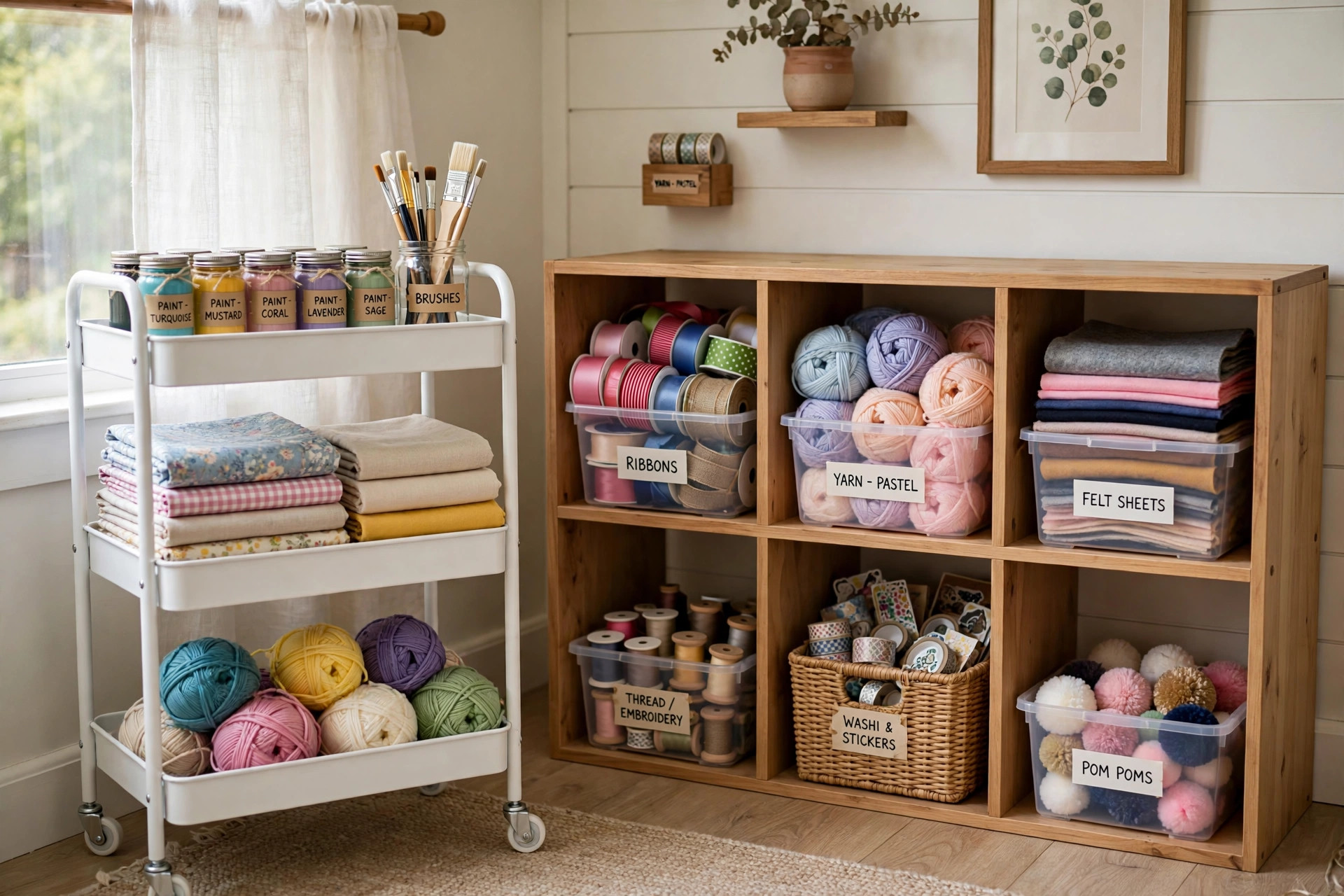

A good craft room does not need to be big. It needs to be smart. When every tool has a home, you can start a project in minutes and put it away just as fast. That is why so many crafters search for the best craft storage organizer for small rooms. They want a system that fits a corner, a closet, or a spare bedroom without taking over the house.
This guide explains what makes a storage organizer work in a tight space. It covers the main types, what to look for before you buy, what you can expect to pay, how to keep things in order, and how to stay safe. By the end, you will know which organizer suits your crafts and your room.
Why It Matters
Craft supplies grow fast. One box of yarn becomes three. Paint tubes multiply. Fabric scraps fill every bag. Without a plan, a small room turns into a mess that slows you down. You spend more time looking for scissors than using them.
A well-chosen organizer solves three problems at once. First, it saves floor space. Small rooms cannot hold big furniture, so the organizer must use walls, corners, and vertical height. Second, it saves time. Clear bins and labels let you see what you own. You stop buying a second pair of pliers because you thought you lost the first. Third, it protects your supplies. Paper stays flat, thread stays clean, and paint stays upright instead of spilling on the floor.
There is a comfort to it as well. A tidy corner invites you to sit down and make something. Home editors at Good Housekeeping often note that organized spaces make daily life calmer. The same holds for a craft corner. When the room feels calm, the work feels fun.
What to Look For When You Choose: Best Craft Storage Organizer for Small Rooms
Measure Your Space First
Start with a tape measure, not a catalog. Write down the width, depth, and height of the spot where the organizer will stand. Note the door swing, the window, and any outlets. A cart that rolls is no good if it cannot turn around. Many small-room plans from The Spruce begin this same way: measure first, shop second.
Match the Organizer to Your Crafts
Different crafts need different homes. Sewing calls for wide shelves for fabric and a spot for a craft table with storage for a sewing room. Paper crafts need flat drawers so sheets do not curl. Jewelry work needs tiny drawers so beads do not mix. List the crafts you do most, then rank them. Buy for the top two, not for all ten.
Look for Clear, Labeled Compartments
You cannot use what you cannot find. Clear plastic bins beat solid boxes because you see the contents at a glance. If the organizer has solid drawers, plan to add a label maker or stick-on tags. Retailers like The Container Store built their whole trade on this idea: visibility plus labels equals order.
Check Weight and Stability
A tall shelf full of paint is heavy. A rolling cart full of fabric is heavier. Check the weight limit on every shelf and on the whole unit. Wide feet or a low center of gravity keep a tower from tipping. Locking wheels keep a cart from rolling away on a wood floor. The U.S. Consumer Product Safety Commission urges buyers to anchor tall furniture to walls, and small-room crafters should take that advice to heart.
Think About Flexibility
Your crafts will change. A system with adjustable shelves, stackable boxes, or add-on drawers can change with you. Modular units cost a little more at the start but last longer, because you do not outgrow them in a year.
Types and Options
Rolling Carts
A three-tier rolling cart is the classic small-room answer. It fits in a gap of about 18 inches, rolls to the kitchen table for work, and parks in a closet at night. Many crafters keep one cart for active projects and a second for supplies. Craft stores like JOANN stock dozens of versions, from metal frames to plastic drawer towers.
Best for: general crafts, renters, rooms that must serve two purposes.
Drawer Towers
Plastic drawer towers come in wide and narrow shapes. They are cheap, light, and easy to label. The drawers pull out fully, so you can carry one drawer to your chair. They are not the sturdiest choice for heavy items, but for paper, ribbon, and thread they do fine.
Best for: paper crafts, scrapbooking, kids’ supplies.
Wall-Mounted Pegboards and Shelves
Walls are free space. A pegboard holds scissors, rulers, and tools in plain sight. Floating shelves hold jars of buttons and paint. Wall storage keeps the floor clear, which makes a small room feel bigger. Guides at Bob Vila show how a single wall can hold a whole craft station with pegs, rails, and small shelves.
Best for: tool-heavy crafts like sewing and embroidery, very small rooms.
Cube Shelves With Bins
A cube shelf is a box divided into squares. You slide fabric bins, baskets, or drawers into each square. It works as a room divider, a table base, or a wall unit. Cube shelves are strong and look tidy. Furniture sellers such as Wayfair offer them in many sizes and finishes.
Best for: fabric and yarn storage, rooms that need a neat look.
Over-the-Door Organizers
The back of a door can hold pocket organizers for thread, markers, and small tools. This option costs little and needs no floor space at all. It works best for light items. Heavy cans of paint will tear the pockets.
Best for: dorm rooms, shared spaces, renters who cannot drill holes.
Armoires and Craft Cabinets
A craft armoire looks like a wardrobe when closed and opens into a full work station with shelves, a fold-down table, and drawers. It is the most expensive type, but it hides everything in one piece. When guests come, you close the doors and the room is a guest room again.
Best for: dedicated crafters who must share the room with other uses.
Under-Bed Storage
Low bins on wheels slide under the bed and hold seasonal or bulky items. They are cheap and invisible. Keep only things you do not need every day here, since pulling them out takes effort.
Best for: overflow supplies, quilting fabric, gift wrap.
Cost and Price
Prices for the best craft storage organizer for small rooms vary widely. Small plastic drawer towers start near ten dollars. A good three-tier rolling cart runs from thirty to eighty dollars. Cube shelves with bins cost from sixty to two hundred dollars, depending on size and brand.
Wall systems fall in the middle. A pegboard with hooks costs about forty dollars. Floating shelves cost twenty to fifty dollars each, plus brackets. Over-the-door pocket organizers are among the cheapest choices, often under twenty dollars.
Craft armoires and full cabinets sit at the top. Expect to pay from three hundred to over a thousand dollars. These are furniture, not accessories. If you craft every day, the cost per use can still be fair.
Three rules help you spend wisely. First, set a budget before you shop. Second, read the weight limits. A cheap shelf that bows under paint is not a bargain. Third, buy one piece and live with it for a month before you buy more. You will learn what you truly need. Advice columns on The Spruce repeat this point often: add storage slowly, and only where the clutter proves it is needed.
Care and Upkeep
An organizer only works if you keep it up. Set a simple routine. Once a month, take ten minutes to check each bin. Put stray items back where they belong. Throw away dried-out markers and bent needles. Wipe dusty shelves with a damp cloth.
Once a year, do a full review. Pull everything out. Keep what you used in the past year. Give away what you did not. Crafters joke that supplies breed in the dark, and there is truth in it. A yearly clear-out keeps the system honest.
Small repairs matter too. Tighten shelf screws. Replace cracked bins. Re-stick labels that fall off. A well-kept organizer lasts for years. Art suppliers like Blick Art Materials remind buyers that supplies last longer in clean, dry storage, and the same applies to the furniture that holds them.
Pair your storage with good tools. Sharp blades cut better and store safer. Keep a tidy set of craft scissors for paper and fabric in a sheath or a jar, and wash paint brushes for acrylics before they harden. Tools that are clean are tools you will actually use.
Safety
Craft rooms hold sharp tools, hot tools, and chemicals. A storage plan must keep them safe, especially around children and pets.
– Sharp tools: Store scissors, rotary cutters, and craft knives point-down in a jar or a sheath. Never toss them loose in a drawer. – Hot tools: Glue guns, irons, and heat presses need a heat-proof rest and a cool-down spot. Unplug them when you finish. – Chemicals: Keep paints, solvents, and glues in a ventilated area, away from heat. Read the label on each product. – Heavy shelves: Anchor tall units to wall studs. Put heavy items low and light items high. – Small parts: Beads, pins, and buttons are choking hazards. Store them in lidded containers out of reach of small children.
Workshops at This Old House and Family Handyman both stress one habit above all: clean up before you leave the room. A tidy room is a safe room.
Frequently Asked Questions
What is the best craft storage organizer for a very small bedroom?
A rolling cart or an over-the-door organizer usually wins. Both need almost no floor space. A rolling cart moves to where you work. An over-the-door unit uses space you already own. Many crafters use both: the cart for the active project, the door for small supplies.
Should I choose clear bins or solid drawers?
Clear bins are better for things you grab often, because you see them at once. Solid drawers look neater and protect supplies from light. A mix works well: clear bins for thread, ribbon, and buttons; solid drawers for paper and fabric that fade in sunlight.
How do I keep a small craft room from looking messy?
Close the doors. That sounds simple, but it works. Choose storage with doors, lids, or covers where you can. Keep one open shelf for pretty items like yarn and jars. Put the rest behind closed fronts. A room that closes up fast gets used more.
Can I build my own craft organizer to save money?
Yes. Simple plans for shelves, carts, and work tables appear on Family Handyman and in many books. A weekend build from plywood can cost half the price of store furniture. Build only what you can finish. An unfinished project on the floor is worse than no storage at all.
How much should I spend on craft storage?
Spend what the room demands, not what the store suggests. Start with one organizer in the thirty to eighty dollar range. Add more only when a real pile of clutter forms. The best craft storage organizer for small rooms is the one you will keep using, not the most expensive one on the shelf.
Where can I find ideas for small craft room layouts?
Home and craft sites run photo galleries of real rooms. Browse layout ideas at Wayfair and room-makeover features at Bob Vila before you buy. Seeing how others used a closet or a corner can spark a plan that fits your own home.
A Short Final Word
The best craft storage organizer for small rooms is not one magic product. It is the system that fits your space, your crafts, and your habits. Measure first. Buy for the crafts you do most. Choose bins you can see into. Anchor what is tall. Keep up a small monthly routine.
Start with one piece. Use it. Adjust. A small room with a smart organizer can hold a surprising amount of joy. Your supplies will be at hand, your floor will be clear, and your next project will be one roll of the cart away.
References
Blick Art Materials. (n.d.). Art and craft supplies. https://www.dickblick.com Bob Vila. (n.d.). Home improvement advice. https://www.bobvila.com Family Handyman. (n.d.). DIY home repair and maintenance. https://www.familyhandyman.com Good Housekeeping. (n.d.). Product reviews and home advice. https://www.goodhousekeeping.com JOANN. (n.d.). Fabric and craft supplies. https://www.joann.com The Container Store. (n.d.). Storage and organization products. https://www.containerstore.com The Spruce. (n.d.). Home and garden advice. https://www.thespruce.com This Old House. (n.d.). Home renovation guidance. https://www.thisoldhouse.com Wayfair. (n.d.). Furniture and home goods. https://www.wayfair.com
Was this guide helpful?

About James Carter
The My Garden US editorial team writes practical, in-depth home and garden guides for American homeowners — tested advice, no fluff.
You May Also Like

Bead Stringing Wire for Necklace Making Crafts: A Plain Guide
June 15, 2026 0 views
A Paint by Numbers Kit for Adults Relaxation: A Simple Path to Calm Evenings
February 28, 2026 0 views
DIY Candle Warmer Kit for Home Fragrance Crafts: A Complete Guide
May 15, 2026 0 views