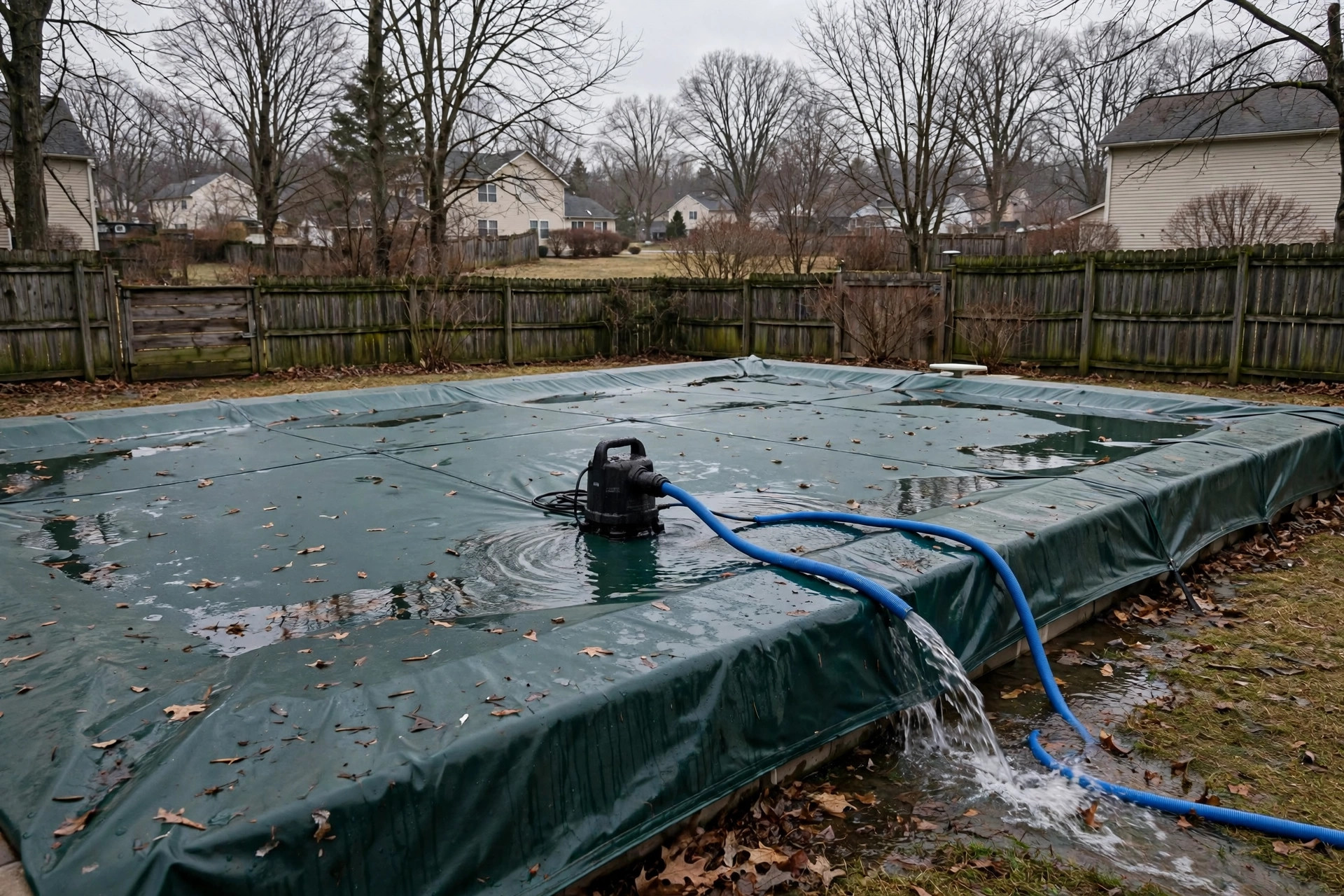

When the cold months come, most pool owners close the pool and stretch a cover over the water. Rain keeps falling. Snow melts. Leaves pile up. All of that weight lands on the cover, and water pools in the middle of it. The best pool cover pump for winter is the simple tool that clears that water away. It is a small electric pump that sits on the cover and pushes water off through a hose. It does one job, and it does it well.
A cover pump is not the same as the main pump that filters pool water. The main pump stays off all winter. The cover pump works above the cover, where rain and melt water collect. Without one, the weight of standing water can tear the cover, pull on the pool walls, and stain the deck. With one, the cover stays dry and spring opening becomes a short job instead of a long one.
Why Standing Water on a Cover Is a Winter Problem
Water is heavy. One inch of water over the whole surface of a twenty foot by forty foot pool weighs close to five thousand pounds. That much weight presses down on the cover and pulls hard on the straps, springs, or water bags that hold it in place. Over a long winter, the stress adds up. Covers tear. Anchor points loosen. In above ground pools, the wall can bend inward under the load.
Standing water also invites trouble on its own. It freezes and thaws in cycles, which wears out cover fabric. It turns green with algae, and that filthy water can leak through the cover or spill into the pool when the cover is removed in spring. Mosquitoes and other pests breed in it. Debris sinks into it and makes a heavy, smelly sludge that is hard to lift by hand.
A cover pump solves this by removing water as it collects. Many pumps have an automatic switch that turns the pump on when water reaches a certain depth and off when the surface is nearly dry. The owner sets the pump on the cover, plugs it in, and runs the discharge hose to a safe spot away from the pool. From then on, the pump watches the water level on its own. That is why pool service people treat a cover pump as a normal part of winter care, not an extra.
What to Look for in a Cover Pump: Best Pool Cover Pump for Winter
Not every pump fits every pool. A few simple facts decide which pump will do the job through a whole winter.
Flow Rate and Lift
Flow rate is the amount of water the pump moves, usually given in gallons per hour. Small cover pumps move three hundred to five hundred gallons per hour. Larger ones move eight hundred to one thousand or more. For a normal home pool, three hundred to five hundred gallons per hour is enough to keep up with rain and melt. A very large pool, or a pool in a rainy area, may need the stronger pump.
Lift is how high the pump can push water. The discharge hose often runs up and over the pool edge, so the pump must lift water a few feet. Most cover pumps can lift six to ten feet. Check this number if the hose must run a long way or uphill.
Size and Base Shape
The best pool cover pump for winter has a flat base and a low profile. A flat base lets the pump sit steady on the cover and pull water down to a thin layer, often less than half an inch. A tall or round pump tips over and leaves a puddle behind. Light weight also matters, since the pump sits on fabric, not on solid ground.
Cord Length and Power
Most cover pumps use normal household current. The power cord should be long enough to reach an outdoor outlet, often twenty five feet or more. Never use a thin indoor extension cord. If an extension cord is needed, use a heavy outdoor rated cord, and keep all connections out of puddles. A ground fault outlet, the kind with a test and reset button, is the safe choice for anything used near water.
Automatic or Manual Switch
Manual pumps run whenever they are plugged in. The owner must watch the water level and unplug the pump when the cover is dry. Automatic pumps have a float or sensor switch. They turn on when water rises and off when it falls. Automatic models cost a little more, but they save the owner from constant checking. For a winter that lasts months, the automatic switch is worth the extra money.
Types of Pool Cover Pumps
Cover pumps fall into a few clear groups.
Manual submersible pumps. These are the simplest kind. Drop the pump on the cover, plug it in, and it runs until unplugged. They are cheap and strong, but they need a watchful owner. If left running dry, the motor can overheat and fail early.
Automatic float switch pumps. These look like manual pumps with an added float. The float rises with the water and turns the pump on, then drops and turns it off. This is the most popular type for winter use, because it works for weeks with little attention.
Low water pick up pumps. These are flat and thin, built to pull water down to a fraction of an inch. They leave the cover almost dry. Some are automatic and some are manual. They cost more, but they keep the cover in the best shape.
Siphon and hand pumps. A siphon hose uses gravity to drain water, and a hand pump uses muscle power. These have no motor and no running cost. They are slow and need the owner to start them, and a siphon stops working if air gets in the line. For a small cover or a short season, they can be enough. For a full winter, an electric pump is the better answer.
Cover pump kits. Some kits add a filter bag, a pull rope, or a freeze guard. A pull rope lets the owner move the pump on the cover without walking on it. A freeze guard shuts the pump off in deep cold so ice does not break it. These extras are useful where winters are hard.
Cost and Price
Prices for pool cover pumps sit in a narrow range. A basic manual pump costs about fifty to eighty dollars. An automatic float switch pump costs about eighty to one hundred and fifty dollars. A low water pick up model with extras can run one hundred and fifty to two hundred and fifty dollars. Hand and siphon tools cost ten to thirty dollars.
Running cost is small. These pumps draw little power, and an automatic pump only runs when water is present. A winter of use may add only a few dollars to the electric bill.
Compare that to the cost of a torn cover. A new mesh or solid safety cover costs several hundred dollars, and a full safety cover can cost well over a thousand dollars. Pool walls, liners, and deck repairs cost far more. Seen that way, the best pool cover pump for winter is one of the cheapest forms of pool insurance an owner can buy. Guides on pool supply sites like Leslie’s Pool Supplies and Pool Warehouse often list prices side by side so buyers can compare.
Care and Upkeep
A cover pump needs little care, but a few habits keep it working year after year.
Set the pump on a flat spot in the middle of the cover where water collects deepest. Keep the intake screen clear of leaves and sticks. A clogged screen slows the pump and strains the motor. Check the screen every few weeks, or after a storm.
Run the discharge hose downhill to a drain or a part of the yard where the water will not flow back under the cover. Keep the hose free of kinks. In freezing weather, drain the hose after the pump runs so ice does not block it. Some owners bring the hose inside between storms, which is a good habit in cold areas.
Check the power cord for cuts or wear. Do not pull the pump up by its cord. Use the handle or the pull rope. At the end of winter, rinse the pump with clean water, let it dry, and store it indoors for the summer. A pump stored dry will start again next fall without trouble.
If the pump runs often but the water level does not fall, check three things: the intake screen, the hose for kinks, and the outlet for blockage. In most cases one of these is the cause. If the pump hums but does not move water, unplug it at once and clear the intake before trying again.
Safety
Water and electricity need respect. Plug the pump only into a ground fault protected outlet. Keep plugs and connections above any standing water. Do not walk on a wet pool cover to reach the pump. Use a pull rope to move it.
Never let children or pets play near a running pump or a water covered pool cover. A deep puddle on a cover can be a drowning risk for a small child, which is another reason to keep the cover dry. Safety notes from the U.S. Consumer Product Safety Commission remind owners that covers and pools need constant watch where children are present.
In very cold weather, turn the pump off if ice forms thick on the cover. Running a pump against solid ice can burn out the motor. Wait for a thaw, then let the pump clear the melt water.
Frequently Asked Questions
How often should a cover pump run in winter?
That depends on the weather. In a dry cold spell, the pump may sit idle for weeks. In a rainy season, an automatic pump may run several times a day. The owner should glance at the cover every week or two. If water stands deeper than two inches for long, the pump may be undersized, clogged, or unplugged.
Can I leave a cover pump out all winter?
Yes, if the pump is built for outdoor use. Most cover pumps are made to sit in the weather. Bring the pump in during hard freezes, or use a model with a freeze guard. Never leave a cheap indoor rated pump outside.
Will a cover pump drain the pool itself?
No. The pump sits on top of the cover and only moves the water that collects above the cover. It cannot reach the pool water below. That said, a cover that leaks can let pump suction pull a little pool water through, so keep the cover in good shape. If you want to know more about the main system that does move pool water, read our guide on the best pool pump for inground pools.
What size pump do I need for a large pool?
Match the pump to the cover area and the rainfall. For pools up to about twenty by forty feet, a pump that moves three hundred to five hundred gallons per hour is enough in most areas. For larger covers or very wet winters, choose eight hundred gallons per hour or more. Home improvement retailers such as The Home Depot list flow rates in the product details to help with the choice.
Do I still need to balance pool water if the pool is closed?
Yes. Balanced water protects the liner and the equipment through winter. Test and adjust before closing, and check again in spring. Our guide on how to balance pool water chemistry explains the steps in plain words. Learning guides from Swim University are another clear source.
Can a cover pump help if I heat my pool in spring?
Not directly. The cover pump clears the cover so the sun can warm the water and so the cover comes off clean. If you plan to swim early, read our notes on how to heat pool without heater for low cost ways to add warmth. For more on home and yard care, The Spruce covers pools, spas, and outdoor living in one place.
A Short Final Word
Winter is long, and a pool cover works hard through it. The best pool cover pump for winter takes the heaviest part of that work off the cover’s shoulders. Choose a flat, automatic pump with enough flow for your pool, plug it into a safe outlet, and let it do its quiet job. Come spring, the cover will lift off clean, the water below will be clear, and the swimming season can start on time. Spa and hot tub owners who winterize outdoor gear will find the same care habits apply; makers like HotSpring and Bullfrog Spas also stress clean, dry covers for long equipment life.
References
Bullfrog Spas. (n.d.). Hot tubs and spas. https://www.bullfrogspas.com Hot Spring Spas. (n.d.). Hot tubs and spas. https://www.hotspring.com Leslie’s Pool Supplies. (n.d.). Pool supplies and equipment. https://www.lesliespool.com Pool Warehouse. (n.d.). Pool equipment and supplies. https://www.poolwarehouse.com Swim University. (n.d.). Pool and hot tub care guides. https://www.swimuniversity.com The Home Depot. (n.d.). Home improvement products. https://www.homedepot.com The Spruce. (n.d.). Home and garden advice. https://www.thespruce.com U.S. Consumer Product Safety Commission. (n.d.). Product safety information. https://www.cpsc.gov
Was this guide helpful?

About David Wilson
The My Garden US editorial team writes practical, in-depth home and garden guides for American homeowners — tested advice, no fluff.
You May Also Like
Pool Resurfacing Options: Pros and Cons for Pool Owners
May 19, 2026 0 views
Finding a Good Pool Heater Repair Service Near Me
August 5, 2026 0 views
The Best Pool Chlorine Alternative Systems for Home Pools
July 2, 2026 0 views