

Many pool owners ask how to heat pool without heater and save money at the same time. A standard gas or electric pool heater costs a great deal to buy and even more to run. But there are simple ways to warm pool water without any heater at all. The sun gives free heat every day. The trick is to catch that heat and keep it from escaping at night. With the right cover and a few smart habits, most pools can gain five to ten degrees of free warmth. This guide walks through each method in plain words.
Why It Matters
Cold water keeps people out of the pool. A pool that sits at 68 degrees feels sharp and unfriendly, even on a hot afternoon. Most swimmers prefer water between 78 and 84 degrees. That gap is the difference between a pool used every day and one that sits empty.
A heater closes that gap fast. But the cost is steep. A gas heater can add hundreds of dollars to the fuel bill each month. An electric heat pump is cheaper to run but can cost several thousand dollars to install. Federal energy programs track these costs, and Energy Star publishes efficiency tips that show why solar methods win on price. For many families, that price is too high. Others want a quieter, simpler setup with less equipment to maintain.
They cost little after the first purchase. Sun-powered methods make no noise and burn no fuel.
How Pool Water Gains and Loses Heat: How to Heat Pool Without Heater
To warm a pool without a heater, it helps to know where the heat goes. Pool water gains heat mainly from the sun. It loses heat through evaporation, wind, the ground, and the night sky.
Evaporation is the biggest loss. As water turns to vapor and leaves the surface, it carries heat away with it. On a warm dry day, an uncovered pool can lose most of its heat through evaporation alone, a fact that pool care guides such as Swim University explain in their sections on heat loss. This is why covers matter so much. A cover blocks evaporation, and that single change holds more heat than any other step.
Convection happens when wind blows across the water. The moving air pulls warm air off the surface and brings in cool air. A windbreak on the windy side of the pool can cut this loss in half. Conduction moves heat from warm water to the cool ground under the pool. Knowing these losses points to the fixes: cover the surface, block the wind, and let the sun in.
Method 1: Solar Blanket Cover
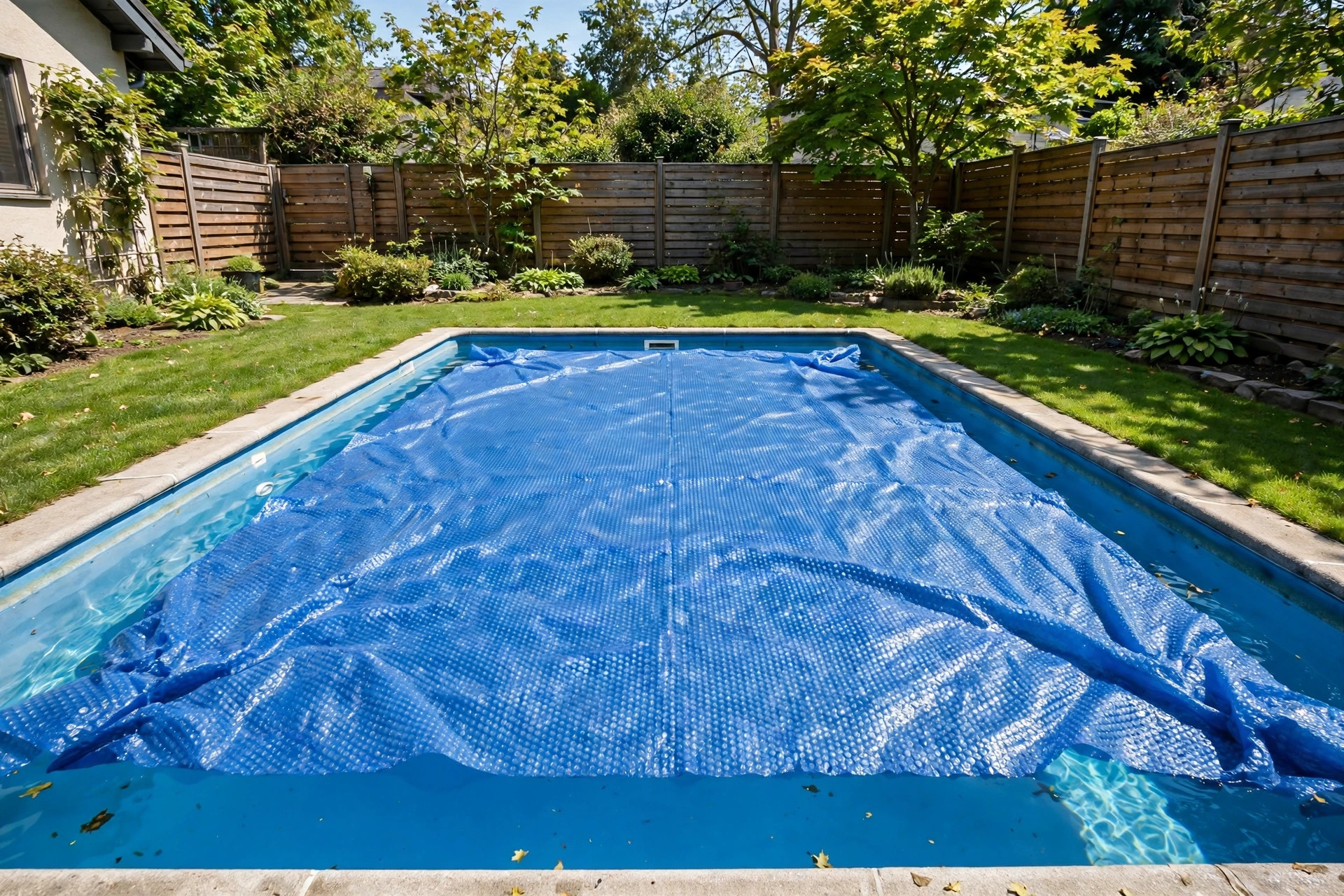
A solar blanket is the cheapest and most common answer. It is a sheet of plastic that floats on the water. Thousands of small air bubbles on the underside catch the sun’s heat and pass it to the water. At night, the blanket stops evaporation and slows heat loss.
Solar blankets cost between thirty and one hundred dollars, based on pool size, and pool supply shops such as Leslie’s carry a wide range for both inground and above ground pools. They can raise water temperature by five to eight degrees in sunny weather. They also cut water use and chemical use, because less water evaporates and the sun breaks down less chlorine under the cover.
To use one well, put the blanket on the pool whenever the pool is not in use. Bubble side goes down. In the morning, take it off before swimmers enter. A simple roller makes the blanket easy to roll on and off. Cut a big blanket into two halves if it is hard to handle.
Method 2: Liquid Solar Cover
A liquid solar cover is a thin chemical layer that floats on the water. It is not a sheet. It is a liquid poured from a bottle once or twice a week. The liquid spreads across the surface and forms a clear, one-molecule-thick film. This film slows evaporation, the main way pools lose heat.
The liquid is safe for filters, pumps, and swimmers, and spa makers such as Hot Spring note the same evaporation-control idea in their guidance for heated water. It breaks down over time and needs fresh doses. A bottle costs about twenty to forty dollars and lasts a month or two for a home pool. It will not add degrees by itself, but it can save two to four degrees of overnight loss.
Method 3: Solar Rings and Sun Pads
Solar rings are round floating pads, about four to five feet wide. They work like small solar blankets, with dark tops that catch sun heat. Each ring weighs very little, and one person can place or remove them in minutes.
A typical pool needs six to twelve rings for good coverage, and online pool retailers such as Pool Warehouse sell them in sets sized to common pool shapes. They cost more than a single blanket, often one hundred fifty to three hundred dollars for a full set. But they last longer and one person can place or remove them in minutes. Dark vinyl pads, sold as sun pads, work the same way in smaller form and suit small above ground pools.
Method 4: Let in More Sun
Shade cools a pool. This is fine on a blazing day, but a shaded pool stays cold all season. Look at the pool through the day. Note which trees, fences, or buildings cast shade on the water between ten in the morning and four in the afternoon. That is the window when the sun adds the most heat.
Trim back branches that hang over the pool or block the south side, which gets the most sun in the northern hemisphere. Even cutting a few high limbs can open a pool to hours of extra sunlight.
A dark pool bottom also helps, and home advice sites such as The Spruce list dark finishes among the simplest passive ways to warm pool water. Dark liners and dark plaster absorb more sun and pass the heat to the water. A pool with a black or deep blue bottom can run three to five degrees warmer than one with a white bottom. When it is time to replace the liner, pick a dark color. Owners planning this job often read about pool heater for above ground pools at the same time, but a dark liner plus a cover is often enough on its own.
Method 5: Block the Wind
Wind is the enemy of warm water. A steady breeze can cool a pool by several degrees in a day. The fix is a windbreak on the side where the wind comes from most often.
A barrier a few feet from the pool edge works best. A solid fence, a hedge, or a screen wall all do the job. For best results, make the windbreak about as tall as a person, or taller. Even a temporary screen of shade cloth on posts helps.
Shrubs and tall grasses are a natural choice. Plant them on the north and west sides in most of the United States, since cold winds often come from those directions. Keep plants far enough back that leaves do not blow into the pool every day.
Method 6: Run the Pump in the Warm Hours
The pump moves water through the filter and back to the pool. When to run it matters for heat. Run the pump during the warmest part of the day. The sun warms the thin top layer of water, and the pump mixes it through the pool. At night, turn the pump off or run it less, since moving water at night speeds heat loss.
If the pool has a fountain or a waterfall feature, turn it off at night. Falling water meets the cool night air and loses heat fast. This method costs nothing. It only asks for a change in the timer setting.
How to Choose the Right Mix
No single method does the whole job. The best results come from a mix. Start with a solar blanket, since it gives the most heat per dollar. Add a windbreak if the yard is open and breezy. Trim shade on the south side. Change the pump timer. Use liquid cover during swim hours if the budget allows.
For a small above ground pool, a solar blanket and a dark pad may be enough. For a large inground pool, add the windbreak and the sun rings. For a cool climate, combine every method. Each layer adds a few degrees. Together they can stretch the swim season by four to six weeks on each end.
When spring comes and it is time to open the pool, warm water from day one makes the season start sooner. The usual spring steps are covered in guides on how to open pool for summer season, and adding the solar blanket at opening time is a smart first move.
Cost and Price Guide
Here is what each method costs in plain numbers. A solar blanket runs thirty to one hundred dollars. A roller for the blanket runs fifty to one hundred fifty dollars. Liquid solar cover costs twenty to forty dollars per bottle, with a few bottles needed per season. Solar rings cost about twenty-five to forty dollars each, and most pools need six to twelve. A simple windbreak of posts and screen cloth can cost under one hundred dollars if built at home, with materials available at home improvement stores such as The Home Depot. Trimming trees may cost nothing if done by the owner, or one to three hundred dollars for a tree service.
Compare that to a gas heater, which costs two to four thousand dollars to buy and install, plus hundreds per month in fuel. The no-heater methods pay for themselves in the first season.
Care and Upkeep
Solar blankets last two to four seasons. Sunlight breaks them down over time. When the bubbles start to flake or the plastic feels thin, replace the blanket. For cold months, a different product is needed, as guides to the best pool cover for winter reviews show. Store it out of the sun on a roller when not in use. Never leave a dry blanket sitting in the sun off the pool.
Rinse the blanket now and then with the hose to wash off dirt and oils. Keep pool chemistry balanced, since harsh chemical levels wear the plastic faster. Liquid covers need steady re-dosing. Set a weekly reminder. Mark the bottle with the date it was opened.
Windbreaks need the same care as any fence or planting. Check posts after storms. Trim hedges so they do not shed into the pool.
Safety Notes
Covers and blankets bring safety rules. Never let small children or pets walk on a solar blanket. It will not hold their weight, and a child can slip under it and be trapped. The U.S. Consumer Product Safety Commission publishes guidance on pool barriers and alarms for the same reason. Remove the blanket fully before anyone swims. Store it on a roller away from the pool edge so no one trips on it.
Liquid solar covers are made for pools and are safe in the right dose. Do not pour in extra thinking more is better. Follow the label. Keep the bottle away from children, like all pool chemicals.
Pool safety around heat also means water safety in general. A warm pool draws more swimmers, including guests who may not swim well. Keep rescue gear and a phone by the pool. Check gates and alarms.
Frequently Asked Questions
How many degrees can a pool gain without a heater?
In sunny weather, a good solar blanket can add five to eight degrees. Combined with a windbreak, less shade, and smart pump timing, most pools gain eight to twelve degrees over an uncovered pool.
How long does a solar blanket take to work?
A blanket starts holding heat the first night it is used. Warming the full body of water takes three to five sunny days. After that, the blanket holds the gain night after night.
Can I heat a pool without a heater in a cool climate?
Yes, but the season will be shorter than in a warm climate. In cool regions, use every method together: blanket, windbreak, full sun, and dark bottom. Spa makers such as Bullfrog Spas also publish seasonal care tips that apply to any body of warm water in a cold climate. The U.S. Department of Energy lists solar pool heating among the most cost-effective uses of sunlight for the home. These steps can still add four to six weeks to each end of the season.
Do solar blankets work on cloudy days?
They work less well, since there is less sun to catch. But they still stop evaporation at night, which is where most heat is lost. Leave the blanket on during cloudy spells. The pool will hold its warmth longer than an uncovered pool.
Is a liquid solar cover as good as a blanket?
No. A blanket both adds heat and stops loss. A liquid cover only slows loss. The liquid is best as a helper during swim hours, when a blanket cannot be on the pool.
Will a dark pool bottom really make a difference?
Yes. Dark surfaces absorb more of the sun’s energy than light ones. A dark liner can add three to five degrees compared to a white liner.
A Short Final Word
The question of how to heat pool without heater has a clear answer: catch the sun, keep the heat, and block the cold. A solar blanket does most of the work. A windbreak, open sunlight, and smart pump timing add the rest. The cost is a small fraction of a real heater, and the upkeep is simple. Start with the blanket this week. The water will be warmer by the weekend, and the swim season will feel longer on both ends.
References
Bullfrog Spas. (n.d.). Hot tubs and spas. https://www.bullfrogspas.com ENERGY STAR. (n.d.). Energy efficient products. https://www.energystar.gov Hot Spring Spas. (n.d.). Hot tubs and spas. https://www.hotspring.com Leslie’s Pool Supplies. (n.d.). Pool supplies and equipment. https://www.lesliespool.com Pool Warehouse. (n.d.). Pool equipment and supplies. https://www.poolwarehouse.com Swim University. (n.d.). Pool and hot tub care guides. https://www.swimuniversity.com The Home Depot. (n.d.). Home improvement products. https://www.homedepot.com The Spruce. (n.d.). Home and garden advice. https://www.thespruce.com U.S. Consumer Product Safety Commission. (n.d.). Product safety information. https://www.cpsc.gov U.S. Department of Energy. (n.d.). Energy efficiency and renewable energy. https://www.energy.gov
Was this guide helpful?

About David Wilson
The My Garden US editorial team writes practical, in-depth home and garden guides for American homeowners — tested advice, no fluff.
You May Also Like
Best Pool Vacuum for Steps and Benches: A Full Guide
March 23, 2026 0 views
Finding a Good Pool Heater Repair Service Near Me
August 5, 2026 0 views
Pool Closing Checklist for Fall Season: A Step-by-Step Guide
October 5, 2026 1 views