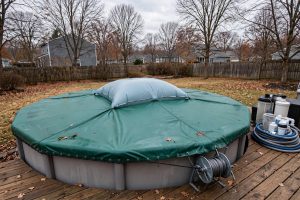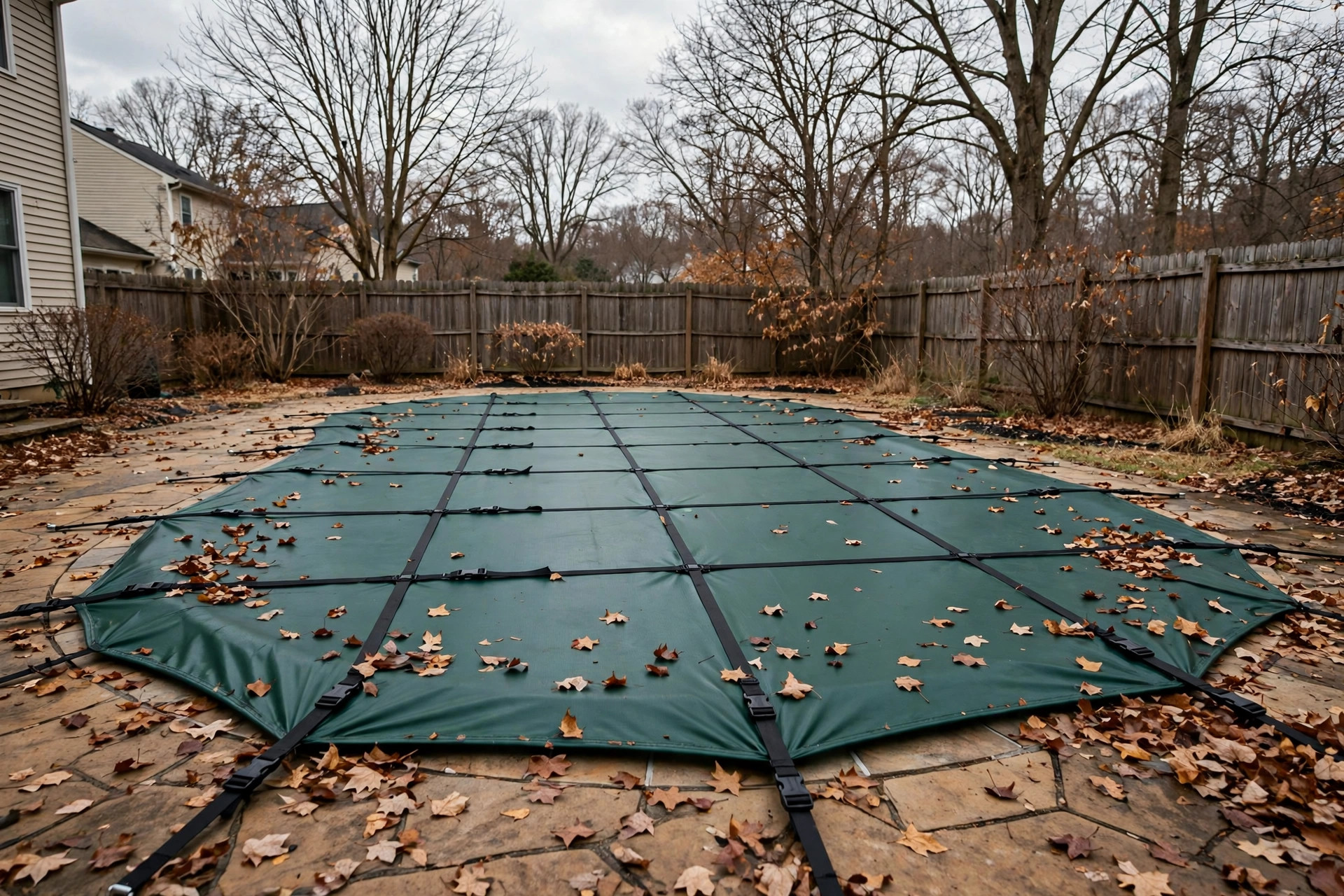

When the swimming season ends, the pool does not go away. It sits in the yard through rain, snow, and ice. A good winter cover is what stands between a clean pool in spring and a green, damaged mess. These best pool cover for winter reviews will help you choose the right one. The choice is not hard, but it matters more than most people think.
Why a Winter Pool Cover Matters
A pool left open through winter collects leaves, dirt, and snow. That debris breaks down and feeds algae. Algae can stain the walls and floor. It can also clog the filter and damage the pump. A cover stops most of this before it starts.
A cover also protects the water chemistry. Sunlight and organic waste push the water out of balance. When the water is out of balance, it can damage the liner or the plaster. Repairs cost far more than a cover.
There is also the matter of safety. An open pool in winter can be a danger. A child or a pet can fall in. Ice makes the danger worse, not better. A strong safety cover keeps weight off the water and can hold a person who steps on it by mistake.
Finally, a cover saves money. A pool that is covered well needs less work in spring. It needs fewer chemicals. It needs less cleaning. Many owners report that spring opening takes half the time when the pool was covered right.
What to Look For When You Choose: Best Pool Cover for Winter Reviews
Size and Fit
The cover must fit the pool. Measure the pool before you shop. Measure the longest point and the widest point. Round shapes need the diameter. Free-form shapes need extra care. Most makers list the pool size the cover fits. A cover that is too small will not reach the anchors. A cover that is too large will sag and pool water on top.
Material Strength
Winter covers are made from woven polyethylene or vinyl. Stronger fabric lasts longer. Look at the weave count or the thickness rating. A thicker cover resists tears from ice and branches. Cheap thin covers may last one season. A good one can last three to five seasons.
The Type of Cover
There are three main types. Solid covers block all light and debris. They need a pump on top to remove rainwater. Mesh covers let rain drain through. They keep leaves out but let in some fine dirt and light. Safety covers are anchored to the deck. They are the strongest type. They keep out almost everything and can hold heavy weight.
Anchor and Strap System
For safety covers, the anchor system matters. Brass anchors set into the deck hold the straps. Straps with strong springs keep the cover tight. Water bag covers use long tubes filled with water around the edge. Check that the cover comes with the parts you need. Some low-price covers do not include the tubes or anchors.
Warranty
A longer warranty often means a better product. Many solid covers carry a one to three year warranty. Safety covers often carry ten to fifteen years. Read the warranty terms. Some warranties are prorated. That means you pay part of the cost if it fails late in the term.
Types of Winter Pool Covers
Solid Winter Covers
Solid covers block one hundred percent of light. They keep out all leaves and debris. Algae cannot grow without light. This is their main strength. Their main weakness is standing water. Rain and melted snow sit on top. You need a small cover pump to remove the water. If you skip the pump, the weight can pull the cover into the pool.
Solid covers are often the lowest in price. They are a good choice for owners who will check the pool through winter. They work best on rectangular pools with a flat deck edge.
Mesh Winter Covers
Mesh covers let rain and melted snow drain into the pool. This means no pumping. It means the cover never holds heavy standing water. Mesh keeps out leaves, sticks, and other large debris. It lets in some fine silt and a small amount of light.
The pool water under a mesh cover may turn a light green by spring. This is common. The water still needs a shock treatment at opening. Mesh covers cost a bit more than solid covers. They are a good choice for owners who do not want to tend a pump.
Safety Covers
Safety covers are the top choice for protection. They are made of strong mesh or solid fabric. They are anchored to the deck with straps and springs. They can hold several hundred pounds. This keeps children and pets from falling in.
Safety covers last the longest. They cost the most at the start. But spread over ten years or more, the yearly cost is low. Many local codes accept safety covers as a barrier. If you have young children, this type is worth the price.
Automatic Covers
Automatic covers roll open and shut with a motor. They are not only for winter. Many owners use them year-round. They keep the pool clean daily. They also act as a safety barrier. They are the most expensive option. The track and motor need care. For this guide, they are worth knowing about but most buyers choose one of the three types above.
How to Read Pool Cover Reviews the Right Way
Reviews can help, but only if you read them well. Look for reviews from owners with the same pool type as yours. A review of a round above-ground cover does not help if you have a rectangular in-ground pool.
Give more weight to reviews that describe a full winter. A cover that looks good out of the box may tear by February. Owners who report back in spring tell the real story. Look for notes on tears, water pooling, and how the straps held.
Watch out for reviews that only praise the price. A cheap cover that fails in one season costs more per year than a better cover that lasts five. Add up the real cost over time.
Also check how the reviewer installed the cover. Some bad reviews come from poor installation, not a poor product. A cover that was too small or anchored badly will fail no matter how good the fabric is.
Cost and Price Guide
Prices vary by pool size and cover type. Small above-ground solid covers can cost under one hundred dollars. Large in-ground solid covers often run between one hundred and three hundred dollars.
Mesh covers for in-ground pools usually cost between two hundred and five hundred dollars. The price rises with pool size and fabric weight.
Safety covers are the largest investment. They often run between eight hundred and two thousand dollars or more for a large pool. Installation may add to the cost. Some owners install them on their own. Others hire a pool company.
Do not forget the extras. A cover pump for a solid cover costs around thirty to eighty dollars. Water tubes cost a few dollars each. Winterizing chemicals and a winter plug kit add a little more. These small items make the cover work as it should.
Care and Upkeep Through Winter
A winter cover still needs some attention. Check it once a month if you can. Clear off heavy leaves and branches. Leaves left on the cover break down and stain the fabric.
If you have a solid cover, pump off standing water after heavy rain. Do not let more than a few inches build up. The weight can stretch or tear the fabric.
Check the straps and anchors on a safety cover. Tighten any strap that has worked loose. Ice can push at the edges. Make sure the cover stays snug.
Do not walk on the cover unless it is a safety cover rated for weight. Even then, stay off it when you can. Sharp shoes can cut the fabric.
In spring, clean the cover before you take it off. Sweep off leaves and dirt. Let it dry fully. Fold it loosely. Store it in a dry place out of the sun. A cover stored wet will grow mildew. A cover stored in sun will weaken the fabric.
Safety: The Part You Must Not Skip
Winter does not make a pool safe. Thin ice is not strong. A child can fall through a pool that is not covered right. The federal safety agency that watches over pool safety posts guidance for home pools, and its pages are a good place to start before you choose a barrier (https://www.cpsc.gov).
A safety cover anchored to the deck is the best winter barrier. Make sure it meets the common safety standard for pool covers. The standard tests how much weight the cover can hold. Ask the maker for the test result if it is not in the product list.
Remove ladders and steps for the winter if the pool maker allows it. This removes a path to the water. Keep the pool area fenced all year. A cover is not a fence. The two work best together.
Never let ice build up on a cover that is not made for it. Heavy ice can push a weak cover into the pool. If you live where winters are hard, choose a cover made for heavy snow loads.
Pairing the Cover With the Rest of Your Pool Care
A cover is one part of winterizing. Before you cover the pool, balance the water. Clean the filter. Lower the water level as the pool maker advises. Add winterizing chemicals. Blow out the lines if you close the pool fully.
When spring comes, test the water before you swim. Accurate pool test strips make this job simple. They show the chlorine and pH levels in under a minute. Adjust the chemicals based on what the test shows.
Pool owners with a spa should winterize it too. A hot tub chemical starter kit holds the basics for a clean start in spring. Hot Spring Spas posts care guides for cold months that many owners find useful (https://www.hotspring.com). Bullfrog Spas also offers guidance for keeping spa equipment in good shape (https://www.bullfrogspas.com).
Families should plan for the swimming season as well. When the pool opens, pool toys for toddlers can make the first swim fun. Just remember that toys are never a substitute for watching children near water.
Where to Shop and Learn More
Big home stores carry a wide range of winter covers. The Home Depot lists covers for many pool sizes and types (https://www.homedepot.com). Pool Warehouse focuses on pool equipment and has a large cover section (https://www.poolwarehouse.com). Leslie’s Pool Supplies is a pool-only chain with staff who know the products (https://www.lesliespool.com).
For how-to guides, Swim University breaks winterizing into clear steps (https://www.swimuniversity.com). The Spruce covers home topics in plain language and often compares pool products (https://www.thespruce.com).
Frequently Asked Questions
How long do winter pool covers last?
It depends on the type and the weather. A basic solid cover often lasts one to three seasons. A good mesh cover lasts three to five seasons. A safety cover can last ten to fifteen years or more. Store the cover dry and out of the sun to get the longest life.
Can I leave my pool uncovered for winter?
You can, but it is not wise in most places. Leaves and debris will fill the pool. Algae will grow. The walls and floor can stain. The pump and filter face more strain. The cost of cleaning and repair is usually more than the cost of a cover.
Should I choose a solid or mesh winter cover?
Choose solid if you want the cleanest water and you will pump rainwater off the top. Choose mesh if you want low upkeep and you accept some fine silt in spring. Both work well. The right pick depends on how much winter care you want to give.
How do I stop the cover from blowing off?
Make sure the cover is the right size. Tighten the straps or fill the water tubes fully. On safety covers, check that each anchor is set firm in the deck. A cover that fits well and is held tight will stand up to wind.
What is the safest winter pool cover?
An anchored safety cover is the safest. It can hold the weight of a child or a pet. It meets a tested strength standard. Pair it with a fence and a locked gate for the best protection.
When should I put the winter cover on?
Cover the pool after the water temperature drops below sixty degrees and stays there. Algae grows slower in cool water. Most owners in cold states cover the pool in late September or October. In mild states, the season may run longer.
A Final Word
The best pool cover for winter is the one that fits your pool, suits your climate, and gets installed with care. A solid cover gives the cleanest water. A mesh cover gives the easiest winter. A safety cover gives the best protection and the longest life. Read the reviews, measure twice, and do not skip the small extras like a cover pump or tight straps. When spring comes, you will be glad you took the time.
References
Bullfrog Spas. (n.d.). Hot tubs and spas. https://www.bullfrogspas.com Hot Spring Spas. (n.d.). Hot tubs and spas. https://www.hotspring.com Leslie’s Pool Supplies. (n.d.). Pool supplies and equipment. https://www.lesliespool.com Pool Warehouse. (n.d.). Pool equipment and supplies. https://www.poolwarehouse.com Swim University. (n.d.). Pool and hot tub care guides. https://www.swimuniversity.com The Home Depot. (n.d.). Home improvement products. https://www.homedepot.com The Spruce. (n.d.). Home and garden advice. https://www.thespruce.com U.S. Consumer Product Safety Commission. (n.d.). Product safety information. https://www.cpsc.gov
Was this guide helpful?

About Lisa Anderson
The My Garden US editorial team writes practical, in-depth home and garden guides for American homeowners — tested advice, no fluff.
You May Also Like
Best Pool Ladder for Above Ground Pools: How to Choose the Right One
April 16, 2026 0 views
Best Pool Vacuum for Sand Bottom: How to Choose the Right One
July 10, 2026 0 views
Inground Pool Steps Replacement Cost: What Homeowners Should Expect to Pay
February 28, 2026 0 views