Introduction
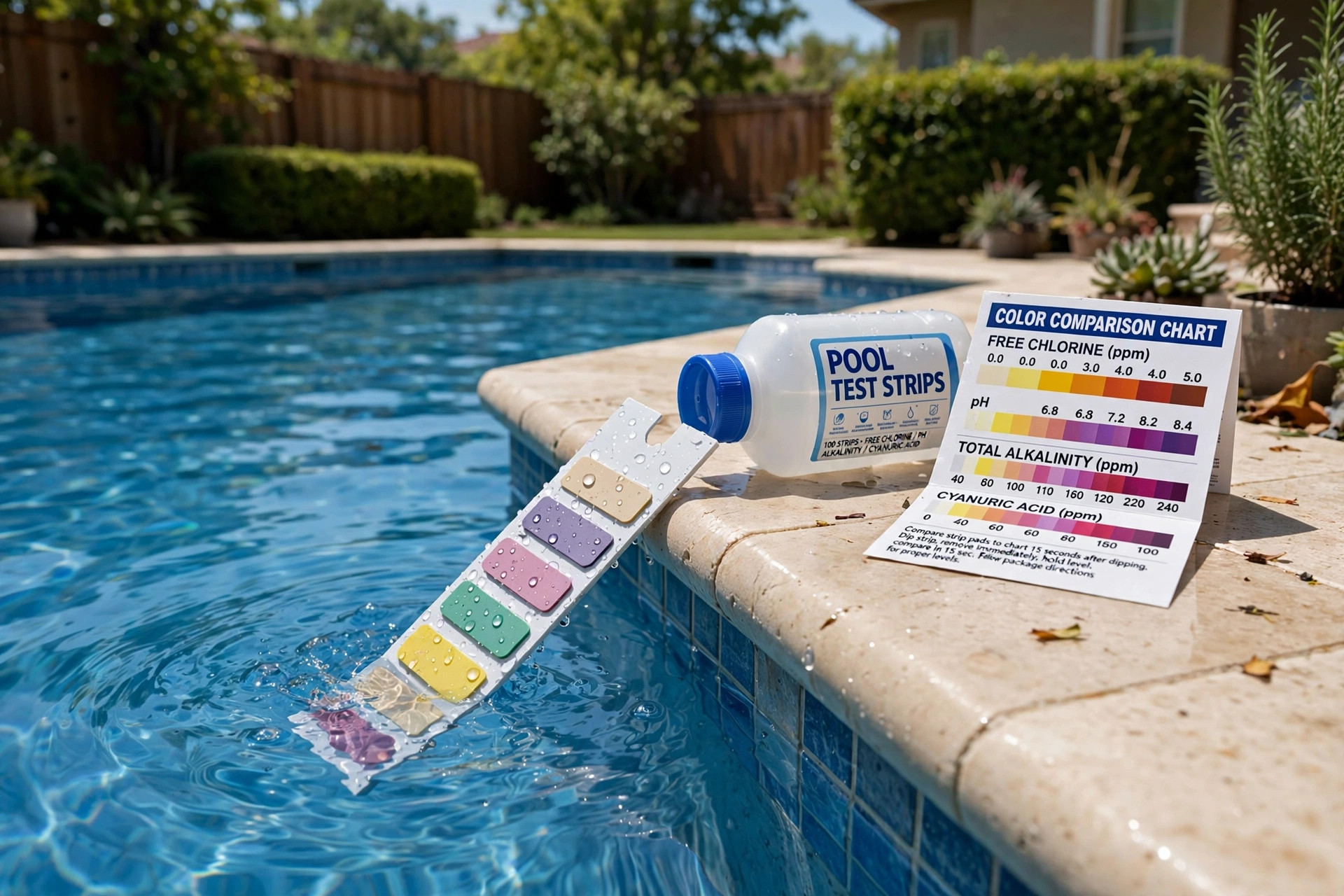
Our best pool test strips accurate reviews will help you find strips that give true readings every time. Pool owners test their water to keep it safe and clear. Test strips are the simplest tool for the job. You dip a small paper strip in the water, wait a few seconds, and match the colors to a chart. The result tells you what to adjust.
Many strips on the market promise accurate results. Some keep that promise. Others fade, blur, or read poorly. This guide explains what matters, what the strips measure, and how to choose. It also explains how to use them right, since even good strips can mislead when used wrong.
Why Accurate Pool Test Strips Matter: Best Pool Test Strips Accurate Reviews
Pool water is more than water. It holds chlorine, salt, minerals, and things that fall in from the yard. When the balance is wrong, swimmers get red eyes, dry skin, and itchy throats. Algae can grow. The pool walls can stain. Pumps and heaters can wear out early.
Accurate readings let you fix small problems before they grow. A strip that reads chlorine as low when it is high can lead you to add too much chemical. A strip that reads pH as fine when it is not can let scale build up on the liner. Over a season, small errors add up to real cost.
Reliable strips also save time. You test, you read, you act. Unreliable strips force you to guess, retest, or drive to a pool store for a second opinion. For families with kids or for hot tub owners, that lost time matters.
What Pool Test Strips Measure
Most strips test several things at once. The exact set depends on the strip. Here are the common readings.
Free Chlorine
Free chlorine is the chemical that kills germs. The safe range for most pools is about 1 to 3 parts per million. If the number is too low, the water cannot fight bacteria. If it is too high, swimmers feel the burn. Most strips show a clear color step for this reading, and it is the most important one for daily testing.
pH
The pH scale runs from 0 to 14. Pool water should sit near 7.2 to 7.6. Low pH makes water acidic. It stings the eyes and can eat at metal parts. High pH makes chlorine weak and can cloud the water. Our how to lower pool ph levels safely guide explains the steps to take when your strip shows a high reading.
Total Alkalinity
Total alkalinity acts as a guard for pH. It keeps the pH from swinging up and down with each splash of rain or each dose of chemical. The usual target is 80 to 120 parts per million. Strips include this pad on most multi-test versions.
Cyanuric Acid
Cyanuric acid is a shield for chlorine. It stops the sun from burning chlorine away in outdoor pools. The target is about 30 to 50 parts per million. Too little means the sun eats your chlorine. Too much can lock the chlorine so it cannot work. Many 6-in-1 and 7-in-1 strips test this.
Total Hardness
Hardness comes from calcium in the water. Low hardness can etch plaster and rough up surfaces. High hardness can leave white scale on tiles and heaters. Strips show this so you can act before damage sets in.
Bromine and Salt
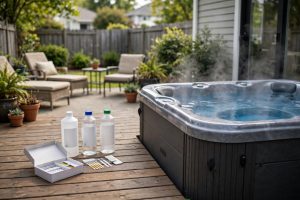
Some strips test bromine for hot tubs and spas. Others test salt level for salt water pools. Salt strips are useful after you add salt or after heavy rain, since dilution changes the reading. The how to maintain hot tub water chemistry guide covers bromine-based care for spas.
How to Choose: What to Look for in Accurate Test Strips
Not all strips read the same. Here is what to check before you buy.
Clear Color Chart
The chart is the heart of the strip. Look for charts with sharp, separate color steps. If two levels look alike, the strip will be hard to read. Good charts print large color blocks and keep the shades far apart.
Fast, Stable Colors
Pads should change color in the time the bottle says, often 15 to 60 seconds. The colors should then hold steady long enough for you to read them. Some cheap pads keep darkening after the time is up. That drift makes readings false.
Fresh Stock and Sealed Bottles
Test strips age. Pads lose strength when they sit in heat or damp air. Buy strips in sealed bottles with a clear date. Check the date on arrival. A bottle that sat in a hot warehouse all summer may read low even when new.
Pads That Match Your Pool Type
Chlorine pools and salt pools use the same main readings, but salt owners need salt level too. Bromine hot tubs need a bromine pad, not a chlorine pad. Buy the strip built for your system. A chlorine strip dipped in a bromine tub gives the wrong number.
Easy to Hold and Read
Wide strips are easier to hold with wet hands. Pads placed in a single line are easier to match to the chart. Narrow strips with tiny pads can slip from your grip and bend, which hurts the reading.
Types of Pool Test Strips
Shops sell several kinds. Each fits a different owner.
5-in-1 Strips
These test the basics: free chlorine, pH, total alkalinity, cyanuric acid, and total hardness. They suit most home pools. They are cheap and fast. Many pool owners start here and never need more.
6-in-1 and 7-in-1 Strips
These add pads for bromine, salt, or other readings. They suit hot tub owners and salt water pool owners who want one strip for everything. They cost a bit more per strip. The added pads are worth it if you test those readings often.
Salt Test Strips
These test only the salt level. Salt pool owners use them after adding salt or after storms. They are cheap in bulk. They are not a full water test, so pair them with a standard strip.
Strips vs Liquid Drop Kits
Liquid kits use drops and small tubes. They cost more at first. They can read finer steps than strips. Many owners use strips for quick daily checks and keep a liquid kit for weekly checks. A deep tutorial from SwimUniversity walks through both methods and shows when each fits best.
Digital Readers
Some brands sell small readers that scan a strip and show numbers. They remove the guesswork of color matching. They cost far more than a bottle of strips. They suit owners who test daily or who manage rental pools.
Cost and Price
A bottle of 50 strips usually costs between 8 and 20 dollars. A bottle of 100 strips can drop the per-strip cost under 20 cents. Salt strips sell in packs and often cost a bit more per strip. Liquid kits run 20 to 40 dollars. Digital readers run well over 50 dollars.
Price alone does not tell you about accuracy. Some budget strips read very well. Some costly strips read poorly. Read the date, check the chart, and store the bottle right. Those steps matter more than the price tag. Major retailers such as Home Depot carry many brands side by side, which makes it easy to compare charts and dates in person.
How to Use Test Strips the Right Way
Even the best strip fails with bad technique. Follow these steps for true readings.
1. Read the bottle first. Note the dip time and the read time. Times differ by brand. 2. Use dry hands. Take one strip and close the bottle right away. Damp air hurts the pads. 3. Hold the strip by the plain end. Keep your fingers off the pads. 4. Dip the strip in elbow-deep water, away from the skimmer and the return jets. Move it slowly. 5. Pull it out and hold it flat. Do not shake it. Shaking throws water off unevenly. 6. Wait the exact time the bottle states. Match each pad to the chart in good light. 7. Read the pads in the order the chart shows. Some pads must be read before others. 8. Write the numbers down. A small notebook beats memory.
Test at the same time of day when you can. Morning tests catch problems before the pool gets busy. Test after storms, heavy swim days, and chemical doses. Keep strips out of the sun while you work. Bright light can bleach the colors and fool your eye.
Care, Storage, and Upkeep
Strips are simple tools, but they need care. Store the bottle in a cool, dry place. Do not keep it in the pump shed if that shed bakes in the sun. Do not store it next to the chemical buckets, since fumes can reach the pads.
Close the cap tight after each use. Never move strips to a bag or a jar. The bottle holds a drying agent that keeps pads fresh. Once the date passes, replace the bottle. Old strips read low and waste your time.
Wipe up spills of pool chemicals with care. Keep testing tools away from kids and pets. A clean test station makes you more likely to test on schedule. Pair testing with another habit, such as skimming leaves. A good best pool vacuum for leaves reviews guide can help you keep debris out so your readings stay steady.
Safety Notes
Testing keeps water safe, but the chemicals you handle need respect. Store chlorine and pH products in their own containers, away from heat and out of reach of kids. Never mix products unless the label says to do so. Mixes can release strong fumes.
Add chemicals to water, not water to chemicals, and follow the label for each dose. Wait the stated time before swimming after a dose. Keep the pool area fenced and watch children at all times. The U.S. Consumer Product Safety Commission offers clear pool safety guidance that every pool owner should read.
If a test shows zero chlorine or very high chlorine, act fast. Low readings mean the water is not sanitized. High readings mean it is harsh. Shock the pool or let it settle per the product label, then retest before anyone swims.
Frequently Asked Questions
How often should I test my pool water?
Test two to three times per week in the swim season. Test after heavy rain, big swim days, and any chemical dose. Hot tubs need more checks, often before each use, since small water volume shifts fast.
Why do my strips read different colors each time?
You may be dipping in a bad spot. Water near the skimmer or jets does not mix like the rest. Dip elbow-deep in open water. Also check the bottle date. Old pads fade and give mixed colors.
Can I use pool strips in my hot tub?
Only if the strip tests what your tub uses. Chlorine tubs need chlorine strips. Bromine tubs need bromine strips. Salt systems need a salt reading too. The hot tub water care guides at Bullfrog Spas explain which readings matter for spas.
Are strips as accurate as liquid kits?
Good strips are close enough for daily care. Liquid kits read finer steps and suit weekly checks. Many owners use both. Strips catch daily drift. Kits confirm the fine details.
How long do test strips last?
Most bottles last one to two years from the printed date. Heat and damp air shorten that life. Keep the bottle sealed, cool, and dry. When in doubt, buy fresh. A new bottle is cheap insurance.
Where can I learn more about pool water balance?
Long guides from Leslie’s cover water balance in plain steps. Pool Warehouse explains how test readings tie to equipment care. Home guides at The Spruce offer simple seasonal checklists. Hot tub owners can also read water care tips from Hot Spring.
A Short Final Word
Good test strips are cheap, fast, and honest when you pick well and test right. Look for clear charts, fresh dates, and pads built for your pool type. Store the bottle well. Test on schedule. Write the numbers down. Those small habits keep the water safe and the season smooth. Our best pool test strips accurate reviews point to one rule above all: trust the strips you can read, and retest when a number looks wrong.
References
Bullfrog Spas. (n.d.). Hot tubs and spas. https://www.bullfrogspas.com Hot Spring Spas. (n.d.). Hot tubs and spas. https://www.hotspring.com Leslie’s Pool Supplies. (n.d.). Pool supplies and equipment. https://www.lesliespool.com Pool Warehouse. (n.d.). Pool equipment and supplies. https://www.poolwarehouse.com Swim University. (n.d.). Pool and hot tub care guides. https://www.swimuniversity.com The Home Depot. (n.d.). Home improvement products. https://www.homedepot.com The Spruce. (n.d.). Home and garden advice. https://www.thespruce.com U.S. Consumer Product Safety Commission. (n.d.). Product safety information. https://www.cpsc.gov
Was this guide helpful?

About Emily Rodriguez
The My Garden US editorial team writes practical, in-depth home and garden guides for American homeowners — tested advice, no fluff.